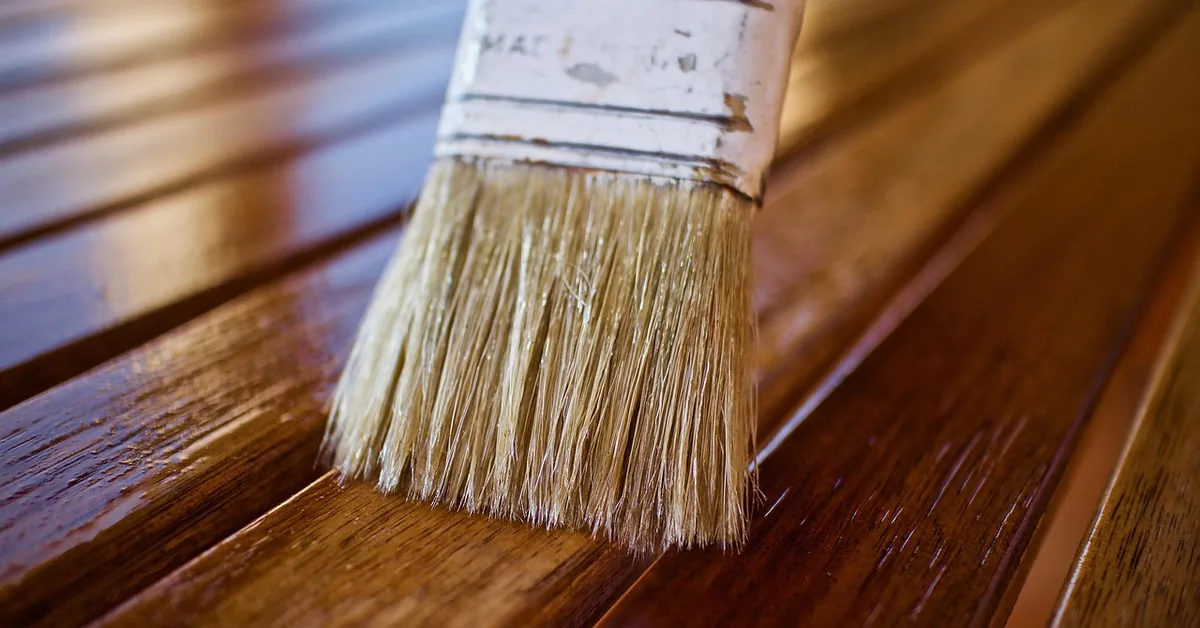
Gel Stain vs. Oil Stain: Which One for Your Wood? (Species Chart)
Gel stain generally wins for blotch-prone woods like pine, maple, or cherry and for refinishing over an existing finish, while oil-based stain suits open-grained species like oak or walnut and always needs bare wood. Picking wrong risks uneven, blotchy staining or a failed refinish. This guide covers the real composition difference, when a wood conditioner is actually needed, species-by-species picks, and dry time and cost by brand.
Quick Answer
Use gel stain for blotch-prone species (pine, maple, cherry, birch) or when refinishing over a cleaned, scuff-sanded existing finish. Use oil-based penetrating stain for oak, walnut, mahogany, or ash, and only on bare wood, since it cannot go over an existing finish. Gel stain runs $20–30/quart versus $7–16/quart for oil stain.
What’s the Actual Difference Between Gel Stain and Oil Stain?
Best Gel Stain Pick
Minwax Gel Stain, Walnut (1 Quart) – $19.05
A classic oil-based gel stain in the thick, urethane-containing formula this guide’s composition section describes — suited to refinishing over an existing finish or staining blotch-prone pine and maple.
- Best for: Cabinets, doors, or furniture with an existing finish, or raw pine/maple/cherry
- Why we picked it: Well-established oil-based gel formula matching the composition this guide covers
- Main drawback: Needs a protective topcoat since it sits on the surface rather than penetrating
Compare more gel stain options
 Faster-Drying Option Varathane Total Control Gel Stain, Dark Walnut (1 Qt) – $16.83
|
 Lighter Tone Option Minwax Gel Stain, Aged Oak (1 Qt) – $19.99
|
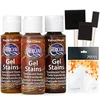 Sampler 3-Pack Americana Gel Stain 3-Pack, Walnut/Oak/Maple (2oz ea.) – $17.99
|
As an Amazon Associate we earn from qualifying purchases.
Gel stain is an oil-based wood stain that is heavily pigmented and contains urethane, sitting on top of the wood surface rather than soaking into it. Regular oil-based penetrating stain is thinner and soaks directly into the wood grain instead of sitting on the surface. That thickness is the entire reason gel stain behaves differently in every other category below — application, conditioner need, and what surfaces it can go over.
Think of regular oil-based stain as a thin liquid that gets absorbed into the wood fibers themselves, coloring from within. Gel stain is closer to a heavy-bodied glaze — it clings to the surface instead of migrating into the grain. That single structural difference is what drives every practical difference covered in this guide, according to The Handyman’s Daughter and Woodcraft.
If you’re still deciding between stain, oil, and other finish types generally, our wood finishing guide covers the full picture before you narrow down to gel versus oil-based stain specifically. For a closer look at gel stain against a standard liquid stain instead, see our gel stain vs regular stain comparison.
Does Gel Stain Need a Pre-Stain Wood Conditioner?
Generally, no — gel stain’s thickness limits uneven absorption, so it usually skips the conditioner step that regular oil-based stain often needs. But that’s not an absolute rule, and treating it as one is where projects go wrong.
- Raw, blotch-prone wood: if you’re seeing blotching persist on raw pine, poplar, birch, or maple even with gel stain, a pre-stain conditioner is still worth applying — gel stain reduces the risk, it doesn’t eliminate it on every board.
- Over an already-finished surface: conditioner is unnecessary here. There’s no raw wood grain left to absorb unevenly, so the step simply doesn’t apply.
- Regular oil-based penetrating stain: typically does need a conditioner on the same blotch-prone species — pine, birch, maple, and cherry — since its thinner consistency has nothing to slow uneven absorption.
Can You Put Gel Stain Over an Existing Finish or Paint?
Yes — this is the real differentiator between the two products. Gel stain can go over a cleaned, scuff-sanded (120–220 grit) existing finish or painted surface, after cleaning with denatured alcohol or water to remove wax, oil, or grease. Regular oil-based penetrating stain cannot do this at all — it requires bare wood every time, because it needs open grain to soak into.
This is why gel stain is the go-to choice for refinishing projects: cabinets, doors, or furniture that already have a finish or coat of paint on them. If you’re specifically working on a painted piece, our full guide to gel staining over paint walks through the complete cleaning, sanding, and application process step by step. Regular oil-based stain simply isn’t an option for that project — you’d have to strip to bare wood first. If you go that route, see our guide on staining over painted wood for the full sanding-based method. A dark gel stain overcoat is also the simplest fix for wood stain that came out too orange, without stripping back to bare wood first.
If you’re leaning toward Minwax’s oil-based lineup and want to see the full color range before picking a can, our Minwax stain color chart lists every shade across their product lines.
Which Wood Species Should Use Gel Stain vs. Oil Stain?
Porosity is the deciding factor. Blotch-prone, porous species do better with gel stain’s surface-sitting thickness, while less porous species absorb oil-based penetrating stain evenly and show off more grain depth in the process:
| Species | Porosity | Recommended Stain | Why |
|---|---|---|---|
| Pine | Porous, blotch-prone | Gel stain | Uneven absorption causes blotching; gel’s thickness limits it |
| Birch | Porous, blotch-prone | Gel stain | Same blotching risk as pine |
| Maple | Porous, blotch-prone | Gel stain | Same blotching risk as pine |
| Cherry | Porous, blotch-prone | Gel stain | Same blotching risk as pine |
| Oak | Less porous, even absorption | Oil-based stain | Penetrates evenly, shows more grain depth |
| Walnut | Less porous, even absorption | Oil-based stain | Penetrates evenly, shows more grain depth |
| Mahogany | Less porous, even absorption | Oil-based stain | Penetrates evenly, shows more grain depth |
| Ash | Less porous, even absorption | Oil-based stain | Penetrates evenly, shows more grain depth |
One caveat worth flagging: no source specifically addresses how gel stain behaves on pressure-treated wood, so we’re not making a claim either way for that specific material — test a hidden spot first if that’s your project.
Gel Stain vs. Oil Stain: Dry Time and Cost Compared
Dry time is brand-dependent for both products, and the cost gap is real but partially offset — gel stain’s higher sticker price is balanced somewhat by not needing a separate conditioner purchase in most cases. If you plan to topcoat with polyurethane, see how long to let stain dry before polyurethane.
| Factor | Gel Stain | Oil-Based Stain |
|---|---|---|
| Dry time between coats | 8–24 hours (Varathane gel: 2–8 hrs; General Finishes gel: 12–24 hrs) | 12–24 hours to dry; some faster-drying products in 2–4 hours |
| Full cure time | Brand-dependent, on the slower end overall | 48–72 hours |
| Cost per quart | $20–30 | $7–16 |
| Conditioner needed? | Usually no — partly offsets the higher price | Often yes on blotch-prone species — extra purchase |
📊 Gel stain runs roughly $20–30 per quart versus $7–16 per quart for comparable oil-based penetrating stain lines — a real price gap that’s partly offset since gel stain typically skips the separate conditioner purchase oil stain often needs on blotch-prone wood. Source: The Handyman’s Daughter.
Note that gel stain is frequently the slower-drying option overall, not the faster one — General Finishes’ gel line at 12–24 hours between coats is on par with or slower than many oil-based penetrating stains. Don’t assume gel stain saves you time on a project; check your specific product’s label.
If a coat of either type is still tacky well past the label’s window, the cause is usually humidity, an unwiped excess coat, or an old can rather than the stain type itself – see our guide on why stain won’t dry for the most common fixes.
Is Gel Stain Harder to Apply Than Oil Stain?
It depends on the surface orientation, not overall skill level. Gel stain’s thick, non-drip consistency is repeatedly cited as easier on vertical surfaces — cabinet doors, furniture faces, trim — while oil-based stain’s thinner, runnier consistency is easier to work on horizontal or flat surfaces like tabletops and floors. If gel stain’s thickness feels too heavy for detail work or you want more open working time, our guide to thinning gel stain covers how to adjust that consistency without losing the surface-clinging behavior that makes it useful here. Bristle choice matters too — natural bristle brushes work best for oil-based stain, while synthetic bristles suit gel and water-based formulas; see our guide to picking the right brush for wood stain for the full breakdown by stain type. If you are weighing a water-based stain instead, see our oil-based vs water-based stain comparison.
“Our cabinet refinishing projects have consistently confirmed the vertical-surface advantage — gel stain’s thick consistency stayed put on door faces where a standard oil-based stain would have needed constant wiping to keep it from running down the panel.”
Durability is a separate consideration from ease of application. Oil-based stain’s deep penetration is generally considered more durable to wear since the color lives inside the wood fibers. Gel stain sits on the surface, so it needs a protective topcoat — polyurethane or varnish — and can wear or scratch through faster without one. If you’re deciding what that topcoat should actually be, our varnish vs. stain comparison breaks down the protective layer question separately from the stain choice itself. This is directional guidance based on how each product is built, not an independently lab-tested durability comparison.
Frequently Asked Questions
What’s the actual difference between gel stain and oil stain?
Gel stain is oil-based, heavily pigmented, and contains urethane, sitting on top of the wood rather than soaking in. Regular oil-based penetrating stain is thinner and soaks directly into the wood grain, coloring the wood fibers themselves rather than forming a surface layer.
Does gel stain need a pre-stain wood conditioner?
Generally no on raw wood, since gel stain’s thickness limits uneven absorption. But if blotching persists on raw pine, poplar, birch, or maple, a conditioner is still worth using. It’s unnecessary when applying gel stain over an already-finished surface, since there’s no raw grain to condition.
Can you put gel stain over an existing finish or paint?
Yes. Gel stain can go over a cleaned, scuff-sanded (120–220 grit) existing finish or painted surface after cleaning with denatured alcohol or water. Regular oil-based penetrating stain cannot do this — it requires bare wood every time. For the full breakdown of going darker vs. lighter and how to tell if a topcoat is blocking penetration, see our guide on staining over an existing stain.
Which wood species work best with gel stain?
Porous, blotch-prone species — pine, birch, maple, and cherry — generally do better with gel stain. Less porous species like oak, walnut, mahogany, and ash absorb oil-based penetrating stain evenly and show more grain depth as a result.
Is gel stain harder to apply than oil stain?
Not harder overall, but different by surface. Gel stain’s thick, non-drip consistency is easier on vertical surfaces like cabinet doors, while oil-based stain’s thinner consistency is easier to work on horizontal surfaces like tabletops and floors.
Does gel stain dry faster than oil stain?
Not necessarily. Dry time is brand-dependent for both: Varathane’s gel line dries in 2–8 hours between coats, but General Finishes’ gel line takes 12–24 hours — on par with or slower than many oil-based stains, which typically dry in 12–24 hours with 48–72 hours to full cure.
Match the stain to the wood’s porosity first, confirm whether you’re refinishing over an existing surface or starting from bare wood, and budget dry time by brand rather than by stain type — gel stain is not automatically the faster-drying option.
Sponsored / affiliate links. As an Amazon Associate I earn from qualifying purchases. I may earn additional commission from eligible campaigns.