Cedar Fence Leaning: Causes and How to Fix It
A cedar fence can lean because posts are rotten, footings have failed, soil has shifted, or hardware has loosened; if the post is extensively compromised, replace it rather than brace it. Ignoring the cause can crack rails, pull panels apart, and turn a simple repair into a full fence rebuild. This guide shows how to diagnose each cause and match it to the right repair or replacement.
What causes a cedar fence to lean?


Cedar posts often lean from ground-line rot, soil movement, post rotation, panel load, or storm damage. Cedar resists decay better than many woods, but the ground line stays wet longest, so the lowest part of the post can still fail first.
Soil erosion can wash out support around the base after heavy rain. Freeze-thaw cycles can expand and contract soil, then loosen posts in concrete bases. Wind and storms can push panels out of alignment, and a gate can add constant side load that slowly tips a post.
What you’ll need
- Post level or spirit level
- Braces or stakes
- Shovel or digging bar
- Gravel, sand, or fast-setting concrete
- Replacement post and exterior fasteners
- Probe tool or screwdriver for checking soft wood
How do you diagnose the lean?
Start by finding whether the post itself has failed or whether the lean comes from panel load, gate pull, or soil movement. Check plumb in two directions, probe the base for soft wood, and look for washout, cracked concrete, or loosened fasteners before you decide on a repair.
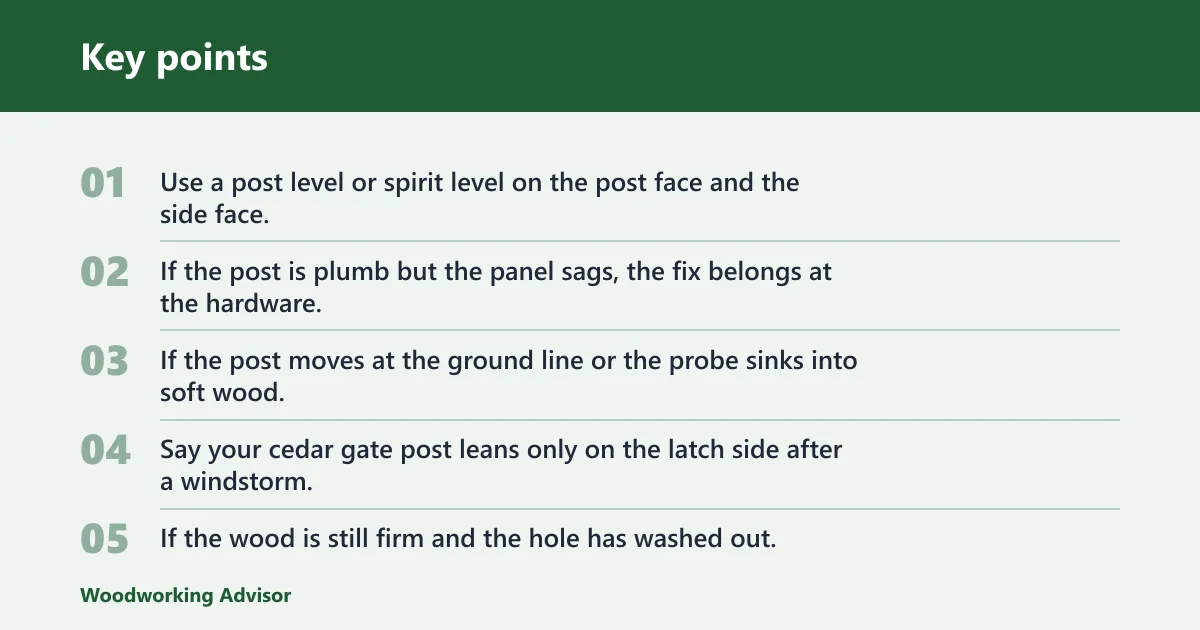
Use a post level or spirit level on the post face and the side face. If the post is plumb but the panel sags, the fix belongs at the hardware. If the post moves at the ground line or the probe sinks into soft wood, the post likely needs reset or replacement.
| Failure mode | Visible symptoms | Probe test result | Likely cause | Best fix | Repair-or-replace threshold |
|---|---|---|---|---|---|
| Ground-line rot | Dark, soft base; post wiggles near soil | Screwdriver sinks easily at the bottom | Wet soil held against cedar at the ground line | Replace with a pressure-treated ground-contact post | Replace if rot reaches more than one-third of the post |
| Soil erosion | Exposed footing; washout around post base | Post is sound but no longer supported | Soil loss after rain or runoff | Reset the post and rebuild the base | Repair if the post is straight and solid |
| Freeze-thaw movement | Seasonal lean; footing shifts after cold snaps | Post moves but wood is firm | Expanding and contracting soil loosens the base | Reset, drain, and compact the footing area | Repair if the post remains sound and uncracked |
| Post rotation | Fence face twists; rails no longer line up | Post turns in the hole without much vertical loss | Loose backfill or failed footing bond | Re-square and brace, then refill or reset | Repair if the post is not split or rotted |
| Panel or gate load | Post leans toward gate or heavy panel | Post is firm, but hardware pulls hard | Hardware stress, sagging hinges, or overwide span | Realign hardware and add support | Repair if the post is structurally sound |
| Wind or storm damage | Sudden lean after wind; loose rails or fasteners | May show mixed movement and loosened base | Storm force combined with soil movement | Reset or replace the damaged post, then reattach panels | Replace if the post split, cracked, or softened |
Say your cedar gate post leans only on the latch side after a windstorm. If the wood is still firm and the hole has washed out, the fix is a reset and new support, not a full fence replacement.
How do you brace a leaning fence?
Set temporary braces before you dig or add fill so the post stays plumb while you work. Use stakes or braces to hold the post upright, then check alignment with a level before you secure anything.
- Place 2-inch by 4-inch by 8-foot braces against the post.
- Stake the brace to the ground at an angle so it cannot shift.
- Set the post plumb in both directions with a post level.
- Tighten the brace and recheck the level before backfilling.
Bracing matters most when the post has not yet been reset. If the post can still move, the brace keeps the lean from returning while you rebuild support around it.
How do you fix a leaning cedar fence post?
If the post is solid, reset it in fresh gravel or concrete and check plumb again after each stage. Use gravel when the post is sound and the main problem is drainage or washout; use concrete when the post needs a rigid footing and the hole can support a sound post. If the base is rotted or split, replacement is the safer route. Fast-setting concrete can help in some resets and, per Bob Vila, should be dry in about 40 to 60 minutes.
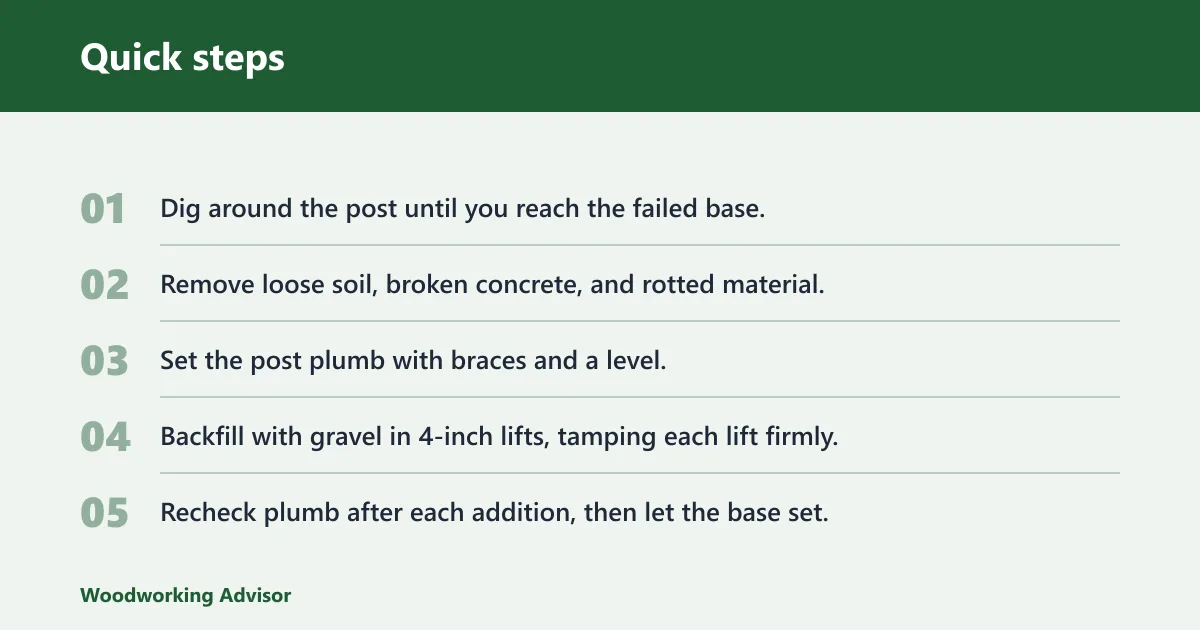
- Dig around the post until you reach the failed base.
- Remove loose soil, broken concrete, and rotted material.
- Set the post plumb with braces and a level.
- Backfill with gravel in 4-inch lifts, tamping each lift firmly, or use fast-setting concrete only if the post is sound.
- Recheck plumb after each addition, then let the base set.
- If the post is damaged beyond repair, install a pressure-treated replacement post rated for ground contact.
Dig the hole deep enough to reach stable ground and, where applicable, below the local frost line, and make the hole wide enough to work and backfill around the post. Bob Vila estimates leaning fence repair at $100 to $300 and says the work can take a few hours to 1 day. That range fits straightforward resets, not full rebuilds or long spans with multiple failed posts.
If that didn’t work, try this next
If the post still moves after reset, the hole likely lacks stable support or the wood is failing deeper than the surface shows. Replace the post rather than adding more fill. If the lean returns after the first rain, drainage is the next problem to fix.
Suppose a cedar post about 6 feet tall feels firm above grade but the probe sinks at the bottom edge. That is a ground-line rot problem, not a simple settlement issue, so a new post is the right call even if the top section looks fine.
How do you reattach rails and panels?
Reattach rails and panels only after the post is plumb and stable. If the lean changed the spacing, realign the hardware, tighten loose fasteners, and check for rail splitting before you close up the repair.
If the gate was part of the problem, restore clearance and latch alignment at the same time. A repaired post will lean again if the hardware keeps forcing it sideways.
- Check the rail ends and panel edges for splits.
- Reset loose screws or nails with exterior fasteners.
- Rehang the panel so weight is centered on the post.
- Test the gate swing and latch clearance.
Bob Vila says the panel can be reattached in roughly 4 to 6 hours when the post repair is straightforward. More damage will push the job longer.
Common mistakes
Replacing cedar repair work with guesswork wastes time and money. The biggest errors are resetting a rotten post, skipping drainage, and checking level only once before the base is firm.
- Resetting a rotten post: If the probe finds soft wood at the base, replace it instead.
- Ignoring drainage: Refill and grade the soil so water moves away from the post.
- Using a level only once: Recheck plumb after backfill, after tamping, and after the base sets.
- Leaving storm or gate load in place: Fix the force that caused the lean or it will return.
How do you maintain cedar fence?
After repair, keep the base dry, inspect the fence after heavy rain, and check for movement at the ground line each season. Cedar fence service life is often planned around 15-25 years, and that range assumes correct installation and routine care.
Reinspect after the first freeze-thaw cycle if you live in a colder climate. If your soil is expansive clay, expect more movement than in free-draining ground; sandy soil usually drains better, but it can also wash out if runoff is not controlled.
- Keep mulch and soil off the post base.
- Seal exposed cedar surfaces with a penetrating exterior stain or sealer as directed by the coating label, rather than a film-forming coating unless the label says otherwise.
- Check drainage after storms.
- Reinspect repaired posts within one season and again after winter.
How much does it cost to fix a leaning fence?
For a single-post repair, Bob Vila puts the cost at $100 to $300. That usually covers a reset, braces, and backfill, not a full fence rebuild or multiple replacement posts.
Cost rises when you find rot, broken concrete, or a gate that needs new hardware. If the fence is past 15 to 20 years with widespread deterioration, replacement often costs less than patching repeated failures one by one.
Frequently asked questions
When should I replace a leaning fence post?
Replace it when rot reaches the ground line, when the probe sinks deeply into the base, or when the post keeps moving after reset. A cracked, split, or bent post also belongs on the replacement list, especially near the ground line.
Can a leaning cedar fence be repaired?
Yes, if the post is still structurally sound and the lean came from soil movement, washout, or hardware load. If the base is rotten or the lean returns after a proper reset, replacement is the better fix. The key is matching the repair to the failure mode.
Sponsored / affiliate links. As an Amazon Associate I earn from qualifying purchases. I may earn additional commission from eligible campaigns.