Custom Wood Pet Ornaments
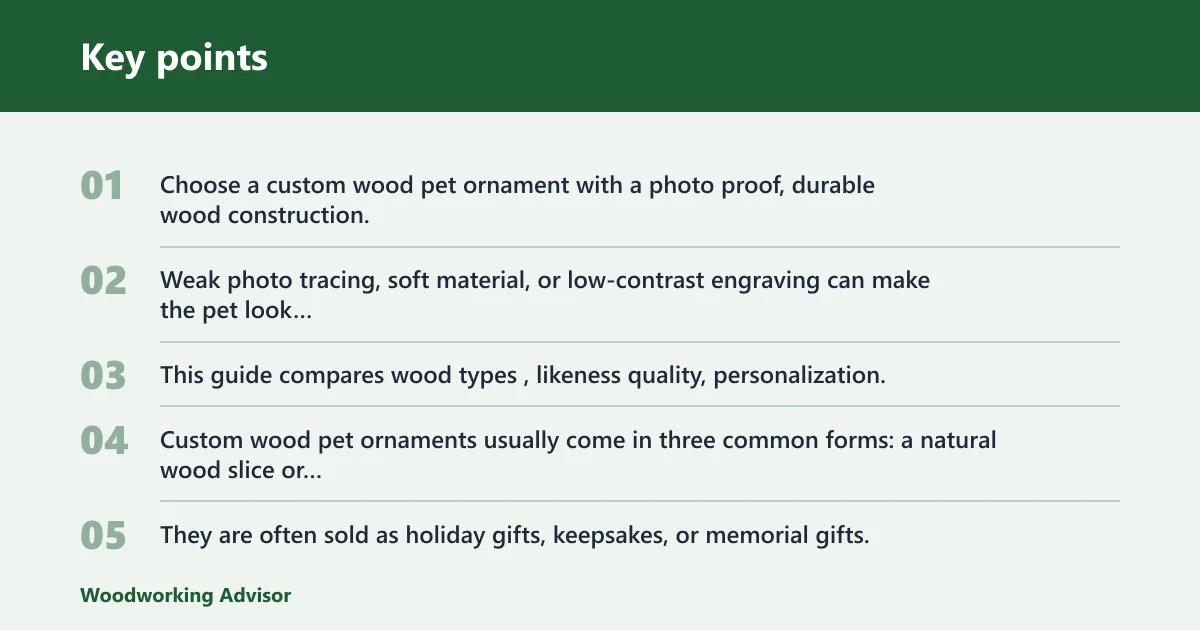
Choose a custom wood pet ornament with a photo proof, durable wood construction, and clear text if you want the best mix of likeness, reuse, and display value. Weak photo tracing, soft material, or low-contrast engraving can make the pet look generic. This guide compares wood types, likeness quality, personalization, and display use so you can order the right ornament.
Photo-based design, material choices, and memorial uses


Common ornament forms and materials
Custom wood pet ornaments usually come in three common forms: a natural wood slice or disc look, a flat MDF ornament, or a cut-from-wood laminate piece. They are often sold as holiday gifts, keepsakes, or memorial gifts, and the same design can usually hang on a tree, sit on a hook, or use a magnet for a fridge or locker.
Material choice changes the look right away. A wood slice reads rustic. MDF gives a flat print-ready face. Real wood laminate keeps visible grain variation and a cleaner cut edge.
How photo-based pet personalization works
Most custom orders start with one reference photo. Sellers commonly ask for email submission after purchase, then send a design proof for approval before production. Lady Wood Goods says customers should send their best photos after purchase, and it says a front view is best for the pet photo. That step matters because the photo becomes the face, pose, and outline reference.
Personalization usually adds the pet name, a date or year, and sometimes ribbon or quote options. Some designs also support wings, paws, or shape changes for memorial use.
Where these ornaments fit as gifts or keepsakes
These ornaments work well when you want a keepsake that can hang on a tree and still survive being stored and reused next season. They also fit memorial gifts when the image is clear enough for a recognizable portrait and the style feels right for remembrance rather than decoration alone.
Use them when you want a small object with a specific pet likeness, not a generic holiday shape. The best results come from simple layouts, readable text, and a photo that shows the face clearly.
Custom pet ornament checklist
Use this checklist before ordering. It ties the material, photo requirements, personalization fields, display method, and failure risk to a practical recommendation so you can match the ornament to the photo you have and the way you plan to use it.
| Material type | Best use case | Photo requirements | Personalization fields | Display option | Common failure risk | Recommendation rule |
|---|---|---|---|---|---|---|
| Wood slice ornament | Rustic holiday decor or memorial keepsake | Front-facing photo with clear face and bright contrast | Name, date, year, simple quote | Ready-to-hang twine, string, or hook | Uneven bark edge or dark photo areas can hide facial detail | Pick this when you want a natural look and can accept shape variation. |
| MDF ornament | Printed custom designs with clean graphics | Sharp image with enough resolution for print | Name, quote, ribbon choice, date or year | Hook or gold string; magnet on some designs | Flat art can look dull if the print or coating is weak | Choose MDF when you want a flat surface and the design depends on print clarity. |
| Real wood laminate | Cutout ornament with visible grain and firm edges | Single clear pet photo for tracing or engraving | Name, date, wings, paw shape, finish color | Hook, hanging string, or magnet on select models | Busy backgrounds can confuse the outline and reduce likeness | Choose laminate when you want precise cutting and a more finished edge. |
Say your dog photo is a front-facing portrait taken near a window, but the background is cluttered. That image can work if the head and ears are clear and the background is removed during art prep. If the same dog is photographed from above, the shape will be harder to trace and the face may flatten out.
A common first-timer mistake is choosing a sleeping cat photo because it looks cute. The result often loses the eye shape, ear angle, and muzzle line that help the ornament look like the pet. A seated or standing photo usually gives the artist more to work with.
Which wood material should you choose?
The best wood material depends on whether you care more about rustic appearance, print clarity, or cut precision. Wood slice suits a natural keepsake look, MDF fits printed designs and lighter-weight pieces, and real wood laminate gives a cleaner cut with visible grain variation and a firmer feel.
Wood slice ornament
A wood slice ornament uses a natural slice or disc look, often with a ready-to-hang twine or string. It usually fits rustic holiday decor and memorial gifts, especially when you want name-and-date personalization on a surface that already looks organic. Carl H Wilson Art describes its personalized pet ornament as a natural wood slice keepsake.
This format works best when you like visible bark or ring texture and do not need a perfectly uniform shape. The tradeoff is that the surface can vary from piece to piece, so text placement and photo framing matter more.
MDF ornament
MDF ornaments use a flat engineered wood base and are commonly used for custom designs because the surface prints cleanly. Custom Designs By Tammy says wood slice ornament text is printed on MDF material, and that matters for buyers who want a smooth face rather than a raw slice look.
MDF is a practical choice for small designs with names, dates, and simple graphics. It is less about showing wood grain and more about giving the artwork a steady, even base.
Real wood laminate
R.J. Machine makes dog and cat ornaments from 1/8-inch real wood laminates. That thickness gives the ornament enough body for cut lines and hanging use while still keeping it light enough for seasonal display. The company also offers ornaments and refrigerator magnets in the same product line.
R.J. Machine’s design set includes Dog Paw, Dog Paw w/Wings, Cat Paw, and Cat Paw w/Wings. It also offers paint options including red, black, blue, green, yellow, purple, and gold. Those options make laminate practical for buyers who want a more finished look without moving into fully hand-painted portrait work.
How do you turn a pet photo into a wood ornament?
You turn a pet photo into a wood ornament by choosing a clear front view, submitting the image after purchase, approving a proof, and then letting the maker cut, print, engrave, or paint the final piece. The closer the photo is to the finished pose, the better the likeness usually holds.
Best photo angles for a recognizable likeness
The same source says a front view is best for the pet photo. That guidance is practical because the face, ear shape, and markings show more clearly when the pet is facing forward. Side profiles can work for silhouette-style ornaments, but they usually reduce facial likeness.
Use a photo with even light, minimal blur, and a visible nose and eyes. Avoid cropped ears, heavy shadows, and backgrounds that compete with the pet’s outline. Dark-coated pets especially need contrast, or the engraving can disappear into the wood tone.
What happens after you submit the photo
Lady Wood Goods asks customers to send their best photos after purchase. That workflow usually means the seller reviews the image, places the pet into the chosen ornament shape, and prepares a proof or layout for approval before production starts. This is the point where text placement, date format, and any ribbon or wings choice get locked in.
If the seller offers design approval, use it. It is the last chance to correct spelling, adjust crop, or switch to a different photo if the first one is too blurry or too dark.
Proof approval before production
Proof approval matters because once cutting begins, small errors become permanent. A wrong date, unreadable quote, or badly cropped ear is harder to fix after engraving or laser cutting. For that reason, a buyer should treat proof review as part of the order, not a formality.
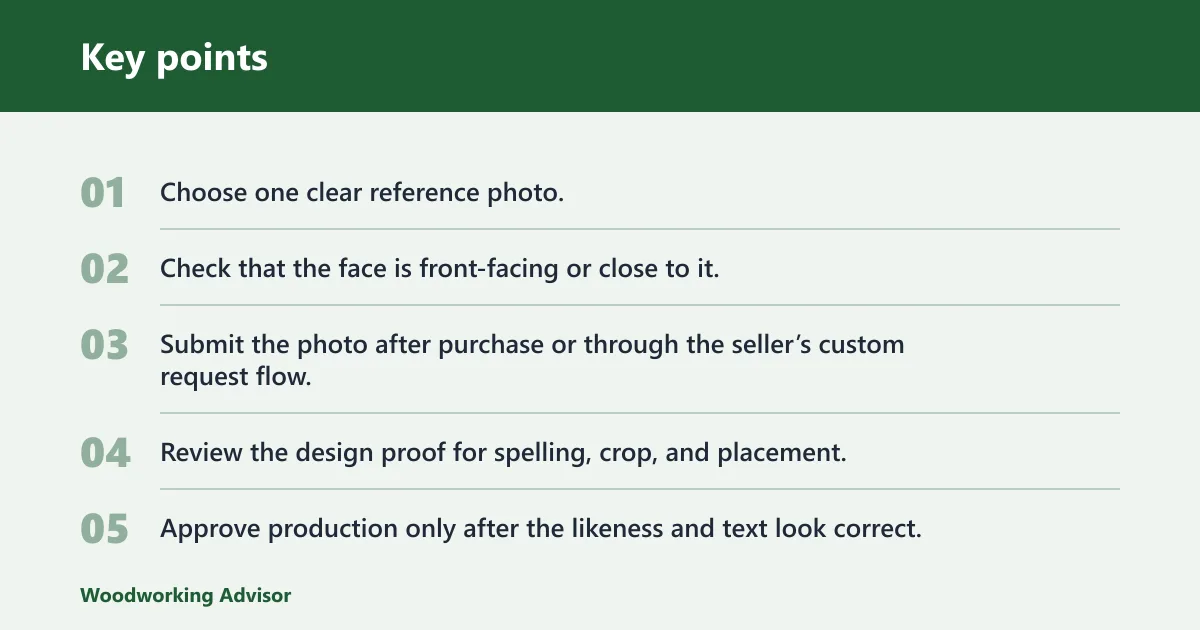
- Choose one clear reference photo.
- Check that the face is front-facing or close to it.
- Submit the photo after purchase or through the seller’s custom request flow.
- Review the design proof for spelling, crop, and placement.
- Approve production only after the likeness and text look correct.
What details can you personalize?
Most custom wood pet ornaments let you personalize the pet name, a date or year, and one or more layout choices such as ribbon, hanger, or quote text. Some sellers also let you choose shape, size, finish, and whether the piece should look painted or left natural.
Pet name, date, and year
Name and date fields are the most common additions because they make the ornament specific without crowding the design. A date of adoption, passing, or a holiday year can shift the piece from decoration to keepsake. Keep the text short if the ornament is small.
Ribbon, hanger, or quote options
Ribbon choice can change the tone of the ornament quickly. A simple gold string reads classic, while a hook supports tree hanging. Quote options are usually best when the ornament has enough open space; otherwise the text can compete with the pet image.
Shape, size, and finish choices
Size varies by shape, but common small ornament formats include 2.8 x 2.8 in pieces and 3.5 in tall designs. That difference affects how much facial detail and text can fit. A larger shape usually gives the artist more room for a name line and cleaner engraving.
Finish also matters. Painted or unpainted options change contrast, and a sealed finish helps protect the piece after cutting. Sealing matters most if you want durability for reuse, storage, or handling after the season.
How are these ornaments made?
Custom wood pet ornaments are made with a mix of cutting, tracing, printing, engraving, and finishing methods. The exact process depends on the material. A wood slice may be printed or engraved, MDF often takes printed art well, and laminate commonly suits precise cutting and etched details.
Scroll saw and CO2 laser cutting
Lady Wood Goods uses a scroll saw in its process. That tool is useful when the maker wants a hand-guided cut with a custom outline. CO2 laser cutting is common for cleaner edges and repeatable shape work, especially on flat wood or laminate pieces.
R.J. Machine’s 1/8-inch real wood laminate format points toward precise cutout work. Laser cutting is a natural fit when the design includes paws, wings, or tight outline changes that need consistent edges.
Hand-drawn art from a photo
Some ornament makers build the design by drawing the pet from the submitted photo before cutting or engraving. That method can preserve the likeness better than a simple silhouette, but it depends heavily on the artist’s skill and the photo quality. Good lighting and a clear front view help the drawing stay accurate.
Engraving, etching, painting, and sealing
Engraving and etching add detail without depending on surface color alone. Painted designs add contrast and can help markings stand out, especially on lighter wood. R.J. Machine lists red, black, blue, green, yellow, purple, and gold as paint options.
After cutting, finish and protection matter. A sealed ornament is less likely to scuff during storage, and that helps if you plan to reuse it each holiday season. Unpainted wood can still work well, but it needs cleaner handling and dry storage.
What do custom wood pet ornaments cost?
Custom wood pet ornaments usually start around entry-level pricing and rise with size, detail, and hand finishing. Custom Designs By Tammy lists custom ornament pricing starting at $12, while one personalized pet ornament from Carl H Wilson Art is $34.97. A premium handcrafted piece can reach $290.84 when the art time, finish work, or customization level is much higher.
Entry-level pricing versus midrange pricing
At the lower end, expect a simpler cutout or printed design with fewer choices. An entry price around $13 usually fits a basic layout, a single photo input, and limited finish options. Midrange pricing around $22.49 often buys more design flexibility, better finish choices, or a more polished shape.
That gap usually reflects time, not just material. More proof work, more layers of finish, and more detailed cropping all add labor.
The same source says each ornament takes a full 8 hours to create and finish. That kind of labor explains why handcrafted prices can climb far above entry-level options. A fully hand-finished portrait, multiple color passes, or a more complex shape takes more time than a simple laser-cut name ornament.
Complexity matters too. A larger form, a detailed pet portrait, or a design with wings, paws, and multiple text lines usually raises cost because it adds setup time and finishing work.
How size and complexity change cost
Small ornaments with a simple name line cost less because they use less material and less art time. Larger shapes, thick wood, or a custom cut from a busy photo push the price up. If a seller offers several variants, ask whether the quoted price includes the proof, finish, and attachment hardware.
How should you display and store one?
Display choice should match the material and the season. A hanging string or hook works for a tree, a magnet suits a refrigerator or locker, and a sealed piece stores better between holidays. If the ornament is meant as a memorial gift, a stable display can matter more than hanging on a tree.
Hanging string, hook, and gold string options
Ready-to-hang twine or string is common on wood slice ornaments. Hooks are useful when you want a faster tree setup and a more secure hold. Gold string often fits a more polished look, especially on painted or laser-cut pieces.
Magnet use for refrigerator or locker display
R.J. Machine offers ornaments and refrigerator magnets in the same product line. That matters because not every buyer wants a tree ornament. A magnet is a better choice when the piece should stay visible year-round on a fridge, office locker, or metal board.
Storage and reuse after the season
Store the ornament in a dry box or padded sleeve after the season ends. A sealed finish helps prevent edge wear, and a flat MDF piece is usually easier to stack than a slice with uneven bark edges. Reuse depends on handling, finish, and the quality of the attachment hardware.
Frequently asked questions
What is a custom wood pet ornament?
A custom wood pet ornament is a small wood keepsake made from a pet photo, name, or both. It can hang on a tree, sit on a hook, or use a magnet. Styles vary by shape, finish, size, and how much likeness detail the maker adds.
How do I make a personalized wood dog ornament from a photo?
Start with a clear front-facing photo, then send it after purchase if the seller uses that workflow. Ask for a proof before production and check the name, date, and crop carefully. A good photo with strong contrast usually gives a better likeness than a dark or angled shot.
What wood works best for custom pet ornaments?
The best wood depends on the result you want. Wood slice gives a rustic keepsake look, MDF works well for printed graphics, and 1/8-inch real wood laminate supports precise cutouts with visible grain variation. Finish quality matters as much as the base material.
Should I choose a wood slice, MDF, or laminated wood ornament?
Choose wood slice for a natural, rustic feel, MDF for a flat printable surface, and laminated wood for cleaner edges and a more controlled cut. If your photo has limited contrast, MDF or a simplified silhouette may work better than a detailed engraved portrait.
How much do custom wood pet ornaments usually cost?
Pricing varies by seller and design complexity. Examples in the market include custom ornament pricing starting at $12, a personalized pet ornament at $34.97, and premium handcrafted work around $290.84. More labor, finish detail, and proofing usually push the price higher.
Can custom pet ornaments be used as memorial gifts?
Yes, if the design style fits the purpose. A wood slice or engraved laminate piece can work well for memorial use when the photo is clear and the text is restrained. The best memorial designs keep the likeness readable and the display simple, not crowded.
Sponsored / affiliate links. As an Amazon Associate I earn from qualifying purchases. I may earn additional commission from eligible campaigns.