Do Wood Fireplaces Dry Out the Air?
A wood fireplace does not directly dry the air, but its heat, chimney draft, and winter ventilation can make a room feel drier than it is. If you ignore that effect, dry skin, static, cracking woodwork, and higher heating bills from too much outside air can follow. This guide explains why that happens, how to tell whether the air is actually dry, and what to do about it.
Heat and draft cause the dryness, not the fire itself
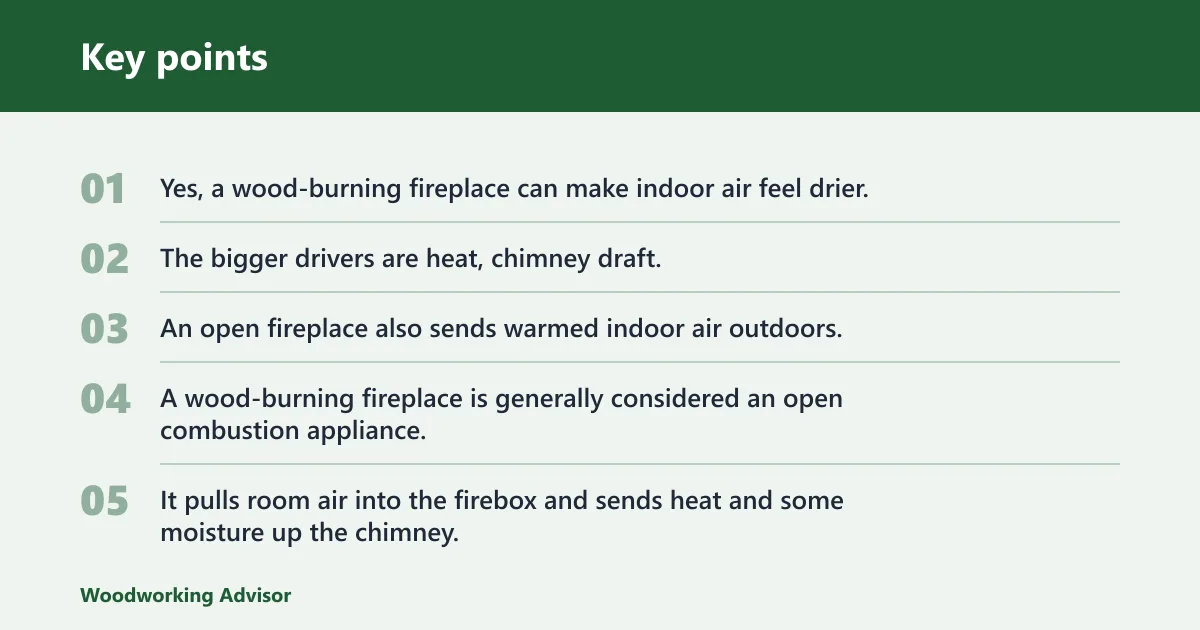


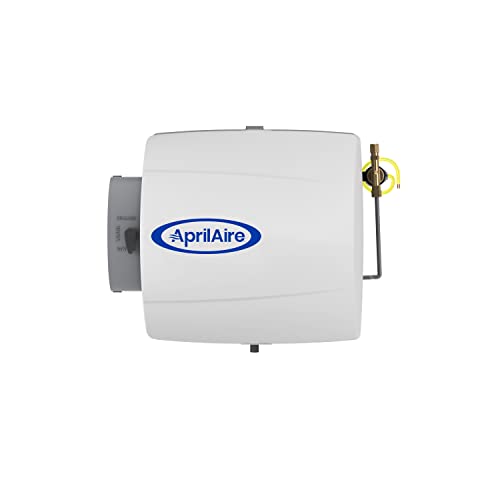
Yes, a wood-burning fireplace can make indoor air feel drier, but it is not acting like a dehumidifier. The bigger drivers are heat, chimney draft, and winter air that already starts with low moisture. An open fireplace also sends warmed indoor air outdoors, which can lower indoor relative humidity.
Open fireplaces and wood stoves are not the same
A wood-burning fireplace is generally considered an open combustion appliance. It pulls room air into the firebox and sends heat and some moisture up the chimney. A wood stove or log burner is usually more efficient than an open fireplace, so it tends to waste less heat and may reduce that dry, drafty feeling.
That distinction matters. Many advice pages group all wood heat together, but an open fireplace, a closed wood stove, and a sealed combustion unit do not affect indoor air in the same way.
Why the room still feels dry
Relative humidity changes when air warms up. The amount of water in the room may stay the same, but warmer air can hold more moisture, so the percentage reading drops. That is why a room can feel parched after the fire is lit even if the appliance is not removing water directly.
Indoor air quality matters here too. Dryness, smoke odor, particulates, and combustion gases are separate issues. They can show up at the same time, but they need different fixes.
Why heated winter air feels drier
Winter air often has low moisture to begin with, and heating it makes the relative humidity reading fall further. That is why the house can feel dry on a cold day even before the fireplace is used. The fireplace may add to the effect, but it is often not the only reason.
Relative humidity and temperature
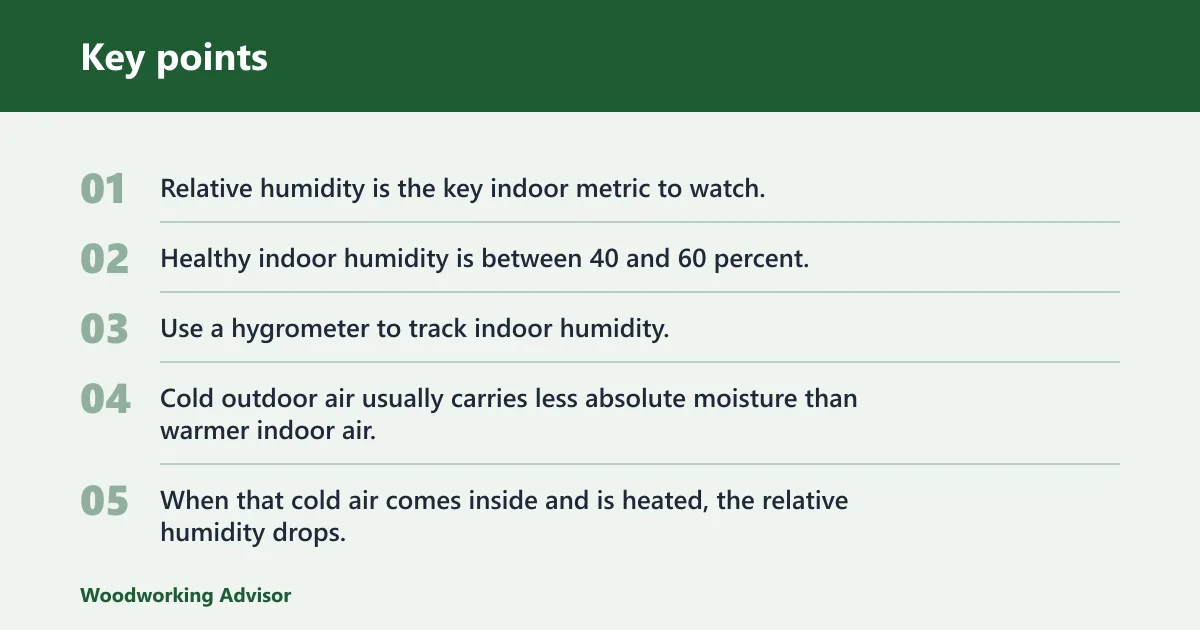
Relative humidity is the key indoor metric to watch. Healthy indoor humidity is between 40 and 60 percent. Use a hygrometer to track indoor humidity, because your skin and nose are less reliable than a number on the wall.
Why winter air starts with less moisture
Cold outdoor air usually carries less absolute moisture than warmer indoor air. When that cold air comes inside and is heated, the relative humidity drops. If the home leaks a lot of outside air, the room may never hold moisture for long.
Why indoor heating changes the reading
Heating does not add water by itself. It changes the reading. The same room can move from comfortable to dry simply because the air temperature rises while the moisture content stays flat. That is why a hygrometer is more useful than guesswork.
Say your living room sits near 25 percent RH on a cold night while the fireplace runs for two hours. The fire may not be the only cause. If the room is drafty and the furnace fan keeps pulling in cold outdoor air, the dryness will usually be worse than in a tighter room of the same size.
Why your fireplace room feels dry
There are four common reasons a fireplace room feels dry: low winter humidity, excessive ventilation, an oversized fire, and a leaky envelope. A hygrometer helps you sort them out. If the number is low before the fire starts, the fireplace is probably adding to an existing problem rather than creating it alone.
| Symptom | Likely cause | How to test it | Fix |
|---|---|---|---|
| Dry skin, static, and a hygrometer below 30 percent | Low winter humidity | Check RH in the room before lighting the fire and again after the fire has been running | Add moisture with a whole-room humidifier and keep indoor RH near 40 to 60 percent |
| The room feels dry only when the fireplace is burning and windows are cracked open | Excessive ventilation | Note whether the feeling improves when outside air leaks are reduced or when the fan is off | Reduce unnecessary air exchange while keeping the appliance venting safely |
| Fast burn, hot firebox, strong draft, and dry air near the seating area | Oversized fire | Watch whether the fire is larger than the room needs or whether you are overfilling the stove or fireplace | Use a smaller, controlled load; avoid overfilling the stove or fireplace |
| Cold drafts near windows, baseboards, or exterior walls | Leaky envelope | Feel for drafts, then compare RH on windy versus calm days | Seal gaps around windows, doors, and other leaks that let winter air in |
| Dry throat, eye irritation, smoke smell, and a stuffy room | Smoke-related discomfort | Check for visible smoke spillage, weak draft, or a chimney that is not pulling well | Inspect draft, fuel size, and venting; improve ventilation for safety |
Simple decision rule: if the hygrometer reads below 40 percent, start with humidification and check for drafts. If it is below 30 percent, the air is dry enough that a humidifier is often needed. If the number is within 40 to 60 percent and the room still feels dry, look harder at smoke, drafts, or ventilation losses.
A common winter mistake is to assume the living-room fireplace is drying the air before checking whether the house is already losing moisture through drafty windows or an overactive HVAC system. Suppose a 180-square-foot den with a wood stove reads 28 percent RH while the outdoor temperature is well below freezing. Adding a humidifier may help, but if the exterior door sweeps are worn and the chimney draft is strong, the room can stay uncomfortable until the air leakage is addressed.
How to tell if dryness is the real problem
A hygrometer can tell you whether the house is actually dry or whether you are dealing with smoke irritation, drafts, or too much ventilation. Read it after the room has been heated for a while, then compare the number with the 40 to 60 percent comfort range. That gives you a real starting point.
Use a hygrometer
Place the hygrometer in the room where you sit, not directly beside the fireplace or stove. Heat rising from the appliance can skew the reading. A nearby wall, shelf, or side table usually gives a more useful number than the hearth itself.
Read the number against the comfort range
If the room is below 40 percent, dryness is likely part of the complaint. If it drops below 30 percent, dry air is likely enough to justify adding moisture. If the room is already in range but still feels unpleasant, the problem may be smoke, soot, or drafts rather than low humidity.
Separate dryness from smoke irritation
Smoke can irritate eyes and airways even when humidity is acceptable. Particulate matter and carbon monoxide are also indoor air quality concerns with wood burning. A dry feeling in the nose is not the same as actual low humidity, so do not treat every symptom as a moisture problem.
How to add moisture back
The practical fixes are simple. A whole-room humidifier is the cleanest way to add moisture back to a room or house. The National Institutes of Health recommends evaporative or steam humidifiers, and a hygrometer helps you avoid overshooting the target range.
Whole-room humidifier
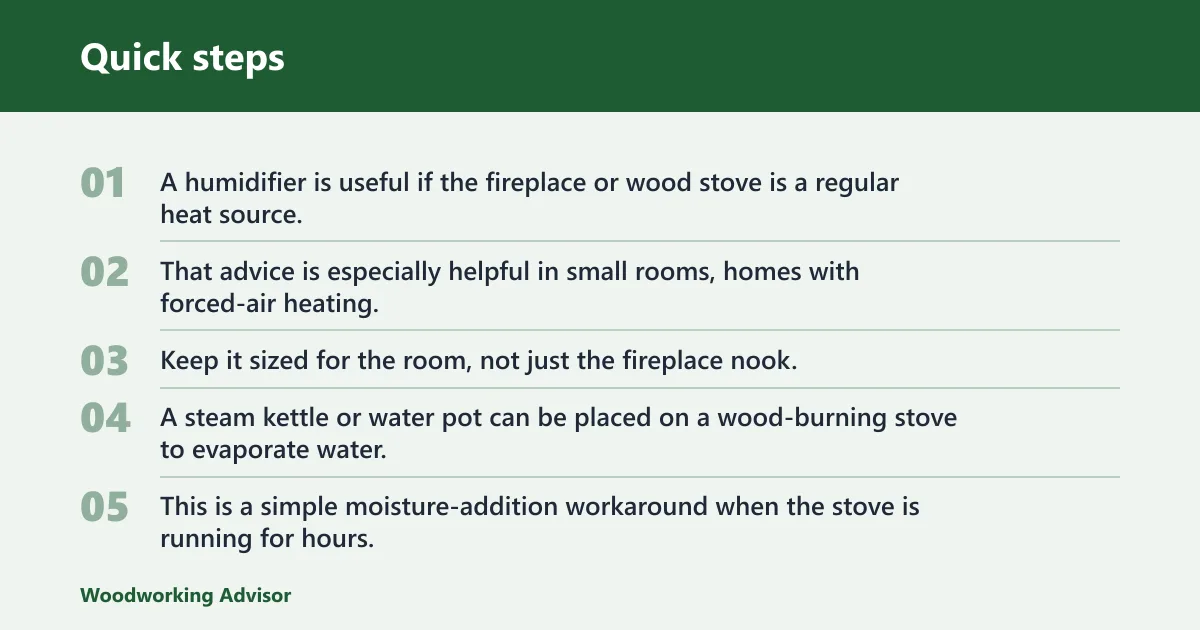
A humidifier is useful if the fireplace or wood stove is a regular heat source. That advice is especially helpful in small rooms, homes with forced-air heating, or houses that sit below 40 percent RH for long stretches. Keep it sized for the room, not just the fireplace nook.
Steam kettle or water pot on a wood stove
A steam kettle or water pot can be placed on a wood-burning stove to evaporate water. This is a simple moisture-addition workaround when the stove is running for hours. It is usually more suitable for a stove top than for an open fireplace.
What not to do with open flames
Do not place any improvised water container where it can tip, boil dry, or interfere with safe stove operation. Keep water additions away from direct flame paths and follow the appliance maker’s instructions. Moisture helps comfort, but it should never reduce fire safety or block proper draft.
Wood burning can also increase indoor CO2 and particulate matter. That is one reason ventilation matters for safety even when the room feels dry. The goal is balanced air, not a sealed-up room with no combustion air.
Is a wood stove drier than an open fireplace?
A wood stove is often less drying than an open fireplace because it is more efficient and loses less heat up the chimney. A closed stove also tends to send less room air straight outdoors, so it may feel less harsh in the same winter conditions.
Why stoves are usually more efficient
An open fireplace pulls a lot of indoor air into the fire and sends it up the flue. A wood stove burns in a more contained firebox, so more of the heat stays in the room. That often means less of the “my house feels cold and dry” effect associated with open hearths.
When a stove can feel less drying
A stove may feel less drying when it is sized correctly for the room and run at a steady burn. It can still make the air feel dry if the fire is oversized, the room is small, or the house leaks a lot of outdoor air. Efficiency helps, but it does not cure winter dryness by itself.
How flue draft affects indoor moisture loss
Strong draft can carry warm indoor air out through the chimney faster than expected. That air carries moisture with it. If the draft is excessive, or if the appliance is overfired, the room may feel drier than the hygrometer alone would suggest.
Indoor air quality and safety
Dryness is only part of the story. Wood burning also affects indoor air quality through smoke, particulates, and carbon monoxide concerns. That is why ventilation matters. You need enough air exchange for safe operation, but not so much leakage that the room turns cold and dry.
Smoke and particulates
Smoke spillage, smoldering fuel, and overfilling the stove or fireplace can raise particulate levels indoors. Venta advises avoiding overfilling the stove or fireplace to reduce particulates. If the room smells smoky, the fix is not more humidification alone.
Carbon monoxide risk
Carbon monoxide is an invisible combustion hazard, so dryness is not the only thing you should track. A fireplace or stove that drafts poorly, spills smoke, or has a blocked flue needs attention. Moist air does not make a combustion problem safer.
Why ventilation still matters
Ventilation and outside air infiltration are major drivers of winter dryness, but they also affect safety. The aim is controlled ventilation, not random leakage. Sealed combustion systems can reduce indoor dryness by limiting the amount of indoor air they use for combustion and by reducing draft losses into the room.
Frequently asked questions
Do wood fireplaces dry out the air?
A wood fireplace can make a room feel drier, but it does not remove moisture from the air the way a dehumidifier does. The main causes are heated winter air, chimney venting, and outside air infiltration. If indoor RH drops below 40 percent, dryness is likely part of the problem.
Do wood stoves dry out the air?
Wood stoves can also make indoor air feel drier, but they are usually less drying than open fireplaces because they are more efficient. They lose less heat up the chimney and often waste less indoor air. A hygrometer is the easiest way to check whether the room is actually dry.
What humidity level is best when using a fireplace?
A common indoor target is 40 to 60 percent relative humidity. That range is often used for comfort and general indoor conditions. If readings fall below 40 percent, add moisture and check for leaks. If they fall below 30 percent, humidification is often needed.
Can a hygrometer tell me if my fireplace is drying the house?
Yes. A hygrometer can show whether indoor humidity drops after the fireplace or stove starts running. Compare the reading before and after the fire, and compare it with the 40 to 60 percent range. If the room still feels dry at normal RH, smoke or drafts may be the real issue.
How can I add moisture to the air while burning wood?
A whole-room humidifier is the most direct fix, and the National Institutes of Health recommends evaporative or steam humidifiers. On a wood-burning stove, a steam kettle or water pot can also add moisture. Keep the appliance safe, and use a hygrometer so you do not over-humidify the room.
Do sealed combustion systems reduce indoor dryness?
Often, yes. Sealed combustion systems reduce the amount of indoor air used for combustion and can lower draft losses into the room. That does not eliminate winter dryness, but it can reduce the way a fire pulls conditioned air from the house. They still need proper venting and safe installation.
Sponsored / affiliate links. As an Amazon Associate I earn from qualifying purchases. I may earn additional commission from eligible campaigns.