What Paint Should I Use on MDF Wood? Oil vs. Water-Based Enamel
For most MDF furniture and cabinets, a self-priming acrylic-urethane enamel gives the smoothest results without a separate primer step. If you want maximum durability instead and don’t mind extra dry time, use a dedicated primer-sealer followed by an oil-based enamel – see our guide on how to seal MDF for the sealer step. The paint type actually matters less than one detail most guides skip entirely: MDF’s raw cut edges are far more porous than its factory-smooth faces, and if you don’t seal them first, any paint you choose gets absorbed unevenly and leaves a rough, “fuzzy” texture as the exposed fibers swell.
Which Paint Type Actually Works Best on MDF
Best Self-Priming Enamel for MDF
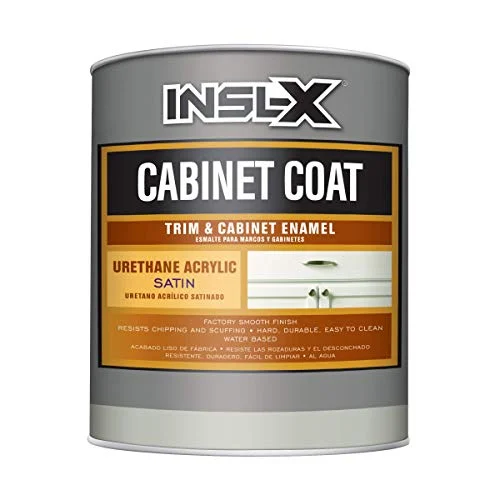 |
INSL-X Cabinet Coat Urethane Acrylic Enamel – $26.99 A self-priming enamel built for exactly the kind of hard-to-coat surface MDF faces present – no separate primer coat needed on sealed faces.
|
Three real options exist for painting MDF, and each has a genuine tradeoff worth knowing before you buy a can.
| Paint Type | Dry / Recoat Time | Odor / VOC | Finish | Cleanup |
|---|---|---|---|---|
| Water-based acrylic/latex enamel | Recoat 1-2 hrs; full cure ~2-3 weeks | Low | Good, may need 2-3 coats for full hide | Soap and water |
| Oil-based (alkyd) enamel | Recoat ~24 hrs; full cure up to 30 days | Strong | Smoothest, hardest “factory” look | Mineral spirits |
| Self-priming urethane-acrylic enamel | Recoat 2-4 hrs; full cure ~1-2 weeks | Low-moderate | Very smooth, adheres without a separate primer coat | Soap and water |
Water-based acrylic or latex enamel is the easiest to live with day-to-day: low odor, fast recoat times, and cleanup with just soap and water. Its tradeoff is that it doesn’t level or harden quite as well as an oil-based finish, so thin coats and light sanding between them matter more.
Oil-based (alkyd) enamel is the choice serious cabinet-makers still reach for when the finish has to look factory-smooth, because it self-levels better and cures into a harder shell. The cost is a much longer dry and cure schedule, a stronger smell while it’s off-gassing, and mineral-spirits cleanup.
A self-priming urethane-acrylic enamel, sometimes labeled a “cabinet and trim” paint, is the middle path most DIYers land on for MDF specifically. These formulas are built to grip hard, non-porous surfaces without a separate primer coat on the painted faces, which is useful on MDF’s dense factory faces – though the porous cut edges below still need their own sealing step first, which is covered next.
Why MDF’s Cut Edges Need Extra Attention
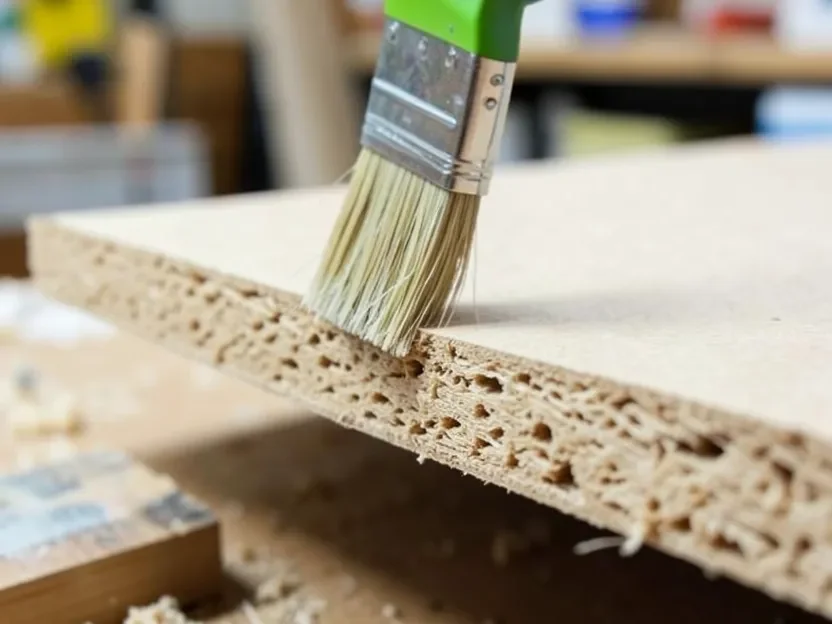
MDF’s flat faces are dense, resin-saturated, and fairly uniform, which is exactly why they take paint so predictably. The cut edges are a different material in practice: sawing through the board exposes loose, compressed wood fiber that never got the same resin saturation as the surface layers. That exposed fiber is dramatically more absorbent, and it’s the single biggest reason MDF paint jobs go wrong.
Paint or primer applied straight onto a raw edge soaks in unevenly, swelling the fibers as it does. The result is a rough, slightly “fuzzy” texture that telegraphs straight through the topcoat, no matter how good the paint itself is. Sanding it smooth after the fact only knocks down the highest fibers – it doesn’t fix the absorption problem underneath.
The fix is to seal the edge before any primer or paint touches it. A dedicated MDF edge sealer or primer-sealer is the most reliable option, since it’s formulated specifically to saturate and bind that loose fiber in one or two coats. Two workable DIY alternatives exist if you’d rather not buy a specialty product: a thin coat of wood glue diluted roughly 1:1 with water, or a dewaxed shellac-based sanding sealer, both brushed onto the raw edge, left to dry fully, then lightly sanded flush before you prime or paint.
Prepping the Surface Before You Paint
Wipe the whole piece down with a damp cloth to pull off dust and shop debris, then let it dry completely. If the faces came factory-primed, a light pass with 220-grit sandpaper is enough to knock down the sheen so paint has something to grip. Raw edges need coarser attention first – 150-grit to knock down loose fiber before you seal them, then 220-grit once the sealer has dried.
Vacuum the sanding dust instead of just wiping it, then go over everything once more with a tack cloth right before you open the paint can. MDF dust is fine and clings to surfaces more than regular sawdust, and any left behind will show up as texture under the first coat.
Do You Still Need a Separate Primer?
If you’re using a self-priming cabinet enamel on faces that are already smooth and sealed at the edges, you can usually go straight to the topcoat. A separate primer coat still earns its place in a few situations: you’re painting a light color over raw or dark MDF and need better hide, you’re using a straight water-based latex rather than a self-priming formula, or any edge hasn’t been sealed yet (sealer counts as the primer for that edge, but the faces still need coverage).
When you do prime, the same oil-vs-water tradeoff from the paint choice applies. Oil-based (alkyd) primers bond aggressively to porous MDF and cure into a harder moisture barrier, but they need roughly 24 hours before recoating. Water-based primers dry to the touch in under an hour and recoat within 2-4 hours, at some cost to how completely they seal the surface in a single coat.
Step-by-Step: Painting MDF the Right Way
- Sand raw edges (150-grit) and factory faces (220-grit), then vacuum and tack-cloth the dust.
- Seal every raw cut edge with an MDF edge sealer, diluted wood glue, or shellac sanding sealer. Let it dry fully, then sand flush with 220-grit.
- Prime if you’re not using a self-priming enamel, or if you’re going from a dark/raw surface to a light color.
- For the complete process including hardware and clear-coat options, see our step-by-step guide to painting MDF doors. Apply the first topcoat in a thin, even layer – a thick first coat is the most common cause of drips and slow curing on MDF.
- Once dry to the touch, scuff-sand lightly with 320-grit and wipe with a tack cloth before the next coat.
- Apply a second (and if needed, third) thin coat, then let the piece reach full cure time before hardware, stacking, or heavy use.
Common Mistakes That Ruin an MDF Paint Job
- Skipping edge sealing. This is the single most common cause of a rough, fuzzy-looking MDF paint job – see the edge section above.
- Applying paint too thick. A heavy first coat traps solvent underneath, slows curing, and is more likely to sag on a vertical cabinet face.
- Skipping primer with a non-self-priming paint. Straight latex wall paint applied directly to raw MDF absorbs unevenly, the same problem as unsealed edges.
- Handling before full cure. A coat that’s dry to the touch in an hour can still take two to four weeks to fully harden; hardware installed early can leave permanent dents or fingerprints.
- Painting in damp conditions. MDF’s exposed fiber will pull in ambient moisture just as readily as it pulls in wet paint, which can cause swelling before you’ve even opened the can.
Frequently Asked Questions
What type of paint is best for MDF?
A self-priming urethane-acrylic enamel gives the best balance of adhesion and easy cleanup for most MDF furniture and cabinets. If you want the smoothest possible finish and don’t mind a longer cure time, a primer-sealer followed by an oil-based enamel is the stronger choice. Either way, seal the raw cut edges before painting – that step matters more than which paint you pick – if you’re still deciding whether MDF is worth painting at all, see does MDF paint well?
Can I use spray paint on MDF?
Yes, as long as the raw edges are sealed and the surface is primed (or you’re using a self-priming spray enamel). Spray formulas go on thinner per pass than a brush, so plan on several light coats rather than one heavy one to avoid drips and uneven absorption.
Do I need to prime MDF before painting?
Not always on the faces if you’re using a self-priming cabinet enamel (see our full breakdown of whether you should prime MDF before painting), but the cut edges are a separate question – those should always get a dedicated sealer first regardless of which topcoat paint you choose, since they’re far more absorbent than the factory faces.
Is oil-based or water-based paint better for MDF?
Oil-based enamel levels smoother and cures into a harder finish, which is why it’s still favored for cabinet-quality results, but it takes far longer to dry and cure and has a much stronger odor. Water-based enamel dries faster, has low odor, and cleans up with soap and water, at some cost to ultimate hardness and leveling.
Why does paint look fuzzy or rough on MDF?
That texture almost always comes from an unsealed raw edge. The exposed fiber there absorbs paint unevenly and swells as it does, and no amount of sanding after the fact fully corrects it. Sealing the edge before priming or painting prevents the problem instead of trying to fix it afterward.
Bottom Line
Pick a self-priming urethane-acrylic enamel if you want an easy, low-odor process with a genuinely durable result, or step up to a primer-sealer plus oil-based enamel if you want the smoothest possible cabinet-grade finish and can accommodate the longer cure time. Whichever you choose, seal the raw cut edges first – it’s the one step that determines whether the finish looks professional or fuzzy, regardless of the paint can you pick up.
Sponsored / affiliate links. As an Amazon Associate I earn from qualifying purchases. I may earn additional commission from eligible campaigns.