Drying Firewood in Winter: Does It Dry in Cold Weather?
Yes, firewood can dry in winter, but cold, damp air usually slows the process; expect modest moisture loss, not full seasoning, and burn only wood at about 20% moisture content or less. EPA Burn Wise and university extension guidance both warn that wetter wood burns less efficiently and creates more smoke and creosote, increasing chimney maintenance and safety concerns. This guide explains how much winter drying is realistic, what moisture level is safe now, and when to leave wood for next season.
Winter drying speed and moisture loss limits


Yes, but slowly. Winter air can still pull moisture from wood, especially in dry, windy weather, yet short days and weaker sunlight reduce drying speed. If the pile is already partly seasoned and stacked well, winter may improve usability. If the wood starts green, winter is usually not enough for burn-safe fuel. Air-drying depends on species, split size, stack exposure, and local weather, so cold-season drying is usually a finishing step rather than a full seasoning period.
What winter can do to moisture content
Dry winter air can still pull moisture from split firewood, but the amount varies widely with species, wind, humidity, and how the pile is stacked. In cold, dry conditions, drying does continue; however, the old rule-of-thumb that wood loses a fixed 2% of moisture per week is too rigid to rely on without local testing, because weather, pile layout, and wood species can change the rate substantially. That is real drying. It is just not the same as full seasoning, especially for dense hardwoods or piles that sit in shade, snow, or still air.
Picture a stack of split oak under open sky in a windy yard. The outer pieces may dry enough to help shoulder-season fires, while the center stays too wet for a stove load. The outer layer improves first. The middle decides whether the pile is ready.
Why cold weather slows drying
Winter drying is slower because sunlight is limited, and short daylight means less surface warming. Cold wood does not dry evenly when air stays damp or still. Freeze and thaw cycles can move some moisture around, but they do not replace open air and sun. Airflow and exposure matter most; a covered, tight, or shaded stack dries much more slowly than one that breathes on all sides.
When winter drying is useful for this season
Winter drying is most useful when the wood is already close to ready, the stack has good airflow, and you need fuel for late winter or shoulder-season fires. It is not a shortcut for green rounds. Treat winter as a finishing period, not a fast seasoning window.
How to know when wood is burn-safe
Burn-safe firewood is usually at 20% moisture content or less. EPA Burn Wise and university extension sources commonly use the 20% threshold because wood above that level tends to smoke more, burn cooler, and promote creosote buildup. The simplest and most effective way to check dryness is a moisture meter, because color and bark alone can mislead you. Test several pieces, and pay attention to the center of the pile, not just the exposed surface. Freshly split faces are the most reliable place to read, because weathered surfaces often look drier than the core.
Moisture targets for stove fuel
Seasoned firewood is generally around 20% moisture or less. Green wood is often 50% or higher, so it may look split and stacked but still be far from ready. A piece that feels lighter can still read too wet inside. Practical seasoning ties to low moisture content rather than appearance alone.
How to read a moisture meter
Use either a pin-type meter or, if you own one, a pinless meter on a smooth, flat split face. Pin-type meters need fresh contact with exposed wood. Pinless meters read below the surface and can be useful on a clean split face, but they are less reliable on rough, narrow, or uneven splits. In both cases, test several pieces, not one sample.
- Pull three split pieces from the center of the pile.
- Check a fresh split face, not the weathered outside.
- Test each piece in more than one spot.
- Record the highest reading from each split.
- If any piece is clearly above 20%, treat the pile as mixed or unfinished.
Why center splits matter more than surface checks
The outside of a stack dries first. The middle tells the truth. Surface checks often make wood look ready when the core still holds too much water. A dry shell around a wet center can still burn poorly and smoke heavily. That is why the center-check method belongs at the heart of any winter decision.
A common first-timer mistake is checking only the top layer of a stack after a cold snap. The top pieces may read lower because wind and sun reached them first, while the center pieces still read well above your target. Always sample from inside the pile.
Winter firewood drying table
This table separates what winter can realistically improve from what should wait. Use it as a burn-now decision guide, not as a promise that every pile will finish seasoning before spring. For mixed loads, use the center-check checklist directly below the table to decide whether to burn now, mix with dry wood, or hold for next season.
| Starting moisture | Stack exposure | Wood species group | Likely winter drying outcome | Recommended action |
|---|---|---|---|---|
| 15% to 20% | Open-sided stack, off ground, top covered only | Softwood or split hardwood | Likely burn-ready or close if the center stays at 20% or less | Burn now |
| 20% to 25% | Open-sided stack with good wind and some sun | Softwood | May drop enough for mild-weather fires, especially in dry weather | Mix with dry wood |
| 20% to 25% | Open-sided stack, shaded or partly snow-covered | Hardwood | Improvement is likely, but not enough for steady solo burning | Mix with dry wood |
| Above 25% | Partly enclosed shed or tight tarp over sides | Any species | Drying is weak, and re-wetting risk stays high | Hold for next season |
| Above 30% | Snow-covered, shaded, or ground-contact pile | Hardwood | Winter drying will be too slow for this season | Hold for next season |
| Any reading with mold, rot, or punky softness | Any exposure | Any species | Unsafe or poor fuel quality | Remove bad pieces; do not treat as good fuel |
3-split center-check checklist
- Check three center splits from the pile, not the outer row.
- Read the fresh split face and record the highest reading on each piece.
- If all three are at 20% or less, the pile is burn now.
- If one or more pieces fall between 20% and 25%, mix them with dry wood.
- If any piece is above 25%, or if the wood is moldy, rotten, or punky, hold it for next season or remove the bad pieces.
How to use the table for mixed piles
Mixed stacks are common. Some pieces may be ready, while others are still green. If the sampled center splits straddle the 20% line, sort the driest pieces for immediate use and keep the wetter pieces in an open stack for next season.
What is the best way to stack firewood for winter drying?
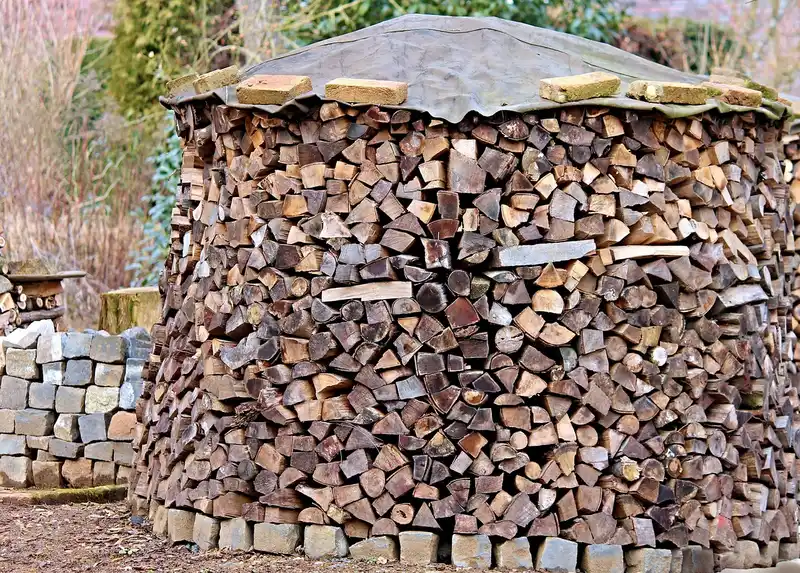
The best winter stack is raised off the ground, open on the sides, and placed where wind and sun can reach it. Airflow matters most. A tight stack in a damp corner may stay wet even if the outer surface looks dry.
Raise the pile off the ground
Use pallets, cinder blocks, or logs to keep wood off bare soil and snow. That reduces moisture wicking from below and helps air move under the pile. Ground contact slows drying and can leave the bottom row wetter than the rest of the stack.
Keep the sides open
Keep the sides open with at least one side exposed. Leaving the sides open lets prevailing winds move through the pile. Closing the sides traps moisture and slows evaporation, especially after snowfall or freezing rain.
Place the stack for sun and wind
Sun exposure still helps in winter, even though daylight is shorter and the sun is weaker. A south-facing or otherwise sunny location is usually better than deep shade. Wind matters just as much, and an exposed site often dries faster than a protected one.
Should you cover firewood in winter?
Yes, but only the top. Cover the top of the pile and leave the sides and bottom open. That keeps snow and rain off the stack without trapping moisture inside. A full wrap or tight side cover can hold damp air against the wood and slow drying.
Why the top gets covered
The top takes the most direct precipitation. A simple cover helps keep rain and snow from soaking the upper layers. The goal is protection without sealing the pile. A roofed top works better than a wrapped bundle.
Why the sides stay open
Sides need airflow to keep drying moving through the stack. If you cover the sides, moisture from the wood cannot escape as easily. That is a common tarp mistake. It protects against weather at the cost of trapping dampness.
Snow, rain, and tarp mistakes
Snow on top of the cover is not a problem if the sides stay open. The problem is a tarp pulled down over the edges or wrapped around the stack like a bag. That setup can lead to mold, slow drying, and wet wood that stays wet.
Does winter drying work better for some wood species than others?
Yes. Softwoods generally dry faster than hardwoods, and split pieces dry faster than rounds. Dense hardwoods hold moisture longer, so winter helps them less than it helps lighter softwoods. Species, split size, and stack exposure all matter.
Hardwoods versus softwoods
Softwoods usually move toward burn-ready moisture faster because they are less dense. Hardwoods often need more time in open air. That difference matters most in winter, when drying conditions are already slower than in warmer months.
Why oak often needs more time
Oak often needs a longer drying period than softwoods, commonly in the range of 12 to 24 months depending on split size, airflow, and weather. A single winter may improve it, but it often does not finish the job. Oak that is only partly seasoned should usually wait unless the meter confirms acceptable moisture in the center.
Why pine can season faster
Pine typically seasons faster than dense hardwoods and may be closer to burn-ready by winter if it was split and stacked early in the year. Even then, test the center. Fast-drying species can still hold wet pockets if the pile is tight or shaded.
What happens if you burn wet wood?
Wet wood burns poorly. It creates more smoke, pops, and sparks than properly dried wood, and it usually gives off less useful heat. It also creates more creosote than dry wood, which raises chimney and stove maintenance concerns.
Smoke and poor heat output
Water inside the wood must boil off before the fuel burns well. That steals heat from the fire and leaves you with a cooler, smokier burn. If the stove needs constant adjustment to stay lit, the fuel is probably too wet.
Creosote risk
More smoke means more creosote risk. Wet fuel sends more unburned material up the flue, where it can condense. That is one reason seasoned wood matters so much for stove safety and draft control.
When wood has gone bad
Moldy, punky, or rotten wood should not be treated as good fuel. If firewood gets wet too much and too often, it can mold or rot. A few damp days are not the issue. Repeated wetting and poor airflow are. Once wood is punky or rotten, it loses fuel quality and can introduce extra mess and smoke rather than dependable heat.
If a pile starts the fall at about the mid-20% moisture range, sits on pallets, and gets a few hours of winter sun with open sides, it may dry enough to mix with drier wood for shoulder-season fires. If the center samples still read above 20%, keep it out of full stove loads.
Frequently asked questions
Does firewood dry in winter?
Yes, firewood can dry in winter, but the process is slower than in warmer, sunnier months. Cold, dry air can still remove moisture, especially from split wood with open airflow. The key question is not whether drying happens. It is whether it happens enough for safe burning.
How fast does firewood dry in cold weather?
Winter drying is usually modest, not rapid. In cold, dry conditions, wood can lose moisture, but shaded, humid, or snow-covered piles dry much more slowly. That is why winter is often best for finishing seasoned wood, not rescuing fresh-cut logs. Exact drying rates vary enough that a moisture meter is a better guide than a blanket percentage claim.
Can you season firewood during winter?
You can season firewood during winter, but you usually cannot finish green wood fast enough for immediate use. If the pile began the season close to 20% moisture and has good airflow, winter may help. If it started much wetter, plan on next season instead.
Should firewood be covered in winter?
Yes, but only the top. Cover the top of the pile to block snow and rain, and leave the sides open so moisture can escape. Do not wrap the whole stack or trap the bottom in plastic. That often slows drying and can encourage mold.
How do you know when firewood is dry enough to burn?
Use a moisture meter and test more than one piece. Firewood burns best when it has less than 20-percent moisture, and the center of the pile matters more than the outside.
Sponsored / affiliate links. As an Amazon Associate I earn from qualifying purchases. I may earn additional commission from eligible campaigns.