Wood Stove Insert vs Open Fireplace
If your chimney is sound and lined for solid fuel, a Wood Stove Insert is the best fit; choose a freestanding stove if the firebox is shallow, damaged, or too small for the insert, or if you need more heat, and keep an Open Fireplace only for appearance. A poor match can mean weak draft, smoke spillage, wasted firewood, and a liner or masonry bill that costs more than the appliance itself. This guide compares the three options, explains which conditions point to each one, and flags the chimney, clearance, and permit checks before you buy.
| Decision factor | Wood Stove Insert | Open Fireplace | Winner |
|---|---|---|---|
| Heating efficiency | EPA Phase 2 certified models can reach 70% or higher, with many inserts listed at 70-85%. | Typical efficiency is about 10-15%. | Wood Stove Insert |
| Heat coverage | Often suited to room or zone heat; many are listed at 25,000-75,000 BTU. | Usually heats only one adjacent room; an open fireplace is often listed at 20,000-30,000 BTU. | Wood Stove Insert |
| Installation path | Fits into an existing fireplace opening and requires a stainless steel chimney liner. | No insert retrofit needed, but a usable fireplace and sound flue are still required. | Open Fireplace |
| Project scope | More parts to inspect and size, including firebox dimensions and liner diameter. | Least change if you only burn occasionally and accept low efficiency. | Open Fireplace |
| Primary-use fit | Better for regular heating and lower wood use. | Better for ambiance and occasional fires. | Wood Stove Insert |
Heat output drives your decision
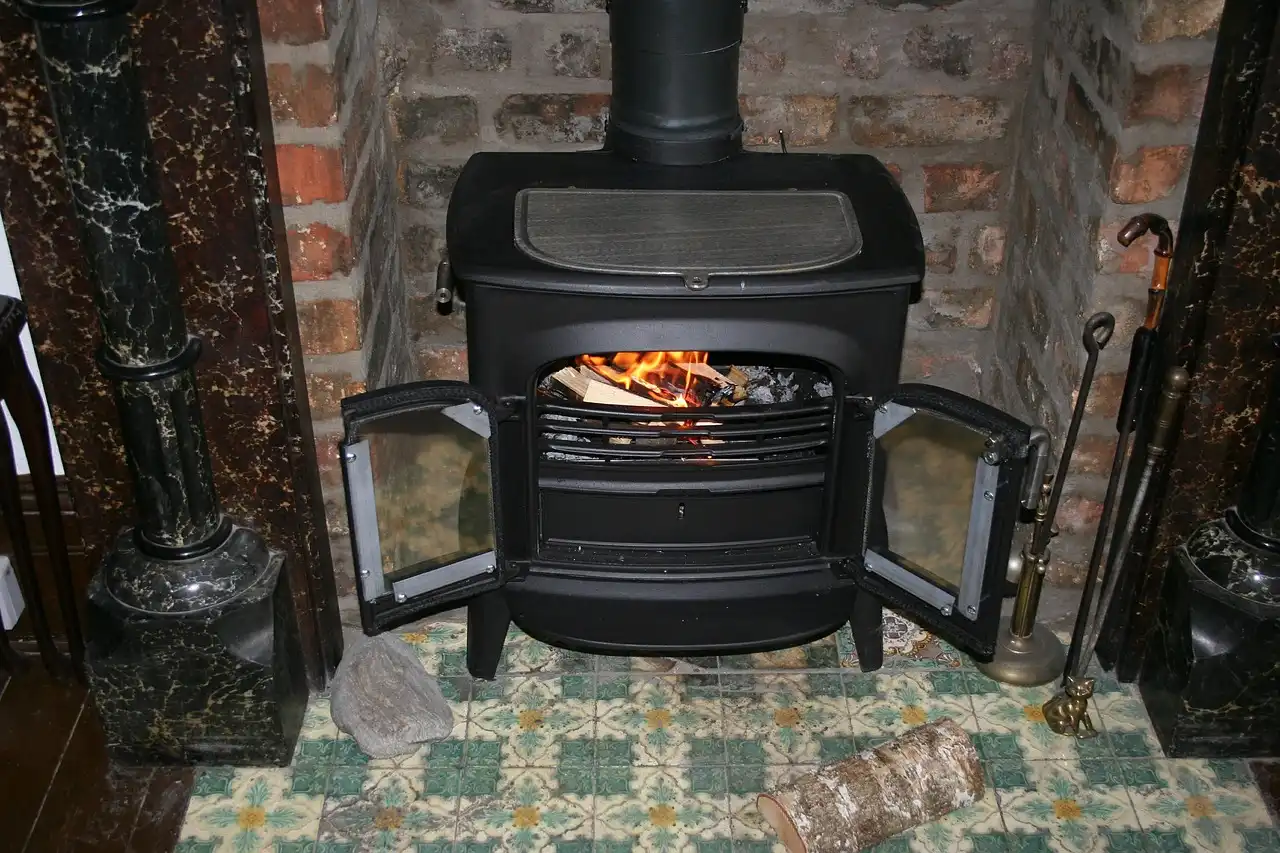
The main difference is how much heat stays in the house. A Wood Stove Insert seals the firebox, routes exhaust through a stainless steel chimney liner, and turns an old masonry opening into a much more efficient heater. An Open Fireplace gives you flame and atmosphere, but most of the combustion energy goes up the flue.
That gap changes the whole purchase path. Inserts need firebox measurements, liner sizing, and a chimney check; open fireplaces need far less hardware, but they are still a poor choice if the goal is dependable space heat.
| Existing masonry fireplace | Chimney condition | Desired heat level | Floor space | Budget range | Recommended option |
|---|---|---|---|---|---|
| Yes, with sound firebox and enough depth | Good; can accept a liner | Room or zone heat | Limited; keep the fireplace opening | Mid-range retrofit | Wood Stove Insert |
| Yes, but shallow, cracked, or oversized opening | Questionable until inspected | Heat is important, not decor | Can accept a hearth pad and clearances | Higher project budget | Freestanding Wood Stove |
| No masonry fireplace | Needs a new vent path | Regular heating | Space available for clearances | Plan for a full install | Freestanding Wood Stove |
| Yes, but only for occasional fires | Serviceable for light use | Ambiance first | No change desired | Lowest spend | Open Fireplace |
Heat output is the first filter
A Wood Stove Insert usually gives you far more usable heat than an Open Fireplace because the appliance is sealed and the exhaust is controlled. Open fireplaces are often listed at 20,000-30,000 BTU and tend to warm one adjacent room, while inserts are commonly listed at 25,000-75,000 BTU and can support zone heating when sized correctly.
Draft and smoke control change the experience
An open fireplace draws conditioned room air up the flue, which can leave the room cooler even while the fire is burning. A lined insert reduces that air loss and gives the chimney a more controlled exhaust path, which is why draft quality matters so much before you buy.
Installation effort is not the same
The insert path depends on firebox dimensions, liner fit, and chimney condition. The fireplace path is simpler only if you are staying with atmosphere rather than heat; if you want real output, the installed system becomes more involved no matter which appliance you pick.
What an open masonry fireplace can and cannot do
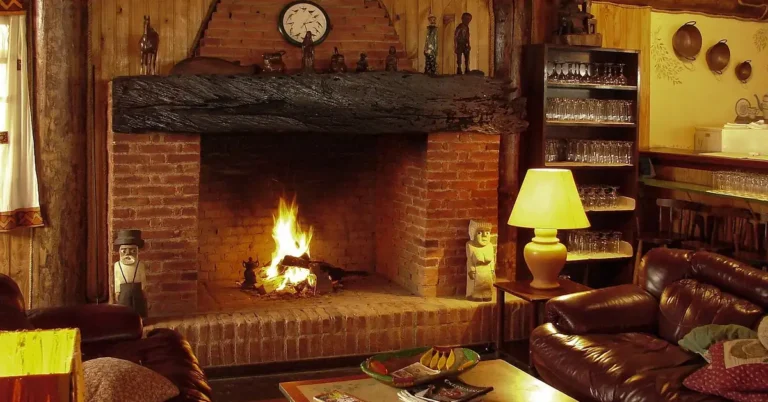
An open masonry fireplace delivers roughly 10 to 15 percent of combustion energy as room heat, so it is best for ambiance and occasional use. It can warm a nearby seating area, but it is not the right answer when you want dependable primary heat or lower wood use.
Typical efficiency and room air loss
Large open fireplaces often leave the space cooler because they exhaust room air up the flue. That is the core penalty: heat leaves with the smoke, and the fire can pull conditioned indoor air out of the room while it burns.
Best use case
Use an Open Fireplace when you want the look, the sound, and an occasional fire without turning the fireplace into a heating project. It is the least demanding option if you accept low efficiency and do not need the room to stay warm after the flames die down.
When a fireplace stops being the right choice
If you are buying wood to heat a room, an open hearth stops making sense quickly. It has no federal emissions limits, but that does not change the fact that its heat output is low and its draft behavior can work against comfort.
Should you choose a wood stove insert?
Choose a Wood Stove Insert when you already have a masonry fireplace, the opening is large enough for a proper fit, and you want efficient heat from the existing chimney. The best candidates are sound fireplaces that can accept a stainless steel chimney liner and meet clearance and inspection requirements without major reconstruction.
Firebox dimensions and fit checks
Firebox dimensions decide whether the insert physically fits the opening. Measure width, height, and depth, then compare those numbers to the appliance manual before you order; a unit that is too tall, too deep, or too wide can stop the project before installation starts.
Picture a 36-inch-wide fireplace with a shallow firebox and a warped back wall. A large insert may look possible from the room, but the depth and shape can block proper clearance and liner routing, which turns a simple retrofit into a much larger job.
Stainless steel chimney liner requirements
Wood-burning inserts require a stainless steel chimney liner, and that liner replaces the original masonry liner as the code and compliance component. It is not an optional add-on; it is part of how the insert vents safely and maintains draft.
Efficiency, emissions, and EPA-certified models
EPA Phase 2 certified wood inserts achieve 70 percent or higher thermal efficiency, and fireplace inserts can raise efficiency from 10-15% to 70-85%. Some EPA-certified wood stove insert models are reported to list emissions around 2.0 g/hr, which can be a sign that the unit is built for cleaner operation and better fuel use.
Should you choose a freestanding wood stove?
Choose a freestanding wood stove when the fireplace opening is too small, damaged, or poorly suited to an insert, or when you want higher output and can handle the extra clearance work. A freestanding stove needs a hearth pad and chimney connection, and it usually radiates heat from multiple sides, which is why it often delivers more output than an insert.
Hearth pad and wall protection
A wood stove needs a hearth pad and wall protection because the appliance sits exposed in the room. Those clearances are part of the install cost and layout, and they can change where the stove can go and how much floor space it consumes.
Say your fireplace opening is usable but the room needs 2,000 square feet of coverage and the existing hearth is too short for a stove body. The insert route may still fit the opening, but the freestanding stove would need added hearth work and wall protection before it can even be set in place.
Chimney connection and clearances
A freestanding stove still needs a proper chimney connection, and the vent path must match the appliance and the code requirements. Clearances to combustibles matter more here than with an insert, because the stove body itself radiates heat from several sides.
Why heat output is often higher than an insert
Freestanding wood stoves typically reach 70-80% efficiency when EPA-certified and are often listed at 25,000-80,000 BTU. That broader output range makes them a better fit when you need stronger room heat, a larger floor plan, or longer comfort from one load.
Installation and cost differences
The cheapest-looking option is not always the cheapest project. A Wood Stove Insert can avoid a full fireplace rebuild, but the real cost still includes the liner, connector parts, possible masonry repair, permit work, and inspection. Starting without a masonry fireplace changes the math more than the appliance label does.
Liner, masonry repair, and inspection costs
For an insert, the stainless steel liner is a required line item, and the chimney may also need repair before the liner can be installed. For a freestanding stove, hearth pad work, wall protection, and chimney connection add to the bill. Permit and inspection costs also belong in the budget.
Why starting with no masonry fireplace changes the math
A new masonry fireplace is estimated at $10,000-$30,000 or more, which is a very different project from retrofitting an existing opening. If you do not already have a fireplace, a freestanding stove usually makes more sense than building masonry first.
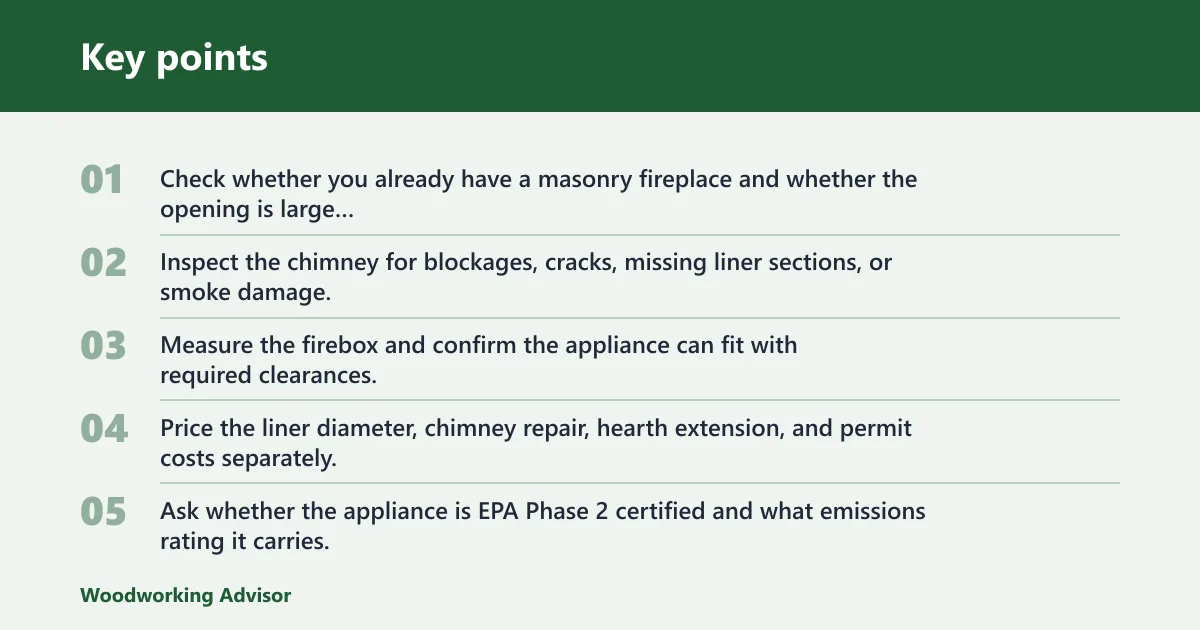
- Check whether you already have a masonry fireplace and whether the opening is large enough for an insert.
- Inspect the chimney for blockages, cracks, missing liner sections, or smoke damage.
- Measure the firebox and confirm the appliance can fit with required clearances.
- Price the liner diameter, chimney repair, hearth extension, and permit costs separately.
- Ask whether the appliance is EPA Phase 2 certified and what emissions rating it carries.
- Stop if the chimney condition or draft is uncertain; call a sweep or installer before buying.
Wood stove insert vs open fireplace checklist
Stop the purchase and call a sweep or installer if any of these show up. These are not small concerns; they can change the appliance choice, the install path, or both.
- Visible cracks, missing mortar, or loose bricks in the firebox or chimney
- No usable chimney liner, or a liner that does not match the venting plan
- Smoke spillage, weak draft, or soot falling into the room
- Firebox dimensions that do not match the appliance manual
- Damaged hearth, short hearth extension, or missing floor protection for a stove
- Unclear permit, inspection, or code requirements for the local area
- Oversized appliance planned for a small room or tight floor plan
Choose Wood Stove Insert if… / Choose Open Fireplace if…
Choose a Wood Stove Insert if you already have a sound masonry fireplace, want real room heat, and can fit a stainless steel chimney liner into the existing flue. Choose an Open Fireplace if the priority is atmosphere, the fireplace is used only occasionally, and you are fine with low efficiency and limited heat.
Choose wood stove insert if…
You want a much higher efficiency range than an open hearth can provide. You can measure the firebox, confirm the chimney condition, and budget for the liner and inspection work. You also want a cleaner, EPA-certified path with output that can support a room or zone.
Choose open fireplace if…
You want the simplest stay-with-what-you-have answer and do not need the fireplace to carry the heating load. The room can tolerate the heat loss, and you are using the fire for appearance or occasional use rather than daily comfort.

Frequently asked questions
Wood stove vs wood stove insert
A wood stove stands on its own and needs a hearth pad, clearances, and a chimney connection. A wood stove insert fits into an existing masonry fireplace opening and uses a stainless steel chimney liner. The insert is usually the retrofit choice; the freestanding stove is the stronger output choice.
Wood burning stove vs open fire
A wood burning stove keeps more heat in the room because it is a sealed appliance with controlled combustion and venting. An open fire sends much of the heat up the chimney and can pull room air out with it. If heat matters, the stove is the stronger choice.
Fireplace insert vs wood stove
A fireplace insert is the right answer when you already have a masonry fireplace and want to improve efficiency without rebuilding the room. A wood stove is better when you need higher output and can support the floor protection and clearances. The insert is usually the easier retrofit; the stove is usually the hotter one.
Putting a wood stove in a fireplace
Putting a wood stove in a fireplace is usually a misunderstanding of the retrofit path. A true insert fits into the opening and connects to a stainless steel chimney liner, while a freestanding stove normally sits on a hearth pad with required clearances. Size and code rules decide which path is legal and practical.
Installing a wood stove in a fireplace
Installing a wood stove in a fireplace usually means installing an insert, not dropping a freestanding stove into the firebox. The existing opening must be measured, the chimney must be checked, and the liner must match the appliance. If the firebox is too shallow or damaged, the plan may need to change.
Gas fireplace insert vs gas fireplace
A gas fireplace insert upgrades an existing masonry fireplace with a sealed unit and venting system, while a gas fireplace is often built as a purpose-made appliance from the start. The insert path depends on the opening and chimney condition. The built-in gas fireplace is the simpler option when no masonry opening exists.
Sponsored / affiliate links. As an Amazon Associate I earn from qualifying purchases. I may earn additional commission from eligible campaigns.