How Long Does Elm Firewood Take to Dry by Split Size?
Elm firewood is commonly reported to take about 12 to 18 months to dry when split and stacked correctly; large rounds may need about 18 to 24 months, while small splits may be ready in about 9 to 12 months. Burn it too soon and you get smoky fires, harder starts, lower heat, and more creosote buildup. This guide gives an elm-by-split-size drying window and a simple checklist to confirm it is ready to burn.
How long does elm firewood take to dry?
For most home stacks, elm needs about a year, and often longer for bigger pieces. Small splits may reach burn-ready moisture in roughly 9 to 12 months under good airflow, while medium and large splits usually need about 12 to 18 months or more. Dense hardwoods dry slowly, so elm sits closer to oak than to easy-drying species.
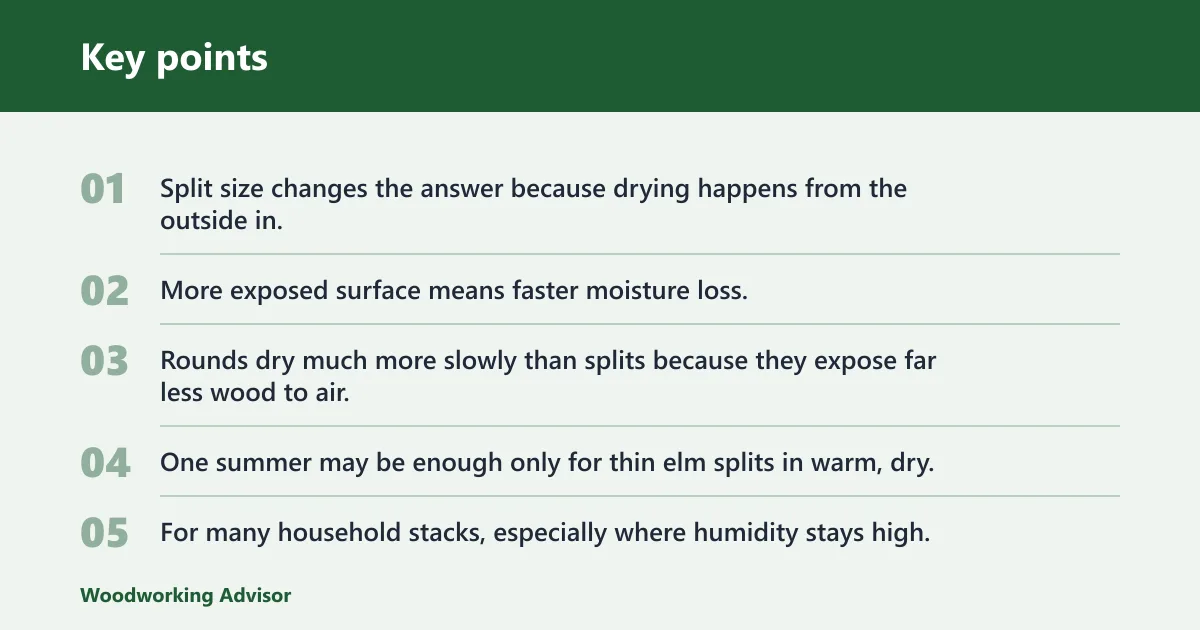
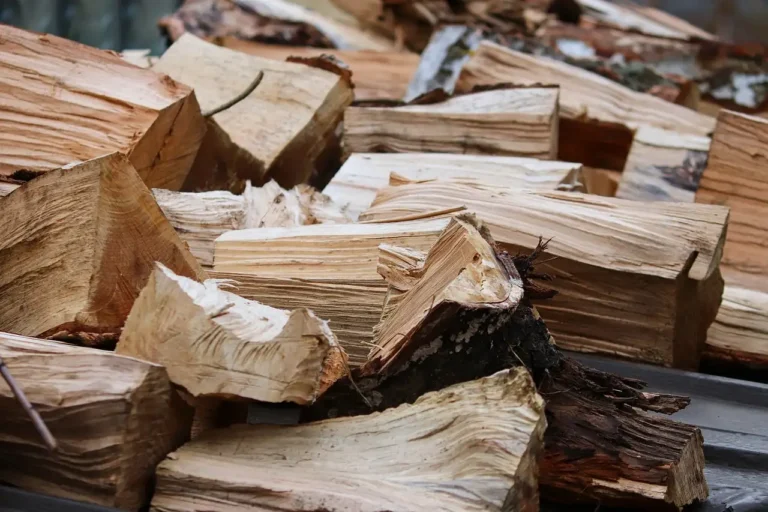
Split size changes the answer because drying happens from the outside in. More exposed surface means faster moisture loss, while thick pieces and bark-heavy pieces hold water longer inside. Rounds dry much more slowly than splits because they expose far less wood to air.
One summer may be enough only for thin elm splits in warm, dry, windy weather with strong stack exposure. That is the exception, not the rule. For many household stacks, especially where humidity stays high, a full year ahead is the safer plan.
Typical seasoning window for elm
Elm is a dense hardwood, so it usually dries slower than easier woods and can lag behind many common species in real-world stacks. A practical rule is to plan on about 12 to 18 months for most split elm, with large pieces tending toward the longer end. If the wood was cut in late spring or summer, the clock often stretches because it misses the strongest early drying season.
Why split size changes the answer
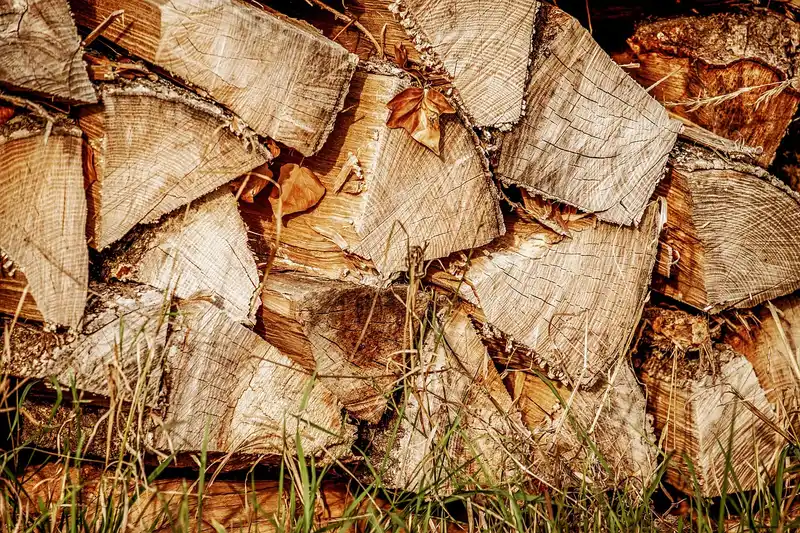
Smaller splits dry faster because they expose more surface area relative to their volume. That matters with elm, since the center can stay wet long after the outside looks pale and cracked. Large splits and rounds retain moisture longer, especially when bark stays intact and the stack is tight.
When one summer may be enough
One summer can work for small elm splits if you stack them in single rows, off the ground, in open sun with steady wind. Even then, use a moisture meter before burning. If the stack sits in shade, under trees, or in still air, assume one summer is not enough.
What affects elm drying speed?
Elm dries slower when the wood is dense, the bark is thick, the stack is crowded, or the weather stays damp. Full sun, steady wind, and wide spacing all help move moisture out of the wood. Humid climates and shaded storage slow the process, and that delay matters because wood that still holds too much moisture burns poorly and raises chimney deposit risk.
Density and bark thickness
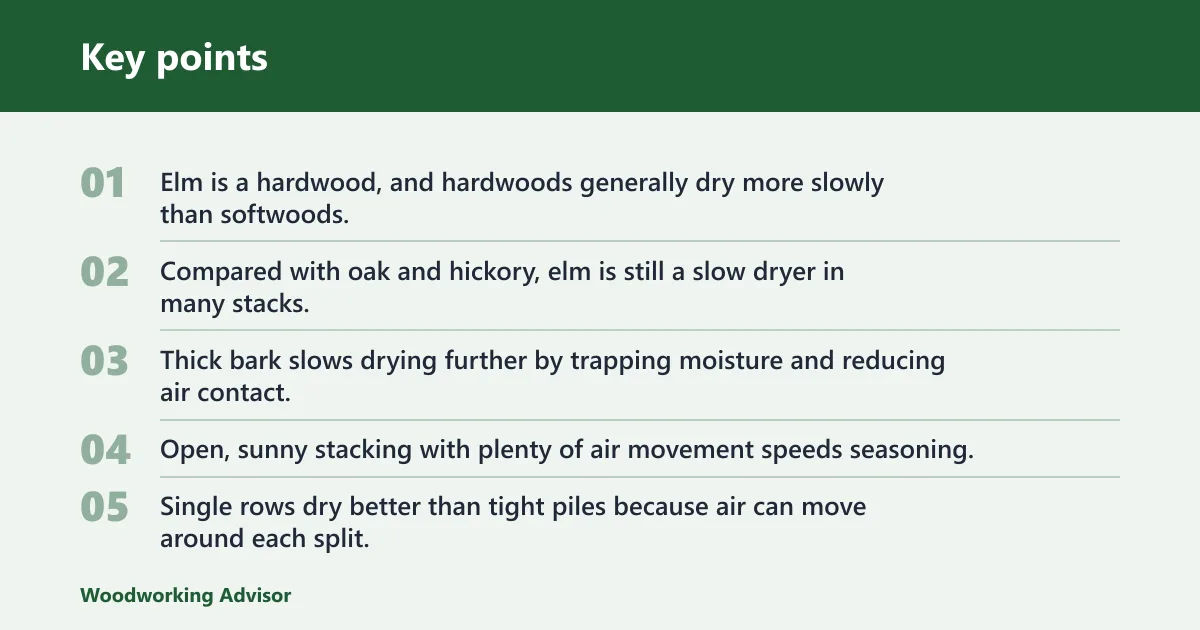
Elm is a hardwood, and hardwoods generally dry more slowly than softwoods. Compared with oak and hickory, elm is still a slow dryer in many stacks, though it can season a bit sooner than the very slowest dense species when split small and stacked well. Thick bark slows drying further by trapping moisture and reducing air contact.
Airflow, sun, and wind exposure
Open, sunny stacking with plenty of air movement speeds seasoning. Single rows dry better than tight piles because air can move around each split, and breezy sites pull moisture off the surface faster than sheltered spots. A dead-air corner under a deck or along a wall can leave the center wet long after the outer shell changes color.
Climate and humidity effects
Damp climates slow elm drying because the surrounding air already holds more moisture. In those conditions, the surface may dry after light rain, but the interior can stay above target for a long time. A firewood guide notes that lighter rain may dry out within a few days, moderate rain can take a week or two for the surface to dry, and heavy rain can take several weeks or even months to recover.
| Split size | Storage condition | Typical seasoning window | Burn-readiness check |
|---|---|---|---|
| Small | Open sun | About 9 to 12 months | 15-20% moisture content, light gray color, edge checking, feels notably lighter |
| Medium | Mixed shade | About 12 to 18 months | 15-20% moisture content on a fresh-split face, bark loosening, visible end cracks |
| Large | Covered stack | About 18 to 24 months | 15-20% moisture content throughout the split, center is not cool or damp, bark begins to separate |
This table is a decision aid, not a promise. Actual drying time changes with cut date, local weather, stack spacing, and how much bark remains on the wood. If a piece looks ready on the outside but still reads high at the center, treat it as unseasoned.
Say your elm was cut in August, split into medium pieces, and stacked along a shaded fence line. Even after a dry spell, the outer face may look gray while the core still measures too wet. In that case, the calendar and the meter both point to more drying time.
How do you stack elm for faster seasoning?
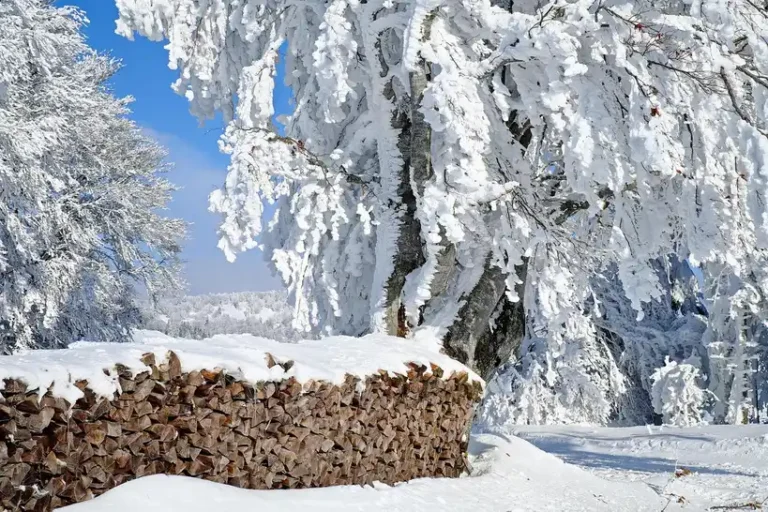
Stack elm in single rows, off the ground, in an open sunny location with good air movement. Cover the top to shed rain, but leave the sides open so air can pass through. That setup gives split wood a much better chance of reaching the 15-20% range before burning season.
Single rows and off-ground storage
Single rows let air reach the faces, ends, and gaps between splits. Off-ground storage keeps moisture from wicking up from soil or snow. Pallets, runners, or simple rails work better than a pile on bare dirt. Tight stacks trap humidity and slow drying at the center.
Why rounds dry more slowly than splits
Rounds hold moisture longer because only the ends are exposed and the bark ring stays intact. Split elm opens fresh surfaces and shortens the path moisture must travel to escape. If your goal is firewood for this season, splitting is not optional for dense elm.
Covering the top without trapping moisture
Use a roof or tarp only over the top of the stack. Do not wrap the sides. Trapped moisture can keep the wood damp and slow seasoning even when the top stays dry. Open sides matter more than a perfect cover.
How can you tell when elm is ready to burn?
Elm is ready to burn when a moisture meter reads about 15 to 20 percent on a freshly split face, the wood looks gray and checked rather than fresh and glossy, and the stack has had proper airflow and time. Exterior dryness alone is not enough, because elm can hide a wet center behind a dry shell.
Moisture meter targets
Good firewood should have moisture content between 15 and 20 percent. Fresh trees can start at 30 to 50 percent native moisture content, and green wood is often over 50 percent moisture content. Use a moisture meter on a freshly split face, not just the outside surface, because the shell can lie about the core.
Fresh-split check on the interior
Split a representative piece and test the newly exposed face in several spots, especially near the center. If the reading stays above target, give the stack more time. A single low reading on one end does not prove the whole split is ready.
Visual cues that support the reading
Colonial Excavating’s FAQ lists grayer color, cracking, and lighter weight as signs of seasoned wood. Those cues help, but they do not replace a meter. A split that feels lighter and shows end checks can still be too wet in the middle if the stack was shaded or packed tightly.
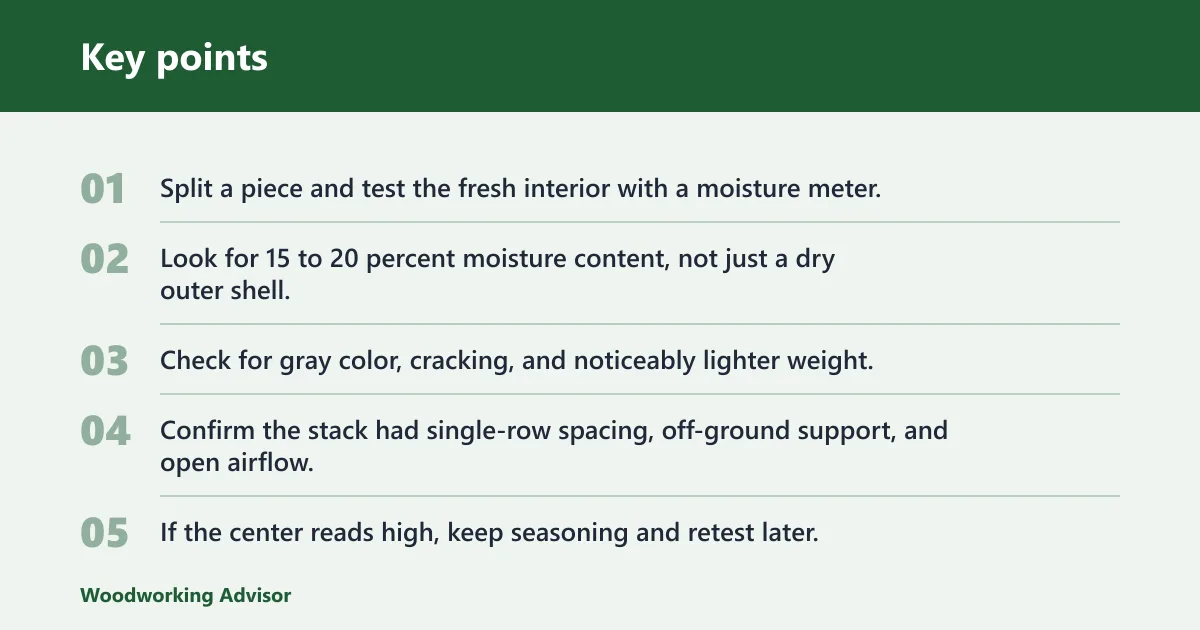
- Split a piece and test the fresh interior with a moisture meter.
- Look for 15 to 20 percent moisture content, not just a dry outer shell.
- Check for gray color, cracking, and noticeably lighter weight.
- Confirm the stack had single-row spacing, off-ground support, and open airflow.
- If the center reads high, keep seasoning and retest later.
Suppose a large elm split has bark still clinging to one side and the outer face looks pale after a dry week. That surface can fool you. A fresh split across the middle may still show a reading above the safe range, which means more time is needed.
What happens if you burn elm too soon?
Wet or under-seasoned elm burns poorly. It smokes more, starts harder, and gives less usable heat because energy goes into driving out water instead of heating the room. Improperly dried wood can lose up to 30 percent efficiency, so a damp stack can waste a lot of useful heat.
Smoke and low heat output
When moisture stays high, the fire spends longer smoldering and less time burning hot. That means cooler flames, more visible smoke, and a weaker coal bed. In a stove or fireplace, the result is often more tending and less heat per load.
Creosote risk in the chimney
Wet firewood leaves creosote deposits in the chimney. That matters because creosote can build up faster when wood smokes instead of burning cleanly. Using seasoned wood lowers that risk and helps the flue stay cleaner between maintenance intervals.
Why wet wood burns less efficiently
One firewood guide defines seasoned wood as 20 percent moisture content or less. Wood above that range burns less efficiently and can recover poorly after rain. If the stack was hit by heavy rain, the same guide says recovery can take several weeks or even months, especially in damp weather.
Frequently asked questions
How long to season elm firewood?
Plan on at least one year for most elm, and prepare it a year ahead unless drying conditions are optimal. In warm, dry, windy weather, thin splits may finish sooner. In shade or humidity, elm often needs longer than a single summer.
Can I burn elm after one summer?
Sometimes, but only for small, well-split elm stored in open sun with strong airflow. Even then, check the moisture with a meter before burning. If the piece is medium or large, or if the stack sat in shade, one summer is usually too short.
What moisture content is safe for burning firewood?
Firewood is generally safe to burn at 15 to 20 percent moisture content. Readings above that range mean the wood is still too wet for best performance. Always measure a freshly split face, because the outside can dry much faster than the core.
How can I tell when elm firewood is seasoned?
Seasoned elm usually shows a moisture reading in the 15 to 20 percent range, plus a gray color, cracking, and lighter weight. The stack should have been kept in single rows, off the ground, with open airflow. If the center still reads high, it is not ready.
How does weather affect elm drying time?
Sun, wind, and low humidity speed elm drying. Shade, still air, and damp weather slow it. Rain also matters: light rain may dry off in a few days, moderate rain can take a week or two, and heavy rain can take several weeks or even months to recover.
Sponsored / affiliate links. As an Amazon Associate I earn from qualifying purchases. I may earn additional commission from eligible campaigns.