How to Treat Termites in Hardwood Floors (DIY Steps + Costs)
Termites in hardwood floors are treated with EPA-registered liquid termiticides, borate wood treatments, or in-ground bait stations – never with surface sprays that don’t reach the colony. Left untreated, subterranean termites can hollow out floor joists within 1-2 years, and standard homeowner’s insurance almost never covers the repair. This guide covers identifying real termite damage, the exact treatment steps for DIY and professional jobs, and what repair and prevention cost afterward.
How to Identify Termites in Hardwood Floors
Termite-damaged hardwood sounds hollow when tapped and often has a slightly blistered or sunken look along the seams – the surface veneer stays intact while the wood underneath is eaten away. Subterranean termites (the species responsible for most U.S. floor damage) rarely surface in the open; they build mud tubes up foundation walls and pier posts to reach the subfloor without exposure to air.
Three signs separate a real infestation from ordinary wear: frass (termite droppings that look like tiny ridged pellets or fine sawdust piled near baseboards), discarded wings near windows and doors after a spring swarm, and mud tubes roughly pencil-width running up a foundation wall, crawlspace pier, or basement pipe. If you already know your hardwood floor’s finish sheen, a sudden dull or slightly raised patch in an otherwise even floor is worth checking with a screwdriver – sound wood resists a firm push; termite-hollowed wood gives way or crumbles.
Moisture is the single biggest risk factor. According to the EPA’s consumer pest-control guidance, subterranean termites need contact with soil moisture or a persistent water source to survive, which is why leaking plumbing under a bathroom floor or a poorly ventilated crawlspace shows termite activity years before a dry interior room does. This overlaps with a lot of the same moisture checks covered in our broader wood care and maintenance guide.
Best DIY Termite Treatment Pick
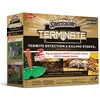 |
Spectracide Terminate Termite Detection & Killing Stakes, 15-Count – $53.86 Placed 2-3 feet out from the foundation, these EPA-registered stakes combine a pop-up activity indicator with a slow-acting bait – the same category of monitoring most pros install as a first line of defense before any floor damage reaches load-bearing framing.
|
As an Amazon Associate we earn from qualifying purchases.
How to Treat Termites in Hardwood Floors: Step-by-Step
Once you’ve confirmed activity, the treatment method depends on how far the termites have spread – a few isolated boards versus a colony already inside wall voids or subfloor framing.
- Confirm the species and extent: Tap along the floor every 12-18 inches to map how far the hollow-sounding area extends, and check the crawlspace or basement ceiling directly beneath it for mud tubes.
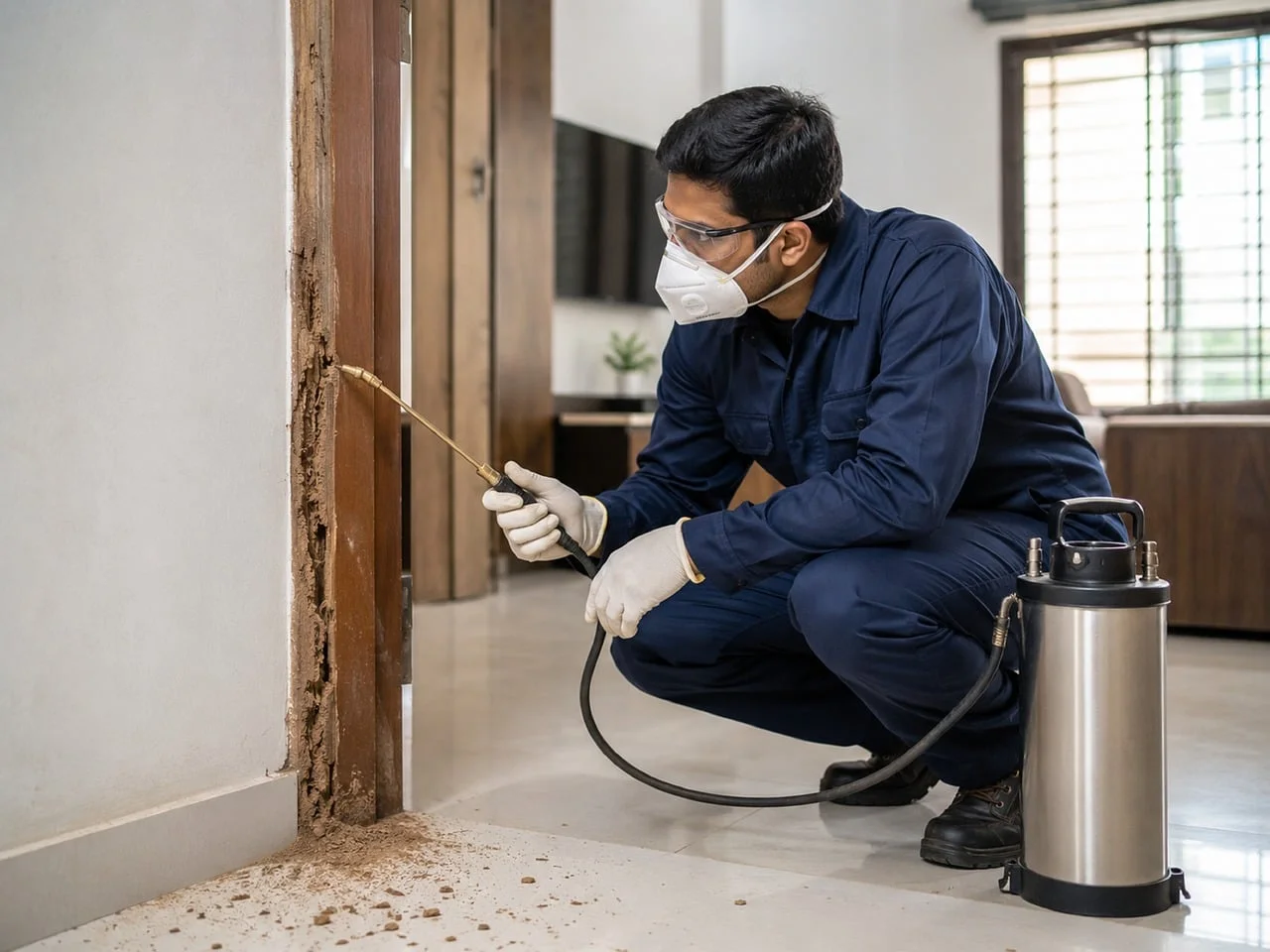
- Choose a localized or whole-structure treatment: A borate wood preservative (applied by drilling small injection holes into infested framing) works for damage confined to a small area. A whole-colony infestation needs either a liquid termiticide trenched around the foundation or an in-ground bait system like the stakes above.
- Apply the termiticide per the EPA label, not by estimate: The EPA’s Pesticide Registration Notice 96-7 requires every termiticide label to specify exact application rates and retreatment intervals – using more product than labeled doesn’t kill termites faster and does raise the risk of runoff into groundwater.
- Ventilate and wait out the manufacturer’s re-entry period before walking on treated flooring or resuming sanding/refinishing work in the room.
- Re-inspect in 30 days: Check bait stakes for the pop-up indicator and re-tap the floor. If hollow spots keep spreading past the treated zone, the infestation has moved past what a homeowner product can reach – call a licensed pest control operator for a full inspection.
The EPA specifically warns that in most cases, termiticide application is best performed by a trained pest management professional, since an improperly placed termiticide trench can fail to fully seal the foundation perimeter and still leave gaps termites use to re-enter.
DIY vs. Professional Termite Treatment: Cost Comparison
DIY termiticide and bait products run $30-$150 depending on coverage area, while a full professional treatment for a typical single-family home ranges from $500 to $2,500 based on square footage and infestation severity – professionals also warranty the treatment, which most DIY products don’t.
| Treatment Option | Typical Cost | Best For |
|---|---|---|
| Borate wood treatment (DIY) | $30-$80 | Isolated damage in 1-2 boards, no active colony found |
| Bait stakes / monitoring (DIY) | $50-$150 | Early detection, perimeter defense against new colonies |
| Liquid termiticide, DIY trench kit | $100-$300 | Small structures, homeowners comfortable with label-rate mixing |
| Professional liquid or bait treatment | $500-$1,500 | Confirmed active colony, most single-family homes |
| Professional whole-structure fumigation | $1,200-$2,500+ | Severe or drywood infestations spanning multiple rooms |
📊 Termites cause an estimated $6.8 billion in property damage across the U.S. every year, and that cost is almost never covered by a standard homeowner’s insurance policy. Source: National Pest Management Association, 2026
Repairing Hardwood Floor Damage After Termite Treatment
Repair only after the termiticide’s labeled re-entry period has passed and a follow-up inspection confirms no live activity remains – refinishing over an infestation that isn’t actually dead just traps the problem under a fresh top coat.
For minor surface damage, wood filler tinted to match the surrounding board can patch small tunnels or soft spots, then be sanded and refinished. Boards with hollowed-out cores or damage extending into the tongue-and-groove joint need full replacement – a patched board over a broken core will eventually flex and telegraph through the finish. Our team’s most common mistake to flag on this kind of job: sanding and refinishing a treated board before it’s fully dried out from the termiticide application. Trapped moisture under a fresh finish coat recreates exactly the damp, dark environment subterranean termites are drawn back to.
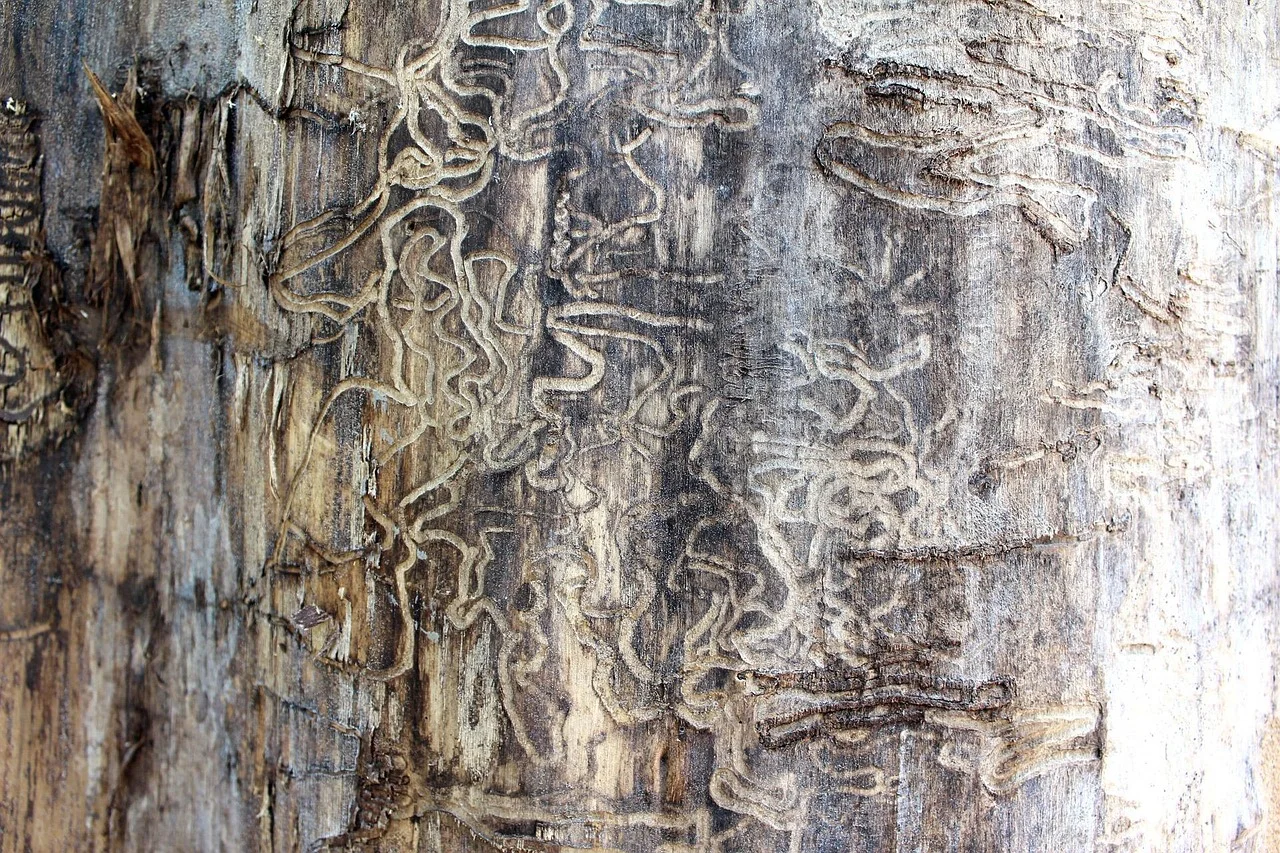
For structural damage below the surface boards, floor joists may need sistering (bolting a new joist alongside the damaged one) or full replacement, which is a job for a licensed contractor rather than a flooring DIY project. If you’re weighing whether existing damage is rot rather than termite damage, wood rot has a softer, crumbly, often darker texture without the smooth internal tunnels termites leave behind.
Preventing Termites From Returning to Your Hardwood Floors
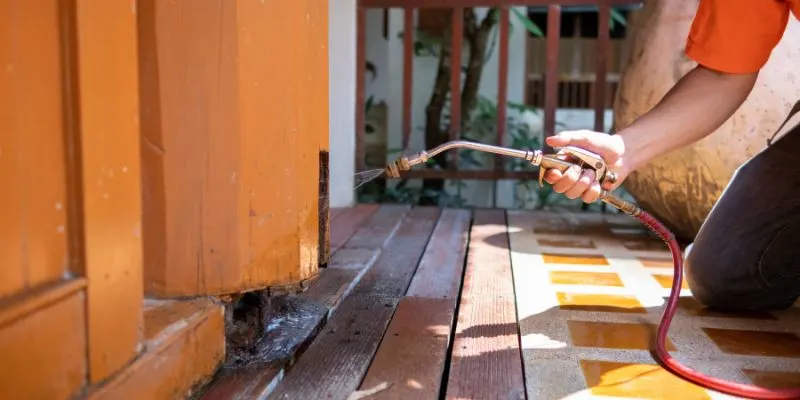
Moisture control does more long-term prevention work than any single chemical treatment. Fix plumbing leaks under bathrooms and kitchens promptly, keep crawlspace humidity down with a vapor barrier and adequate venting, and route downspouts so water drains away from the foundation instead of pooling against it.
- Keep any wood-to-soil contact eliminated – store firewood at least 20 feet from the house, and never bury wood scraps or stakes near the foundation.
- Schedule a professional termite inspection annually; most termite damage stays hidden inside framing for 1-2 years before it’s visible at the surface.
- Re-check bait stakes or monitoring stations every 30-60 days rather than assuming a clear pop-up indicator means the risk is gone permanently.
- Maintain a mulch-free strip or use less-attractive mulch types immediately around the foundation, since bark mulch piled against siding gives termites a moist bridge straight to the wood. Some species are naturally more resistant to attack than others – see our breakdown of whether termites avoid cedar wood if you’re choosing lumber for a repair or a new deck near the house.
Frequently Asked Questions
How Can I Identify Termites in Hardwood Floors?
Tap the floor and listen for a hollow sound, then check nearby for frass (tiny ridged pellets resembling sawdust), discarded wings near windows after a swarm, or mud tubes on foundation walls and crawlspace piers. Termite damage keeps the surface veneer intact while hollowing out the wood beneath, so visible holes are actually a late-stage sign.
What Are the Signs of Termite Damage?
Sagging or slightly blistered floorboards, a hollow tap sound, frass piles near baseboards, and pencil-width mud tubes on nearby foundation walls or pipes are the main signs. Discarded wings near light sources after a spring or fall swarm are also a strong indicator that a colony is active nearby.
How Do I Treat Termites in Hardwood Floors?
For isolated damage, a borate wood treatment applied to the affected framing works well. For an active colony, use an EPA-registered liquid termiticide trenched around the foundation or an in-ground bait station system, always following the exact application rate on the product label. Extensive infestations spanning multiple rooms are better handled by a licensed pest control operator.
Is Professional Help Necessary for Termite Treatment?
Not always – a small, isolated infestation caught early can often be treated with a homeowner-labeled borate or bait product. But the EPA notes that termiticide application in most cases is best performed by a trained professional, since an incomplete termiticide barrier can leave gaps that let termites re-enter and continue causing damage undetected.
Can I Get Rid of Termites in Hardwood Floors Myself?
Yes, for a limited, well-defined infestation – borate treatments and EPA-registered bait stakes are legal for homeowner use and effective against small or newly-detected colonies. A widespread infestation reaching subfloor framing or multiple rooms typically needs a professional’s equipment and colony-elimination methods to fully resolve.
How Much Does It Cost to Treat and Repair Termite Damage in Hardwood Floors?
DIY treatment products run $30-$300 depending on the method, while professional treatment typically costs $500-$2,500. Floor repair costs vary widely: a few patched boards with wood filler can cost under $200 in materials, while replacing structural joists or multiple boards can run into the thousands once a contractor is involved.
Conclusion
Treating termites in hardwood floors comes down to matching the treatment to the scale of the problem: borate or bait products for early, isolated activity, and EPA-registered liquid termiticide or a licensed professional once a colony is confirmed. Repair only after the treatment’s re-entry period has passed and a follow-up inspection confirms the activity is gone, then focus on moisture control and annual inspections to keep termites from finding their way back.
Sponsored / affiliate links. As an Amazon Associate I earn from qualifying purchases. I may earn additional commission from eligible campaigns.