Hand Planer Vs Electric: The Proven Best Choice
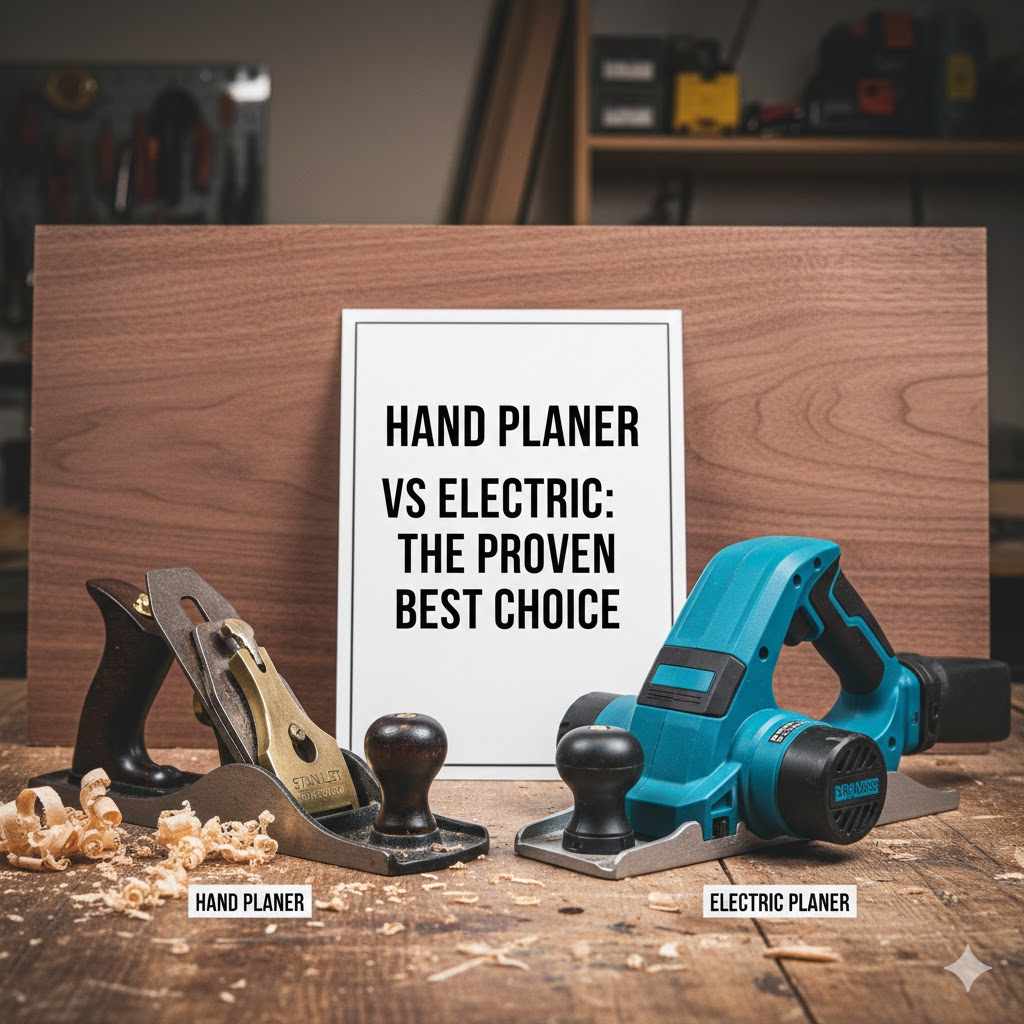
For quick, powerful wood removal on large projects like doors or rough lumber, an electric planer is the best choice. For fine-tuning, precision, and a quiet, dust-free experience on smaller details, a traditional hand planer is proven to be superior. Your project’s needs will determine the winner.
Hi there, I’m Md Meraj. Welcome to the workshop! Walking into the tool aisle can be a bit overwhelming, I know. You see a classic hand planer and a powerful electric planer right next to it. They both promise to smooth wood, but which one should you bring home? It’s a question every new woodworker asks, and it’s a great one.
Don’t worry, this choice is simpler than it looks. The “best” tool really depends on the job you need to do. In this guide, I’ll break down everything you need to know about both tools in simple terms. We’ll look at what they do, when to use them, and how to choose the perfect one for your projects. Let’s get you planing with confidence!
What is a Hand Planer? The Quiet Craftsman
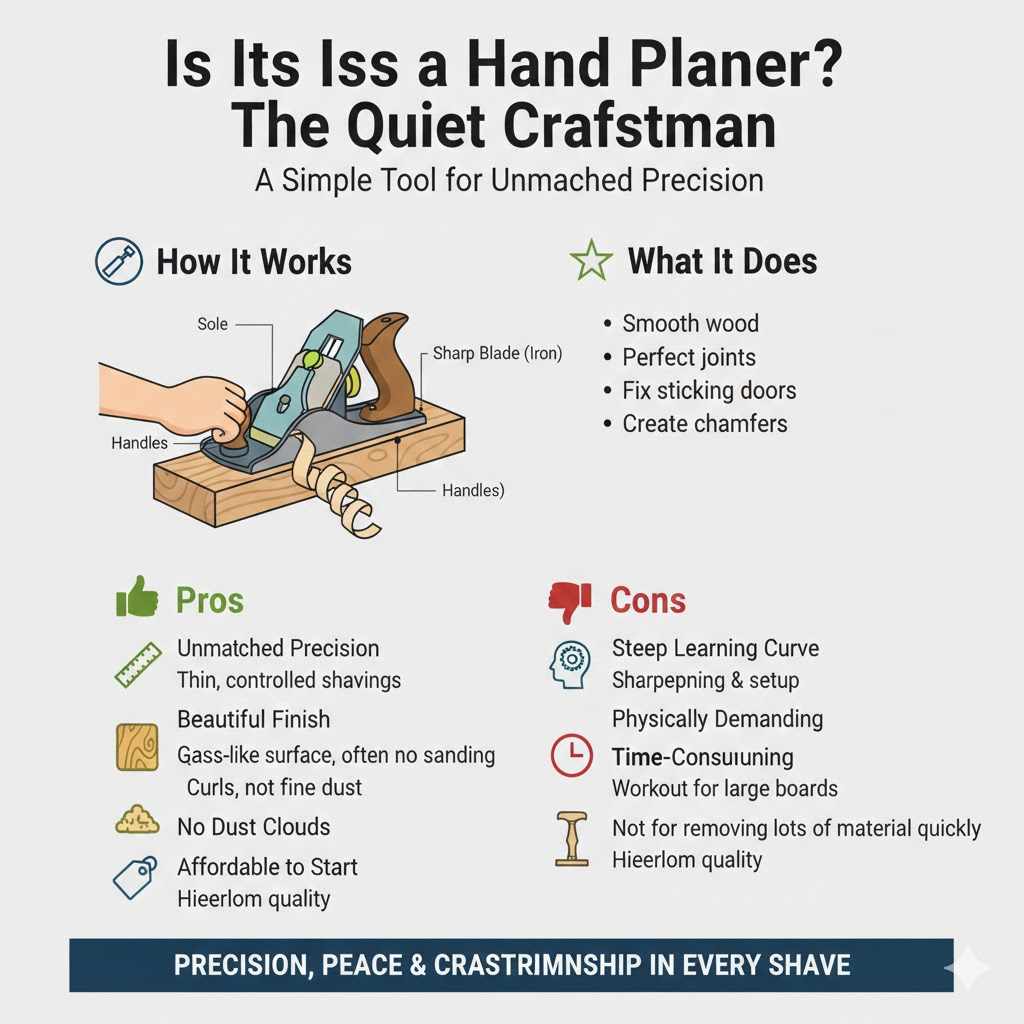
Think of a hand planer as the original woodworking tool for smoothing wood. It has been used for centuries, and for good reason. A hand planer is a simple tool made of a flat metal or wood body (called the sole), a sharp blade (the iron), and handles to push it.
You provide the power by pushing it across the wood’s surface. With each pass, it shaves off a paper-thin curl of wood, leaving behind a perfectly smooth, glass-like finish. It’s all about control and connecting with your project. There’s nothing quite like the quiet swish of a sharp hand planer at work.
Pros of a Hand Planer
- Unmatched Precision: You have complete control over how much wood you remove. You can take off shavings as thin as a hair.
- Beautiful Finish: A sharp, well-tuned hand planer leaves a surface that often doesn’t need sanding. It’s a finish you can feel.
- Quiet and Peaceful: There’s no motor screaming in your ear. It’s a quiet, focused process that many woodworkers love.
- No Dust Clouds: It creates shavings, not fine dust. Cleanup is as easy as sweeping up a few curls of wood.
- Affordable to Start: A good quality beginner hand planer is much cheaper than an electric one.
- Lasts a Lifetime: With proper care, a good hand planer can be passed down for generations.
Cons of a Hand Planer
- Steep Learning Curve: It takes practice to learn how to sharpen the blade and set it up correctly. This is the biggest hurdle for beginners.
- Physically Demanding: Planing a large board, like a tabletop, by hand is a real workout!
- Time-Consuming: It’s not built for speed. Removing a lot of material takes time and patience.
When to Choose a Hand Planer
A hand planer truly shines with detailed work. Reach for it when you need to:
- Smooth the edge of a board after cutting.
- Perfectly fit a joint for a seamless look.
- Shave a tiny bit off the bottom of a door that sticks.
- Create a chamfer (a small, decorative bevel) along an edge.
- Work on delicate or beautifully figured wood without risking tear-out.
What is an Electric Planer? The Powerful Workhorse
An electric planer is the modern answer to removing a lot of wood quickly. It’s a handheld power tool with a motor that spins a drum of blades at very high speeds. As you guide it over the wood, these blades rapidly chip away at the surface.
You can adjust a knob on the front to control how deep it cuts with each pass. An electric planer is built for speed and power. It’s the tool you grab when you have a lot of material to remove and you need it done fast. It makes quick work of big, tough jobs that would take hours by hand.
Pros of an Electric Planer
- Incredible Speed: It removes wood many times faster than a hand planer. Perfect for large surfaces.
- Powerful and Effortless: The motor does all the hard work. You just guide the tool.
- Great for Rough Lumber: It’s ideal for flattening rough-sawn lumber or taking the twist out of a warped board.
- Consistent Depth: Once you set the depth, it will remove the same amount of material with every pass, creating a uniform surface.
Cons of an Electric Planer
- Very Loud: You absolutely need hearing protection. The motor is as loud as a lawnmower.
- Creates a Mess: It shoots out fine sawdust at high speed. A dust collection bag or shop vac is a must.
- Can Be Aggressive: It’s easy to remove too much wood by accident if you’re not careful. This is called “snipe.”
- Risk of Tear-Out: The high-speed blades can sometimes chip or tear the wood grain, especially on delicate woods.
When to Choose an Electric Planer
An electric planer is your go-to for the heavy lifting. Use it for jobs like:
- Flattening a large, rough slab for a coffee table.
- Trimming a significant amount off the bottom of a new door to fit the frame.
- Quickly dimensioning lumber for a project.
- Removing old paint or finish from reclaimed wood (after checking for nails!).
Hand Planer vs Electric Planer: Head-to-Head Comparison
Let’s put them side-by-side to make the choice even clearer. This table breaks down the key differences that matter most for a beginner.
| Feature | Hand Planer | Electric Planer |
|---|---|---|
| Speed | Slow and deliberate. Best for small areas. | Very fast. Excellent for large surfaces. |
| Precision & Finish | Extremely high. Can produce a glass-smooth finish. | Good, but less precise. The surface may require sanding. |
| Learning Curve | High. Requires learning to sharpen and set up the tool. | Low. Easy to get started, but takes practice to avoid mistakes like snipe. |
| Cost | Lower initial cost. A good starter model is affordable. | Higher initial cost, especially for quality models. |
| Noise & Dust | Very quiet. Creates easy-to-clean wood shavings. | Very loud and creates a huge amount of fine dust. |
| Best For… | Fine-tuning, jointing edges, chamfering, creating a perfect finish. | Removing lots of material, flattening large boards, trimming doors. |
Safety First: How to Use Your Planer Safely
No matter which tool you choose, safety is the most important rule in the workshop. Both tools are safe when used correctly, but they require respect.
Hand Planer Safety
- A Sharp Blade is a Safe Blade: A dull blade requires too much force, which can cause you to slip. Learn to keep your iron razor-sharp.
- Mind Your Fingers: Always keep your hands on the handles (the tote and knob). Never place your fingers underneath the sole.
- Plane with the Grain: Push the planer in the same direction as the wood grain. Going against it can cause the tool to catch and tear the wood.
- Secure Your Work: Clamp your board firmly to a workbench so it doesn’t move while you are planing.
Electric Planer Safety
Power tools require extra attention. As the Occupational Safety and Health Administration (OSHA) advises for all woodworking machinery, personal protective equipment is essential.
- Wear Your PPE: Always wear safety glasses, hearing protection, and a dust mask. No exceptions.
- Check for Metal: Before planing any wood, especially reclaimed lumber, carefully check for hidden nails, screws, or staples. Hitting one can destroy your blades and be very dangerous.
- Let it Stop: Never put the planer down until the blades have come to a complete stop. Most have a “foot” that raises the blades, but it’s best to be safe.
- Use Two Hands: Keep both hands on the tool at all times for maximum control.
- Watch the Cord: Be mindful of where the power cord is so you don’t accidentally cut it or trip over it.
The Proven Best Choice: Which One Is for You?
So, what’s the final verdict in the hand planer vs electric debate?
The proven best choice is the tool that best fits your projects and your style of working.
To find your answer, ask yourself these simple questions:
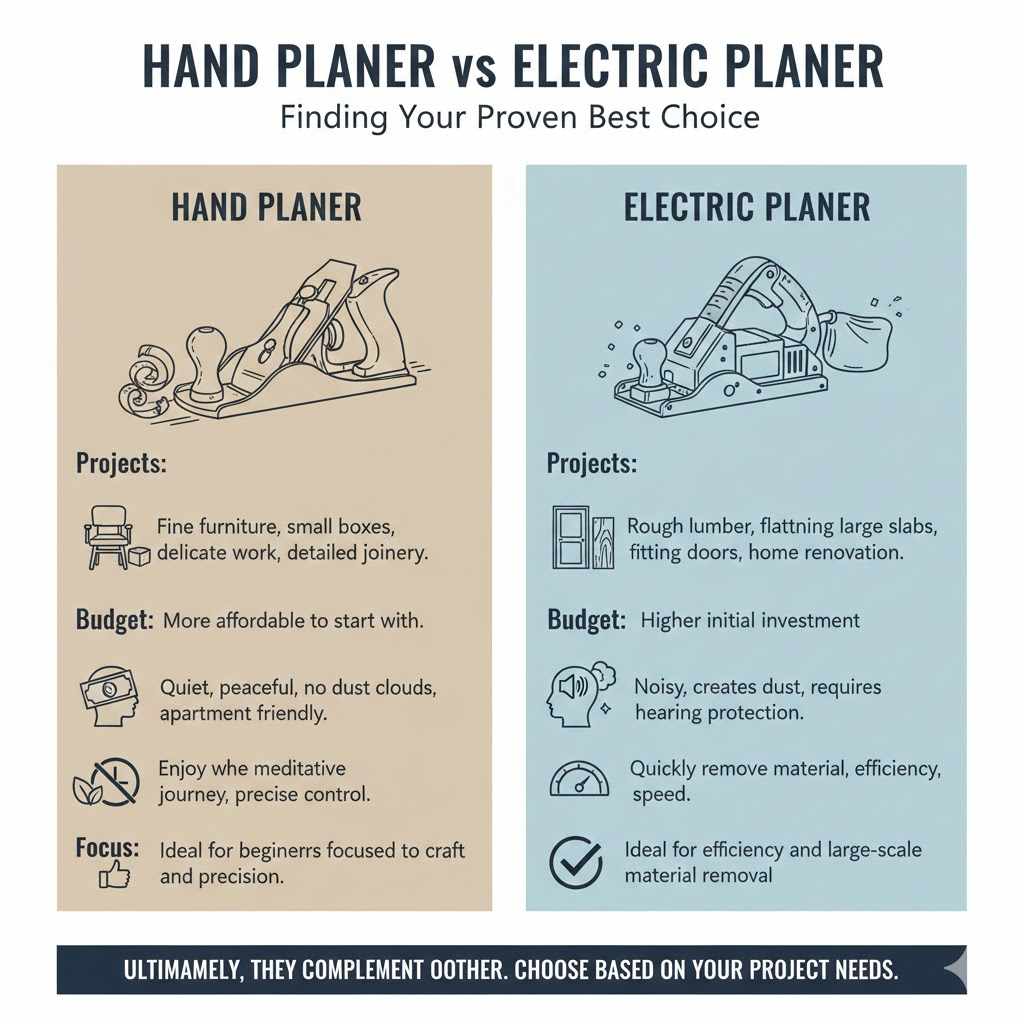
- What kind of projects will I be doing? If you plan on building fine furniture, small boxes, or just enjoying the craft, a hand planer is a fantastic starting point. If you plan to work with rough lumber, flatten big slabs, or do a lot of home renovation like fitting doors, an electric planer will save you a huge amount of time and effort.
- What is my budget? If you’re on a tight budget, you can get a high-quality hand planer for less than a decent electric one.
- Do I mind noise and dust? If you work in a small space, an apartment, or just prefer a quiet environment, a hand planer is the clear winner. An electric planer requires good dust management and a tolerance for noise.
- Am I more focused on the journey or the destination? If you enjoy the meditative process of slowly shaping wood, you will love using a hand planer. If you need to get the job done quickly and efficiently, you’ll be grateful for an electric planer.
For many woodworkers, the ultimate answer is to own both. They don’t compete; they complement each other. You might use an electric planer to quickly flatten a board and then switch to a hand planer for that final, perfect smoothing pass. But as a beginner, start with the one that solves your most immediate need.
Frequently Asked Questions (FAQ)
1. Which planer is better for flattening a warped board?
An electric planer is much better and faster for flattening a large warped board. A hand planer can do it, but it requires much more time, skill, and physical effort.
2. Is a hand planer hard to learn to use?
The hardest part of using a hand planer is learning to sharpen the blade and set it up correctly. Once you master that, the actual planing motion is very intuitive and satisfying. There are many great online videos to help you learn.
3. How much wood can an electric planer remove in one pass?
Most handheld electric planers can remove up to 1/8th of an inch (about 3mm) in a single pass, but it’s often better to take several shallower passes of around 1/16th of an inch for a cleaner result and less strain on the tool.
4. Can I use a planer on painted wood?
It’s not recommended to use either planer on painted wood. The paint gums up the blades and dulls them very quickly. Worse, old paint may contain lead. It’s always best to strip or sand off the old finish first.
5. Is an electric planer the same as a jointer?
No, they do different jobs. A handheld electric planer is great for making a rough board thinner and smoothing one face. A jointer is a stationary machine used to make one face perfectly flat and one edge perfectly square to that face, which is essential for furniture making.
6. Do I need to sharpen my hand planer blade?
Yes, absolutely! A hand planer is useless without a razor-sharp blade. You will need a set of sharpening stones or another sharpening system. This skill is fundamental to using hand tools effectively.
Conclusion: Your Workshop, Your Choice
Choosing between a hand planer and an electric planer isn’t about finding a single “winner.” It’s about understanding what each tool was designed to do and matching it to your own needs. One is a master of finesse, the other a champion of force.
If you’re drawn to the quiet satisfaction of craftsmanship and fine detail, start with a quality hand planer. You’ll learn an incredible amount about how wood works. If your projects involve big, rough boards and a need for speed, an electric planer will be your best friend in the workshop, saving you from hours of sweat.
Either way, you are adding a fantastic capability to your tool kit. Both will help you turn rough wood into smooth, beautiful projects you can be proud of. Now you have the knowledge to make a confident choice. Get out there, build something wonderful, and enjoy the process!