How Long Do Wood Beams Last? Lifespan by Type
Dry, properly detailed interior wood beams often last about 50 to 100+ years; exterior or persistently damp beams may fail in about 10 to 30 years, and any beam with active rot, repeated wetting, or insect damage may need replacement sooner. Ignore moisture and the beam can lose capacity, sag, crack, or fail where the repair bill is highest. This guide explains lifespan by beam type and exposure, then shows the moisture limits, detailing, and inspection checks that decide whether a beam lasts decades or needs repair.
Wood beam lifespan decision table
| Use case | Expected lifespan | Main failure risks | Inspection points | Most common repair-or-replace trigger |
|---|---|---|---|---|
| Interior dry beam | 50-100+ years | Occasional leaks, hidden plumbing moisture, fastener corrosion, deferred maintenance | Beam ends, underside staining, joints, bearing points, nearby roof or pipe leaks | Active rot, soft wood at a bearing, or a crack that affects load transfer |
| Semi-exposed beam | 25-75 years, sometimes longer with strong detailing | Wind-driven rain, splashback, poor flashing, end-grain wetting, insects | Top surfaces, caps, joints, ends, sealant gaps, drainage paths | Repeated wetting that keeps moisture above safe levels or visible decay at joints |
| Exterior beam | 10-30 years | Weather exposure, UV breakdown of finishes, rot fungi, corrosion at metal hardware | All exposed faces, especially ends, checks, joints, and hardware connections | Soft wood, deep decay, or failure at a beam end, joint, or connector |
| Ground-contact beam | Varies widely; often shortest service life without preservative treatment | Persistent moisture, soil fungi, insects, poor drainage, capillary uptake | Contact zone, buried ends, base connections, drainage, soil line | Any decay at the ground line or loss of section where the beam meets the soil |
How long do wood beams last?
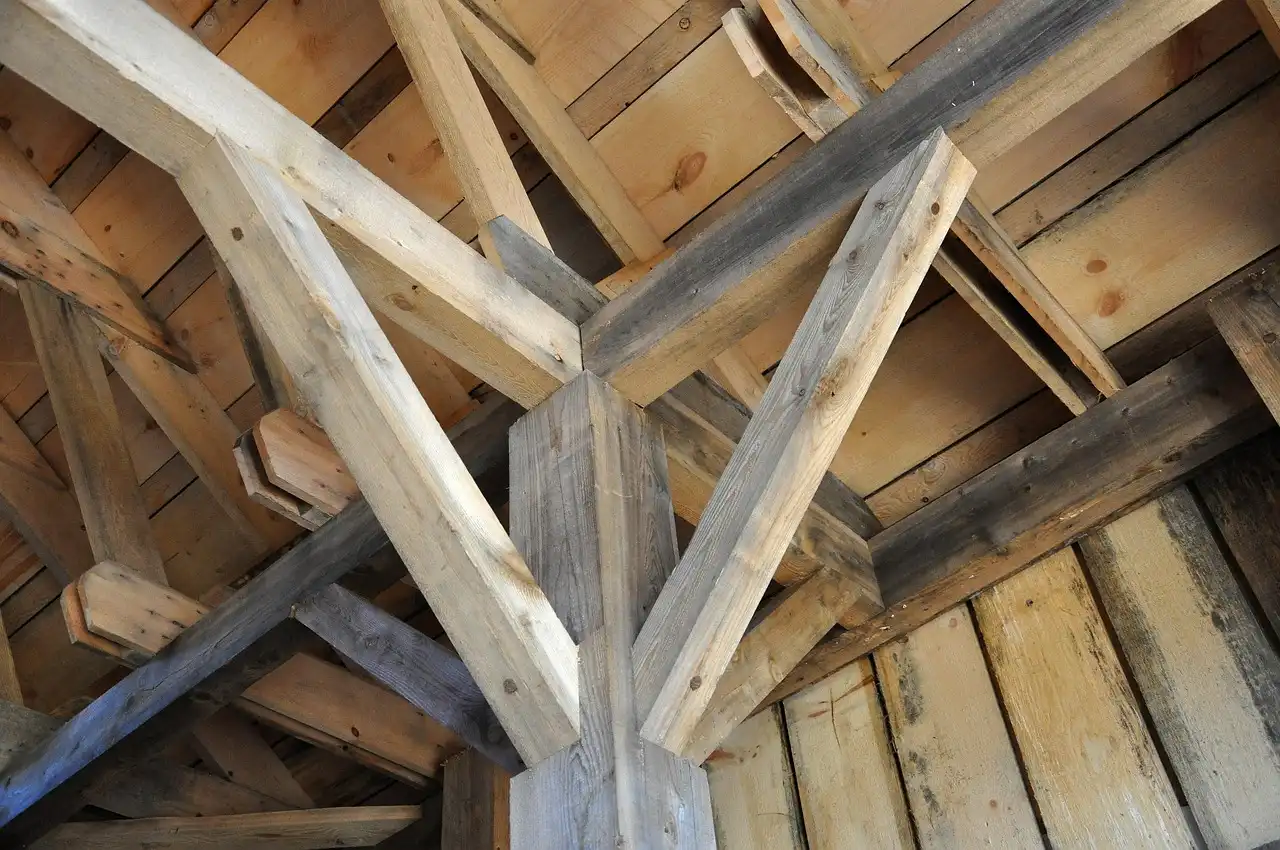
Wood beam life starts with exposure. Heavy timber and post-and-beam members often last 100-500+ years when they stay dry and are detailed well, while light wood framing is commonly listed at 50-100+ years. Exterior wood is much shorter at 10-30 years unless the species, treatment, and detailing fit the exposure.
Heavy timber and post-and-beam lifespan
Heavy timber and post-and-beam construction tends to outlast light framing because larger members handle surface weathering, checking, and local repair better. The main weak point is moisture at bases and joints, plus end-grain exposure. Keep those areas dry and easy to inspect, and service life can stretch far beyond a century.
Light framing lifespan
Light wood framing usually has a shorter service life because smaller members have less reserve section if decay starts. A well-built wood-frame house can last 100 years or more, but the framing itself is more sensitive to leaks, hidden wetting, and fastener corrosion. Small defects carry more weight.
Where LVL fits
LVL is a structural member designed to carry heavy loads. It is built from multiple thin wood veneers with grain running parallel to the member length, then bonded under heat and pressure. That process makes it straight and dimensionally stable when it arrives on site, but it still needs dry, protected detailing like any wood beam.
Species matters too. Wood durability class runs from Class 1 to Class 5, with Class 1 very durable and Class 5 not durable. For exposed uses, preservative-treated timber is common, and timber-frame builders often mention Western Red Cedar as a natural alternative in some applications.
What actually shortens beam life?
Moisture intrusion is the main driver. Once wood stays wet long enough, rot fungi can colonize it, insects may move in, and metal fasteners can corrode. Deferred maintenance then lets small leaks, failed flashing, and blocked drainage turn into structural damage.
Moisture intrusion and trapped water
Beam ends and caps are common moisture traps where water pools. So are joints, bearing pockets, and places where flashing or sealant has failed. Water does not need to soak the entire beam. A repeated wet spot at one end can start decay that moves inward.
Suppose a 6×10 beam under a porch roof has a hairline gap at the top of one end. Each rain event sends water into that gap. The face may look fine for a while, but the end grain can stay wet long enough to start decay where inspection is hardest.
Rot fungi and insects
Wood does not decay below 20% moisture content. Above 30% moisture content, decay becomes actively likely. That is why a beam can look serviceable while hidden moisture keeps it in the danger zone. Insects usually follow the moisture problem rather than create it first.
Fastener corrosion and deferred maintenance
Corroded connectors, nails, bolts, and plates can weaken the connection even if the wood itself is still sound. Deferred maintenance also lets sealant fail, joints open, gutters clog, and drainage stay poor until the beam end or bearing loses capacity.
Moisture levels that decide decay
Moisture content gives a practical threshold for risk. Below 20%, decay does not occur. Above 30%, decay becomes actively likely. That gap matters more than a vague “dry versus wet” rule, because a beam may seem fine on the surface while the moisture at an end or joint stays high.
Why 20% matters
Below 20%, the conditions are generally too dry for decay fungi to work. That does not make a beam indestructible, but it does mean the main rot mechanism is not active. For interior beams, staying below that threshold is the clearest route to long service life.
Why 30% raises risk fast
Once moisture climbs above 30%, decay becomes much more likely. That is the point where repeated wetting, a leaking flashing detail, or a hidden plumbing issue turns from nuisance to structure risk. If moisture stays high after repairs, the beam needs another look.
Beam ends and joints as moisture traps
Beam ends and joints deserve the most attention because they trap water and dry slowly. End grain absorbs moisture more readily than side grain, and joints can hide small leaks for months. Protective caps, flashing, drainage, and clear drying space do more than cosmetic finishes alone.
- Check beam ends first.
- Look under joints and bearing points.
- Find any stain, soft spot, or peeling finish.
- Confirm water can drain away from the member.
- Repair the moisture source before repairing the wood.
How do you know if a beam is sound?
A beam is usually sound when it is dry, firm, and free of decay at the bearing and connection points. Checking and shrinkage can be normal in timber frames, but a check that extends clear through a timber is structurally concerning. Soft wood, staining, or movement at supports deserves prompt attention.
Normal checking versus structural checking
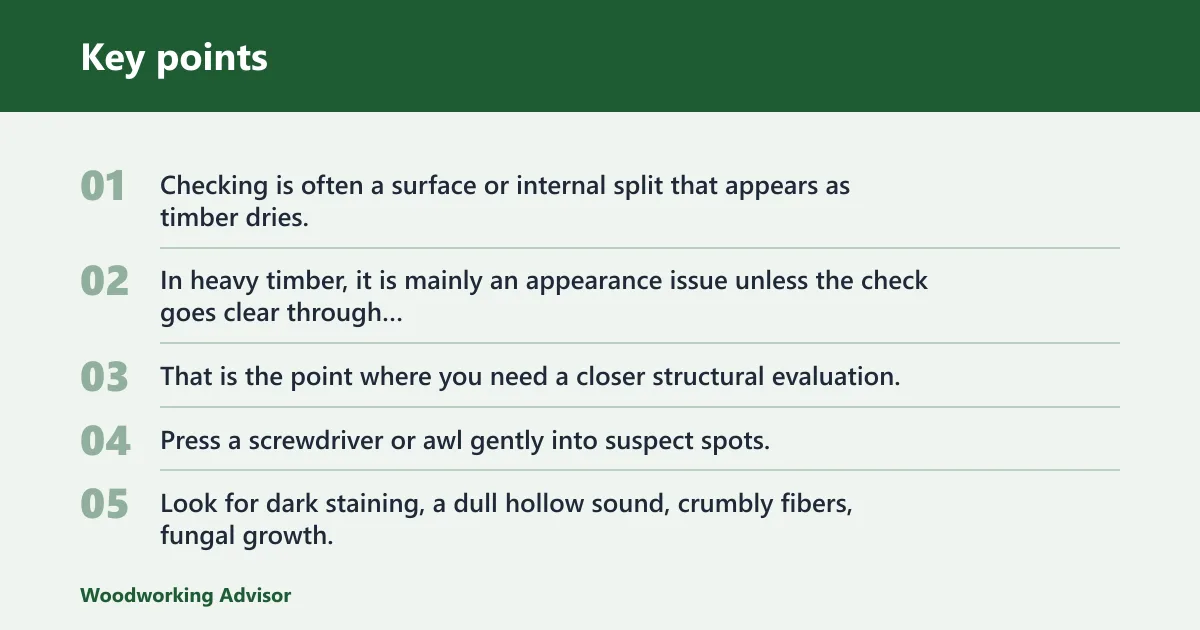
Checking is often a surface or internal split that appears as timber dries. In heavy timber, it is mainly an appearance issue unless the check goes clear through the timber or lines up with a load-bearing weakness. That is the point where you need a closer structural evaluation.
Signs of rot or soft wood
Press a screwdriver or awl gently into suspect spots. Sound wood resists; decayed wood yields. Look for dark staining, a dull hollow sound, crumbly fibers, fungal growth, and wood that feels punky near the ends or joints. Softness at the bottom of a post or beam end is especially serious.
A common first-timer mistake is to focus on a clean-looking face and ignore the underside of a beam near a wall pocket. If the top stays hidden and the end stays damp, the beam can look acceptable from one side while decay advances where support is actually transferred.
Inspection points at bearings and concealed areas
Inspect where the beam sits on masonry, steel, or wood supports. Check hidden pockets, caps, and wrapped ends. Review flashing above exterior beams, and trace drainage away from the structure. If a beam is boxed in, the concealed side needs access or inspection ports, not just a surface look.
Span is different from lifespan
Beam life and beam span are separate questions. Lifespan is about durability and exposure. Span is about the distance a beam can bridge under a given load. A longer span does not automatically shorten life, but it can increase stress, deflection, and the consequences of any decay.
What affects how far wood beams can span
Span depends on beam size, species, grade, load, and support spacing. A beam used for a roof span may perform very differently from one carrying a floor. The same species can last decades in one location and fail early in another if the load or support condition changes.
Why size, load, and species matter
Larger members carry more load and deflect less, which helps limit cracking at supports and joints. Species and grade determine strength, stiffness, and durability. For exposed members, a durable species or preservative-treated timber is often a better choice than simply choosing a larger section of a less durable wood.
Why a longer span does not mean a shorter life
A beam can span far and still last a long time if it stays dry and properly supported. The reverse is also true: a short span can fail early if the beam end is trapped in moisture or the bearing detail stays wet. Dryness and detailing decide life first.
Frequently asked questions
How long do wooden support beams last?
“Support beam” covers very different conditions. A dry interior support beam can last decades, often 50 to 100+ years. A semi-exposed or exterior support beam usually lasts less unless the species, treatment, and flashing are right. Check ends, joints, and bearing points first.
How far can wood beams span?
Span is a structural design question, not a lifespan question. How far a wood beam can span depends on its size, species, grade, load, and the spacing of supports. A beam that spans farther may need deeper section depth or engineered wood, but that does not by itself shorten service life.
How long can a wood beam span?
The beam does not “last” longer or shorter because of span alone. A longer span means more load demand and more deflection control, so the member must be sized accordingly. Life depends more on moisture, decay risk, insects, hardware corrosion, and maintenance than on span length.
What makes a wood beam rot or fail?
Repeated wetting is the main cause. Moisture above 30% makes decay actively likely, especially at beam ends, joints, and bearing pockets. Rot fungi, insects, corroded fasteners, and deferred maintenance then reduce capacity. If the beam stays below 20% moisture content, decay does not occur.
How do you know if a wood beam is structurally sound?
Look for firm wood, dry ends, intact joints, and no active staining or soft spots. Normal checking can be cosmetic, but a check that runs clear through a timber is a structural concern. If the beam is soft at a bearing or visibly decayed, get it evaluated for repair or replacement.
Do heavy timber beams last longer than framing lumber?
Usually, yes. The larger section tolerates local checking and minor damage better. Still, moisture at bases and joints can shorten either type quickly.
What maintenance helps wood beams last longer?
Keep water off the beam. Maintain flashing, drainage, and roof or plumbing repairs, and protect beam ends and joints from repeated wetting. For exposed members, use preservative-treated timber where appropriate, or a durable species such as Western Red Cedar in suitable applications. Inspect regularly and fix damage fast.
Sponsored / affiliate links. As an Amazon Associate I earn from qualifying purchases. I may earn additional commission from eligible campaigns.