How Much Does It Cost to Sand and Stain Wood Floors?
Sanding and staining wood floors usually costs about $2.50 to $6 per square foot, with sanding around $1.50 to $3.50 and stain plus labor about $1 to $2.50; full refinishing is often reported around $3 to $8. Poor prep or the wrong stain can leave scratches visible, create blotches, and shorten finish life. This guide breaks down sanding, staining, and full-refinish costs, then shows how floor condition and finish choice change the quote.
Cost breakdown table


| Work item | Typical per-square-foot range | What changes the price |
|---|---|---|
| Sanding | $0.50 to $3 | Number of passes, perimeter work, floor condition, and setup time |
| Staining | $1 to $3 | Labor, color changes, test samples, and cleanup |
| Topcoat and finish | $0.75 to $2.50 | Water-based vs oil-based products, extra coats, and dry time |
| Dustless upgrade | About $5 to $8 total refinishing cost per sq ft | Vacuum-attached sanding setup and more contained dust collection |
| Common repair add-ons | $1 to $5+ extra per sq ft | Water damage, pet stains, deep gouges, board replacement, and patching |
How much does it cost to sand and stain wood floors?
Sanding and staining wood floors usually lands at $2.50 to $6 per square foot when you separate the two tasks. Full hardwood floor refinishing is broader; it usually includes sanding, stain, coating, and final finishing, so the total often runs $3 to $8 per square foot.
That quote usually splits into labor and materials. Labor covers sanding passes, edge work around walls and trim, stain application, cleanup, and drying time. Materials cover sandpaper, stain, filler, tack cloths, and finish. If a contractor quotes only “refinishing,” ask whether sanding, stain, and topcoat are all included, because the scope changes the number fast.
Sanding hardwood floors can cost between $0.50 and $3 per square foot, while staining hardwood floors costs between $1 and $3 per square foot. Most stains cost between $27 and $40 per gallon, but gallon price does not map cleanly to job cost because labor, test spots, and the floor’s condition often cost more than the stain itself.
What changes the quote?
Floor condition is the biggest driver. Light wear may need standard sanding and one stain application. Deep scratches, water marks, pet stains, or old finish failure can add more sanding passes, filler, patching, or board replacement. Those repairs often change the quote more than the stain color choice does.
Room size also matters because fixed work does not shrink much. Small rooms still need setup, edging, and cleanup, so contractors often use a minimum charge. Larger rooms spread those fixed costs over more square feet, which usually lowers the per-square-foot price.
Wood species changes both labor and risk. Oak usually sands predictably. Cherry, maple, and mahogany can show sanding marks sooner if the crew stays too long in one spot. Pine can dent and cup more easily. Bamboo and engineered hardwood need extra caution because the wear layer may be too thin for aggressive sanding.
Suppose a 250-square-foot dining room has pet stains near the doorway and a few loose boards. The sanding quote may start in the normal range, then climb after patching, stain-blocking prep, and extra edging time are added. The stain color itself may not move the price much; the repair work will.
How sanding affects price
Traditional sanding uses a drum or orbital sander for the main field and an edger for perimeter work. Most jobs need multiple passes: a coarse pass to remove the old finish, a medium pass to remove scratches, and a fine pass before stain or topcoat. More passes mean more labor, more abrasive, and more time.
Traditional versus dustless sanding
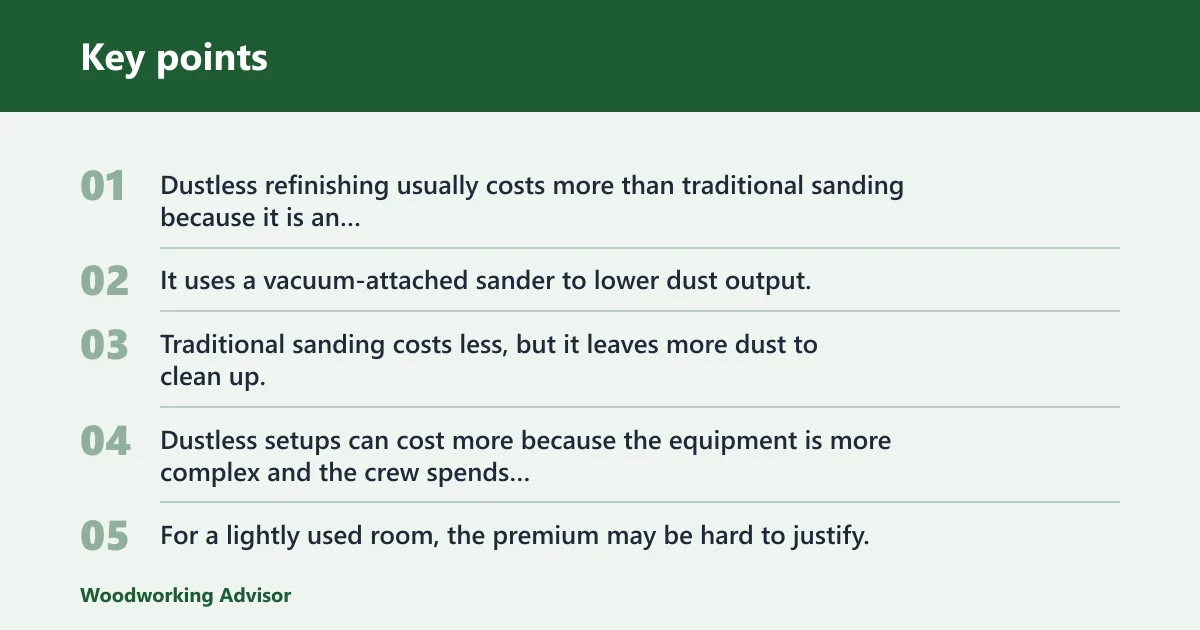
Dustless refinishing usually costs more than traditional sanding because it is an upgrade to the refinishing process, not a separate base price. It uses a vacuum-attached sander to lower dust output, which helps if anyone in the home has allergies, asthma, or another breathing concern. It does not make dust disappear. It reduces it.
Traditional sanding costs less, but it leaves more dust to clean up. Dustless setups can cost more because the equipment is more complex and the crew spends time managing collection hoses, filters, and containment. For a lightly used room, the premium may be hard to justify. For a home with sensitive occupants, it is easier to defend.
Perimeter sanding and DIY risk points
Perimeter sanding takes time because large sanders cannot reach tight edges, door frames, and corners. Edgers can leave swirl marks or a visible lip if the operator pauses too long. That is one reason DIY jobs often go wrong: the center of the room may look fine while the perimeter shows uneven sanding.
DIY sanding tools usually include a drum or orbital sander, an edger, a vacuum, and several grits of abrasive. The risk is time, but also the finish. Uneven pressure can leave waves, and a bad edge pass can stay visible after the finish dries. That risk rises on soft woods and thin wear layers.
How staining and finishing add cost
Staining can cost between $1 and $3 per square foot, but the real price depends on labor more than pigment. A same-color recoat is usually simpler than a full color change because the floor may not need as much color correction. A darker color change often requires more prep, more testing, and more attention to blotching.
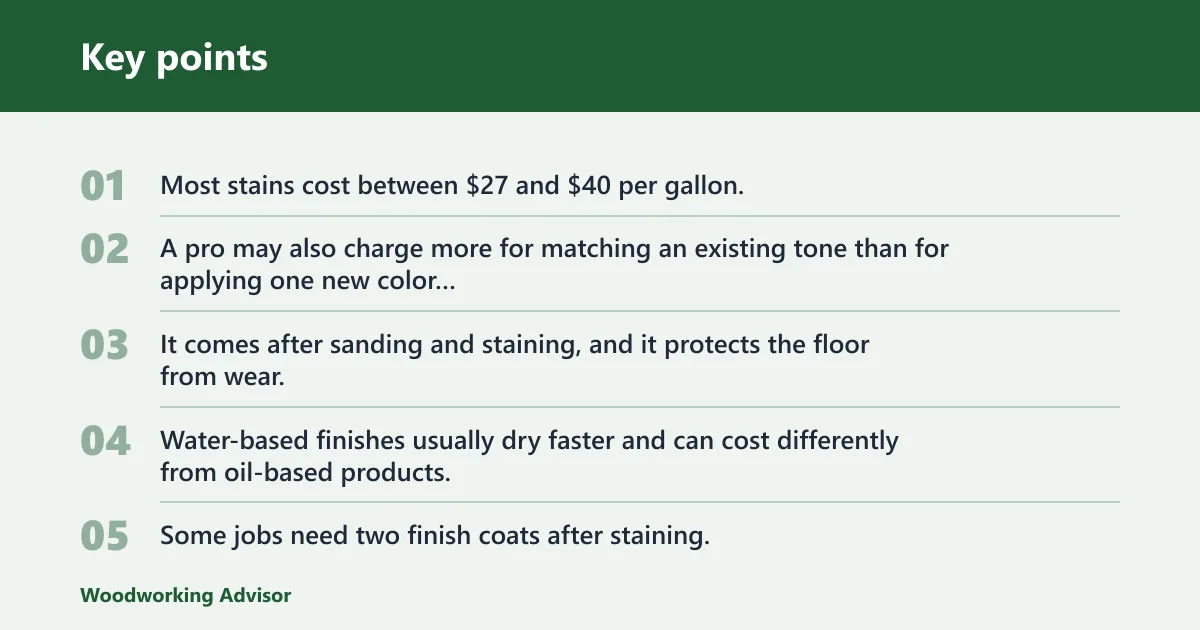
Stain gallons are only part of the equation. Most stains cost between $27 and $40 per gallon, yet a small job can still carry a high stain line item because opening, mixing, sample testing, and cleanup take time. A pro may also charge more for matching an existing tone than for applying one new color across the room.
Topcoat and finish costs
Topcoat is a separate cost driver. It comes after sanding and staining, and it protects the floor from wear. Water-based finishes usually dry faster and can cost differently from oil-based products. Some jobs need two finish coats after staining; others need three for better wear resistance. Extra coats raise both material use and labor time.
Think of finish as the last budget step, not an afterthought. If the floor needs stain but no color shift, finish still matters because it determines sheen, cure time, and how soon the room can be used. A quote that skips finish details is incomplete.
Picture a 400-square-foot living room with a medium oak floor and no major damage. The sanding, stain, and finish may stay near the middle of the range. Add a full color change to a darker tone, and the crew may spend more time testing, wiping, and correcting uneven absorption. The room size stays the same. The labor does not.
Room size cost examples
Use per-square-foot pricing as a starting point, then apply the contractor’s minimum charge if the room is small. A 100-square-foot room can cost more per square foot than a larger project because setup and edge work take nearly the same time either way. That is why the smallest rooms often feel expensive.
| Floor size | Traditional refinishing estimate | What usually drives the number |
|---|---|---|
| 100 sq ft | $300 to $800 | Minimum charge, setup, edging, and cleanup |
| 250 sq ft | $750 to $2,000 | Small-room inflation, repair risk, and stain labor |
| 400 sq ft | $1,200 to $3,200 | Typical mid-size project with better cost spread |
| 1,000 sq ft | $3,000 to $8,000 | More efficient labor spread, but more finish material |
| 2,000 sq ft | $6,000 to $16,000 | Large-job labor, staging, and material volume |
A homeowner can estimate a budget by multiplying square footage by a per-square-foot range, then adding repair allowances if the floor has damage.
A simple estimate method looks like this: square feet × base refinishing rate, then add sanding complexity, stain labor, finish type, dustless upgrade, and repairs. If the room is small, compare the result to the contractor’s minimum charge. If the room is large, check whether the price steps down on a per-square-foot basis.
Can engineered hardwood be sanded and stained?
Sometimes, but not always. Engineered hardwood can be sanded only if the wear layer is thick enough. If that top layer is too thin, sanding can cut through to the core and ruin the floor. Staining is only sensible when the surface can accept sanding and still keep enough wear layer left.
Ask for the wear-layer thickness before you hire anyone. Also ask how many times the floor has been refinished before, whether the manufacturer allows sanding, and whether the floor has beveled edges, wire-brushed texture, or a factory finish that may not accept stain well. Those details matter more than the wood name on the spec sheet.
For solid hardwood, sanding and staining are usually possible with the right method. For bamboo and engineered planks, the answer depends on construction. Maple and cherry may need gentler sanding than oak. Pine dents easily and may need more care during prep.
Frequently asked questions
How much does it cost to sand and re stain wood floors?
Resanding and restaining usually falls in the same cost band as first-time staining, but the old finish and prior color can add labor. Expect more time if the crew must correct blotches, remove a darker stain, or even out wear patterns before the new color goes down.
What is the average cost per square foot to sand and stain hardwood floors?
A practical average for sanding and staining hardwood floors is about $2.50 to $6 per square foot. Full refinishing is higher because it includes topcoat work and sometimes extra prep. Dustless refinishing usually adds cost, while minor jobs can dip below that range only when the floor is in very good shape.
What factors change the price of sanding and staining wood floors?
Floor condition, room size, wood species, stain color change, finish type, and repair work all affect the quote. Deep gouges, water damage, pet stains, loose boards, and board replacement can raise the price faster than stain choice. Small rooms also cost more per square foot because of minimum charges.
Is dustless floor refinishing worth the extra cost?
Dustless refinishing is often worth it when allergies, asthma, or cleanup concerns matter. It costs about $5 to $8 per square foot and uses vacuum-attached sanding gear to reduce airborne dust. It is still sanding, though, so containment and cleanup are better, not perfect.
What is included in a sanding and staining quote?
A complete quote should list sanding, stain labor, stain materials, topcoat, cleanup, and any repair add-ons. It should also say whether dustless equipment is included and how many finish coats are planned. If those parts are missing, the quote is probably incomplete.
Sponsored / affiliate links. As an Amazon Associate I earn from qualifying purchases. I may earn additional commission from eligible campaigns.