How Much Does It Cost to Refinish Wood Furniture?
Refinishing wood furniture can cost roughly $150 to $1,500 professionally, while many DIY jobs use about $40 to $250 in materials; simple side tables tend to stay on the lower end, but damaged pieces that need stain matching or sprayed lacquer can get much more expensive. I have seen people price a job by size alone and get burned, because stripping, repairs, and finish failures can add more cost than the piece can justify. This guide sorts cost by furniture type, actual condition, finish choice, and the point where hiring a pro makes more sense than doing it yourself.
How much does it cost to refinish wood furniture?


Professional furniture refinishing typically costs between $335 and $917, and the national average professional refinishing cost is $625. Most furniture renovations can run about $100 to $700 per item on average, but large dressers, damaged tables, and antique work move well beyond that because labor rises faster than material cost.
Typical professional range and what it includes
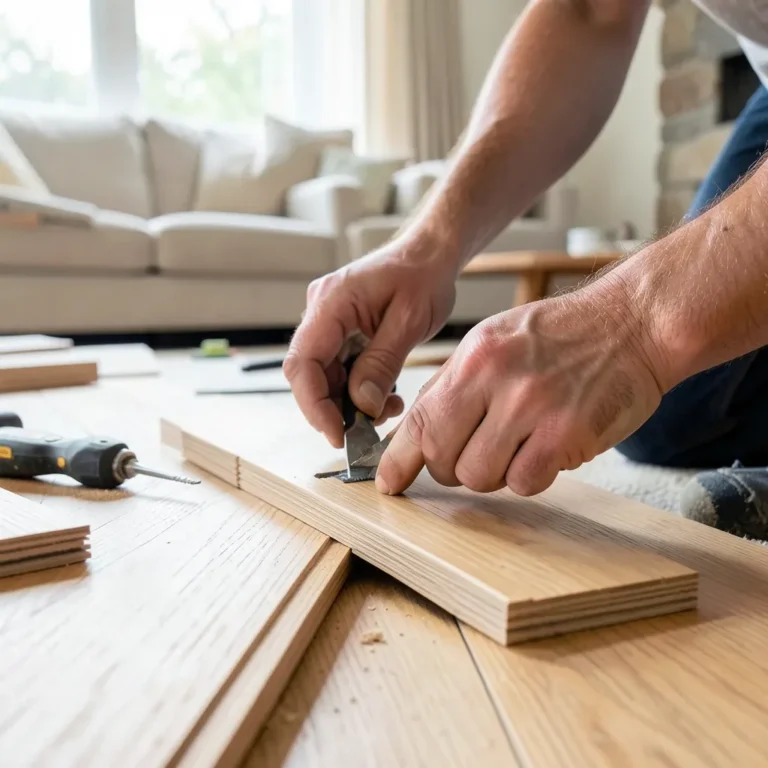
Furniture refinishing cost usually pays for the bench work and shop supplies tied to the actual steps required. In a standard quote, that usually means surface prep, stripping or sanding if needed, minor filling, stain or paint application, a protective topcoat, and reassembly of removable parts.
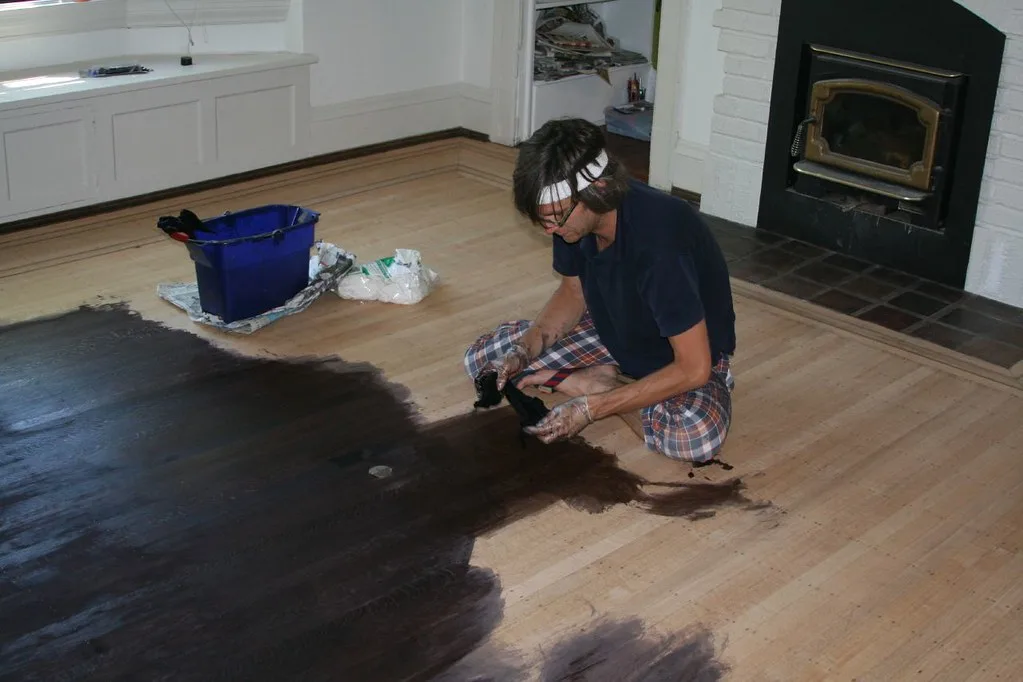
The refinishing process can include sanding and repainting. On stained wood, it may also include stripping old finish, color correction, and clear coating. On painted furniture, prep often leans harder on cleaning, adhesion sanding, blocking stains, and building a smooth paint film.
A basic quote usually fits a small, flat, sturdy piece with easy access and a simple clear finish. A premium quote usually involves one or more of these: finish removal that fights back, loose joints, veneer issues, carved or turned parts, hardware removal, odor sealing, or a close color match.
That is why two tables of similar size can land far apart. A plain coffee table with a worn top is one job. A pedestal dining table with leaves, dark stain, water damage, and an old lacquer finish is another.
📊 Professional furniture refinishing typically costs between $335 and $917. Source: Furniture Refinishing Cost: How Much You’ll Pay for a Professional Job.
What are you actually paying for in furniture refinishing?
A refinishing bill is mostly labor tied to prep, finish removal, repairs, color work, and topcoating. Materials matter, but they rarely drive the quote the way time does. The biggest budgeting mistake I see is lumping refinishing, restoration, and structural repair into one service, because they are different jobs with different time demands.
Standard process steps from prep to topcoat
- Cleaning to remove wax, oil, silicone, and grime.
- Disassembly of hardware, drawers, leaves, or detachable bases.
- Stripping or sanding, depending on the old finish and target result.
- Minor surface repairs such as filling dents or small checks.
- Structural work if joints, legs, slides, or veneer have failed.
- Stain, paint, toner, or other color work.
- Protective topcoat.
- Curing, rub-out if needed, and reassembly.
Labor versus materials in most estimates
Most quotes are labor-heavy because furniture has awkward shapes, edges, undersides, and parts that cannot be rushed. Flat surfaces strip quickly. Spindles, slats, turnings, moldings, and drawer interiors do not.
Materials usually include abrasives, stripper if used, filler, stain or paint, topcoat, masking supplies, and shop consumables. Better coatings can raise the bid, but the labor to prep the piece is usually the bigger line item.
Refinishing, restoration, and repair are different services
Refinishing means removing or abrading the old finish and applying a new one.
Repair means fixing function or structure: regluing joints, patching veneer, repairing drawer runners, straightening legs, or addressing water damage.
Restoration means preserving as much original material and character as possible, especially on older or valuable pieces. That often takes longer than full refinishing because less material can be removed and every step needs tighter control.
Use this cost-estimate worksheet before you call a pro
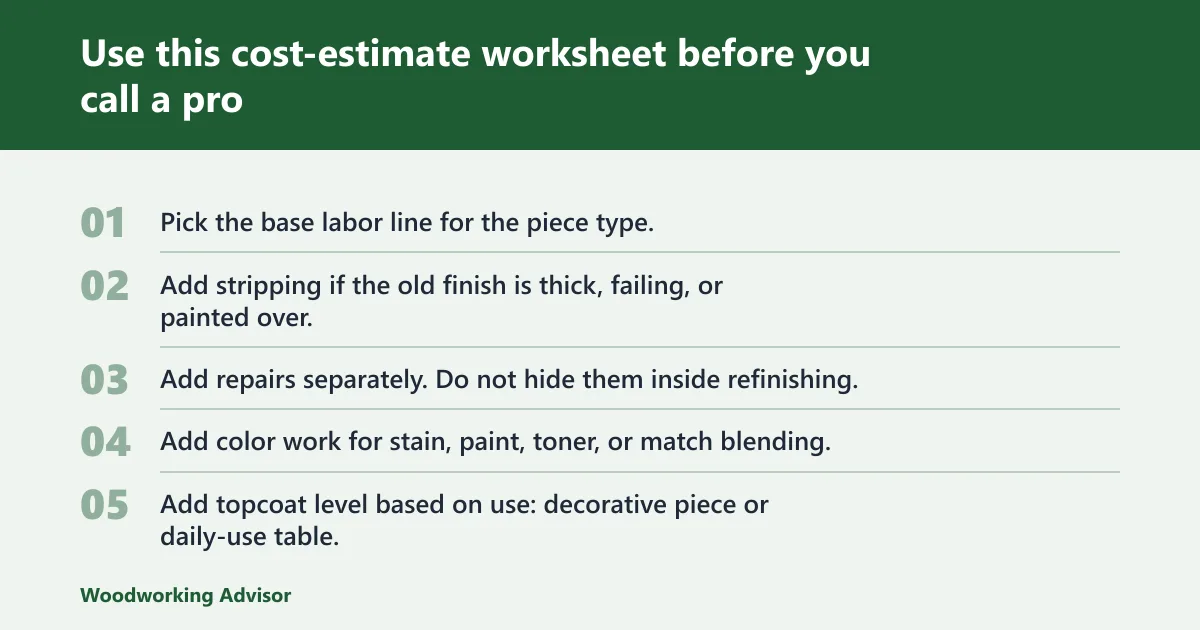
The quickest way to price a piece at home is to break the job into the same buckets a shop uses: base labor for the piece type, finish stripping, repair work, stain or paint work, topcoat, and shape-driven extras like drawers, slats, carving, or leaves. I use that split because it turns a fuzzy quote into a working estimate and makes it easier to compare a simple refinish against a repair-heavy restoration.
How to use the worksheet
Start with the furniture type. Then add only the line items that fit the actual condition and finish goal. The figures below are planning numbers for homeowner budgeting, not fixed shop rates, but they are specific enough to show where the money goes.
| Estimate line | Budget planning figure | What usually drives it up |
|---|---|---|
| Base labor: small side table or stool | $150 to $275 | Shelves, stretchers, turned legs |
| Base labor: coffee table | $200 to $400 | Lower shelf, routed edge, thick old finish |
| Base labor: dining table | $350 to $700 | Leaves, pedestal base, apron detail |
| Base labor: dining chair | $100 to $400 | Multiple slats, turnings, many joints |
| Base labor: dresser | $300 to $2,000 | Many drawers, veneer, hardware, color match |
| Strip heavy existing finish | Add $75 to $250 | Painted-over surfaces, lacquer buildup, carved parts |
| Extra sanding and leveling | Add $50 to $200 | Water marks, deep scratches, raised grain |
| Minor cosmetic repair | Add $40 to $150 | Dents, fills, small edge chips |
| Structural repair | Add $75 to $400+ | Loose joints, broken leg, drawer repair, veneer patching |
| Stain or color matching | Add $50 to $225 | Blotch-prone woods, mixed new and old wood |
| Paint finish | Add $50 to $200 | Primer, stain blocking, smoother prep standard |
| Protective topcoat upgrade | Add $40 to $175 | High-build finish, extra coats, table-use durability |
| Complexity add-on | Add $50 to $300 | Carving, pedestal base, slats, hardware removal |
| Antique or preservation-first work | Add 25% to 60% | Conservation methods, limited stripping, fragile parts |
Quick worksheet formula
- Pick the base labor line for the piece type.
- Add stripping if the old finish is thick, failing, or painted over.
- Add repairs separately. Do not hide them inside refinishing.
- Add color work for stain, paint, toner, or match blending.
- Add topcoat level based on use: decorative piece or daily-use table.
- Add complexity for slats, drawers, hardware, veneer, leaves, carving, or antique handling.
Example estimates using the worksheet
A plain side table with light wear and a clear topcoat often lands near the low end of the table. A dresser with six drawers, removed pulls, finish stripping, veneer touch-up, and stain matching can climb into the upper end quickly.
That is the real use of the worksheet. It tells you if the money is going into stripping, repairs, or the shape of the piece. In my shop experience, that beats any broad average every time.
How much does it cost to refinish tables, chairs, and dressers?

Tables, chairs, and dressers land in different bands because shape changes labor more than homeowners expect. Chairs are small but slow. Tables often have broad tops that need careful flattening and durable topcoats. Dressers carry wide surface area, drawer work, hardware handling, and frequent veneer issues.
Wood dining chair
A dining room chair may cost between $100 and $400 to refinish. Refinishing a wooden dining chair is cheaper than reupholstering a chair, but chair pricing still climbs fast when the frame has many slats, turnings, stretchers, or loose joints.
Simple seat-back chairs are the easiest. Ladder-back chairs, Windsor-style shapes, and chairs with many spindles take much longer to strip and sand. Paint can be easier than a clear stained finish when old color matching would be difficult, but paint often demands better prep if the goal is a smooth, furniture-grade surface.
Wood coffee table and side table
Coffee tables and side tables usually price well because most surfaces are open and easy to access. The cost rises when there is a lower shelf, routed edge, carved apron, turned legs, or finish failure on the top that requires heavier leveling.
For a coffee table, the top drives the job. A thick, scratched film finish can mean more stripping. A stained top with water rings may need more color correction before clear coats go on.
Wood dining table and hardwood table
Dining tables are often where homeowners underestimate cost. The top is broad, needs better flatness, and usually needs a tougher protective film than a display piece. Leaves add time. Pedestal bases add more.
Hardwood tables are not automatically cheaper or harder. The species matters more than the word hardwood. Oak can need grain filling for a smoother close-textured final look. Maple and birch can go blotchy under stain, which adds prep and color-control steps. A natural clear finish is often simpler than a dark stain match.
Dresser
A dresser may cost between $300 and $2,000 to refinish. That wide spread is real. Dressers combine large panels, multiple drawer fronts, hardware removal, interior edge work, and a high chance of veneer trouble on tops and sides.
Each drawer adds handling time. So does labeling and removing pulls, escutcheons, and slides. If veneer is lifting, chipped, or water-damaged, the structure and surface both need attention before any finish work starts.
Which factors change the price the most?
The biggest price movers are condition, the old finish, wood species, and the finish you want at the end. Size matters, but surface condition and finish complexity often matter more. A damaged small piece can cost more than a clean large one for that reason.
Piece condition
Light wear is cheap to handle. Deep scratches, black water marks, heat rings, sun fading, gouges, and loose veneer are not. Finish failure on a tabletop can require complete removal when a light sand-and-recoat would have handled a less damaged surface.
Veneer damage is a hidden driver. Once the face veneer is thin or broken, prep slows down because aggressive sanding is off the table.
Existing finish type
Some finishes come off easily. Others fight every inch. Old paint layered over varnish, heavy lacquer buildup, conversion coatings, and wax or silicone contamination all raise labor because the finish removal step gets slower and riskier.
That is why finish removal should be listed separately in an estimate. It is one of the clearest cost drivers in the whole job.
Wood species and grain filling
Wood species affects refinishing cost because different woods accept color and texture differently. Open-grained woods such as oak and ash may need grain filling if the goal is a smoother finish. Close-grained woods may skip that step but can create other problems.
Maple, birch, pine, and cherry are common examples of woods that can blotch under stain. If the color target is dark and even, the prep and finishing schedule gets longer.
Desired finish system
Paint, stain, and clear coat are not equal jobs. Paint often needs stronger stain blocking and more surface refinement. Stain needs careful bare-wood prep and color consistency. Natural clear finishes show every sanding error, glue spot, and patch.
A table top also needs a more durable topcoat than a low-use accent table. Extra coats, longer cure time, and a final rub-out can all appear as add-ons.
How much does it cost to repair or restore old wood furniture?
Repair and restoration often cost more than plain refinishing because they address function, missing material, and preservation. A standard refinishing quote usually covers surface prep and new finish, while loose joints, veneer patches, drawer rebuilding, and antique conservation sit outside that base scope and should be priced separately.
How much does it cost to repair wood furniture?
Repair pricing depends on the failed part, not the overall size of the piece. A loose chair joint may be a modest add-on. A broken leg, drawer reconstruction, water-damaged top substrate, or veneer replacement can become the main budget item.
- Loose joints and reglue work: usually moderate labor, common on chairs and tables.
- Broken legs or stretchers: more shaping, clamping, and finish blending.
- Drawer slide or runner issues: often tedious because drawers must fit cleanly after repair.
- Veneer patches: slow work, especially when grain and color need to disappear into the field.
How much does it cost to restore old furniture?
Old furniture restoration costs more when the goal is to preserve original parts, patina, and construction rather than strip everything clean. That approach is common on antiques and family pieces where historical value or sentimental value matters more than getting a brand-new-looking surface.
Antique furniture restoration is a delicate process. Preserving integrity usually means less aggressive stripping, more selective repair, more careful cleaning, and finish decisions that respect the original build. Labor rises because every step is slower and mistakes are harder to hide.
When restoration can exceed replacement and still make sense
If a common, low-value piece needs heavy repair, replacement can be the better financial move. If the piece is antique, unusually well made, sentimental, or hard to replace in solid wood, restoration can still be worth it even when the cost exceeds the price of a new item.
That is also the point where kitchen comparisons help. Kitchen cabinet refinishing can cost $1,800 to $4,100, and refinishing kitchen cabinets is one of the most expensive refinishing jobs. Furniture can follow the same logic: many parts, repeated doors or drawers, and high prep demands push labor up fast.
Can a conditioning wax restore your old wood furniture?
Howard Feed-N-Wax uses beeswax and Brazilian carnauba wax suspended in orange oil to penetrate dry wood and revive faded finishes, but it only addresses superficial wear rather than deep structural damage. A thorough Howard Feed-N-Wax review details exactly which surface flaws the treatment improves, which imperfections it merely masks, and where it falls short on bare wood or stripped surfaces.
Understanding these performance limits helps you decide whether simple conditioning is enough to save your piece or if you need a more aggressive restoration approach before spending money on materials.
Should you refinish it yourself or hire a professional?
DIY refinishing works best on simple, sturdy pieces with flat surfaces and limited damage. It becomes a poor trade when the piece is large, veneer-faced, antique, structurally loose, or needs an even stain match. Material cost can stay low, but time, tools, and rework often erase the savings.
Best candidates for DIY
Small side tables, plain coffee tables, and basic chairs with sound joints are the safest DIY choices. Light wear, a simple painted finish, or a straightforward clear coat over clean wood are manageable for many homeowners.
Projects to leave alone or price carefully
Antiques, veneered dressers, pedestal dining tables, and anything with odor damage, major water staining, or failing joints should be approached carefully. The same goes for dark stain matching, lacquer touch-up, and preservation-first restoration.
Time, tools, and common mistakes
DIY usually goes wrong in prep. Common mistakes include sanding through veneer, leaving stripper residue, failing to remove silicone contamination, underfilling open grain, applying stain unevenly, and topcoating before the color layer is ready.
Homeowners should also count the cost of abrasives, stripper, fillers, primer if painting, topcoat, brushes or spray equipment, masking supplies, and space to let the piece cure. A cheap material list on paper can still become expensive when a table top has to be redone.
When a professional quote is the safer call
Hire a pro when the piece has value, the shape is fussy, the finish needs to look even across a large top, or structural repair is involved. If a quote clearly separates refinishing from repairs, it is easier to see what the shop is actually charging for.
How to decide whether to refinish, repair, strip, or replace
Quick decision framework
- Refinish when the structure is sound and the problem is mainly worn, ugly, or failed finish.
- Repair first when joints, legs, drawers, or veneer have failed.
- Restore when the piece is antique, historically interesting, or sentimental and preserving original material matters.
- Screen and recoat when the finish is dull or lightly scratched but still attached well.
- Replace when the piece is low value and needs heavy repair plus full refinishing.
When a screen-and-recoat beats full stripping
If the existing finish is stable and the damage is shallow, a light abrasion and fresh clear coat can cost much less than full stripping. This works best when there is no widespread peeling, alligatoring, deep water damage, or incompatible contamination.
How to compare quotes on the same piece
Ask each shop to break out finish removal, repairs, color work, and topcoat. Ask whether hardware removal is included, whether drawers and undersides are refinished, whether veneer work is extra, and whether the quoted finish is paint, stain plus clear coat, or clear coat only.
That format makes apples-to-apples comparison possible. It also shows when one quote is lower only because it skips repairs or uses a simpler finish system.
Frequently asked questions
How much does it cost to have furniture refinished?
Professional furniture refinishing typically costs between $335 and $917, and the national average professional refinishing cost is $625. Labor and materials are usually included for the needed steps, but repairs, veneer work, and antique preservation are often separate add-ons that push the final number higher.
How much does it cost to refinish wood table?
A wood table can land near the lower end if it is a small side table with a simple clear coat, or much higher if it is a dining table with leaves, pedestal details, heavy finish removal, and stain matching. Tabletops often cost more than expected because they need durable finish work.
How much does it cost to refinish a wood dining table?
A wood dining table usually costs more than a coffee table because of its larger top, heavier wear, and higher topcoat demands. Leaves, aprons, and pedestal bases add labor. If the old finish is failing or the color needs correction, the total can move from moderate into premium territory quickly.
How much does it cost to refinish a wood coffee table?
A wood coffee table is often one of the better-value professional refinishing jobs because the surfaces are open and easy to access. Cost rises with lower shelves, carved edges, turned legs, deep water marks, or a thick old film finish that requires full stripping before new stain or clear coat.
How much does it cost to repair wood furniture?
Repair cost depends on what failed rather than the overall size of the piece. Loose joints may be a modest add-on, while broken legs, drawer rebuilding, veneer patches, or water-damaged panels can become the main expense. Repair should be listed separately from refinishing in any useful quote.
How much does it cost to restore old furniture?
Old furniture restoration usually costs more than standard refinishing because the goal is to preserve original material and character. Antique furniture restoration is a delicate process, and that slower approach raises labor and material cost. It still makes sense when the piece has historical, sentimental, or build-quality value.
Sponsored / affiliate links. As an Amazon Associate I earn from qualifying purchases. I may earn additional commission from eligible campaigns.