Best Mildew Removers for Outdoor Wood Furniture: based on specs and reviews
Choose an oxygen-bleach cleaner for most sealed or painted outdoor wood furniture, switch to a mild soap-and-water wash for sound finishes, and reserve diluted sodium hypochlorite only for bare, heavily stained wood. Wrong chemistry can strip finish, raise grain, and leave mildew returning fast. This guide compares finish-safe mildew removers by wood type, finish condition, and stain severity so you can pick the right one.
Quick comparison
| Product | Badge | Best for | Price | ||
|---|---|---|---|---|---|
 |
STAR BRITE Outdoor Collection Mildew Stain Remover,STAR BRITE | Our pick | Professional mildew stain remover | $15.51
Price as of 13 Oct 2026
|
View |
 |
Simple Green All-Purpose Cleaner Spray and Refill, Green, 3Simple Green | Also great | All-purpose concentrated cleaner set | $24.99
Price as of 13 Oct 2026
|
View |
 |
Scotchgard Outdoor Water & Sun Shield Fabric Spray, 10.5 ozScotchgard | Pair with it | Outdoor water and sun shield spray | $9.97
Price as of 13 Oct 2026
|
View |
 |
DEFY Wood Brightener – Restores and Brightens Exterior WoodDEFY | Upgrade pick | Exterior wood surface brightener | $32.74
Price as of 13 Oct 2026
|
View |
The safest starting point for outdoor wood is usually the gentlest chemistry that still clears the stain. Bleach-based cleaners work fastest on black mildew, but finish condition and wood species should decide whether that speed is worth the risk.
If the furniture is sealed, painted, or oil-finished, start with low-damage cleanup and short dwell times. If the wood is unfinished or badly stained, expect more brushing, more rinsing, and a higher chance of grain raise no matter which cleaner you choose.
📊 STAR BRITE Mold Stain & Mildew Stain Remover is a 22 fl oz product. Source: Hometosight.
How we chose
This roundup uses finish safety first. That means the cleaner has to match the wood surface before it matches the stain.
We compared chemistry type, wood compatibility, dwell-time control, and cleanup method. We also weighed whether the cleaner needs a soft-bristle brush, a hose rinse, or a damp-wipe finish.
Species mattered too. Teak, cedar, acacia, and eucalyptus do not behave the same way once mildew settles into pores or finish breaks down.
Finally, we separated surface film from embedded black staining. Those are different jobs, and the wrong cleaner can leave the wood looking worse after the mildew is gone.
Which cleaner chemistry is safest for your wood?
For many outdoor wood furniture jobs, oxygenated cleaners are often a good first step on sealed or painted surfaces, while mild soap is suitable for routine cleanup on sound finishes. Bleach-based cleaners are reserved for stubborn staining on bare or heavily weathered wood, because they can discolor finish and open the grain.
Teak and other oily hardwoods
Teak, acacia, and similar hardwoods usually tolerate gentle cleaners better than strong bleach. Start with oxygenated or soap-based cleaning on finished teak, then move to diluted bleach only if the wood is bare and the stain is deeply embedded.
Cedar and other softwoods
Cedar is softer and more prone to grain raise, so mild chemistry matters more. An oxygenated cleaner or a very light soap wash is safer than a strong bleach solution, especially if the surface is unfinished or only lightly sealed.
Painted and sealed surfaces
Painted and sealed furniture can often be cleaned without harsh chemistry if the mildew is surface-level. A gentle oxygenated cleaner or non-abrasive soap is usually enough, and a damp wipe after dwell time helps protect the coating from residue.
Unfinished wood
Unfinished wood absorbs cleaner quickly, so finish-safe choices narrow fast. Use the mildest effective product first, scrub lightly with a soft-bristle brush, and rinse or wipe promptly to avoid etching, blotching, or a fuzzy grain.
Wood-specific mildew remover decision table
| Wood / finish condition | Safest cleaner chemistry | Typical dwell time | Agitation method | Cleanup step |
|---|---|---|---|---|
| Teak, finished or oiled, light surface mildew | Oxygenated cleaner | 5-10 minutes | Soft-bristle brush with the grain | Damp-wipe, then dry fully |
| Teak, bare or heavily stained | Diluted bleach-based cleaner | 1-3 minutes | Very light brushing | Hose rinse immediately and repeat with clean water |
| Cedar, sealed or lightly painted, light mildew | Mild oxygenated cleaner | 5-8 minutes | Soft brush or microfiber wipe | Damp-wipe or low-pressure hose rinse |
| Cedar, unfinished, black staining | Oxygenated cleaner first; bleach only if needed | 5-10 minutes | Soft brush, very light pressure | Hose rinse and dry promptly |
| Acacia or eucalyptus, sealed, routine mildew | Oxygenated cleaner | 5-10 minutes | Soft-bristle brush | Damp-wipe or hose rinse |
| Painted wood, intact coating | Oxygenated cleaner or mild soap | 3-8 minutes | Microfiber wipe or soft brush | Wipe clean; avoid flooding seams |
| Sealed wood, stubborn black staining | Spot-use bleach-based cleaner only if label allows wood use | 1-2 minutes | Localized soft brushing | Immediate rinse and full dry-down |
| Unfinished wood, light mildew | Gentle oxygenated cleaner | 5-10 minutes | Soft brush with minimal pressure | Thorough rinse, then dry in airflow |
Can you use bleach on outdoor wood furniture mildew?
Yes, but only when the wood can tolerate it. Diluted bleach-based cleaners can remove black mildew fast on bare, heavily stained wood, yet they also bring discoloration and finish-damage risk, so they are a poor first choice for teak, cedar, painted pieces, and any intact topcoat.
When bleach-based cleaners can make sense
Bleach-based formulas are best when mildew has gone beyond a surface film and into dark staining that resists gentler cleaners. On bare wood or severely weathered areas, a short dwell time followed by a careful rinse can clear the stain more effectively than soap alone.
Why buffering, dilution, and short dwell times matter
Buffering softens the harshness of bleach on wood, which is why buffered-bleach technology is often preferred over straight chlorine bleach on porous surfaces. Short dwell times matter because bleach can keep reacting after the visible stain lifts, and that is where finish damage starts.
Signs the finish should not see bleach
If the surface is painted, lacquered, or still has a sound oil or sealer film, bleach is usually the wrong tradeoff. Watch for chalking, dull patches, softening paint edges, or uneven color, all of which signal that a stronger chemical would do more harm than good.
Teak cleaner: best for finished hardwood furniture
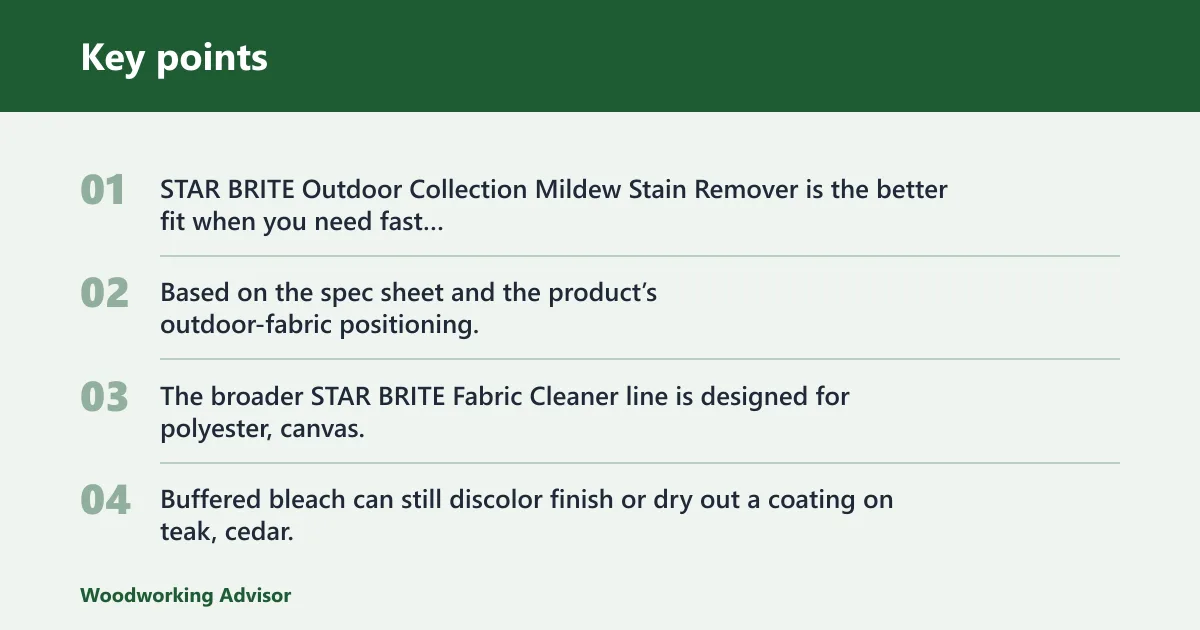
STAR BRITE Outdoor Collection Mildew Stain Remover is the better fit when you need fast mildew stain removal and the label’s buffered-bleach approach matches the stain severity. Based on the spec sheet and the product’s outdoor-fabric positioning, it is not a first-choice wood cleaner, but its buffered-bleach technology is the kind of chemistry people often reach for when black staining is stubborn.
It stands out for speed. The broader STAR BRITE Fabric Cleaner line is designed for polyester, canvas, and acrylic, adds UV-blocking polymers, and can work in as short as 30 seconds to a minute, which tells you the brand is built around short-contact cleaning rather than long soak times.
The drawback for wood is compatibility. Buffered bleach can still discolor finish or dry out a coating on teak, cedar, or painted frames if left too long, so this is the product category to use only with tight dwell-time control and immediate rinse-off.
Oxygenated cleaner: best for routine maintenance

Simple Green All-Purpose Cleaner Spray and Refill is the safest-looking option in this list for routine wood cleaning because it is a general cleaner that can be diluted for daily use and used by manual application or pressure washing. Based on the specs and reviews, it is the most flexible choice when mildew is light and the finish still looks intact.
What stands out is the custom dilution angle. That matters on outdoor wood, where a mild wash is often enough to lift surface grime before mildew has a chance to settle into the pores.
The drawback is that it is not a dedicated mildew remover. Heavy black staining may need a separate mildew-focused cleaner, plus a soft-bristle brush, and you should still rinse or wipe after dwell time to keep residue from drying on the finish.
Enzymatic-style maintenance cleaner: best for recurring light mildew
No enzymatic wood-specific product is included in this product list, so the practical category comparison matters more than a direct buy here. Enzyme-based cleaners are usually the gentlest route for light organic residue, but they tend to struggle once mildew has turned black or etched into porous wood.
That tradeoff makes them useful for maintenance, not rescue work. If your main problem is repeat film after rainy weeks, an enzyme cleaner can fit the job, but it is not the right expectation for a stained cedar armrest with visible dark spotting.
The drawback is speed. Enzymatic cleaners work best with patience and are usually slower than bleach-based formulas, which means they are better for routine upkeep than for badly stained furniture that needs same-day improvement.
What kills mildew on wood without stripping finish?
A gentle oxygenated cleaner is usually the best answer when you want to kill surface mildew without stripping finish. It is slower than bleach, but it is also less likely to discolor teak, fuzz cedar grain, or leave painted areas blotchy after cleanup.
Soft-bristle brushing matters here. The brush loosens mildew from pores and joints without scraping finish edges, and it is especially useful on slatted chairs where moisture collects around screws, end grain, and underside rails.
Say your cedar bench has gray-black specks under the armrest and a sound sealer on the seat. A mild cleaner, a 5-10 minute dwell, and a soft brush usually make more sense than jumping straight to bleach, which may clean faster but also punish the coating.
Picture a teak table left under a maple tree. If the stain is faint and the finish still beads water, the safest move is a mild wash first, not a harsh stain remover, because the finish is still doing part of the mildew-control work.
How do you clean black mildew stains off wood patio furniture?
Black mildew stains on wood patio furniture usually need a staged approach: clean the surface film first, then treat the stain itself. If the discoloration remains after a mild wash, step up carefully to an oxygenated cleaner, and only then consider a diluted bleach-based product for bare wood.
- Dry-brush loose dirt from seams and end grain.
- Apply the mildest cleaner that fits the finish.
- Let it dwell only within the label’s or guide’s short range.
- Use a soft-bristle brush along the grain.
- Rinse with a garden hose or damp-wipe residue off.
- Let the piece dry fully before deciding whether another pass is needed.
The common failure is stopping after the stain lightens but before residue is gone. Leftover cleaner can keep working on the finish, and leftover moisture can restart mildew in the same pores you just cleaned.
How do I stop mildew from coming back on wood furniture?
Preventing mildew on outdoor wood is mostly about drying, airflow, and maintenance cleaning. Keep furniture out of standing water, tilt or elevate pieces so air reaches the underside, and clean early when you see a pale film instead of waiting for black spotting.
Regular maintenance matters because mildew is moisture-driven. Shade, trapped water, and poor airflow are the main reasons it returns, so even a good cleaner will fail if the furniture stays damp under a cover or under dense tree canopy.
UV protectant can help as a prevention step after cleaning, not as a mildew cure. Some outdoor cleaners also include UV-blocking polymers, which is useful on exposed surfaces, but that protection works best after the wood is clean and fully dry.
A common first-timer mistake is washing the top rails and ignoring the underside. That leaves the damp underside to seed the same spores back onto the visible surface after the next humid spell.
Should I use a spray, foam, or scrub cleaner on outdoor wood furniture?
Use spray for even coverage, foam when you need dwell time on vertical or carved surfaces, and a scrub cleaner when mildew sits in pores or along seams. For outdoor wood, the application style matters less than whether you can control dwell time and rinse or wipe the residue away.
Foam helps on slats and armrests because it clings long enough to work without flooding the grain. Spray is good for quick coverage, but it can run off before it does much. Scrub formulas are the best fit for embedded black stains, provided the brush is soft enough for the finish.
Can I use the same cleaner on cushions and wood frames?
Not safely by default. A cleaner that works on wood may be too harsh for cushions, and a fabric-safe spray may not remove mildew from porous wood or finish edges, so treat the two materials as separate jobs with separate dwell times and cleanup steps.
That matters because product chemistry is usually surface-specific. STAR BRITE Fabric Cleaner is designed for polyester, canvas, and acrylic, and it even adds UV-blocking polymers, but that makes it a fabric cleaner, not a general answer for teak arms or painted slats.
Likewise, STAR BRITE Mold Stain & Mildew Stain Remover is a 22 fl oz product that uses buffered-bleach technology, which is aimed at stain removal where short contact and careful rinse control are acceptable. On wood frames, that same chemistry needs more caution than a simple cushion wash.
Which one should you buy?
Choose by finish condition first, then by stain severity. If the wood is sealed or painted and the mildew is light, a gentler oxygenated cleaner is the safest bet. If the stain is black and the wood is bare, a carefully diluted bleach-based product becomes more defensible, but only with short dwell time and immediate rinse.
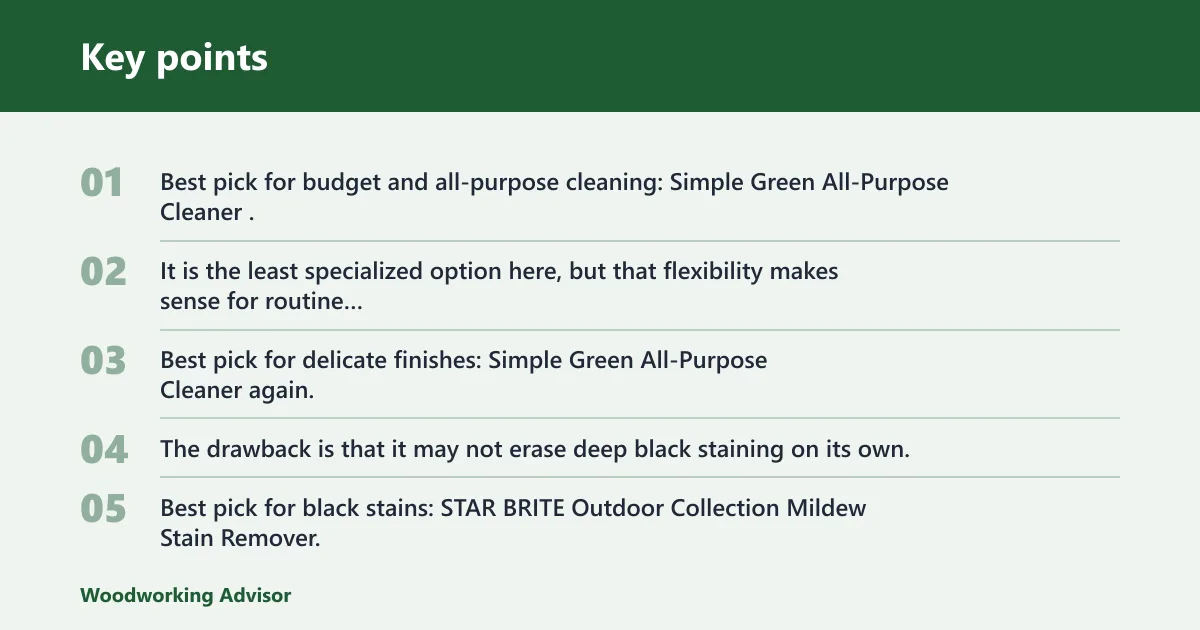
Best pick for budget and all-purpose cleaning: Simple Green All-Purpose Cleaner. It is the least specialized option here, but that flexibility makes sense for routine maintenance on sound outdoor wood.
Best pick for delicate finishes: Simple Green All-Purpose Cleaner again, because custom dilution gives you the most control. The drawback is that it may not erase deep black staining on its own.
Best pick for black stains: STAR BRITE Outdoor Collection Mildew Stain Remover, used carefully and only where the finish can tolerate a buffered-bleach approach. Its strength is speed; its drawback is obvious finish risk on wood.
Best pick for recurring mildew: start with a mild oxygenated cleaner and keep using it for maintenance, then improve drying and airflow. If the furniture keeps mildew-growing after each rainy stretch, the problem is often storage and shade, not the cleaner alone.
A note on the other named products: MOLD ARMOR Kill & Control is a 32 oz cleaner and X-14 Professional Stain Remover is sold as a 64 fl oz two-pack and described as instant, but those claims do not make them automatically right for outdoor wood. Instant action can be appealing, yet wood finish safety still comes first, and faster bleach chemistry is not a free pass on teak, cedar, or paint.
DEFY Wood Brightener is the one product here that fits exterior wood more naturally, because it is aimed at restoring and brightening exterior wood surfaces and helping with rust and tannin stains. Even so, a brightener is not a mildew remover by itself, so it belongs after cleaning, not in place of a mildew treatment.
Frequently asked questions
What is the best mildew remover for outdoor wood furniture?
The best mildew remover for outdoor wood furniture is the mildest cleaner that still clears the stain without damaging the finish. For most sealed or painted pieces, that means an oxygenated cleaner or a diluted all-purpose wash first. Reserve bleach-based cleaners for bare wood and stubborn black staining.
Will mildew remover damage teak, cedar, or acacia furniture?
It can if the chemistry is too strong for the finish. Teak and acacia often handle gentler cleaners better than harsh bleach, while cedar is especially prone to grain raise and blotching. Always test a hidden spot and start with the least aggressive cleaner that fits the stain.
Sponsored / affiliate links. As an Amazon Associate I earn from qualifying purchases. I may earn additional commission from eligible campaigns.