How to Attach Wood to Aluminum Without Corrosion (2 Proven Methods)
The fastest way to attach wood to aluminum is a stainless steel self-tapping screw through a pre-drilled pilot hole, or a polyurethane construction adhesive if you want a flush, fastener-free bond. The material that actually fails this joint isn’t the wood or the aluminum — it’s the wrong fastener metal. Plain steel screws in bare aluminum set up a galvanic reaction that corrodes the aluminum from the inside out, often before the wood itself shows any wear.
Quick answer: For a permanent bond, use stainless steel self-tapping screws with a pilot hole (mechanical) or a polyurethane construction adhesive like Loctite PL Premium (no fasteners, no corrosion risk). Never use plain steel screws on bare aluminum outdoors — galvanic corrosion will eat the aluminum around the screw within one to two seasons.
Why Most Wood-to-Aluminum Joints Fail (and It’s Not the Wood)
EDITOR’S PICK — ADHESIVE BOND
 |
Loctite PL Premium Polyurethane Construction Adhesive – $5.84 A one-part polyurethane adhesive that bonds wood directly to bare aluminum with no fasteners, no drilled holes, and no corrosion risk — the fix most guides skip.
|
As an Amazon Associate we earn from qualifying purchases.
Two things cause almost every failed wood-to-aluminum attachment: galvanic corrosion and thermal mismatch. Aluminum sits far from steel on the galvanic series, so any plain steel, zinc-plated, or even some “stainless” fastener grades will corrode the aluminum wherever moisture collects — a screw head, a washer, a joint line. Separately, aluminum expands and contracts about twice as much as wood does across a temperature swing, so a rigid connection across a long board eventually cracks the glue line or works the screws loose. Solving for both up front is the real difference between a joint that lasts one season and one that lasts twenty.
Method 1: Mechanical Fastening With Screws
Mechanical fastening is the right call when you need to remove or adjust the wood later — deck ledger boards, removable panels, signage.
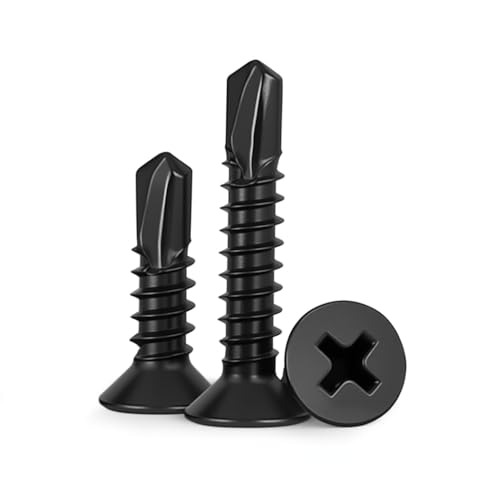
- Use 18-8 or 316 stainless steel self-tapping screws (sheet metal screws), never plain steel, zinc, or galvanized — those corrode aluminum on contact with moisture.
- Drill a pilot hole through the aluminum sized to the screw’s minor (root) diameter, then a slightly oversized clearance hole through the wood so the screw doesn’t bind the wood fibers.
- For runs longer than about 4 feet, drill the aluminum-side holes as short slots rather than round holes so the metal can expand and contract without stressing the screws.
- Add a nylon or rubber washer between the screw head and the aluminum surface to break metal-to-metal contact and stop water from pooling at the joint.
- Drive the screw until snug — overtightening dimples the aluminum and creates a low spot where water collects.
Method 2: Adhesive Bonding for a Fastener-Free Joint
Adhesive bonding is the better choice for a flush, visible surface — trim pieces, tabletop edging, cladding — where screw heads would be ugly or where drilling into the aluminum isn’t an option.
| Adhesive Type | Best For | Flexibility | Cure Time |
|---|---|---|---|
| Polyurethane construction adhesive | General bonding, outdoor use | High — absorbs thermal movement | 24 hrs |
| 2-part epoxy (structural) | Load-bearing, small joints | Low — rigid, can crack on long spans | 4–24 hrs |
| Acrylic foam tape (3M VHB) | Flat panels, no wet cycling | High | Instant handling, 72 hrs full strength |
Whichever adhesive you choose, surface prep decides whether the bond holds. Wipe the aluminum with isopropyl alcohol or acetone to strip the oxide layer and any mill oil left from manufacturing, then scuff it with 120–180 grit sandpaper right before bonding. Skipping this step is the single most common reason an adhesive joint releases within weeks — the glue never touches bare metal, only the oxide film sitting on top of it.
Avoiding Galvanic Corrosion Between Wood Fasteners and Aluminum
Galvanic corrosion happens when two dissimilar metals sit in electrical contact with an electrolyte (rain, humidity, even condensation) between them. Aluminum is anodic to steel, meaning it sacrifices itself to protect the steel — the aluminum pits and corrodes around every steel screw or nail on the joint. This is why a deck ledger or aluminum-framed structure fastened with the wrong screws shows white, crumbly corrosion rings within a year or two outdoors, long before the wood itself needs attention.

- Use 18-8 or 316 stainless steel, or aluminum fasteners — both are galvanically compatible with aluminum.
- Isolate dissimilar metals with a nylon washer, rubber gasket, or a bead of sealant between the screw head and the aluminum.
- Never use plain steel, zinc-plated, or galvanized screws or nails directly against bare aluminum outdoors.
Accounting for Thermal Expansion
Aluminum’s coefficient of thermal expansion (about 13 x 10-6 per °F) is roughly double most softwoods along the grain. Over a 3-foot run and a 60°F seasonal swing, that difference is enough to crack a rigid epoxy line or shear screws set in tight, round holes. For anything longer than a couple of feet, use slotted fastener holes on the aluminum side, or choose a flexible polyurethane adhesive instead of epoxy so the joint can flex with the temperature swing instead of fighting it.
Common Mistakes
- Using standard wood glue (PVA/yellow glue): it has no adhesion to metal and will release under the slightest load.
- Skipping the pilot hole: driving a self-tapping screw straight into aluminum without a pilot hole strips the hole or snaps the screw.
- Plain steel fasteners outdoors: guaranteed galvanic corrosion within one to two wet seasons.
- Rigid adhesive across long spans: epoxy on a multi-foot run cracks from thermal cycling; use polyurethane instead.
Frequently Asked Questions
Can you screw wood directly into aluminum?
Yes, with a self-tapping stainless steel screw and a pre-drilled pilot hole sized to the screw’s minor diameter. Never use plain steel or zinc-coated screws in bare aluminum — the two metals form a galvanic cell in the presence of moisture, and the aluminum corrodes around the screw within a season or two outdoors.
What glue actually bonds wood to aluminum?
Polyurethane construction adhesives (Loctite PL Premium, PL S30), two-part structural epoxies (JB Weld, Gorilla Epoxy), and acrylic foam tape (3M VHB) all bond wood to bare, clean aluminum. Standard wood glue (PVA/yellow glue) does not bond to metal at all and should never be used for this joint.
Do you need to prime or etch the aluminum first?
For adhesive bonds, yes: wipe the aluminum with isopropyl alcohol or acetone to remove the oxide film and any mill oil, then scuff it lightly with 120-180 grit sandpaper. Skipping this step is the single most common reason a wood-to-aluminum glue joint fails within weeks.
Why does wood attached to aluminum crack or pop loose outdoors?
Aluminum expands and contracts roughly twice as much as wood per degree of temperature change. A rigid glue line or an over-tightened screw pattern across a long board fights that movement until the joint cracks. Long boards need slotted screw holes or a flexible adhesive (polyurethane, not epoxy) to absorb the differential movement.
Related Reading
- Wood Glue Buying Guide — for wood-to-wood joints on the same project
- Best Circular Saw — sizing wood panels before attaching them to an aluminum frame
- Wood Fence Designs — aluminum-and-wood combination fence styles
Match the fastening method to how permanent you need the joint to be: stainless screws with isolating washers for anything you might remove later, polyurethane adhesive for a flush, fastener-free look that still flexes with temperature swings. Get the metal compatibility and thermal allowance right up front and the joint will outlast the project it was built for.
Sponsored / affiliate links. As an Amazon Associate I earn from qualifying purchases. I may earn additional commission from eligible campaigns.