How to Chamfer Wood: 4 Methods and a Chamfer Size Chart
To chamfer wood, mark the chamfer width on both faces of the edge, then remove the corner at a 45-degree angle with a router and chamfer bit, a block plane, a chisel, or a table saw with the blade tilted. A router gives the most repeatable result, a block plane gives the most control, and the size of the chamfer matters as much as the tool.
A chamfer breaks the sharp 90-degree corner of a board. It stops splinters, keeps finish from thinning out on a razor edge, and cuts down on chipped corners from everyday bumps. This guide covers the four methods, a size chart that shows the real width of a 45-degree cut, and how to handle end grain without blowout. If you are cutting an angle across the full thickness of a board instead, that is a bevel, covered in our guide on how to bevel wood.
What Is the Best Way to Chamfer Wood?
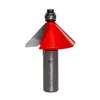
Best 45-Degree Chamfer Bit Pick
|
Freud 40-114 Chamfer Router Bit, 1-5/8 in. Diameter, 1/2 in. Shank
|
The best method depends on how many edges you have and how much control you need. Use this table to choose before you pick up a tool.
| Method | Best for | Repeatability | Main risk |
|---|---|---|---|
| Router with chamfer bit | Many edges, tabletops, shelves, frames | Very high | Tear-out on end grain, burning if you move slowly |
| Block plane | A few edges, fine furniture, stopped chamfers | Medium, depends on your eye | Tear-out when planing against the grain |
| Chisel (paring) | Short chamfers, corners a plane cannot reach | Low to medium | Digging in, uneven width |
| Table saw, blade tilted | Long straight edges on straight stock | High with a good setup | Kickback and trapped offcuts if set up wrong |
| Sanding block | Light edge-breaking on hardwood | Low | Rounds the chamfer instead of keeping it flat |
How Big Should a Chamfer Be? (Size Chart)
This is the part most guides skip. On a 45-degree chamfer, the two legs run along the faces of the board, but the sloped face you actually see is longer than either leg. The sloped face is the leg length multiplied by 1.414 (the square root of 2). Measure the leg, not the slope, when you set a router bit or draw your pencil lines.
| Leg length (each face) | Width of sloped face | Typical use |
|---|---|---|
| 1/16 inch | about 0.09 inch | Light edge-breaking on shelves and drawer parts |
| 1/8 inch | about 0.18 inch | Tabletops, cabinet frames, box edges |
| 3/16 inch | about 0.27 inch | Visible decorative chamfers on furniture |
| 1/4 inch | about 0.35 inch | Legs, thick tops, workbench edges |
| 3/8 inch | about 0.53 inch | Posts, beams, and outdoor timber |
| 1/2 inch | about 0.71 inch | Large posts and heavy beams |
The leg lengths in the last column are a common-sense starting range, not a code or standard, so cut one on scrap before the real piece. Also check what is left of the edge. If you chamfer both corners of a 3/4 inch board edge with 1/4 inch legs, you leave only 1/4 inch of flat edge (3/4 minus 1/4 minus 1/4). A chamfer that eats most of a thin edge looks heavy and can make the edge feel sharp again.
How to Chamfer Wood With a Router
A router and a 45-degree chamfer bit make the same cut every time, which is why most shops reach for one. Bearing-guided bits follow the edge of the board, so the cut size is set by the bit height. Our Bosch 1617EVS router setup guide covers bit depth and speed for a typical full-size router.
- Check the shank. A 1/2 inch shank bit needs a 1/2 inch collet. Never force a bit into the wrong collet.
- Set the bit height on scrap. Raise the bit until the cut leaves the leg length you want (see the chart above). A lower setting is safer for the first test.
- Clamp the work and wear eye and ear protection. Routers throw chips and dust, and hardwood dust is worth a mask.
- Cut the end grain first, then the long grain. The long-grain pass that follows cleans up any splinters left at the exit corner.
- Move in the right direction. On an outside edge, travel so the bit rotation pulls the router against the work, which means moving counterclockwise around the piece. The wrong direction (a climb cut) can grab the router and pull it away from you.
- Take two light passes on hard or thick wood. A shallow first pass and a final skim pass leave a cleaner face than one deep cut.
Check the size on a test piece, then run the real board. If you see burn marks on the chamfer, the router is moving too slowly or the bit is dull. Cutting MDF? Read whether MDF can be routed and which bits work best first, since MDF dulls bits quickly and makes heavy dust.
How to Chamfer Wood With a Hand Plane or Chisel
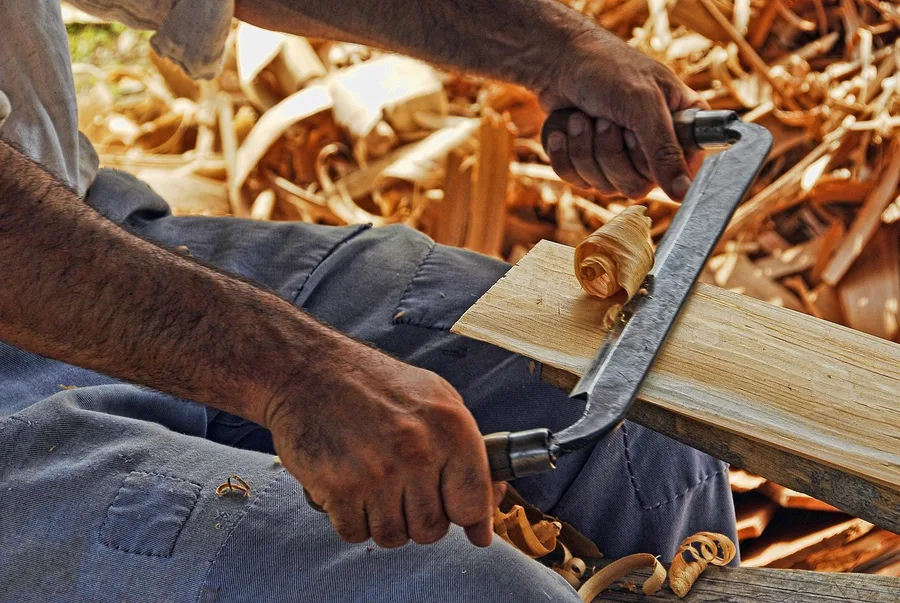
Hand tools are slower for long runs but give you precise control, and they are quiet and low on dust. A block plane is the usual choice, and a sharp one leaves a surface you can finish with little or no sanding.
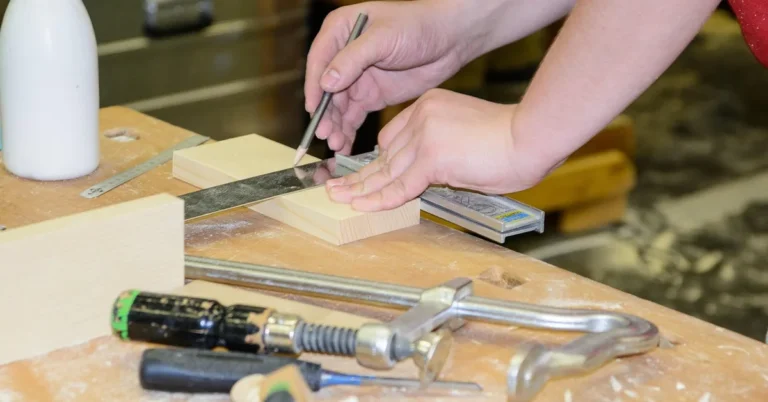
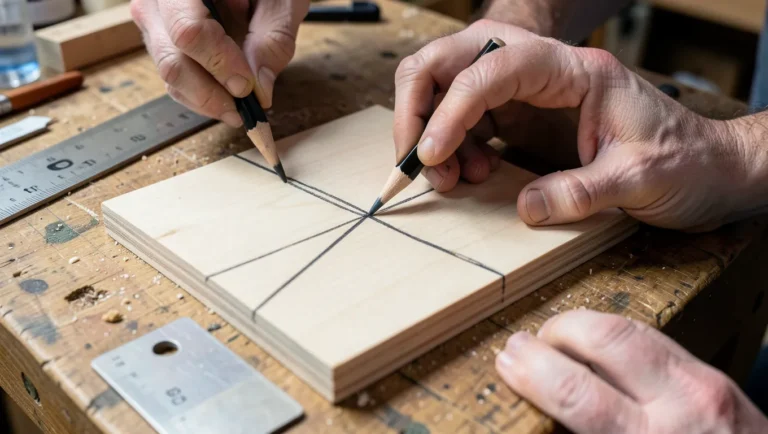
- Mark both faces. Use a combination square or marking gauge to draw a line the same distance in from the edge on each face. These two lines are your leg lengths.
- Plane the corner down. Hold the plane at roughly 45 degrees to the face and shave until you reach both lines. Keep the sole flat across the chamfer.
- Plane with the grain. If the wood tears, turn the board or approach from the other direction. Take thinner shavings on figured wood.
- Handle end grain from the outside in. Plane from the edge toward the center and stop before the far corner, then flip the board and plane in from the other side. This stops the far corner from splitting off.
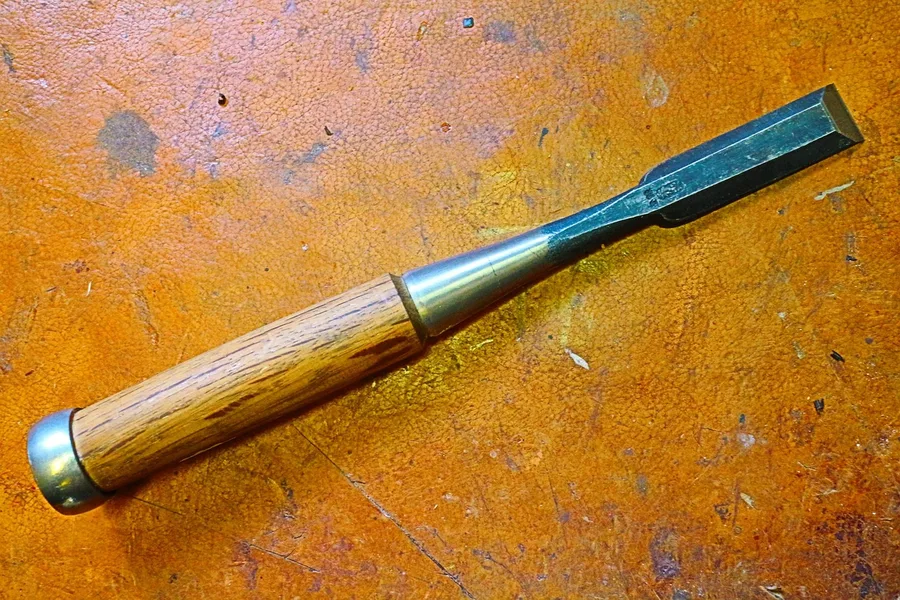
- Use a chisel for the last bit. A sharp chisel pared with the bevel down is good for short chamfers and for finishing a stopped chamfer where a plane cannot reach.
For rounded edges instead of angled ones, read how to round wood edges without a router. If you want the hand-tool version of a full-width angled cut, see how to bevel wood by hand.
Chamfering Large Timber Posts (90 x 90 mm and Similar)
A post is just a long edge with four corners, and the same rules apply with larger numbers. Pencil-line all four corners, then work with a router and large chamfer bit, a hand plane, or a drawknife. On an exposed post, keep the chamfer at about 6 to 10 mm so the post still reads as square. A chamfer on the top edges of an outdoor post gives hands and water an easier slope than a sharp corner and cuts down on splinters, though you should still seal any cut end grain.
Can You Chamfer on a Table Saw?
Yes, but it is the method with the most ways to go wrong. A table saw cuts a long straight chamfer quickly when the blade is tilted to 45 degrees and the board is held tight to the fence. Tilt the blade away from the fence so the offcut cannot get pinched between the blade and the fence, use a push block, and never freehand the cut. For the full safe setup, see our guide on how to make a bevel cut with a table saw, which uses the same blade tilt.
Chamfer End Grain Without Blowout
End grain is where most chamfers go wrong. The fibers at the end of the board have nothing supporting them at the exit corner, so a router bit or plane blade can blow a chunk out. Three habits prevent it. Chamfer the end grain first so the following long-grain pass cleans up any damage. Take light passes near the end. Or clamp a scrap block flush against the exit corner so the bit has something to cut into.
Chamfer Mistakes and a Myth to Skip
Myth: chamfers strengthen glue joints. Old guides often claim this, and it does not hold up. A chamfer on the mating face of a glued joint removes surface and gives the glue less to grip. The real benefits are indirect: a chamfered corner is less likely to chip, and a chamfer on the outside corners of an assembled frame stays out of the glue line. If you want a joint to look tight, chamfer the outside edges after the glue dries.
- Uneven chamfer width. Usually a router that tilted or a plane that rocked. Redraw pencil lines and plane to them.
- Burn marks. Move the router steadily, use a sharp bit, and do not stop in the middle of a pass.
- Rounded chamfer instead of flat. Happens when sandpaper is held in your hand. Wrap it around a flat block.
- Chamfer too large on thin stock. Check the chart and keep a flat section of edge.
How to Finish and Polish a Chamfer
A chamfer is a new surface, so it needs the same finishing as the rest of the piece. Sand through your normal grits and stop at 180 to 220 grit, using a flat block so the chamfer face stays flat. Finish takes better on a chamfered edge than on a sharp corner, because liquid finishes pull away from a sharp arris and leave a thin coat there. A wax or oil finish buffs up to a soft sheen on a clean chamfer.
Chamfer vs Bevel vs Roundover
These three edge treatments are often confused. A chamfer is a small flat angled cut on one corner. A bevel is an angled cut across the whole thickness of the board, covered in what a bevel cut is and how it differs from a miter. A roundover is a curved edge made with a roundover bit, with sizes covered in what size round-over bit to use for 3/4 inch wood. If you need to chamfer the rim of a drilled hole instead of an edge, use our guide to chamfering a hole in wood.
Frequently Asked Questions
What tool is primarily used to chamfer timber surfaces?
A router with a 45-degree chamfer bit is the most common power tool, and a block plane is the most common hand tool. For large timber posts, a hand plane, drawknife, or a router with a large-diameter chamfer bit all work. Pick the router when you need the same chamfer on many pieces.
How do you chamfer the edge of a 90 x 90 mm timber post?
Mark the chamfer width with a pencil line on both faces of each corner, then remove the corner with a router and chamfer bit, a hand plane, or a drawknife. Work down to the lines in light passes. Keep the chamfer small, such as 6 to 10 mm, so the post keeps its square look. Seal the cut surfaces with finish or end-grain sealer if the post sits outdoors.
Can you polish a chamfer?
Yes. Sand the chamfer through the same grits as the rest of the piece, finishing at 180 to 220 grit, then apply your finish. For a polished look, wrap the sandpaper around a flat block so the chamfer face stays flat instead of rounding over. A wax or oil finish buffs to a soft sheen on a clean chamfer.
What is the best angle for a chamfer?
45 degrees is the standard because it is equal on both faces and router bits are made for it. A shallower angle such as 30 degrees leaves a longer, flatter slope that reads as more refined on furniture. Use a bevel gauge or a test cut on scrap to confirm the angle before you cut the real piece.
How deep should a chamfer be?
Most edge chamfers on furniture run from 1/16 inch to 1/4 inch measured along each face. Match the size to the piece: small on thin stock so you keep a flat edge, larger on thick posts and legs. Cut a test chamfer on scrap of the same thickness and look at it from normal viewing distance.
What is the difference between a chamfer and a bevel?
A chamfer is a small angled cut that breaks one corner of an edge. A bevel is an angled cut that runs across the full thickness of the board. The tools overlap, but the size and purpose are different.
Conclusion
Pick the tool by the number of edges: a router for many, a block plane for a few. Decide the leg length first using the chart, mark it with a pencil, cut end grain first, and test on scrap. Do that and a chamfer takes a few minutes and makes every project look finished.
Sponsored / affiliate links. As an Amazon Associate I earn from qualifying purchases. I may earn additional commission from eligible campaigns.