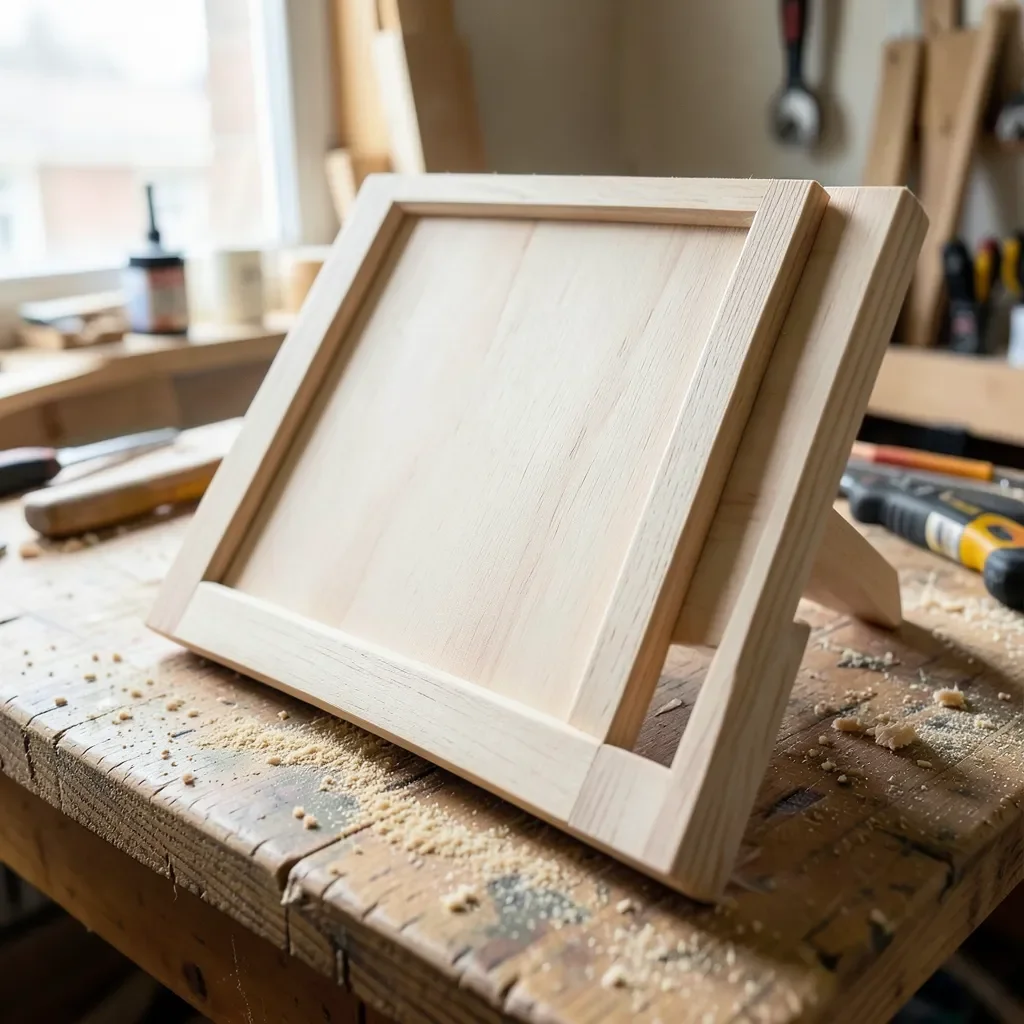
How to Clean Cabinets After Sanding (Skip the Water)
Clean cabinets after sanding by vacuuming first, then wiping with a tack cloth or a rag dampened with mineral spirits — not water. Plain water raises the wood’s surface fibers, leaving the surface rough again right before you paint or stain it. Kitchen cabinets have one extra step most wood surfaces don’t need: degreasing, since cooking residue gets sanded into the grain along with the old finish. This guide covers the correct cleaning order and the products that actually work for each step.
The Right Tools for Cleaning Sanded Cabinets
Best Tack Cloth Pick
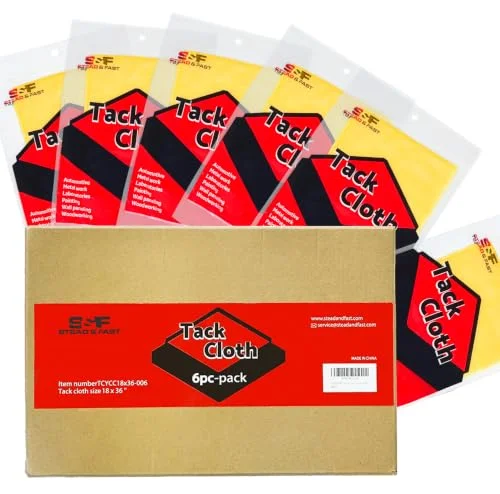 |
S&F Stead & Fast Tack Cloth, 6-Pack – $7.99 The exact tool this guide recommends over a damp rag — lifts fine sanding dust without adding moisture that raises the wood grain.
|
Three tools handle nearly every sanded-cabinet cleaning job: a vacuum with a brush attachment for loose dust, a tack cloth for the fine dust a vacuum leaves behind, and mineral spirits on a rag for grease or stubborn residue. Skip the vacuum step and you’re just dragging loose grit around with your cloth, which can scratch the freshly-sanded surface.
Why You Shouldn’t Use Water on Freshly Sanded Cabinets
Wood is made of fibers that swell when they absorb moisture. Wipe freshly sanded wood with a wet or even damp cloth and those fibers swell back up, leaving the surface rough again once it dries — effectively undoing part of your sanding work. This is why professional finishers use a tack cloth (a slightly sticky cloth that picks up dust without adding moisture) or a rag dampened with mineral spirits, which flash off within minutes and don’t swell the grain the way water does.
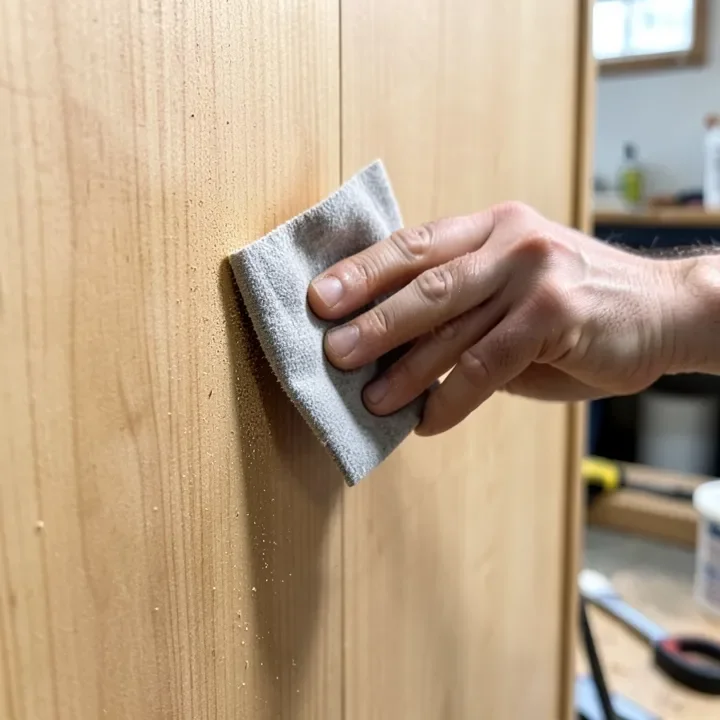
📊 Wiping bare sanded wood with a wet cloth raises the surface fibers because wood swells on contact with moisture — mineral spirits and denatured alcohol flash off quickly and don’t cause the same swelling. Water is only useful here if you’re deliberately pre-raising the grain before a final sanding pass, not as your final pre-finish wipe-down.
The one exception: if your cabinets are already painted or sealed and you’re just doing routine maintenance cleaning (not prepping bare wood for a new finish), mild soap and water is fine — the existing finish protects the wood underneath. For our full walkthrough on cleaning bare wood generally (furniture, boards, or trim), see how to clean wood after sanding.
Removing Kitchen Grease Before You Even Start Sanding
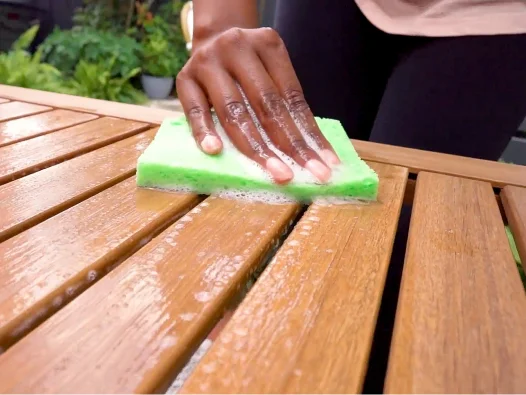
Kitchen cabinets pick up a thin film of cooking grease that regular furniture and trim never encounter, and sanding over it just grinds the grease into the wood fibers instead of removing it. Degrease cabinet doors and boxes with a TSP substitute or a mix of warm water and dish soap before you sand — not after. Rinse with a barely-damp cloth and let the wood dry completely before picking up the sander.
Skipping this step is why sandpaper loads up and clogs fast on kitchen cabinets specifically — the grease gums up the grit, and grease trapped under a new finish can eventually cause adhesion problems.
Step-by-Step: Cleaning Cabinets After Sanding
- Vacuum first: Use a brush attachment to lift loose dust from the surface, corners, and any grooves or panel details.
- Wipe with a tack cloth: Fold it into a pad and wipe with the grain, refolding to a clean section as it picks up dust.
- Spot-treat residue with mineral spirits: For grease or stubborn spots the tack cloth doesn’t lift, dampen a rag with mineral spirits and wipe, then let it flash off (a few minutes) before touching the surface again.
- Inspect under raking light: Angle a work light across the surface — this reveals dust and swirl marks a straight-on look misses.
- Apply finish only once the surface is fully dry: Mineral spirits evaporate quickly, but give it a few extra minutes in humid conditions.
Tackling Scratches and Rough Spots
Minor scratches revealed after cleaning usually respond to a light pass with fine-grit sandpaper (220-grit or higher) followed by re-cleaning with a tack cloth. For shallow scuffs on stained wood, a baking-soda-and-water paste applied with a soft cloth can lift the mark without gouging the surrounding surface — but treat it as a spot fix, not a substitute for proper sanding, and always re-clean the treated area with a tack cloth (not left wet) before finishing.
Frequently Asked Questions
How do I prepare cabinets for cleaning after sanding?
Vacuum with a brush attachment to remove loose dust, then wipe with a tack cloth or a rag dampened with mineral spirits. Avoid plain water on bare sanded wood — it raises the grain and leaves the surface rough again.
What cleaning products are best for cabinets after sanding?
A tack cloth for dust and mineral spirits for grease or residue are the standard choice before staining or painting bare wood. Mild soap and water is fine only for cleaning already-finished or painted cabinet surfaces.
Why does my cabinet feel rough again after I wipe it with a damp cloth?
Water raises the wood’s surface fibers because wood swells slightly when it absorbs moisture. This is normal, but it means a damp cloth undoes some of your sanding — switch to a tack cloth or mineral spirits instead for the final pre-finish wipe-down.
Do I need to degrease kitchen cabinets before sanding?
Yes. Cooking grease sits on kitchen cabinet surfaces even when they look clean, and sanding over it grinds grease into the wood fibers and clogs sandpaper fast. Degrease with a TSP substitute before sanding, not after.
Can I use a microfiber cloth for cleaning sanded cabinets?
A microfiber cloth works for a quick dry dusting pass, but for the final pre-finish wipe-down, a tack cloth or a mineral-spirits-dampened rag removes fine dust more thoroughly without adding moisture to the wood.
Conclusion
The order matters more than the product: vacuum first, then tack cloth or mineral spirits, never plain water on bare sanded wood. Kitchen cabinets need one extra step — degreasing before you sand, not after — since regular soap-and-water cleaning misses the grease that’s already worked into the grain. Get that sequence right and your paint or stain will go on smooth the first time.
Sponsored / affiliate links. As an Amazon Associate I earn from qualifying purchases. I may earn additional commission from eligible campaigns.