How to Dispose of Varnish: Cans, Brushes and Rags (Safe Steps)
Leftover oil-based varnish should be treated as household hazardous waste: take liquid varnish to a collection site, never down a drain or into the curbside bin. The bigger surprise is the rag, because a varnish safety data sheet warns that soaked rags can spontaneously catch fire. This guide covers liquid varnish, water-based varnish, brushes, rags, sanding residue and empty cans, plus what a PaintCare drop-off will and will not take.
Start With the Fire Risk: Rags, Steel Wool and Sanding Residue
Best Rag Can Pick
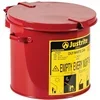 |
Justrite 2 Gallon Galvanized Steel Countertop Oily Waste Can ($93.44) A steel can with a self-closing lid for the temporary storage of rags soaked with oils, solvents and thinners, which is the job a plastic bucket or an open trash can does badly.
|
Most guides open with the can. The safety data sheets open with the rags. The sheet for Minwax Helmsman Spar Urethane aerosol warns that rags, steel wool, other waste soaked with the product, and sanding residue may spontaneously catch fire if improperly discarded, and tells you to put them in a sealed, water-filled, metal container. That list matters because it includes the sanding dust from between coats, not just the wipe-on rags.
The safety data sheet for the non-aerosol spar varnish gives the same method for wiping rags: soak them immediately after use in a water-filled, closed metal container, and control the accumulation of overspray. It also says to dispose of contaminated materials and waste properly, which is why the water-filled can is a holding step and not the finish line. For the full rag routine, see our guide to choosing and disposing of staining rags.
Where Each Type of Varnish Waste Goes
The right route depends on whether the varnish is solvent-based (oil-based) or water-based. This table pulls the rules from the sources named in each cell; your local program has the final say.
| Waste | Oil-based (solvent) varnish | Water-based varnish |
|---|---|---|
| Leftover liquid | Household hazardous waste collection site, or a PaintCare drop-off in a program state (EPA, PaintCare) | Use it up or give it away first; ask your local program whether to dry it out or drop it off (Georgia brochure, EPA-hosted) |
| Brushes and thinner | Paint out the brush, filter and reuse the thinner, and take excess liquid and residue to hazardous waste (Salt Lake County pamphlet, EPA-hosted). PaintCare does not take thinner | Paint out the brush, then rinse in the sink (same pamphlet, written for water-based paint); check local sewer rules |
| Rags and steel wool | Water-filled, closed metal container, then follow local fire regulations (spar varnish SDS) | Thoroughly dried rags may go in the trash (same county pamphlet, written for water-based paint) |
| Sanding residue | Treat it like the rags (spar varnish aerosol SDS) | Sweep it up and bag it; confirm locally |
| Empty can | Ask your local program; PaintCare drop-offs turn away empty containers | Ask your local program |
One number worth remembering: the non-aerosol spar varnish data sheet lists a flash point of 101 degrees F (Pensky-Martens closed cup) and classes the product as combustible. A closed garage in summer can reach that range, so do not leave soaked rags or open cans sitting around.
Why Oil-Based Varnish Counts as Hazardous Waste
The EPA defines household hazardous waste as leftover household products that can catch fire, react or explode under certain circumstances, or that are corrosive or toxic. Solvent-based varnish fits the first category.
The spar varnish data sheet is blunt about it: waste from the product may be hazardous under the Resource Conservation and Recovery Act (40 CFR 261), and waste must be tested for ignitability to determine the hazardous waste numbers. A homeowner is not going to run an ignitability test, so the practical reading is simple. Treat it as hazardous, and let a collection program that has the equipment and permits handle it. The same sheet says incineration belongs in an approved facility and that a closed container must not be incinerated, which rules out burning leftovers in a burn barrel.
How to Take Leftover Varnish to a Drop-Off
- Keep it in the original container. The EPA advises keeping household hazardous products in their original containers with the labels on. PaintCare also requires the original manufacturer label.
- Check the lid. PaintCare rejects containers that are open or leaking, so tighten the lid or ask the site how to handle a can that will not seal.
- Do not mix products. The EPA warns that mixing household hazardous products can cause a reaction, ignition or explosion, and that mixed waste may become unrecyclable. Do not pour half-cans together to save space.
- Check the size limit. PaintCare accepts containers of 5 gallons or less.
- Find the site. The EPA points to the Earth 911 database or your local environmental, health or solid waste agency for permanent and periodic collections; PaintCare has its own product list and drop-off locator.
PaintCare lists stains, sealers, lacquers, urethanes and clear coatings such as shellac and varnish as accepted. It operates only in certain states, including California, Colorado, Connecticut, Illinois, Maine, Maryland, Minnesota, New York, Oregon, Rhode Island, Vermont and Washington, so outside those states your county household hazardous waste program is the route.
Spar and Marine Varnish: Check Before You Assume
PaintCare lists auto and marine paints among the products it does not accept, and it also excludes epoxies and two-component coatings. Whether a can labeled marine or spar varnish counts as marine paint is not something we could confirm from the sources we read, so call PaintCare or your county program before you drive a can across town.
Water-Based Varnish: The Easier Case, With Caveats
Water-based finishes need no thinner, which removes one hazardous waste stream entirely. A Georgia state brochure hosted on the EPA site recommends latex paint over oil-based paint for exactly that reason, and a Salt Lake County pamphlet says thoroughly dry empty water-based paint cans, spent brushes, rags and drop cloths may go in the trash. Both are written for paint, and rules differ by county, so treat them as the usual pattern rather than a guarantee for your area.
If you stripped old varnish before refinishing, the leftover stripper is its own waste. Our page on disposing of Citristrip walks through gel, empties and scraped waste from the manufacturer’s data sheet.
What Not to Do With Varnish
- Do not pour it down a drain, on the ground or into a storm sewer. The EPA lists all three as improper disposal.
- Do not put liquid varnish out with regular trash. The EPA notes that in some cases household hazardous waste cannot go out with the trash.
- Do not burn it. The data sheet only sanctions incineration in an approved facility.
- Do not pile soaked rags or sanding residue in a corner or a plastic bag.
Cut Down the Leftovers Before They Exist
The Georgia brochure advises buying a little less than you think you will need, then topping up once the job is underway, and giving leftovers to someone who can use them. Measure the surface first with our varnish calculator, and if a half-used can has been sitting for a while, check whether it has actually spoiled with our guide on whether varnish goes bad before writing it off. The same rules apply to oil-based polyurethane, covered on our polyurethane disposal page.
Frequently Asked Questions
Is varnish considered hazardous waste?
Leftover oil-based (solvent-based) varnish should be treated as household hazardous waste. The safety data sheet for one widely sold spar varnish says its waste may be hazardous under the federal RCRA rules and must be tested for ignitability, and the EPA defines household hazardous waste as leftover products that can catch fire, react, explode, or are corrosive or toxic. Ask your local program how it classifies water-based varnish.
Can you pour varnish down the drain or throw it in the trash?
No. The EPA warns that household hazardous waste should not be poured down the drain, on the ground or into storm sewers, and that in some cases it cannot go out with regular trash. Take liquid varnish to a household hazardous waste collection site or a PaintCare drop-off instead, and confirm what your local program accepts.
How do you dispose of varnish-soaked rags?
Do not leave them balled up or in the trash. One spar varnish safety data sheet says to soak wiping rags immediately after use in a water-filled, closed metal container, and another from the same product line warns that rags, steel wool and sanding residue may spontaneously catch fire if improperly discarded. Then follow your local fire regulations for final disposal.
Does PaintCare take varnish?
PaintCare says it accepts stains, sealers and clear coatings such as shellac and varnish, plus lacquers and urethanes, in containers of 5 gallons or less that have the original label and a secured lid. It does not accept paint thinners, mineral spirits, solvents or aerosols. It only operates in certain states, so check its drop-off locator first.
Can you use up old varnish instead of disposing of it?
Yes, and using it up is the first option in the household guidance we reviewed. A Georgia state brochure hosted by the EPA says to use leftover paint, stain, varnish or sealer, find someone who will, or take it to a collection site. If the varnish has gone bad, read our guide on whether varnish goes bad before you decide it is waste.
Conclusion
For oil-based varnish the routine is short: soak the rags in a water-filled metal can right away, keep leftover liquid in its labeled container, and take it to a hazardous waste collection or PaintCare drop-off. For water-based varnish, use it up first and check your local rules before drying anything out for the trash. When the sources disagree or say nothing, your county household hazardous waste program is the tie-breaker.
Sponsored / affiliate links. As an Amazon Associate I earn from qualifying purchases. I may earn additional commission from eligible campaigns.