How To Get Rid Of Water Marks On Wood Furniture: Proven Clean
You can get rid of most water marks on wood furniture using simple household items like mayonnaise, toothpaste, or baking soda. These gentle abrasives and oils safely lift the moisture and restore the wood’s finish without causing damage. Explore easy, step-by-step methods to make your furniture look like new again.
Wood furniture can be a beautiful addition to any home, but accidents happen! That dreaded white ring or dark stain from a forgotten glass of water can feel like a disaster. Don’t worry, though! These water marks are often not as permanent as they seem. With a few common household items and a little patience, you can usually banish them and restore your beloved wood pieces to their former glory. This guide will walk you through proven, beginner-friendly methods to tackle water damage, so you can feel confident in bringing your furniture back to life.
Understanding Water Marks on Wood Furniture
Before we dive into the fixes, let’s quickly understand what causes these marks. Water marks on wood furniture typically appear as white rings or dark splotches.
White Rings
White rings are usually caused by moisture trapped in the top layer of the wood’s finish. This is often referred to as a “cloudy” or “hazy” mark. The water hasn’t penetrated the wood itself, but has gotten into the wax or polish. Because the water is just in the finish, these are generally the easiest to remove.
Dark Spots
Dark spots, on the other hand, indicate that water has penetrated deeper, potentially into the wood itself. This can happen if the finish on your furniture is worn or damaged. These are usually a bit tougher to tackle but often still salvageable.
Gathering Your Cleaning Arsenal
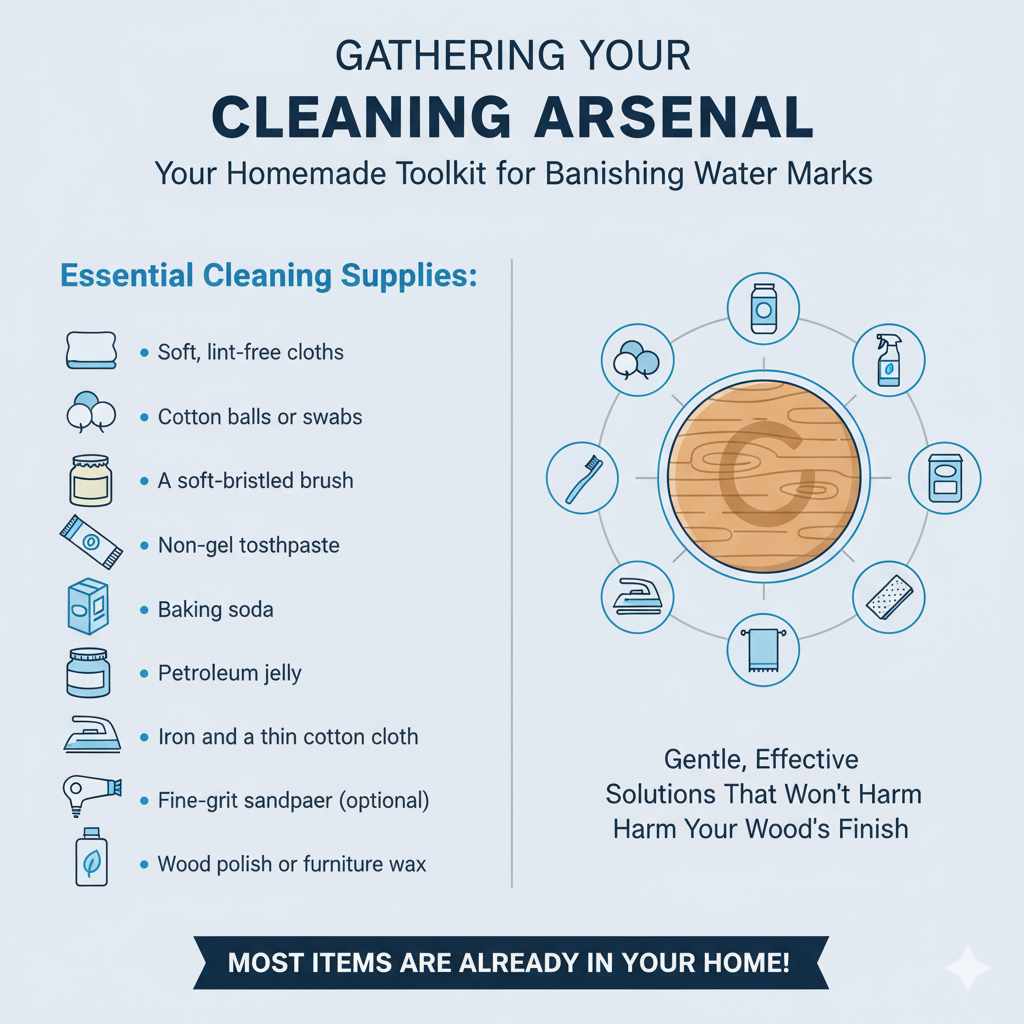
The best part about removing water marks from wood is that you likely already have most of the tools and cleaning agents you need right in your home. We’ll focus on gentle, effective solutions that won’t harm the wood’s finish.
Essential Cleaning Supplies:
- Soft, lint-free cloths (microfiber cloths are excellent)
- Cotton balls or swabs
- A soft-bristled brush (an old toothbrush works well)
- Mayonnaise (full-fat is best)
- Non-gel toothpaste (avoid whitening or abrasive types)
- Baking soda
- Petroleum jelly
- Iron and a thin cotton cloth (like a dishtowel or t-shirt)
- Hair dryer
- Fine-grit sandpaper (optional, for deeper marks)
- Wood polish or furniture wax
Proven Methods to Remove White Water Marks
White water marks are often superficial and can be gently lifted. Here are a few of the most effective and beginner-friendly methods to try.
Method 1: The Mayonnaise Miracle
Who knew your sandwich spread could save your furniture? The oils in mayonnaise can help displace the trapped moisture in the finish.
Steps:
- Ensure the area is clean and dry.
- Apply a generous amount of full-fat mayonnaise directly onto the white water mark.
- Let it sit for several hours, or even overnight if the mark is stubborn.
- Wipe away the mayonnaise with a clean, soft cloth.
- Buff the area gently to a shine.
- If the mark persists, repeat the process.
Method 2: Toothpaste for a Gentle Buff
Non-gel toothpaste acts as a mild abrasive to gently buff out the hazy ring. It’s important to use a paste that doesn’t contain harsh scrubbing particles or whitening agents.
Steps:
- Mix one part non-gel toothpaste with one part baking soda for a slightly more potent, yet still gentle, paste. Alternatively, you can use just the toothpaste.
- Dab a small amount of the paste onto a soft cloth.
- Gently rub the paste into the water ring in the direction of the wood grain. Don’t scrub aggressively!
- Wipe the area clean with a damp cloth.
- Dry the area thoroughly with another clean cloth.
- Assess the mark. If it’s improved but not gone, you can repeat, being extra gentle.
Method 3: Baking Soda Paste Magic
Similar to toothpaste, baking soda is a mild abrasive that can help lift moisture and subtle imperfections.
Steps:
- Create a paste by mixing baking soda with a small amount of water. You want a consistency like toothpaste.
- Apply this paste to a soft cloth.
- Gently rub the paste over the water mark, following the wood grain.
- Wipe away the paste with a slightly damp cloth.
- Dry the area completely with a dry, soft cloth and buff.
Method 4: The Iron and Cloth Trick
This method uses gentle heat to help evaporate the trapped moisture. This is particularly effective for fresh white rings.
Steps:
- Empty any water from your iron.
- Set your iron to a low-heat setting – NO STEAM.
- Place a clean, dry, thin cotton cloth (like a t-shirt or a thin dishtowel) over the water mark.
- Briefly place the warm iron on top of the cloth over the mark for a few seconds.
- Lift the iron and the cloth to check.
- Repeat this process, moving the iron slightly, for short bursts until the mark disappears. Be very careful not to overheat the wood.
Method 5: Hair Dryer Warmth
Like the iron method, a hair dryer can gently warm and help evaporate trapped moisture.
Steps:
- Set your hair dryer to a low heat setting.
- Hold the hair dryer a few inches away from the water mark.
- Gently move the hair dryer back and forth over the affected area.
- Watch closely as the mark should begin to fade.
- Once the mark is gone, wipe the area clean and buff.
Table: Comparing White Water Mark Removal Methods
| Method | How it Works | Best For | Pros | Cons |
|---|---|---|---|---|
| Mayonnaise | Oils displace trapped moisture. | Stubborn white rings. | Very gentle, effective for cloudy marks. | Takes time (hours/overnight). |
| Toothpaste | Mild abrasive buffs finish. | Most white rings. | Quick results, easy to find ingredients. | Requires careful rubbing to avoid marring. |
| Baking Soda Paste | Mild abrasive lifts moisture. | White rings. | Gentle yet effective. | Can be slightly abrasive if rubbed too hard. |
| Iron & Cloth | Heat and gentle pressure evaporate moisture. | Fresh or superficial rings. | Can be fast, very effective. | Risk of overheating/damaging finish if not careful. |
| Hair Dryer | Gentle heat evaporates moisture. | Recent or light rings. | Non-contact, easy to control. | May not work on older or deeper marks. |
Tackling Dark Water Stains on Wood Furniture
Dark water stains are more challenging because the water has likely penetrated the wood’s finish and stained the actual wood fibers. These methods are a bit more involved but still manageable for a beginner.
Method 1: Baking Soda and Water Paste (Deeper Clean)
For deeper stains, a baking soda paste can be used more assertively, but always with caution.
Steps:
- Make a thick paste of baking soda and water.
- Apply the paste generously to the dark stain.
- Let it sit for a few hours.
- Gently rub the paste with a soft cloth or a soft-bristled brush, working in the direction of the wood grain.
- Wipe clean with a damp cloth and dry thoroughly.
- You may need to repeat this process multiple times.
Method 2: Using Steel Wool (Fine Grade Only!)
This is where things get a bit more advanced, but still achievable. You’ll need very fine grade steel wool (0000 grade is recommended) and a lubricant.
Steps:
- Ensure the wood is completely dry.
- Lightly dampen a pad of 0000-grade steel wool with mineral spirits or furniture polish. This acts as a lubricant and helps prevent scratching.
- Gently rub the stained area with the steel wool, always moving in the direction of the wood grain.
- Wipe away any residue with a clean cloth.
- Check your progress frequently. Stop as soon as the stain is lifted.
- This process removes a thin layer of the finish, so you will likely need to reapply a furniture polish or wax to the area afterward. For more information on wood finishes and repairs, resources like Wood Magazine’s finishing basics can be very helpful.
Method 3: Oxalic Acid (For Stubborn Stains)
Oxalic acid is a more powerful cleaner designed for removing dark water stains that have penetrated the wood. It’s available at most hardware stores. The U.S. Environmental Protection Agency (EPA) provides safety information on chemicals like oxalic acid, emphasizing proper handling and ventilation: Understanding the Types of Pesticides.
Steps:
- Work in a well-ventilated area, wear gloves and eye protection.
- Mix oxalic acid crystals with warm water according to the product instructions.
- Apply the solution to the stain with a brush or cloth, making sure not to get it on the surrounding finish if possible.
- Let it sit for the time recommended on the product label, usually until the stain lightens. You may need to reapply.
- Neutralize the acid by wiping the area with a solution of baking soda and water.
- Rinse thoroughly with a damp cloth and dry completely.
- This method will almost certainly require you to refinish the spot with a matching stain and topcoat.
Special Considerations for Different Wood Finishes
The type of finish on your wood furniture plays a role in how best to tackle water marks. Most vintage or older furniture has a lacquer or varnish finish. Newer pieces might have polyurethanes.
- Lacquer/Varnish: These finishes are more delicate and susceptible to heat and solvents. Gentle methods like mayonnaise or the iron trick (on low heat) are best. Avoid harsh chemicals or aggressive scrubbing.
- Polyurethane: This is a tougher, more durable finish. It can often withstand mild abrasives like toothpaste or baking soda a bit better. However, always start gently and increase intensity only if necessary.
- Oiled Finishes: If your furniture has an oiled finish, water marks can be harder to remove as the water soaks in quickly. Applying a suitable wood oil can sometimes help reduce the appearance of the stain by darkening the wood evenly.
- Unfinished Wood: If the wood is unfinished, water marks can cause swelling and staining. Light sanding might be necessary, followed by sealing the wood.
When to Call a Professional
While many water marks can be fixed with these DIY methods, there are times when you might want to seek professional help:
- If the wood is antique or has significant monetary or sentimental value.
- If the water mark is very deep, large, or has caused significant damage to the wood.
- If you’ve tried several methods and are not seeing improvement, or fear you might cause more damage.
- If refiishing the entire piece is something you’re not comfortable doing.
Restoring valuable furniture is a skill that takes practice, and professionals have the tools and expertise to handle complex repairs without causing further harm. You can find furniture restoration specialists through local antique dealers or by searching online for “furniture repair near me.”
Preventing Future Water Marks
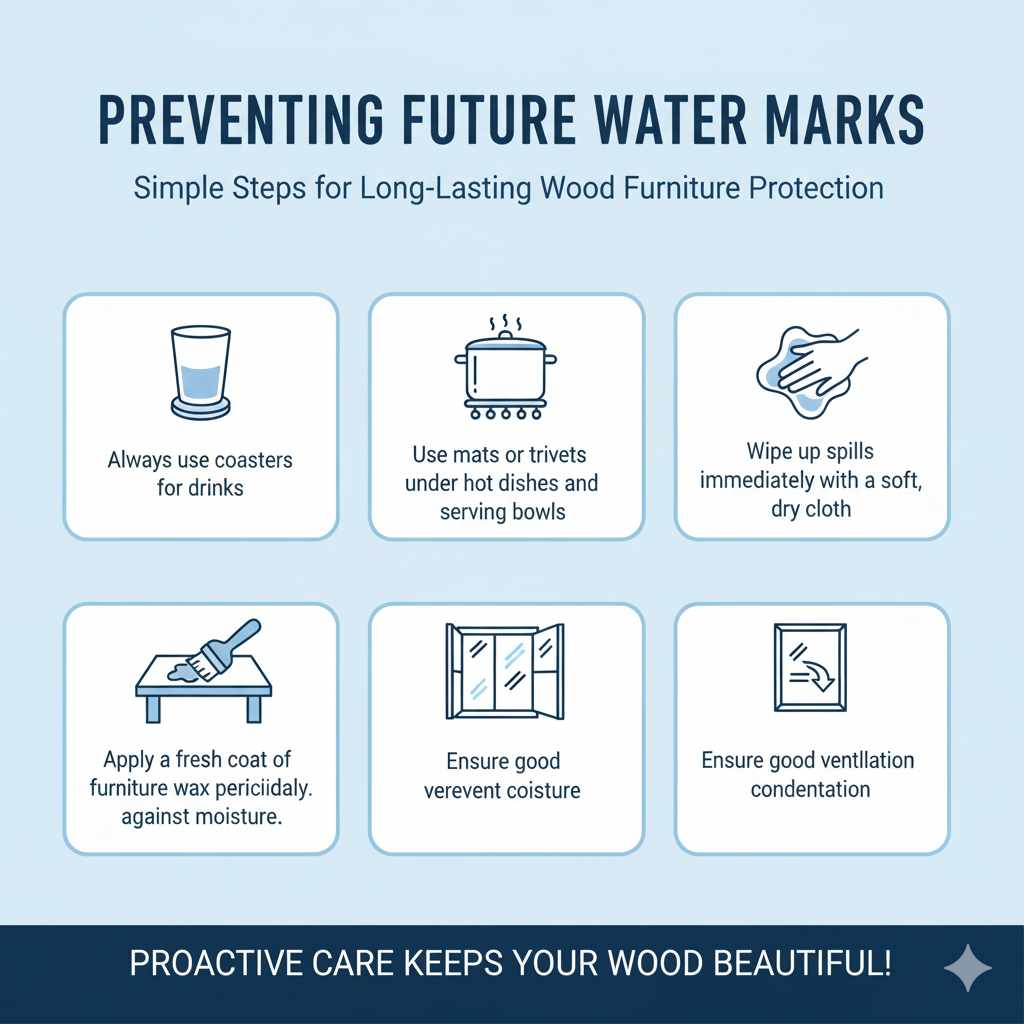
The best way to deal with water marks is to prevent them from happening in the first place! Here are some simple tips:
- Always use coasters for drinks.
- Use mats or trivets under hot dishes and serving bowls.
- Wipe up spills immediately with a soft, dry cloth.
- Consider applying a fresh coat of furniture wax periodically (annually is a good rule of thumb). Wax acts as a protective barrier against moisture.
- Ensure good ventilation in humid rooms to prevent condensation from forming on furniture surfaces.
Frequently Asked Questions (FAQs)
Q1: Will these methods damage my furniture’s finish?
These methods are designed to be gentle. Always start with the mildest option (like mayonnaise or the hair dryer) and use soft cloths. Avoid aggressive scrubbing. For tougher stains, methods involving fine steel wool or oxalic acid require more care, but with proper technique, they can be safe.
Q2: How long does it usually take to remove a water mark?
It varies greatly. For fresh, white rings, a quick application of mayonnaise or the iron trick might work in minutes to hours. For older or darker stains that require multiple applications or a bit more effort, it could take several hours or even days of repeated treatments.
Q3: Can I use regular household cleaners?
It’s generally not recommended to use harsh household cleaners, ammonia-based products, or abrasive scouring pads on wood furniture. These can strip the finish, bleach the wood, or cause deep scratches that are difficult to repair.
Q4: My dark stain is very deep. What else can I try?
For very deep dark stains that DIY methods haven’t touched, sanding down to the bare wood and then restaining and refinishing that section might be necessary. If this seems daunting, it’s a good time to consider professional restoration.
Q5: What’s the difference between a white mark and a dark mark?
A white mark means moisture is trapped in the finish layer. A dark mark means moisture has penetrated past the finish and into the wood itself, causing a stain.
Q6: Should I always re-wax or polish after fixing a mark?
Yes, it’s a good idea. Most of these methods can slightly alter or remove the existing protective layer of wax or polish. Reapplying a good quality furniture polish or wax will help restore the shine and provide ongoing protection.
Conclusion
Seeing a water mark appear on your cherished wood furniture can be disheartening, but as you’ve seen, it’s often a fixable problem. From the surprisingly effective mayonnaise trick to gentle heat applications and mild abrasive pastes, there are numerous beginner-friendly ways to tackle both white rings and darker stains. By understanding the type of mark and using the right method with care and patience, you can restore the beauty of your wood pieces. Remember to always work gently, test in an inconspicuous area if you’re unsure, and follow up with protective polishing or waxing. With these proven techniques, you can confidently banish water marks and keep your wood furniture looking its best for years to come!