Install Shutters on Brick Without Drilling: 3 Real Methods
Drilling into brick to hang shutters means a carbide-tipped masonry bit, a hammer drill, and a real risk of chipping the brick face or blowing out a corner if the bit skates. None of that is actually necessary. Three no-drill methods, mortar-joint fasteners, adhesive mounting blocks, and magnetic mounts, get shutters onto a brick wall without a single hole in the brick itself. Which one is right for your house depends mostly on how much the shutters weigh and whether they’re decorative or actually meant to close.
Why Drilling Into Brick Isn’t the Easy Option
Best No-Drill Mortar-Joint Fastener
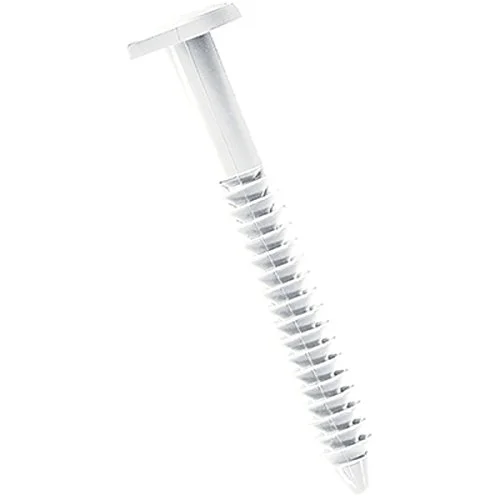 |
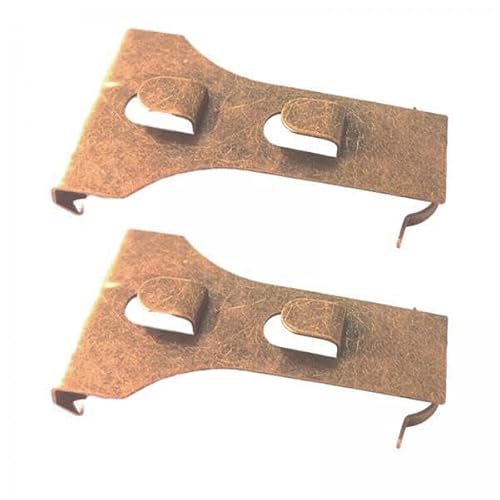
Ekena Millwork Lifetime Vinyl Shutter-Lok’s (12/Bag) – $10.25 Pushes or taps by hand into a mortar joint instead of the brick face, giving real pull-out strength without a masonry bit or hammer drill.
|
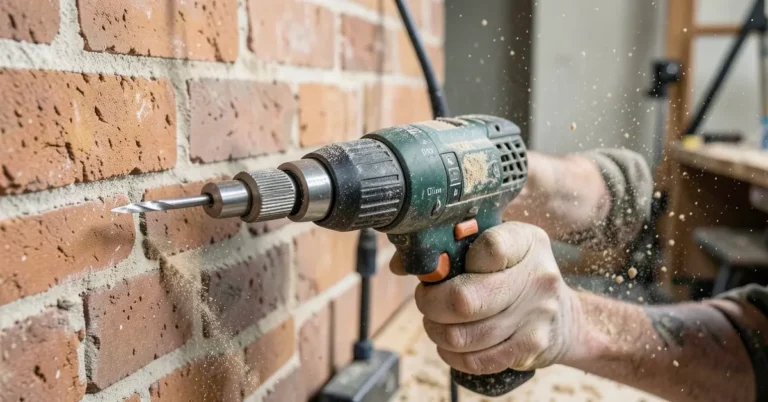
Fired clay brick is hard and brittle. Cutting into it takes a carbide-tipped masonry bit chucked into a hammer drill, not a standard twist bit and a cordless driver, and even then the bit can wander or the brick can crack right at the edge if you’re too close to a corner or an existing hairline crack. A blown-out hole in the brick face doesn’t patch invisibly the way a hole in wood trim does; you’re looking at a visible chip or a mortar repair for the life of the house. None of the three methods below touch the brick face at all.
Method 1: Mount Into the Mortar Joints, Not the Brick
The mortar between bricks is a soft sand-and-cement mix, nowhere near as hard as the fired brick itself, and it’s also the part of the wall that’s meant to be replaced eventually anyway (that’s what repointing is). Installers use that softness on purpose: peg-style shutter fasteners like Shutter-Lok are pushed or lightly tapped straight into the mortar joint by hand, no hammer drill needed, and they grip because the fastener’s ribbed shank wedges into the mortar as it goes in. If a fastener ever needs to come out, you’re patching a thin joint line with mortar caulk, not repairing a chip in the brick face.
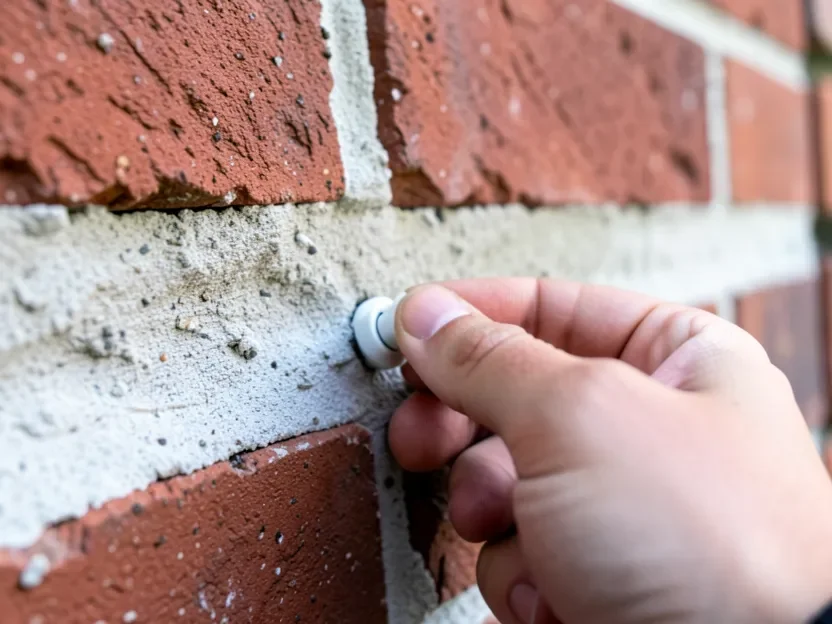
This is the method worth using for shutters that actually function, ones with hinges that let them close over the window, because the mortar-joint anchor holds real pull-out force the way a wood-frame screw does. It’s also the closest thing to a permanent, storm-rated mount that still never puts a hole in the brick. The catch is placement: you need a mortar joint close enough to line up with the shutter’s existing fastener points, and mortar that’s already crumbling or badly deteriorated won’t hold a fastener any better than it holds anything else. If your mortar joints are too thin or too far gone for that, drilling into the brick itself with the right masonry bit becomes the more realistic option.
Method 2: Adhesive Mounting Blocks and Clips
Adhesive-backed mounting blocks skip fasteners entirely: a small plastic or composite block with construction adhesive on the back presses directly onto the clean brick face, and the shutter’s edge screws or clips into the block instead of into the wall. Clean the brick with a wire brush and let it dry fully first; adhesive bonds poorly to dusty or damp masonry, and that’s the single biggest reason these mounts fail early. Give the adhesive its full cure time, typically about 24 hours, before the shutter takes any real load.
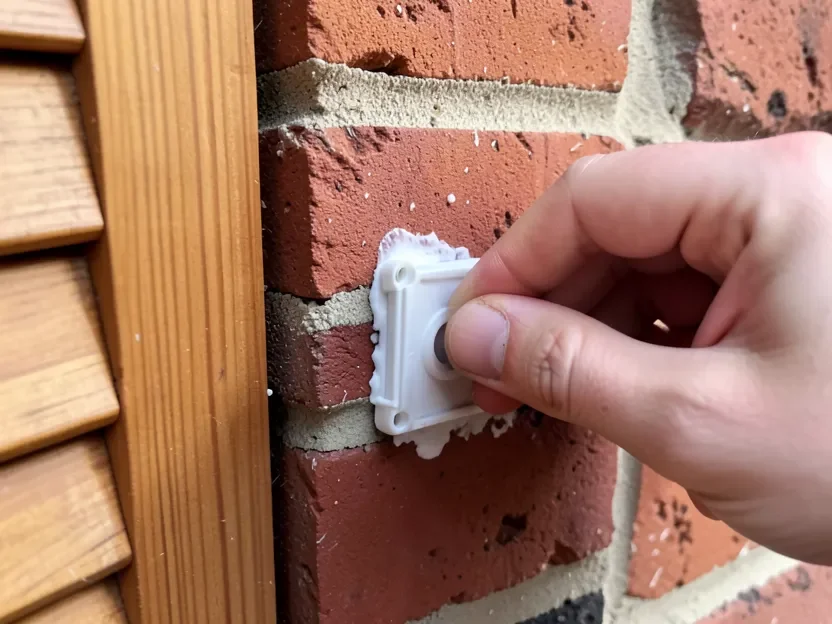
Adhesive mounting is genuinely the fastest of the three methods, and it leaves nothing behind but a thin residue if you ever remove it. The tradeoff is holding strength: exterior-grade construction adhesive on brick loses some bond strength through repeated freeze-thaw and heat cycling, so it’s a better fit for lightweight decorative shutters than for a heavy functional pair exposed to wind load year-round.
Method 3: Magnetic Mounts for Faux and Decorative Shutters
Magnetic shutter mounts work in reverse of what you’d expect: a thin steel keeper plate gets fixed near the window opening, typically on the window’s own wood or metal frame or on a small mortar-anchored bracket, not just floated on the brick alone, and magnets embedded in the back of the shutter snap onto it. Because the shutter isn’t fastened at all, it lifts straight off for painting, storm prep, or cleaning behind it, which is the main reason installers reach for magnets on purely decorative shutters that never actually close. They’re not rated for functional, hinged shutters meant to swing shut in weather; nothing is holding a magnetic mount against a steady sideways pull the way a mortar anchor or even a good adhesive bond does.
Solid Wood vs. Faux Shutters: Why Weight Changes the Right Method
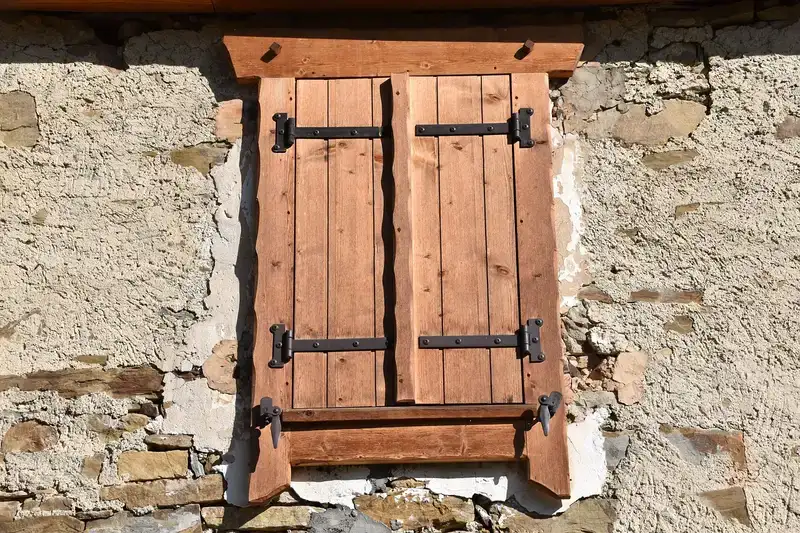
A pair of solid-wood, raised-panel functional shutters is a lot heavier than the lightweight polyurethane or vinyl faux shutters most no-drill hardware is designed around, and that weight difference matters more than any of the three methods’ packaging suggests. Adhesive alone, no matter how strong the tape or glue, is a poor match for a heavy solid-wood shutter hanging on hinges: the constant sideways load from wind, plus the shutter’s own weight pulling on the bond line, is exactly the kind of stress that peels an adhesive mount off brick over a season or two. If the shutters actually swing and latch, treat the mortar-joint fastener method as the floor, not the ceiling, for how much holding strength you need. For anything heavier than a standard faux shutter panel, check what the panel material itself can support before assuming any no-drill hardware, adhesive or otherwise, is rated for it.
If you’re building the shutters yourself rather than buying faux panels, our guide to building exterior wood shutters covers panel thickness and hardware choices that affect how much weight the mounting method actually has to carry.
Step-by-Step: Mortar-Joint Installation
- Hold the shutter in place and mark the fastener points where its existing mounting holes or edges land on the wall, checking with a level so the shutter hangs straight.
- Find the nearest mortar joint to each marked point. A joint within about half an inch of the mark still works; anything farther off means shimming the shutter or picking a different fastener spacing.
- Clear loose debris from the joint with a stiff brush so the fastener has clean mortar to grip, not surface dust.
- Push or lightly tap the fastener into the mortar joint by hand, keeping it square to the wall so it doesn’t wedge in at an angle.
- Check the fastener is seated firmly by tugging on it before hanging any weight on it; it shouldn’t wiggle in the joint.
- Hang the shutter on the seated fasteners and recheck it’s level and sitting flush against the wall.
- Caulk any gap between the shutter edge and the wall with an exterior-grade, paintable caulk for a finished look and a little extra weather protection.
Mistakes That Cause No-Drill Shutters to Fail Early
- Mounting a heavy solid-wood functional shutter with adhesive alone, with no mortar-joint anchor backing it up.
- Pressing an adhesive block onto dusty, damp, or freshly power-washed brick instead of letting it dry fully first.
- Hanging the shutter’s full weight on an adhesive mount before the full cure time has passed.
- Forcing a mortar-joint fastener into deteriorating or crumbling mortar that can’t hold it any better than it holds anything else.
- Using a magnetic mount on a functional, hinged shutter that’s meant to actually close in weather.
Frequently Asked Questions
Can you really mount shutters on brick without drilling?
Yes. Mortar-joint fasteners, adhesive mounting blocks, and magnetic mounts all attach shutters to a brick wall without a hole in the brick face itself. Which one to use depends mainly on whether the shutters are lightweight faux panels or heavy, functional solid wood shutters that actually close.
What’s the strongest no-drill method for heavy solid wood shutters?
Mortar-joint fasteners, such as peg-style Shutter-Lok hardware, hold the most real pull-out force of the three no-drill methods because the fastener is anchored into the mortar joint rather than just adhered to the surface. That makes them the better choice for functional, hinged shutters carrying real weight and wind load, not just decorative panels.
Will adhesive mounting damage the brick?
No. Construction adhesive bonds to the surface of the brick and comes off as a thin residue if removed, rather than chipping or cracking the brick the way a slipped masonry drill bit can. The tradeoff is holding strength, not damage: adhesive bonds weaken faster than a mortar-joint anchor under repeated weather cycling.
How long does adhesive shutter mounting need to cure before hanging shutters?
Most exterior-grade construction adhesives used for shutter mounting blocks need about 24 hours to reach full cure strength. Hanging the shutter’s weight on the block before that cure time is up is one of the most common reasons an adhesive mount fails early.
Conclusion
Shutters go onto a brick wall without a masonry drill in reach three real ways: mortar-joint fasteners for the strongest hold and functional, hinged shutters; adhesive mounting blocks for the fastest install on lightweight decorative panels; and magnetic mounts for shutters you want to lift off easily and often. Match the method to the shutter’s actual weight and whether it needs to close, not just to whichever hardware is easiest to find, and the brick itself never has to take a single hole.
Sponsored / affiliate links. As an Amazon Associate I earn from qualifying purchases. I may earn additional commission from eligible campaigns.