How to Secure a Glass Table Top to Its Base (No Glue Required)
A glass table top should sit on clear silicone bumper pads or glass edge clips, not permanent glue: rigid adhesive can crack tempered glass as it naturally expands and contracts. A wrongly secured top can slide off a pedestal base, crack under stress, or scratch a wood frame. This guide covers pad and clip options by base type, the ANSI Z97.1 safety basics, and how to fix a top that already wobbles.
Quick Answer
Use clear silicone bumper pads for wood or metal legs, bolt-on glass adapters or edge clips for a pedestal base, and wider foam pads for wicker or rattan. Never use epoxy or silicone caulk to permanently bond the glass; it can crack under thermal stress and blocks future replacement.
Why You Should Never Permanently Glue a Glass Table Top
Furniture and glass suppliers agree on one rule: never permanently glue or bolt a glass table top to its base. Tempered glass expands and contracts slightly with temperature changes, and a rigid epoxy or silicone-caulk bond does not flex with it; that mismatch is a common cause of stress cracks around the contact points. A solid bond also means the top cannot be lifted off later if it needs replacing after a chip or a deep scratch, and many glass suppliers warn that bonding a top directly can void the piece’s warranty.
Even hot glue, sometimes suggested for small craft projects, isn’t strong or heat-stable enough for a furniture-scale top; see our breakdown of what hot glue can and can’t hold on glass. The safer approach uses a cushioning layer, clear silicone pads, felt, or a mechanical fastener, that grips the glass without rigidly bonding it.
Choosing the Right Method by Base Type
The right fastening method depends on what the glass is sitting on. A flat 4-leg base, a single pedestal column, and a woven wicker or rattan base all distribute weight differently, so the same pad that works on a wood leg base can leave a pedestal top rocking.
| Base Type | Best Method | Why |
|---|---|---|
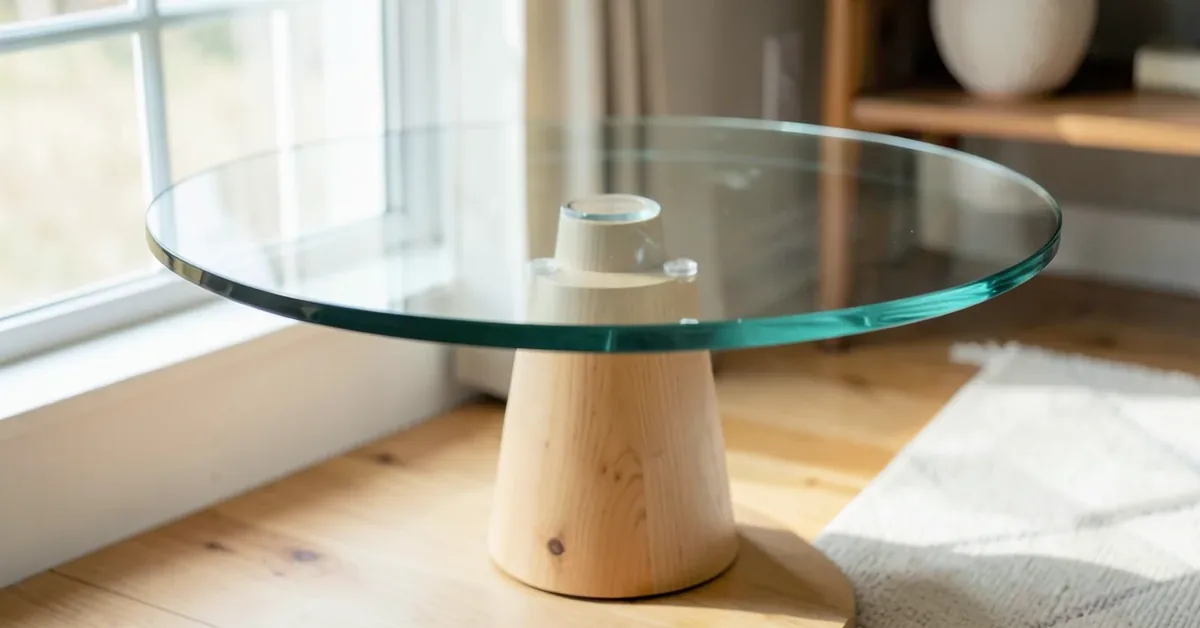
| Pedestal base (single center column) | Bolt-on glass top adapter, glass rests on a silicone pad on top of the adapter | Adapter distributes weight evenly and lets the glass be lifted off later |
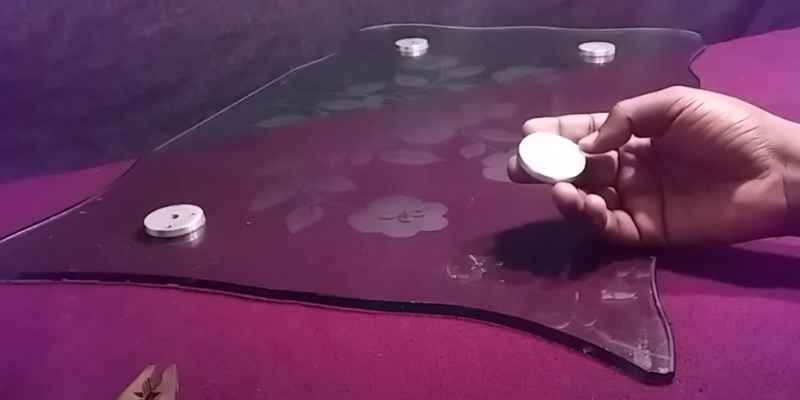
| Wood or metal legs (4-leg base) | Clear silicone bumper pads, 3 to 4 per glass edge | Cheap, nearly invisible, allows slight seasonal movement |
| Wicker or rattan base | Wider felt or rubber pads, or a thin foam ring cut to the glass diameter | Uneven weave needs a bigger cushioning footprint to avoid pressure points |
| Outdoor or patio base | UV-stable silicone or rubber pads rated for outdoor use | Standard adhesive pads degrade faster in sun, heat, and rain |
Best Glass Table Top Bumper Pick
 |
Glass Table Top Bumpers (12-Pack) – $4.99 These clear silicone pads are the pad-based method this guide recommends for wood and metal-leg bases: they cushion the glass, stop sliding, and peel off cleanly if you ever reposition or remove the top.
|
As an Amazon Associate we earn from qualifying purchases.
Materials You’ll Need
- Clear silicone bumper pads or bolt-on glass top adapters/edge clips
- Glass cleaner and a lint-free microfiber cloth
- Isopropyl alcohol (optional, for extra-clean contact points)
- Measuring tape and a pencil for marking pad positions
- Felt pads or a leveling kit for uneven legs
- A soft blanket or moving pads for handling the glass safely
Step-by-Step: Attaching a Glass Top With Pads or Clips
These six steps work for most flat wood or metal bases; add edge clips at the end if the base is a pedestal or the top still shifts after the pads are in place.
- Clean both surfaces: Wipe the underside of the glass and the top of the base with glass cleaner and a lint-free cloth, then let both dry fully.
- Mark pad positions: Measure the glass diameter and mark three to four evenly spaced points, about one to two inches in from the edge, on the base or the underside of the glass.
- Apply the pads: Peel and stick clear silicone bumper pads or felt pads at the marked points, pressing firmly for a few seconds each.
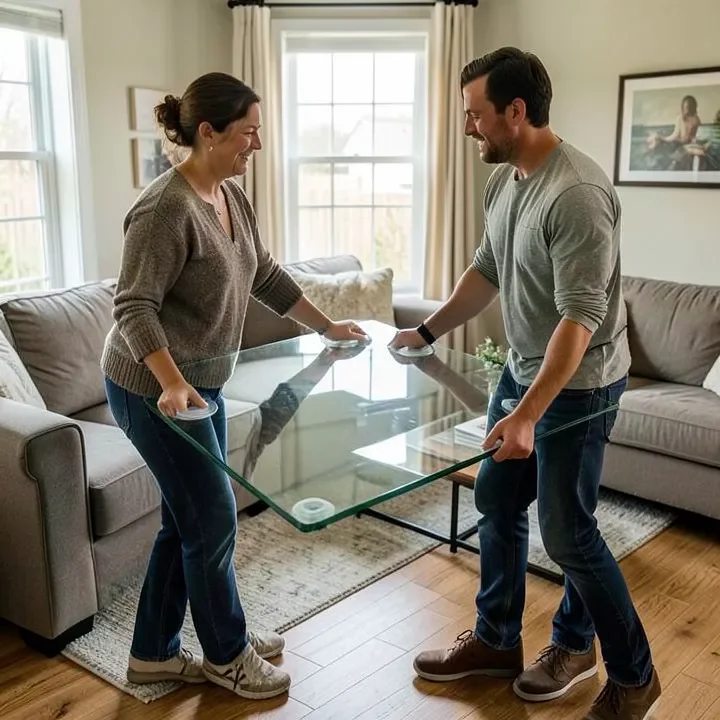
- Set the glass down: Lift the glass with both hands, never by one edge alone, and lower it evenly onto the base so every pad contacts at the same time.
- Check for rock: Press each side of the glass gently; if it rocks, add a thin extra pad under the low point instead of forcing the glass down flat.
- Add edge clips if needed: For a pedestal base or a top that still shifts, screw glass top adapter clips to the base rim so they cradle the glass edge without clamping it tight.
Securing Glass on a Wicker, Rattan, or Uneven Base
A woven wicker or rattan base isn’t flat, so standard small pads can end up resting on only two or three high points in the weave, leaving the glass to flex under pressure. Use larger felt or rubber pads spaced evenly around the rim instead, or cut a thin closed-cell foam ring to the glass’s diameter so the weight is spread across the whole edge rather than a few contact points. If the wobble persists, add a plywood or MDF disc between the wicker and the glass as a flat, level intermediate surface before placing the pads.
Can You Use a Glass Table Top Outdoors?
Outdoor glass table tops are tempered glass, a category of safety glass that is heat-treated to be roughly four times stronger than regular annealed glass and to break into small, rounded pieces rather than sharp shards if it ever fails. That makes it the only glass type suitable for an unsupervised outdoor table. Standard adhesive-backed pads break down faster outdoors, so use UV-stable silicone or rubber pads and check them each season, since sun, heat, and rain shorten the life of any adhesive backing.
📊 Tempered safety glass sold for table tops must pass ANSI Z97.1’s impact and center-punch fragmentation tests, which confirm it breaks into small, rounded pieces instead of sharp shards. Source: Intertek, ANSI Z97.1 overview
Glass Thickness and the ANSI Z97.1 Safety Standard
3/8 inch (10 mm) tempered glass is the common choice for round or rectangular tops up to about 36 to 42 inches across. Larger tops, heavier bases, or outdoor use typically call for 1/2 inch (12 mm) tempered glass for extra rigidity and impact resistance. Always specify tempered, never annealed or plain float glass, for any table top; a small etched logo or stamp in one corner, along with edges ground smooth instead of sharp, is usually how a supplier marks a piece as tempered.
Using Glass Top Adapters and Clips for a Firmer Hold
A glass top adapter is a small hardware fitting that bolts to the base and gives the glass a raised, cushioned surface to rest on, instead of sitting directly on wood or metal. For a pedestal base, this is usually the better choice over pads alone, since a single center column has far less contact area than a 4-leg base.
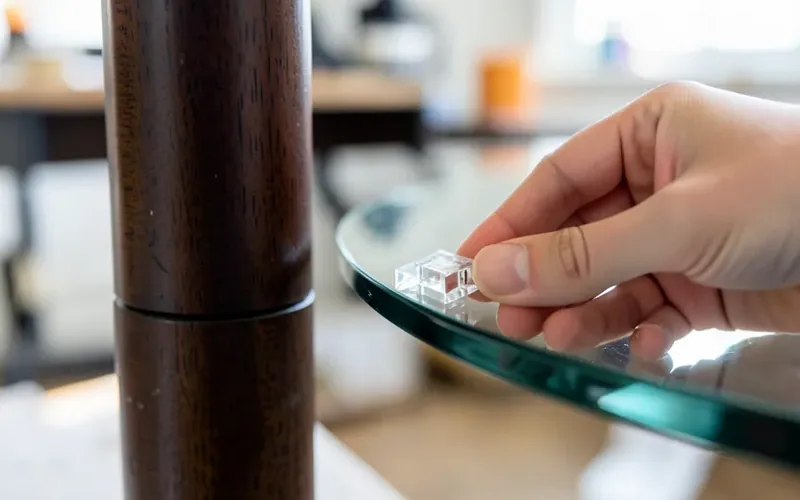
If you’d rather add a permanent bracket by drilling into the glass edge instead, read whether tempered glass can be drilled first; tempered glass shatters if it’s drilled after tempering, so any drilled hole has to be specified before the glass is tempered at the factory. For a specialty adhesive rated specifically for glass-to-glass or glass-to-metal joints, see our guide to glass glue options.
Fixing a Glass Top That Already Wobbles or Slides
Before touching the glass, check the legs; an uneven leg is a far more common cause of a wobbly table than a failed pad, and correct leg placement and length fixes most rocking on its own. If the base is level and the glass still shifts, remove and clean the old pads, check them for wear or lost tack, and replace them rather than adding more adhesive on top of old residue.
- Inspect each leg for length and levelness before blaming the glass
- Add felt pads or a leveling kit under any short leg
- Replace worn or flattened bumper pads instead of stacking new ones on old
- Re-check for rock after every change, one variable at a time
Handling and Cleaning a Secured Glass Top
Always lift a glass top with both hands spread wide, never by one edge or corner, and set it on a soft blanket during any pad or clip work to avoid chipping. Once secured, clean it with a standard glass cleaner and a microfiber cloth weekly, and avoid ammonia-based cleaners on tinted or coated glass, which can degrade the coating over time.
Frequently Asked Questions
Do You Glue a Glass Table Top to the Base?
No. Furniture and glass suppliers advise against permanently gluing or bolting a glass table top to its base. Tempered glass expands and contracts slightly with temperature, and a rigid epoxy or silicone caulk bond does not flex with it, which can cause stress cracks. Use cushioned pads or edge clips instead.
How Do You Keep a Glass Table Top From Sliding?
Clear silicone bumper pads or felt pads placed at three to four points under the glass create enough friction to stop sliding without gluing anything. For a pedestal base or a heavier top, bolt-on glass adapters or edge clips give a firmer hold while still letting the glass be lifted off.
Can You Put a Glass Table Top on a Wicker or Rattan Base?
Yes, but the uneven weave needs a wider cushioning footprint than a flat wood or metal base. Use larger felt or rubber pads spaced evenly around the rim, or set the glass on a thin closed-cell foam ring cut to its diameter so weight doesn’t concentrate on a few high points in the weave.
Is It Safe to Use a Glass Table Top Outdoors?
Yes, as long as it is tempered safety glass rated for outdoor use, not annealed glass. Use UV-stable silicone or rubber pads instead of standard adhesive pads, since regular pads degrade faster in sun and rain, and check them each season for cracking or lost grip.
How Do Glass Table Top Clips Work?
Glass table top clips (also sold as glass adapters) bolt to the base rim and cradle the glass edge from below and the side, holding it in place without clamping down tight enough to stress the edge. They work well on pedestal bases where pads alone can’t cover enough surface area.
What Thickness Should a Glass Table Top Be?
3/8 inch (10 mm) tempered glass is the common choice for round or rectangular tops up to about 36 to 42 inches across. Larger tops, heavier bases, or outdoor use typically call for 1/2 inch (12 mm) tempered glass for extra rigidity and impact resistance.
Conclusion
Match the fastening method to the base, not the other way around: clear silicone pads for a 4-leg wood or metal base, bolt-on adapters or edge clips for a pedestal, and wider foam or felt pads for wicker or rattan. Skip the glue entirely, confirm the glass is tempered at the thickness the base calls for, and re-check the pads once a year so the top stays secure without ever being permanently bonded down.
Sponsored / affiliate links. As an Amazon Associate I earn from qualifying purchases. I may earn additional commission from eligible campaigns.