DIY Wooden Box Ideas: Creative Projects for Your Home
Wooden boxes are one of the most forgiving first projects in woodworking – small enough to finish in a weekend, simple enough for basic tools, and flexible enough to become storage, decor, or a handmade gift. Whether you’re building your first box or your fiftieth, the ideas below cover storage, decorative pieces, functional boxes, outdoor projects, and gifts, plus the tools and finishing steps that make any of them turn out well.
What You’ll Need to Build a Wooden Box
Handy For Lidded Box Projects
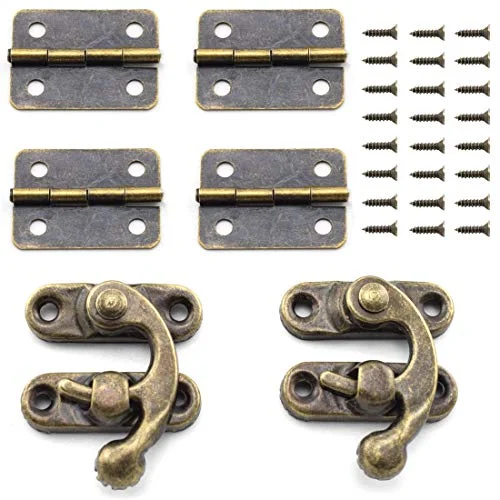 |
SDTC Tech Retro Jewelry Box Hardware Kit Matched brass-look hinges and hasp catches turn a plain lidded box into a proper jewelry or keepsake box without hunting for parts that match.
|
Most of these projects only need a handful of tools: a saw for cutting boards to length, wood glue and clamps for assembly, a hammer or brad nailer for reinforcement, sandpaper in a couple of grits, and a finish of your choice. If you’re adding a lid, hinges and a small clasp or hasp turn a plain box into a jewelry box or keepsake box – a cheap hardware kit like the one above saves you from hunting through a hardware store for matching hinges and screws.
Wood choice matters more than most beginners expect. Pine is soft, cheap, and easy to cut with hand tools, which makes it forgiving for a first project, but it dents easily and shows tool marks. Oak and maple cost more and are harder to cut, but they hold up to daily use and take stain evenly. Cedar has a natural aromatic oil that repels moths, which is why it’s the traditional choice for keepsake and blanket boxes even though it’s a softwood.
Simple Storage Box Ideas
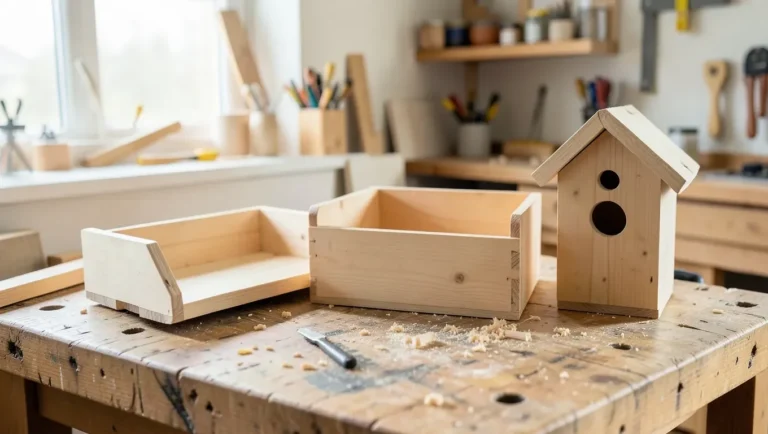
A basic wooden crate is the fastest storage project you can build – four side boards, a bottom panel, and a few nails or screws at each corner. Left unfinished, crates have a rustic look that works for books, toys, or produce; painted or stained, the same crate fits a living room or entryway. Stack two or three together and you have open shelving without buying a single piece of hardware store furniture.
Stackable storage boxes solve the same problem with a lid, which matters for anything you want to keep dust-free in a closet or garage – seasonal clothes, off-season tools, or holiday decorations. Build them all to the same width and length so they stack cleanly, and label the front of each one so you’re not opening five boxes to find what you need.
Decorative Wooden Box Ideas
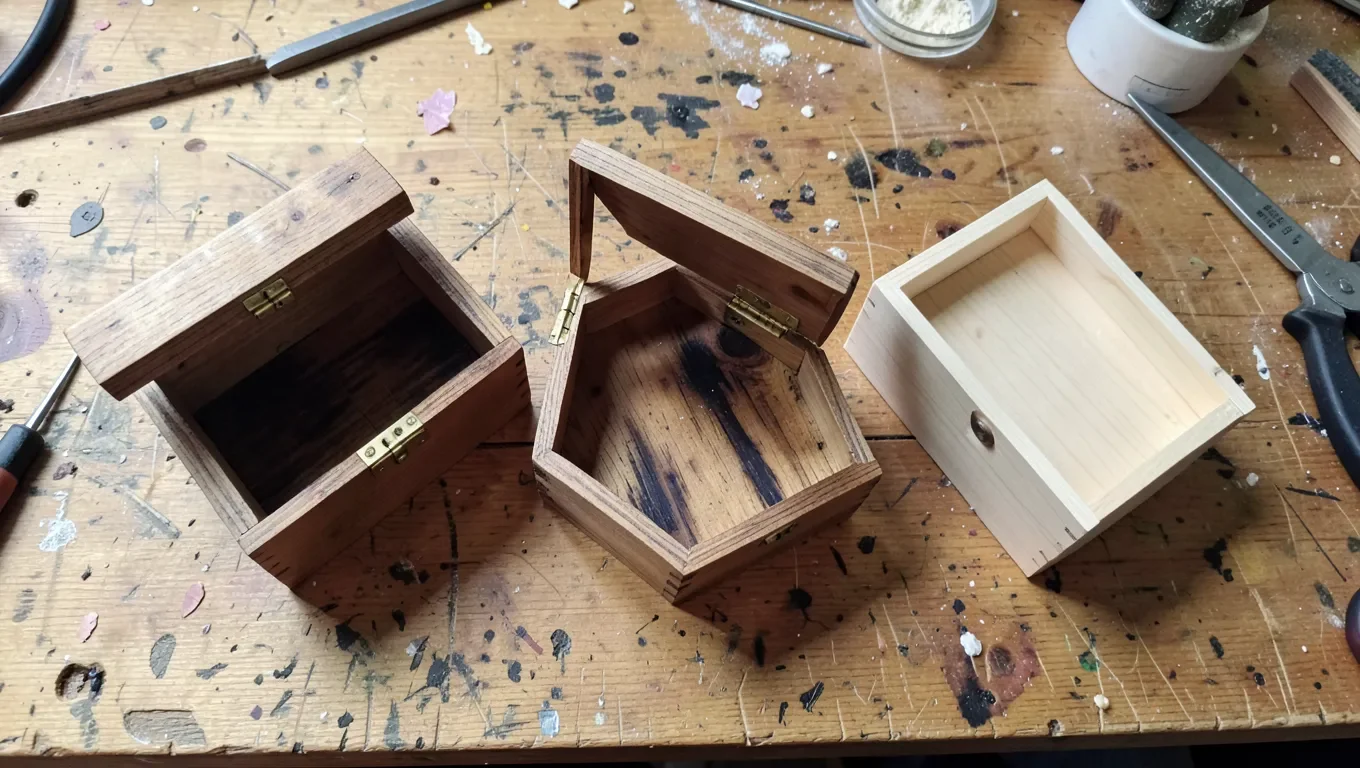
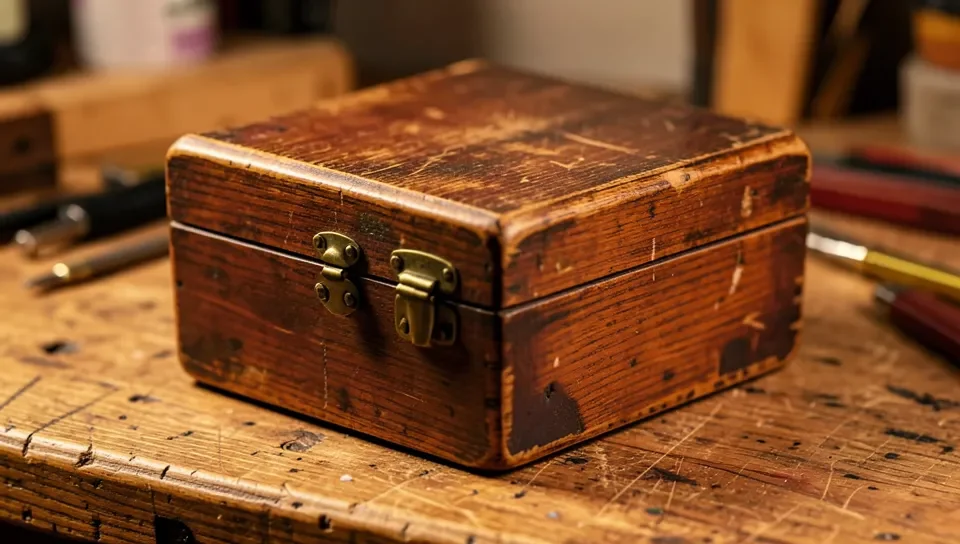
An antique finish comes from distressing the wood before you seal it, not from the wood itself looking old. Sand through the edges and corners where a real antique would show wear, dent a few spots lightly with a chain or the back of a hammer, then apply a dark stain that settles into the distressed areas more than the smooth surfaces. Old-style hinges and a small lock finish the look, and a coat of paste wax brings out a soft sheen instead of the glossy shine you’d get from polyurethane.
For a brighter look, acrylic craft paint works well on wooden boxes because it dries fast and holds detail for stencil work. Painter’s tape and a stencil give you clean flowers, stars, or geometric patterns without freehand painting skill, and two thin coats look better and last longer than one thick one. Seal the finished design with a clear acrylic or polyurethane topcoat so the paint doesn’t chip with handling. For more painting and stenciling techniques specifically, see our full guide to decorating wooden boxes.
Functional Wooden Boxes
A jewelry box is where the small hardware details matter most. Interior compartments keep rings and small pieces from tangling with necklaces, a mirror glued to the underside of the lid is a nice functional touch, and a strip of felt or velvet glued to the bottom protects anything you set inside. Because these boxes are handled often and opened daily, spend a little more on real brass hinges rather than the thin stamped-steel ones – they won’t sag or bind after a year of use.
Keepsake boxes serve a different purpose – they’re built to be opened rarely and treasured for years, holding photos, letters, or a handful of small mementos. A simple design with a well-fitted lid matters more here than fancy hardware, since the box itself often becomes the keepsake, passed down after the objects inside it have been sorted through many times.
Outdoor Wooden Box Projects
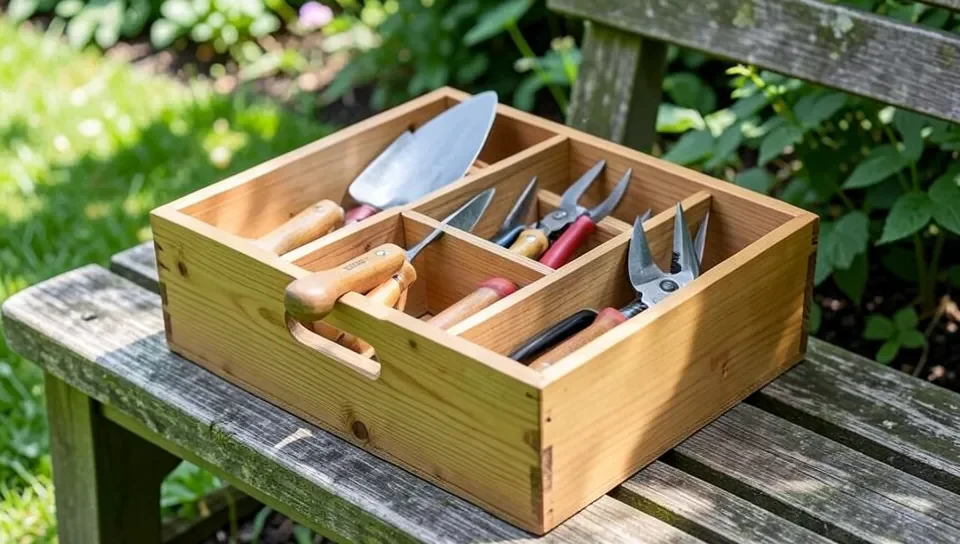
A garden tool caddy keeps hand tools organized and off the ground, which matters more for tool longevity than it sounds – damp soil left on a trowel or pruner rusts the metal fast. Adding dividers inside the box keeps smaller tools from sliding around and burying themselves under bigger ones, and a center handle makes it easy to carry the whole caddy to wherever you’re working.
A planter box needs drainage more than anything else – drill several holes in the bottom before you add soil, or standing water will rot the wood from the inside out within a season. Cedar and redwood resist rot naturally and hold up outdoors without a liner, while pine or fir need a waterproof liner or exterior-rated sealant if you want the box to last more than a year or two outside.
Wooden Box Gift Ideas
A personalized box turns a simple gift into something the recipient keeps long after whatever was inside it is gone. Wood-burning or engraving a name and date takes the same box from generic to memorable, and it costs nothing beyond the tool if you already own a wood-burning pen. A small box works well for jewelry or a watch; a larger one can double as a keepsake box or hold a stack of favorite books.
A themed gift box built around a hobby or interest – a coffee lover’s box with beans and a mug, a gardener’s box with seed packets and gloves, a relaxation box with candles and tea – gives the box itself a purpose beyond packaging. Once the contents are used up, the box stays useful for storage, which makes it a gift that keeps working long after the occasion. If building your own isn’t in the cards this week, our guide on what to look for when you buy a wooden box covers the same construction details – joinery, solid wood vs. veneer, hinge quality – worth checking before you order one instead.
Repurposing Old Wooden Boxes
An old crate or box doesn’t need to go to the curb just because the finish is worn. Sand off loose paint and rough patches, add handles if it doesn’t have them, and either repaint it to match a room or leave the bare wood for a rustic look. Lined with fabric, an old box becomes a fabric-covered storage bin; mounted to a wall, it becomes an open shelf or a plant holder with almost no extra material.
Stacked boxes of different sizes make an easy modular shelving unit for a bedroom or craft room – no cutting required if you already have a few boxes of similar depth. Because you’re reusing material instead of buying new lumber, this is usually the cheapest project on this list, and it keeps a box that still has plenty of useful life out of the trash.
Wood and Finishing Tips
- Pine is the easiest and cheapest wood to start with, but it dents and scratches more than hardwood.
- Oak is heavy and strong, takes stain evenly, and holds up to years of daily use.
- Cedar naturally resists moths and moisture, making it the standard choice for keepsake and blanket boxes.
- Cherry, walnut, and maple are the usual picks for small decorative boxes because they’re easy to work in thin stock and finish beautifully.
- Sand before you finish – start around 120 grit and move up to 220 for a smooth surface that takes stain or paint evenly.
- Seal after staining – a coat of polyurethane or a food-safe finish (for anything that might hold food or go outdoors) protects the wood and the color underneath it.
Frequently Asked Questions
What paint is best for a wooden box?
Acrylic paint is ideal for wooden boxes. It provides vibrant colors and durability. Use primer for a smoother finish.
What is the best wood to make a small box out of?
Cherry, walnut, and maple are excellent choices for making a small box. They are durable, easy to work with, and offer a beautiful finish.
What is the golden ratio of a wooden box?
The golden ratio of a wooden box is approximately 1.618. This means the length is 1.618 times the width.
Should I sand a wooden box before painting it?
Yes, sand the wooden box before painting. It ensures a smooth surface, better paint adhesion, and a professional finish.
Conclusion
Creating your own wooden boxes can be fun and rewarding. These DIY projects add charm to any space, and they make great gifts you can fully customize to fit your style. Start with a simple crate or storage box to build confidence, then move on to hinged jewelry boxes or decorative pieces once you’re comfortable with the basics. Every box you build teaches you something for the next one.
Sponsored / affiliate links. As an Amazon Associate I earn from qualifying purchases. I may earn additional commission from eligible campaigns.