Why Is Cedar Wood Important? Key Properties, Uses and Benefits
Cedar wood is important because its natural oils resist decay and repel insects without any chemical treatment — making it the most durable self-protecting softwood available. A Western Red Cedar deck lasts 25 or more years outdoors; skip the chemical treatment that a pressure-treated alternative needs and you save maintenance time every two to three years. This guide covers cedar’s measurable technical properties, the main species woodworkers use, and how each one performs best in real construction and woodworking projects. For the full list of practical benefits (and a couple of myths worth correcting), see our cedar wood advantages guide.
Quick Answer
Cedar wood is important for three reasons no other common softwood matches together: its natural oils resist rot and insects without chemicals; its fiber saturation point of 18-23% (versus 25-30% for most softwoods) keeps it dimensionally stable through humidity swings; and its R-value of 1.36 per inch makes it the best-insulating softwood for siding, decks, and closet linings.
Cedar Wood Technical Properties at a Glance
Best Cedar Closet Block Pick
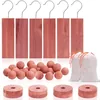
Homode Cedar Blocks for Clothes Storage, 40 Pack
Made from premium aromatic red cedar, this 40-piece set includes hang-ups, balls, chips, sachets, and rings — covering closets, drawers, and storage bags in one purchase.
- Best for: full closet systems with multiple storage zones
- Why we picked it: aromatic red cedar has the highest natural oil concentration of any cedar type — strongest moth-repelling effect
- Main drawback: smaller individual pieces may need sandpaper refresh sooner in high-airflow closets
Compare more cedar closet block options
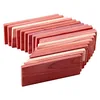 Option 1 Cedar Space Cedar Blocks 16 PCS
|
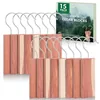 Option 2 ESRICH Cedar Blocks 15 Pack with Metal Hooks
|
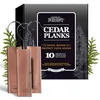 Option 3 Dr. Killigan’s Cedarwood Planks 10-Pack
|
As an Amazon Associate we earn from qualifying purchases.
Most articles about cedar describe its benefits in general terms. The table below gives the actual numbers — drawn from USDA Forest Products Laboratory data and the Western Red Cedar Lumber Association — so you can compare cedar directly against Douglas fir and pine when making material decisions.
| Property | Western Red Cedar | Douglas Fir | Eastern White Pine |
|---|---|---|---|
| Janka Hardness | 350 lbf | 660 lbf | 380 lbf |
| Dried Weight | 23 lbs/ft3 | 32 lbs/ft3 | 25 lbs/ft3 |
| R-value per inch | 1.36 | 0.88 | 1.32 |
| Fiber Saturation Point | 18-23% | 25-30% | 25-30% |
| Volumetric Shrinkage | 6.8% (Low) | 11.6% (High) | 8.9% (Moderate) |
| Expected Lifespan Outdoors | 25+ years untreated | 5-10 years untreated | 5-8 years untreated |
Why Cedar Has the Best Thermal Insulation of Any Common Softwood
Cedar’s R-value of 1.36 per inch is the highest of any widely available softwood. Western Red Cedar is the best thermal insulator among commonly used structural timbers — superior not just to other woods but to brick (R-0.2), concrete (R-0.08), and steel (essentially R-0). This matters most for siding and roofing applications where the wall assembly’s total thermal resistance directly affects heating and cooling costs. A 1-inch cedar bevel siding board adds meaningful insulation value that pine or Douglas fir simply cannot match.
Why Cedar Resists Decay, Insects, and Weather
Natural Oils That Repel Insects
Cedar wood contains two naturally occurring compounds — cedrol and thujopsene — that give it its characteristic aroma and its insect-repelling ability. These oils deter moths, carpet beetles, and cockroaches on contact. The repellent effect works as long as the cedar releases its scent; when the oils dissipate (typically after three to five years in a closed storage chest or closet), lightly sanding the wood surface with 120-grit sandpaper re-activates fresh oil-bearing fibers. Cedar blocks and hang-ups in closets work on the same principle and are reactivatable indefinitely.
One practical note: cedar’s natural oils deter insects from settling in, but they are not a systemic pesticide. If termites are already established in a structure, cedar alone will not eliminate them — professional treatment is still required. Cedar is prevention, not cure.
Rot and Decay Resistance Without Chemical Treatment
Cedar heartwood contains natural preservatives called thujaplicins — a group of tropolone compounds that inhibit fungal growth. This is why cedar’s fiber saturation point sits at 18-23% compared to 25-30% for most other softwoods: cedar absorbs less moisture before its cell walls become saturated, so it stays drier under the same weather conditions and gives fungi less opportunity to establish. In practical terms, untreated cedar siding, decking, and fencing regularly last 25 or more years in North American climates where comparable untreated pine would need replacement within a decade.
Cedar Wood in Construction and Woodworking

Best Uses for Cedar in Building and Woodworking
Cedar wood excels in applications where weight, weather, and longevity intersect. Builders prefer it for exterior siding, shingles, decking, fencing, and outdoor furniture precisely because no chemical treatment is needed to achieve long service life. Indoors, aromatic (eastern red) cedar is the go-to material for closet linings, storage chests, and drawers because of its moth-repelling oils. Cedar is also used in acoustic guitar soundboards — its low density and even grain give it excellent resonance and sound projection, which is why many fingerstyle guitars use cedar tops rather than spruce.
| Application | Best Cedar Type | Key Reason |
|---|---|---|
| Exterior siding and shingles | Western Red Cedar | Best R-value, low weight, natural rot resistance |
| Decking and fencing | Western Red Cedar | 25+ years without chemical treatment |
| Closet lining and storage chests | Eastern Red (Aromatic) Cedar | Strongest moth-repelling oil concentration |
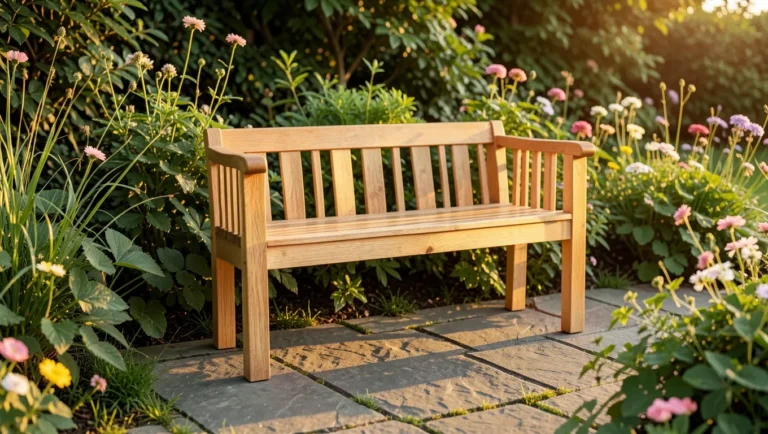
| Outdoor furniture | Western Red or Northern White Cedar | Lightweight, dimensionally stable, natural finish |
| Guitar soundboards | Western Red Cedar | Excellent resonance and acoustic projection |
| Log cabins and canoes | Northern White Cedar | Extremely lightweight, excellent for hand-tool work |
Cedar Maintenance Schedule
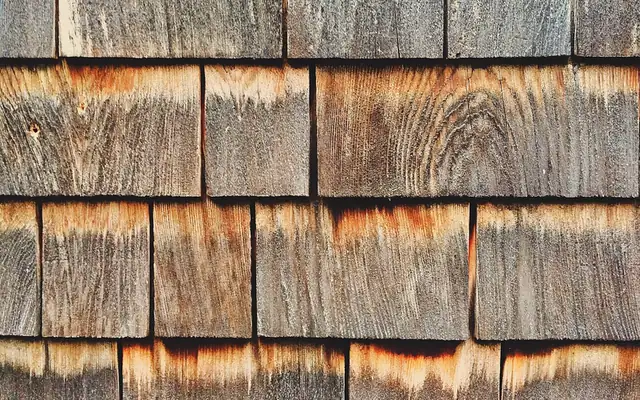
Untreated cedar weathers naturally to a silver-gray patina that many homeowners find attractive. If you prefer to maintain cedar’s warm reddish-brown color, a penetrating oil finish or semi-transparent stain needs to be reapplied on a predictable schedule. Horizontal surfaces (decks, flat fence rails, pergola rafters) collect water and UV exposure from above and need refinishing every two to three years. Vertical surfaces (siding, fence boards, vertical trim) shed water more effectively and typically need refinishing every four to five years. Sealed cedar also resists checking and splitting better than unfinished cedar in climates with wide humidity swings.
Use Stainless Steel or Hot-Dipped Galvanized Fasteners
One practical woodworking note that competitors rarely mention: cedar’s natural tannic acids react with iron-based fasteners in wet conditions, causing black staining that runs down the wood grain and is extremely difficult to remove. Always use stainless steel or hot-dipped galvanized screws and nails with cedar in any exterior application or anywhere the wood will get wet. Electroplated or “bright” zinc fasteners are not adequate — they corrode within one to two seasons and leave permanent dark streaks. For staining cedar, clean the wood thoroughly before applying any finish to avoid trapping tannin bleed under the coating.
Types of Cedar Wood: Which One to Choose?
The word “cedar” covers several distinct species with genuinely different working properties. Choosing the wrong type for your project — using aromatic cedar for an outdoor deck, for example — leads to faster deterioration and wasted money. Here are the three types woodworkers and builders encounter most often.
Western Red Cedar (Thuja plicata)
Western Red Cedar is a large softwood tree native to the Pacific Northwest, commercially the most important of the true cedars in North American construction. It has a Janka hardness of 350 lbf, dried weight of 23 lbs/ft3, and the highest R-value of any common softwood at 1.36 per inch. Its heartwood contains thujaplicins that give it natural decay resistance without treatment. Best for: exterior siding, decking, roofing shingles, outdoor furniture, and musical instrument soundboards. The wood accepts stains and finishes readily and can be worked with either hand or power tools, though its low density means it dents and scratches easily from impact.
Eastern Red Cedar — The Aromatic Cedar (Juniperus virginiana)
Eastern Red Cedar — often called aromatic cedar — is technically a juniper, not a true cedar, but it is the species most people encounter in closet liners, cedar chests, and storage block products. It is denser than Western Red Cedar (Janka 900 lbf) and has the highest concentration of cedrol and thujopsene of any cedar-family wood, giving it the strongest insect-repelling properties. Best for: closet lining, storage chests, drawers, and cedar block products. Less suited to large construction projects because it is more knotty and difficult to find in clear, wide boards. It does not share Western Red Cedar’s thermal insulation advantage.
Northern White Cedar (Thuja occidentalis)
Northern White Cedar is the lightest of the three (approximately 22 lbs/ft3 dried) and has a long history in traditional canoe building and rustic furniture because it responds exceptionally well to hand tools and bends without splitting. Its natural decay resistance is lower than Western Red Cedar’s but still adequate for outdoor use in many climates. Best for: log cabins, outdoor and rustic furniture, canoe ribs and planking, split-rail fencing. Less common in retail lumber yards than Western Red Cedar but readily available in the Great Lakes region and New England.
Cedar’s Ecological Role and Sustainable Forestry
Cedar forests support significant biodiversity. The dense, year-round foliage of cedar trees provides nesting and shelter for a wide range of bird species, small mammals, and insects. Their deep root systems help prevent soil erosion on slopes and river banks, and they filter pollutants from surface runoff before it reaches waterways. Cedar mulch, a byproduct of cedar milling, is widely used in garden beds because it suppresses weeds and retains soil moisture while its natural oils slow decomposition compared to other wood mulches — making it a productive use of material that would otherwise be waste.
Sustainable harvesting practices in cedar forestry typically involve selective cutting of mature trees, followed by replanting to maintain forest structure. Cedar grows faster than many hardwoods used in similar applications, making it a genuinely renewable resource when managed correctly. Consumers who prioritize cedar mulch and cedar lumber from certified sustainable sources (FSC or SFI) support the economic viability of forest management operations that protect old-growth stands.
Cultural and Historical Significance of Cedar
Cedar has been a prestige material across multiple civilizations for thousands of years. Ancient Egyptians used cedar wood in mummification coffins and embalming oils because of its preservative and aromatic properties. The cedars of Lebanon (Cedrus libani) were the most prized timber in the ancient Near East — used in Solomon’s Temple, Phoenician trading ships, and royal palaces across the Levant. For Indigenous peoples of the Pacific Northwest, Western Red Cedar was central to daily life: cedar bark processed into thread, ropes, and woven textiles; cedar planks split for longhouses; and carved cedar used for totem poles and ceremonial regalia. Cedar wood symbolizes strength, protection, and purification across many cultures, and cedar trees remain sacred elements in Shinto shrine landscapes in Japan and ceremonial burning practices in numerous Indigenous traditions.
Cedarwood in Aromatherapy and Wellness
Cedar essential oil — extracted from Virginian juniper (aromatic cedar) or Himalayan deodar cedar — has a well-documented calming effect in aromatherapy practice. The compound cedrol has been shown in several clinical studies to have anxiolytic (anti-anxiety) properties when inhaled; a 2015 study in the journal Frontiers in Behavioral Neuroscience found cedrol inhalation reduced physiological markers of stress in healthy volunteers. The oil also has mild antiseptic properties and has been used in traditional medicine to address minor skin irritation and respiratory congestion. Diffusing cedar oil in a home workspace or bedroom is a practical low-intervention method for reducing ambient stress, and the scent has the added benefit of the natural insect deterrence described above.
Frequently Asked Questions About Cedar Wood
Why was cedar so important historically?
Cedar was important historically because no other widely available timber combined durability, workability, fragrance, and natural preservation in one wood. Ancient Egyptians, Phoenicians, Hebrews, and Pacific Northwest Indigenous peoples all prized it for construction, sacred objects, and preservation of the dead. The Cedars of Lebanon were so valuable that Phoenician traders exported them across the ancient Mediterranean for over a thousand years.
How long does cedar wood last outdoors without treatment?
Western Red Cedar typically lasts 25 or more years outdoors without any chemical preservative treatment in North American climates. Its natural thujaplicin compounds resist fungal decay, and its fiber saturation point of 18-23% means it absorbs less moisture than untreated pine or fir under the same weather conditions. Periodic cleaning and refinishing (every 2-3 years for horizontal surfaces) extends service life further and maintains the wood’s appearance.
What makes cedar wood better than pine for outdoor use?
Cedar outperforms pine outdoors for three measurable reasons: it has a lower fiber saturation point (18-23% vs. 25-30%), meaning less moisture uptake and less swelling; its natural oils resist decay without chemical treatment, while pine requires pressure treatment with copper compounds for outdoor longevity; and its R-value of 1.36 per inch versus pine’s 1.32 gives it a marginal thermal insulation advantage. Cedar is also lighter (23 lbs/ft3 vs. 25 lbs/ft3 for white pine), which matters for large decking or siding installations.
Does cedar wood repel all insects?
No — cedar repels moths, carpet beetles, cockroaches, and some other fabric-damaging insects, but it does not reliably repel established termite colonies or carpenter ants. Cedar’s oils work as a deterrent for insects that are choosing where to settle, not as an insecticide for infestations already in place. For termite prevention in structures, pressure treatment or chemical barriers are still required; cedar’s insect resistance is most effective in closed storage environments like closets and chests where the aromatic oils concentrate.
What are the disadvantages of cedar wood?
Cedar’s main disadvantages are its low Janka hardness (350 lbf for Western Red Cedar), which makes it prone to dents and surface scratches in high-traffic applications; its tendency to cause iron staining when wet-contact iron fasteners corrode against the tannins; and its higher cost compared to pressure-treated pine for structural framing. Cedar is also not suitable for applications requiring structural load-bearing strength — its modulus of rupture (7,500 lbf/in2) and compression strength (4,560 lbf/in2) are classified as “Very Low” by USDA standards. Use it for its specific strengths (weather resistance, lightness, insulation, aroma) rather than as a general-purpose structural timber.
Is cedar a good choice for beginner woodworkers?
Yes — cedar is an excellent choice for beginners. Its straight, consistent grain makes it easy to cut, plane, and sand with both hand and power tools. Its low density means less tool resistance and less fatigue on long projects. The main beginner pitfall is its tendency to dent from tool pressure or clamp marks, so use caul boards when clamping and keep chisel and plane blades sharp. Cedar also raises fine dust that can irritate skin and airways — always wear a dust mask and eye protection when sanding or routing.
Cedar’s natural beauty and forgiving workability make it a satisfying first project material, particularly for outdoor planters, storage boxes, and small furniture items. As a bonus, the off-cuts from any cedar project can go straight into a closet or drawer as natural insect deterrents.
Conclusion
Cedar’s importance comes down to a combination of properties no single competitor species can fully match: natural decay resistance, insect deterrence, superior thermal insulation, low weight, and workability — all without chemical treatment. Whether you are choosing exterior siding, lining a closet, or selecting a guitar soundboard, cedar’s technical profile makes it the right material for a specific set of applications. Understanding the three main cedar species (Western Red, Aromatic/Eastern Red, and Northern White) helps you match the wood to the job rather than assuming all cedar is interchangeable.
Sponsored / affiliate links. As an Amazon Associate I earn from qualifying purchases. I may earn additional commission from eligible campaigns.