Humidifier for Wood Stove: Do Steamers Work?
Yes, a humidifier made for a wood stove can work, but only if the stove runs hot enough to keep water moving, the room is small enough, and your indoor humidity is actually low; otherwise you get little moisture and more corrosion risk. A poor setup can leave the room dry, waste heat, and add rust or condensation problems. This guide explains when steamers help, what type to buy, and when a separate humidifier is the better choice.
How steamers compare to electric humidifiers


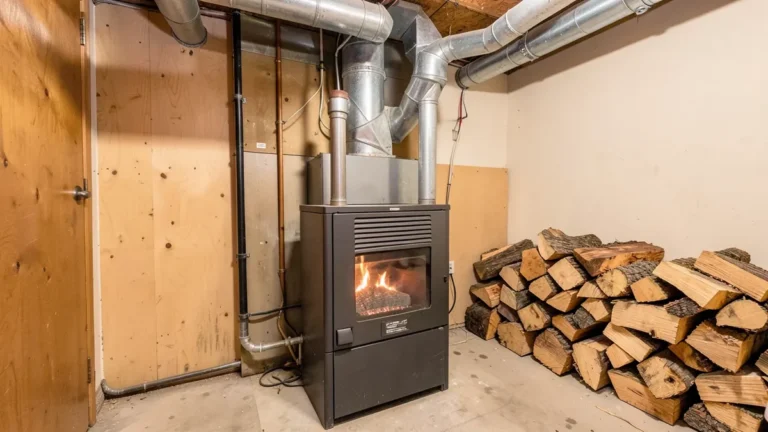
A wood stove steamer is a passive, open-water humidifier that sits on or near the stove and evaporates water from stove heat. It is not a powered mist machine. Most are cast iron or enameled steel, and they usually need frequent refilling because they trade runtime for simple, heat-driven operation.
Passive evaporation versus powered mist
That difference matters. A stove-top steamer depends on radiant and conductive heat from the stove surface, so its output rises and falls with burn rate and stove temperature. A true steam humidifier plugs in, boils or atomizes water on its own, and does not need stove heat at all. A cool-mist humidifier also runs on electricity, but it releases room-temperature mist instead of heat-driven vapor.
Typical materials and water capacity
Cast iron is common because it handles direct radiant heat well and resists warping. Enameled steel is also used, and the enamel layer can help with rust resistance if the finish stays intact. Capacity is usually measured in ounces or quarts, and larger capacity usually means fewer refills, but also more mass, more spill risk, and a larger footprint on the stove.
What it can and cannot do
A steamer can nudge humidity upward in a small, enclosed room with steady stove heat. It cannot fix a large open-plan space by itself, and it cannot replace a room humidifier when indoor RH is very low. Use a hygrometer to judge results. Guessing from comfort alone is unreliable, especially during a dry winter stretch.
Why winter air feels so dry
Wood heat lowers indoor relative humidity because warm air can hold more moisture than cold air. Once the house warms up, the same amount of water vapor becomes a smaller percentage of the air, so RH drops. The fix is not more steam by default. It is the right amount of moisture for the room and the season.
Why room layout changes the result
Room size and layout change everything. A closed room with a door and limited airflow can hold added moisture longer, so a steamer has a better chance of raising RH. An open-plan living area pushes dry air farther from the stove, spreads heat unevenly, and makes a small reservoir look ineffective even when it is working.
What RH target to aim
A practical winter target is usually the middle of the comfort range, not the highest number you can reach. Too much humidity can encourage condensation on cold windows, trim, or masonry. Place the hygrometer away from direct steam and out of the plume path, or it will read artificially high and give you a false sense of success.
Do wood stove steamers actually work?
Yes, but only under specific conditions. A wood stove steamer can add enough moisture for a small or moderately sized room when the stove surface stays hot and the reservoir is kept filled. If the stove is idling, the room is large, or the indoor RH is already reasonable, the effect may be too small to notice.
When they add enough moisture
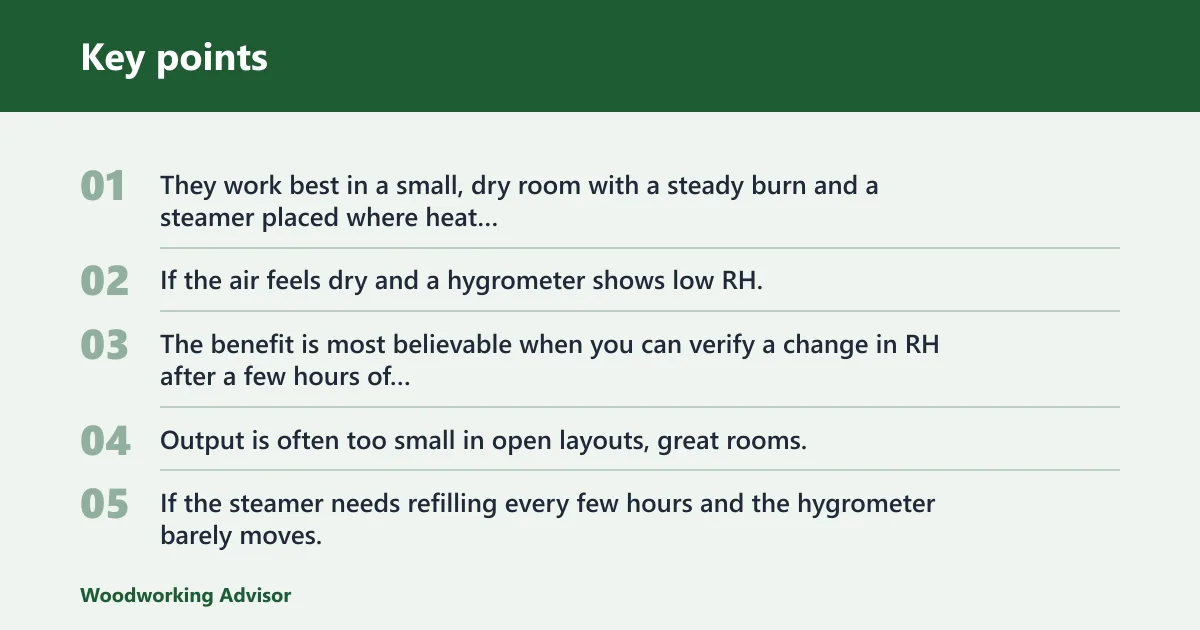
They work best in a small, dry room with a steady burn and a steamer placed where heat is consistent but not extreme. If the air feels dry and a hygrometer shows low RH, even modest evaporation can improve comfort. The benefit is most believable when you can verify a change in RH after a few hours of stable stove operation.
When output is too small
Output is often too small in open layouts, great rooms, or houses with strong air movement between zones. If the steamer needs refilling every few hours and the hygrometer barely moves, the setup is undersized for the room. At that point, a room humidifier or whole-house humidifier is usually the better tool.
How stove heat changes evaporation
Stove surface temperature appears to drive the evaporation rate. A hotter surface means more vapor movement, but it also raises boil-dry and spill risk. One common mistake is expecting a steamer to perform the same on a lazy shoulder-season fire as it does on a hot winter burn. It will not.
Say your stove heats a 180-square-foot den and the hygrometer shows 22% RH. A steamer with a small reservoir may raise comfort if the burn stays steady. Move that same steamer to a 600-square-foot open living area, and the RH gain may be too small to matter.
Stove steamer decision table
Use the table below to match room conditions to the right moisture strategy. The best answer depends on room size, current RH, stove heat, and how much attention you want to give refilling and monitoring.
| Room size and layout | Current indoor RH | Stove surface heat | Risk tolerance | Best path | Refill frequency | Safety notes |
|---|---|---|---|---|---|---|
| Small, closed room under about 200 sq ft | Below 30% | Hot enough for steady evaporation | High attention to monitoring | Steamer only | Often every 4-8 hours | Keep away from the flue and hottest zone; watch for boil-dry. |
| Small to medium room, partly open | 25% to 35% | Moderate to hot | Moderate | Steamer plus room humidifier | Steamer every 4-8 hours; room unit as needed | Use the steamer for local support, not as the only moisture source. |
| Open-plan area above about 400 sq ft | Below 30% | Any normal wood-stove burn | Low tolerance for frequent refills | Whole-house humidifier | Not practical as a primary source | A small steamer will usually be too weak for the space. |
| Any size room | Above 35% | Hot | Low tolerance for spills or maintenance | Skip the steamer | None | Extra moisture may create condensation, rust, or window sweating. |
A common first-timer mistake is buying the biggest cast-iron pot available for a medium room. More capacity helps runtime, but if the room is already near target RH, the larger reservoir just increases spill consequences and makes over-humidification easier to miss.
What size and material should you choose?
Choose size and material around the stove, not the catalog photo. Cast iron is the safe default for direct radiant heat and durability. Enameled steel is fine if the finish stays intact and you want better rust resistance. Capacity should match how often you are willing to refill and how steady your fire burns through the day.
Cast iron versus enameled steel
Cast iron handles high heat well and is common for stove-top steamers. It is less forgiving if left wet after use, because rust can form on unprotected surfaces. Enameled steel usually resists rust better and is easier to wipe clean, but chipped enamel can expose metal and shorten service life.
Capacity and refill frequency
Think in terms of runtime. A larger reservoir can reduce refill frequency, but only if the stove heat is not so intense that the water boils off too quickly. A smaller steamer is easier to move and fill, yet it may demand attention multiple times per day during long burns. That is normal for a passive device.
What to look for in a lid or grate
Look for a lid or grate that slows splash-out while still allowing evaporation. Openings should not be so large that water sloshes out when the stove gets bumped or when the room air shifts. If the design includes a removable lid, make sure it stays secure enough to handle heat cycles without rattling loose.
Can you put a humidifier on top of a wood stove?
You can place a stove-top steamer on a wood stove only if the design is made for that heat, the placement keeps it away from the flue and hottest zones, and you are ready to refill it before it runs dry. It should never sit where a spill could hit a control, seam, or draft path.
Safe placement near hot zones
Put the steamer on a stable part of the stove top where the heat is steady, not at the edge where it can be knocked off. Keep it clear of the flue pipe, stovepipe collar, and any point that gets extreme direct radiant heat. If the manual for the stove or steamer conflicts with this, follow the manual.
Spill and boil-dry risks
Spill risk rises when the reservoir is overfilled, the stove is uneven, or someone bumps it while adding wood. Boil-dry risk rises when the fire runs hot and the reservoir empties faster than expected. Both failures can damage the steamer and make the stove area less safe. Check water level before long burn periods.
Kid and pet precautions
Kids and pets can reach a hot steamer faster than many owners expect. Treat it as a burn hazard. If the stove area is already used as a warm resting spot for a dog or cat, a steamer may not be worth the risk. A lower, electric humidifier away from the stove can be the safer answer.
How to clean and maintain a steamer
Maintenance is simple, but it should be regular. Mineral deposits build up fast when water evaporates on a hot surface. Rust shows up when wet metal is left to cool without drying. Clean the reservoir often, remove scale before it hardens, and check the finish before each refill.
Descaling mineral deposits
Empty the steamer when it is cool, then remove mineral buildup with a non-damaging cleaner suitable for the material. Hard water leaves white scale that can reduce capacity and slow evaporation. If the lid or grate is removable, take it off so you can reach the corners and waterline. Rinse well before returning it to the stove.
Preventing rust
Dry the steamer after cleaning and before storage. For bare cast iron, wiping away moisture is important because rust can form quickly once the water evaporates and the metal cools. If the steamer is enameled, inspect for chips. Damaged areas need more care because exposed metal can corrode.
Routine checks before refilling
- Let the unit cool enough to handle safely.
- Check for cracks, chips, or loose parts.
- Remove scale or residue from the waterline.
- Refill only to the marked or safe fill level.
- Set it back on a stable, approved spot on the stove.
- Confirm the hygrometer is placed away from direct steam.
Frequently asked questions
What is a steam humidifier?
A steam humidifier is a powered device that creates moisture independently of the stove. It plugs in, uses electricity, and can produce output without relying on stove heat. For a wood stove setup, that matters because it can work in a room where the stove is not hot enough for a passive steamer to do much.
Hot steam vs cold steam humidifier
Hot steam humidifiers use heat to create vapor, while cool-mist units disperse water as a fine mist at room temperature. For a wood stove room, neither depends on the stove itself. A stove-top steamer is passive and heat-driven; a cool-mist humidifier is usually quieter in temperature terms and easier to place away from the stove.
Are cast iron stove-top steamers safe?
They can be safe when used correctly, because cast iron tolerates heat well and is common for this purpose. Safety depends on placement, fill level, and how closely you monitor it. The main hazards are burns, spills, and boil-dry damage, not the material alone.
How much water do wood stove steamers add to a room?
There is no single answer because room size, stove heat, airflow, and reservoir size all change the result. In a small closed room, the effect may be noticeable on a hygrometer. In a large open area, the same steamer may add too little moisture to make a meaningful difference.
Do steam humidifiers work better than cool mist humidifiers?
For a wood stove room, a true steam humidifier is not automatically better than cool mist. It is different. Steam units add moisture with heat and electricity, while cool-mist units add moisture without stove dependence. The better choice is the one sized for the room and able to hold your target RH without constant refilling or overheating the space.
Sponsored / affiliate links. As an Amazon Associate I earn from qualifying purchases. I may earn additional commission from eligible campaigns.