15 Live Edge Bar Ideas (Plus the Slab-Drying Step Most Guides Skip)
Live edge bars are one of the most popular home-bar features right now for good reason — the raw bark-line edge and continuous grain of a single slab looks like nothing a factory-made counter can match. But most “live edge bar ideas” roundups stop at the design photos and skip the two things that actually decide whether the bar looks good in five years or splits down the middle: the slab has to be properly dried before it’s built into anything, and the finish has to handle spilled drinks and condensation, not just look nice on day one. Here’s how to pick a design, a wood, and a finish that will actually hold up as a working bar top.
Start With a Slab That’s Actually Ready to Build With
The single most common reason a beautiful live edge bar top cracks, cups, or opens up a gap at a glued seam within its first year has nothing to do with the design — it’s that the slab was still wet when it got built into furniture. A freshly milled slab can sit well above 20% moisture content, and wood keeps losing that moisture (and shrinking as it does) for months or years after milling, whether or not it’s already installed in your bar. If that shrinkage happens after the bar is built, sealed, and sitting in a climate-controlled room, the wood has nowhere to move except by cracking along the grain or pulling away from its base.
A slab needs to be air-dried or kiln-dried down to somewhere around 6–8% moisture content — roughly matching the humidity of an indoor living space — before it’s built into a bar top, and a cheap pin-type moisture meter (most run $20–$40) is the only reliable way to confirm that rather than guess by look or feel. Air-drying a thick slab properly takes about a year per inch of thickness, stacked flat with stickers (thin spacer strips) between layers so air can move around every surface; kiln-drying compresses that into weeks but costs more per slab. If you’re buying a slab from a supplier rather than milling your own, ask directly what its current moisture content is and how it was dried — a legitimate live edge slab dealer will know the number, not just say “it’s dry.”
Best For Sealing A Dried Slab Into A Durable Bar Top
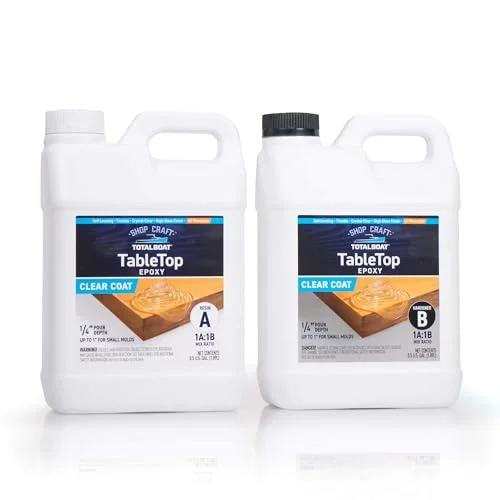 |
TotalBoat Table Top Epoxy Resin – 1 Gallon Kit – $59.99 A self-leveling, food-safe-once-cured epoxy built specifically for bar and table tops — it fills the natural cracks and bark-edge gaps in a live edge slab while giving you a glass-smooth surface that shrugs off spilled drinks and wet glasses.
|
Wood Species That Actually Hold Up as a Bar Top
Not every tree that yields a dramatic live edge slab is a good match for a bar top, which gets far more daily wear than a coffee table or headboard. Three species show up again and again in real live edge bars for good reason:
- Black walnut — a mid-density hardwood with a rich chocolate-brown heartwood and dramatic grain figure. It’s dimensionally stable once dried (less prone to seasonal movement than many hardwoods), which matters on a wide single-slab bar top that will see temperature and humidity swings.
- Hard maple — one of the denser common hardwoods, pale and tight-grained, and genuinely resistant to dents and scratches from glassware and bar stools scraping against the edge. A good pick if you want the wood itself to look clean and modern rather than dark and rustic.
- White oak — dense, durable, and traditionally used for anything that gets wet (it’s the same wood used in whiskey barrels and boat building) because its grain structure resists moisture penetration better than most domestic hardwoods.
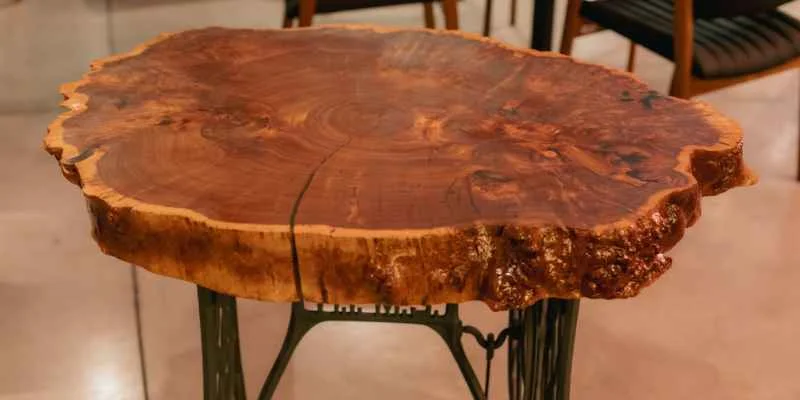
Softer woods like pine or spalted (partially decayed) slabs can still make a striking bar top, but they dent and stain more easily and lean harder on the finish to protect them — if you go that route, a thicker epoxy pour matters more, not less.
Design Styles That Work With a Live Edge Bar
Once the slab and finish are sorted, the design direction is really about what surrounds the wood, since the live edge itself is already the focal point.
Industrial: Pair the raw edge with black steel legs, pipe-style shelving, and exposed hardware. The contrast between rough wood and hard metal is what sells this look — keep the metal matte or blackened rather than polished, which reads more upscale/contemporary than industrial.
Modern minimalist: A single clean slab (walnut or maple work well here) on simple hairpin or slab-style legs, with no visible seams or joinery. Keep everything else in the space — stools, lighting, wall color — neutral so the grain pattern stays the visual anchor.
Rustic/cabin: Leave more of the bark edge intact (or use a live edge with visible knots and character marks) and pair with reclaimed wood shelving or stone. This is the style where a slightly thicker slab (2″+) actually reads better — a thin live edge top can look out of place against heavier rustic materials.
Building a DIY Live Edge Bar Top
If you’re building rather than buying, the order of operations matters more than any single step:
- Confirm moisture content with a meter before you do anything else — don’t skip this even on a slab a supplier told you was “kiln dried.”
- Flatten the slab with a router sled or a wide-belt/planer pass if you have access to one — most rough-cut slabs aren’t flat enough straight off the mill to sit level.
- Fill cracks and voids with epoxy before final sanding, not after — epoxy shrinks slightly as it cures, so a second thin fill coat is normal.
- Sand through the grits (80 up through at least 220) so the epoxy or oil finish soaks in evenly instead of blotching on rougher patches.
- Apply the finish in a dust-free, temperature-controlled space — this is where most DIY bar tops actually go wrong, since garage dust and temperature swings are the top causes of a cloudy or bubbled epoxy cure.
- Attach the top to a base rated to support its weight — a large single slab is heavier than it looks, and hairpin or thin metal legs need to be sized for that, not just for looks.
For a closer walkthrough of the bark-edge build process specifically, see our guide on how to make a live edge table with bark, which covers the same slab-prep and stabilization steps in more detail.
Choosing a Finish That Can Actually Handle a Bar
A bar top gets condensation rings, spilled drinks, and glasses set down repeatedly — a delicate oil finish alone isn’t really built for that kind of daily contact, even though it’s a common recommendation in generic “live edge ideas” content. Three realistic options, in order of durability:
- Bar-top epoxy (most durable): A 2-part pour-on epoxy creates a fully sealed, glass-smooth, waterproof surface. It’s the standard choice for a bar specifically because nothing soaks through it — no water rings, no alcohol staining. Requires the most careful application process of the three.
- Marine-grade or exterior polyurethane (durable, lower effort): Several coats build a hard, water-resistant film without the mixing precision epoxy demands. Won’t fully self-level like epoxy, so it won’t hide surface imperfections the way a poured finish does.
- Hardwax oil or tung oil (lowest maintenance protection, needs upkeep): Penetrates the wood rather than sitting on top, so it looks and feels the most natural — but it needs reapplication every few months on a heavily used surface and offers the least protection against standing liquid.
For a bar that actually gets used for drinks and entertaining rather than just displayed, epoxy or a durable polyurethane is the more realistic choice — save an oil-only finish for a bar top that’s mostly decorative or very lightly used. See our wood finish comparison with real photos for how each of these looks once cured.
Caring for a Live Edge Bar Long-Term
An epoxy-sealed bar top mostly just needs wiping down with a damp cloth — avoid ammonia-based glass cleaners directly on the epoxy over time, as they can dull the gloss. An oil-finished bar needs a fresh coat of food-safe mineral oil or hardwax oil every few months, more often near the areas that see the most glass and hand contact. Whatever the finish, keep the bar out of direct sunlight where you can — UV exposure fades wood tone and, on a poly or oil finish, breaks the coating down faster than normal wear does. If a deep scratch does show up on an oiled surface, a light sand and a fresh oil coat usually blends it back in; on an epoxy surface, a scratch typically needs a thin new topcoat poured over the affected area rather than spot-sanding.
Frequently Asked Questions
How dry does a live edge slab need to be before it’s built into a bar?
Around 6–8% moisture content, which roughly matches the humidity level inside a climate-controlled home. A freshly milled slab is usually well above 20% and needs either a year or more of proper air-drying per inch of thickness, or kiln-drying, before it’s stable enough to build into furniture without cracking or warping after installation.
What’s the best wood for a live edge bar top?
Black walnut, hard maple, and white oak are the three most common choices because they hold up to daily bar use better than softer species. Walnut offers rich color and grain with good dimensional stability, maple resists dents and scratches, and white oak resists moisture penetration — the same property that makes it a traditional choice for barrels and boat building.
Should I use epoxy or oil to finish a live edge bar?
For a bar top that actually gets used for drinks, a bar-top epoxy or a durable marine-grade polyurethane holds up far better than oil alone, since both create a sealed, waterproof surface that resists spills, condensation rings, and alcohol staining. An oil or hardwax finish looks more natural but needs reapplication every few months and offers less protection against standing liquid.
Where can I buy a live edge slab for a bar top?
Specialty live edge lumber suppliers and local sawmills are the most reliable sources, since they can tell you the slab’s actual moisture content and drying history rather than just its appearance. Online live edge retailers and reclaimed-wood suppliers are also worth checking, especially for pre-kiln-dried slabs that are ready to build with sooner.
The Bottom Line
A live edge bar earns its reputation as a showpiece when the slab was actually dry before it was built, the species was chosen for durability and not just grain pattern, and the finish is rated for real spills rather than just for looks. Get those three things right and the design part — industrial, minimalist, or rustic — is really just a matter of taste.
Sponsored / affiliate links. As an Amazon Associate I earn from qualifying purchases. I may earn additional commission from eligible campaigns.