Wood Finish Examples: 7 Types Compared With Real Photos
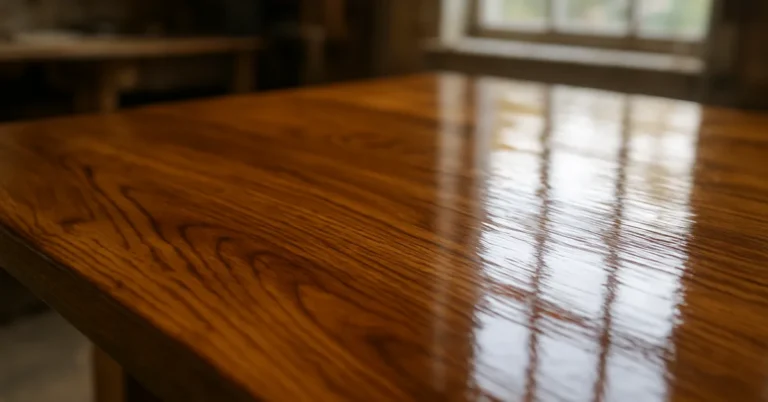
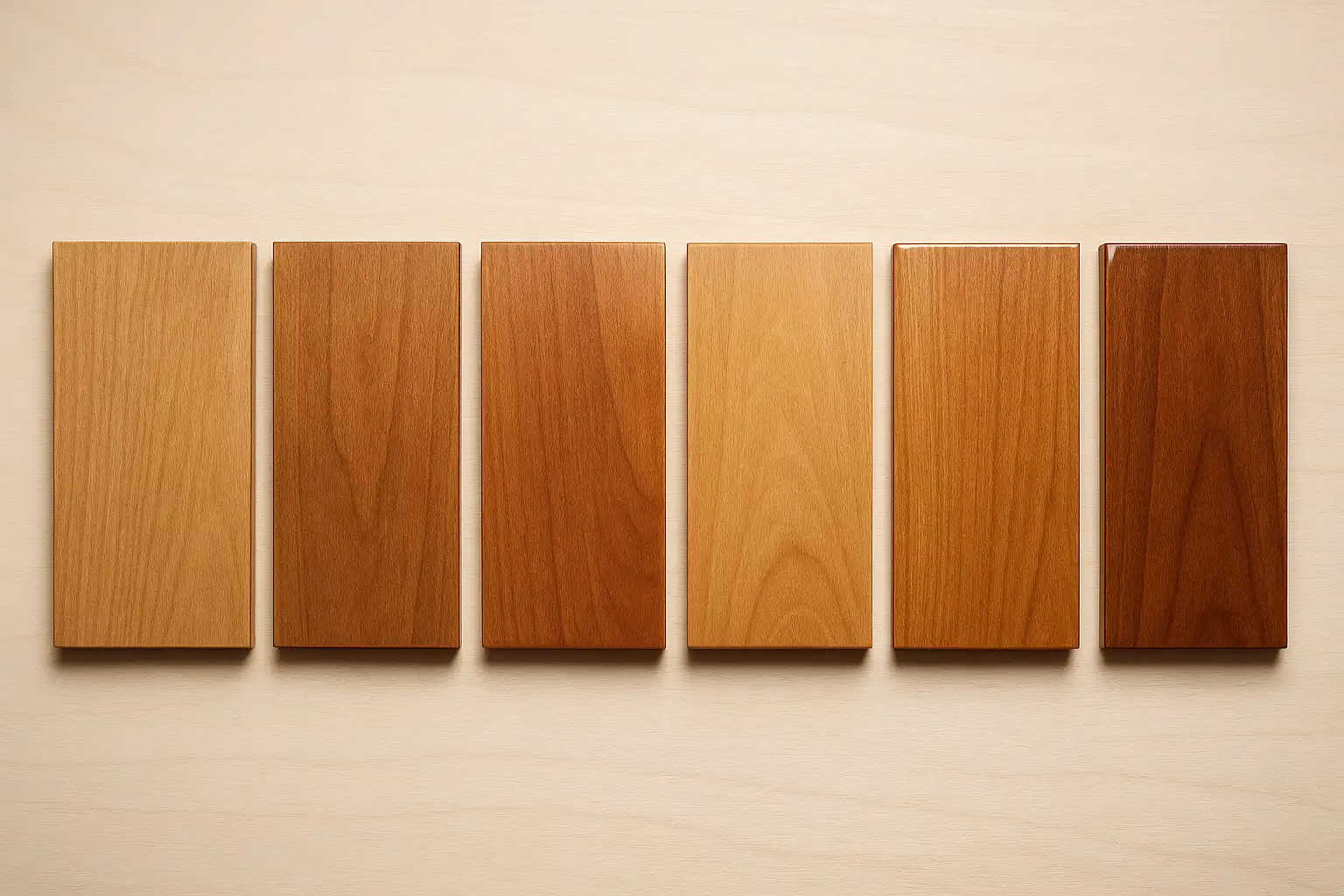
These seven wood finish examples — oil, shellac, lacquer, wax, varnish, polyurethane, and paint — account for nearly every finished wood surface you’ll ever touch. Each one changes color, sheen, and grain visibility in a different, predictable way, and the photos below show exactly what each looks like on real wood before you commit a whole project to one.
Quick answer: The seven common wood finish examples are oil (Danish, tung, linseed), shellac, lacquer, wax, varnish (including spar varnish), polyurethane, and paint (including milk paint). Oils and wax sit lowest in sheen and durability; lacquer and polyurethane sit highest in gloss and protection; paint is the only fully opaque option.
What Are the Main Types of Wood Finish?
Wood finishes split into two structural categories: penetrating finishes, which soak into the wood fibers, and film-forming finishes, which cure into a layer sitting on top of the surface. Oil is the only common penetrating finish; shellac, lacquer, varnish, and polyurethane are all film-forming. Wax and paint behave differently from both — wax barely penetrates and barely films, while paint is a fully opaque film that hides the wood underneath instead of showing it through – taken to its extreme with grain filler first, this is also the basis for making wood look like plastic.
That split matters more than the marketing names on the can, because it predicts almost everything else: how deep the color goes, how the surface feels, how it’s repaired, and how long it lasts. According to the USDA Forest Service’s Forest Products Laboratory, a finish’s core job is controlling moisture movement in and out of the wood, and penetrating and film-forming finishes do that in fundamentally different ways — one from the inside, one from the surface.
What Does an Oil Finish Look Like on Wood?
An oil finish leaves wood with a matte to low-satin sheen and a noticeably deeper, richer color than the raw board, because the oil soaks into the fibers instead of sitting on top. Danish oil, tung oil, and boiled linseed oil are the three most common versions, and all three enhance grain without adding the “plastic” look of a film finish.
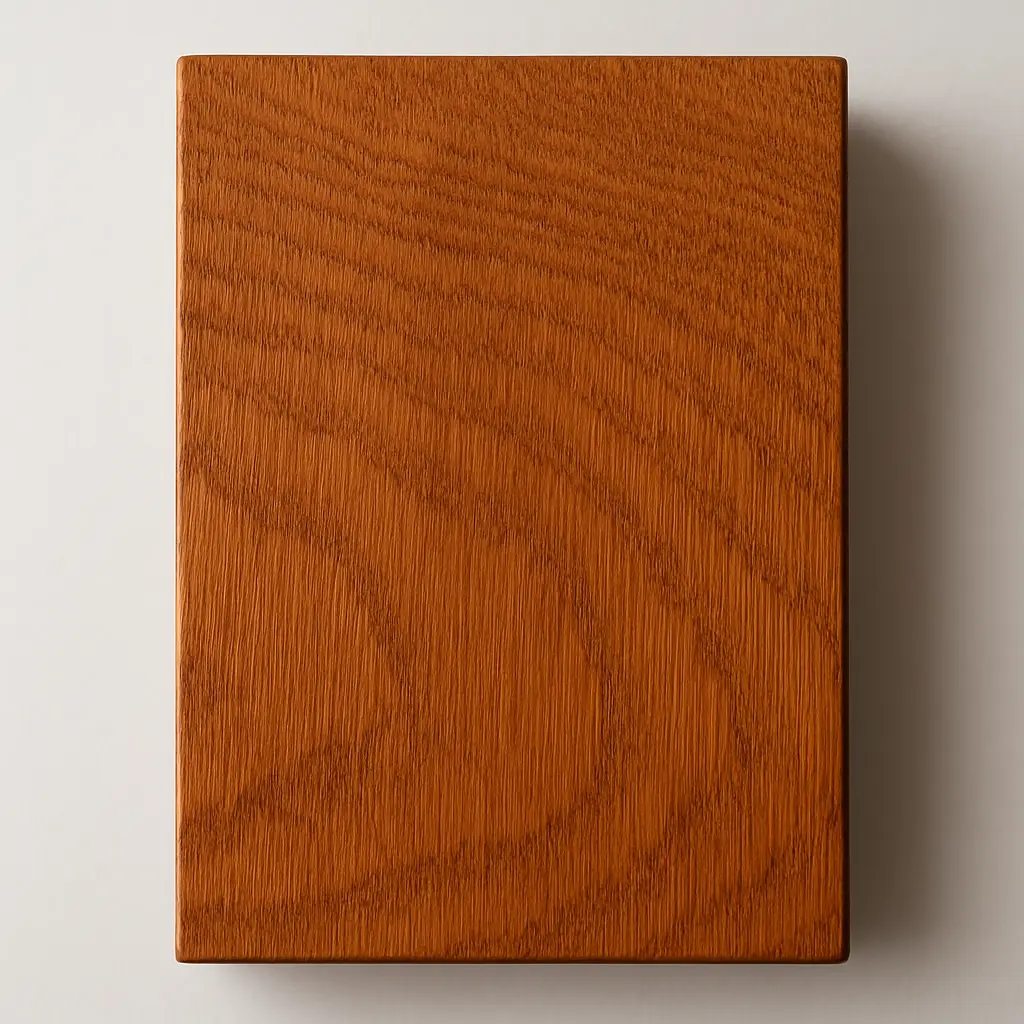
In practice, a single wiped-on coat of Danish oil visibly darkens and saturates raw oak within the first ten minutes — before any sheen builds — which is the fastest way to preview how a wood species will look “wet” under a clear finish before committing to a full schedule. Oil offers only moderate water resistance and needs reapplication every six to twelve months on furniture that gets handled regularly. Repair is the easiest of any finish on this list: wipe on more oil and the patch blends invisibly, because there’s no film edge to feather.
Food-safe versions — mineral oil and walnut oil — are common on cutting boards and salad bowls, though walnut oil should be avoided for anyone with a tree-nut allergy. Oil is the closest thing to a “no finish” look, which is exactly why it’s the default choice whenever the goal is showing off the wood itself rather than protecting it heavily. See our wood oil vs stain comparison if you’re deciding between changing the wood’s color or just enhancing what’s already there.
What Does a Shellac Finish Look Like on Wood?
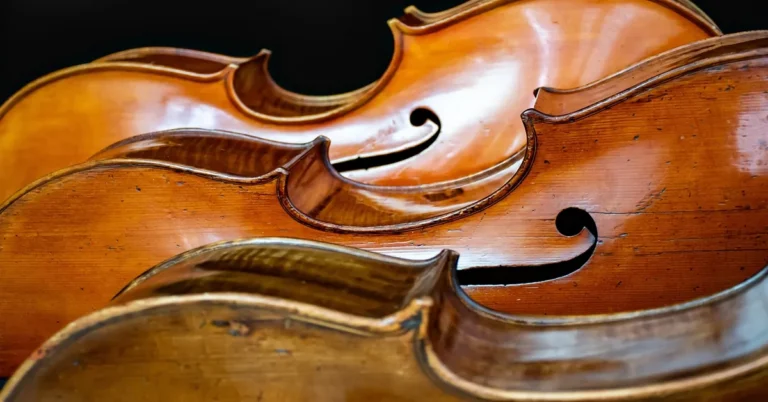
Shellac dries to a warm amber-to-honey color with a naturally glossy sheen, made from lac bug resin dissolved in denatured alcohol. Standard amber shellac shifts wood color noticeably warmer; bleached “blonde” or dewaxed clear shellac shifts it far less, closer to the oil examples above.
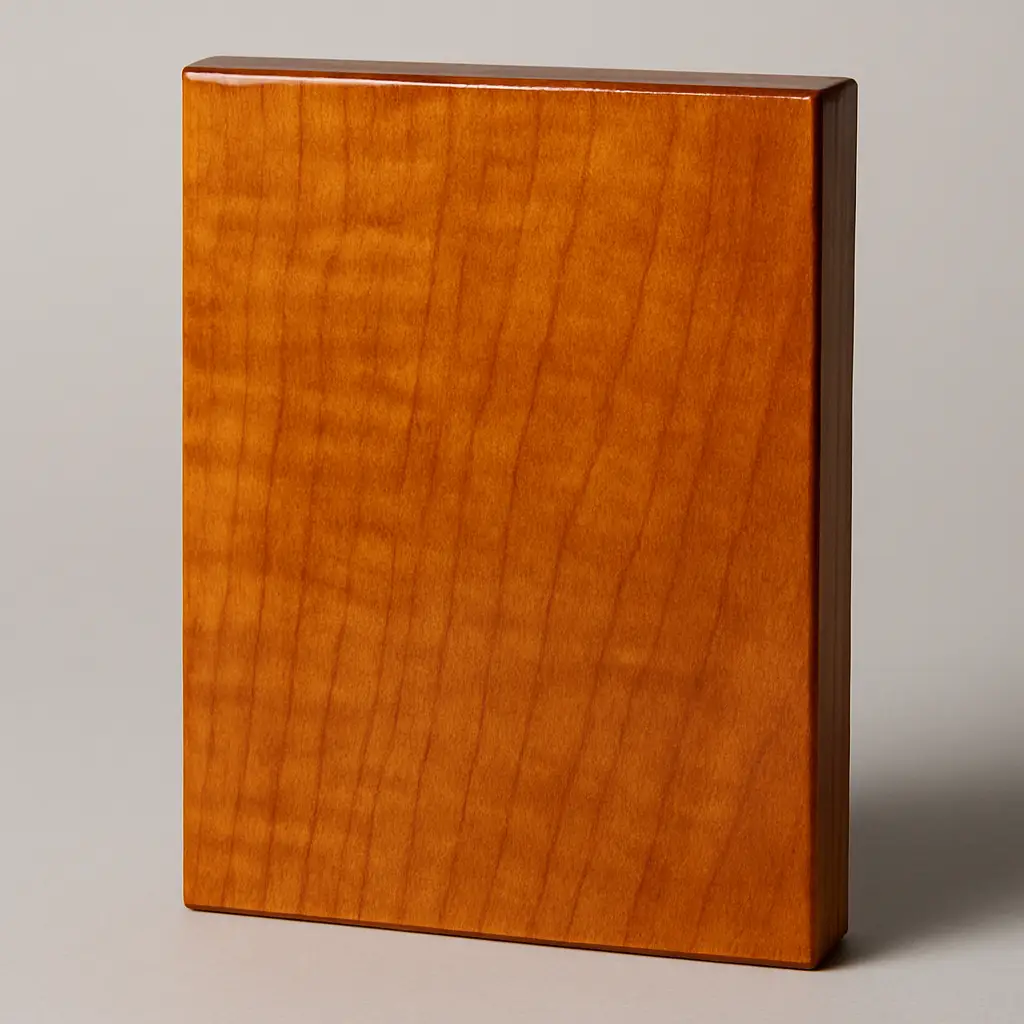
Shellac dries dust-free in fifteen to thirty minutes at a standard 2-lb cut, so three or four coats can go on in a single afternoon — faster than almost any other film finish on this list. That speed comes with a real weakness: shellac softens under alcohol and can ring white under a wet glass, so it’s a poor choice for bar tops or anywhere spills are routine. What it’s genuinely excellent for is antique restoration, because a fresh coat melts slightly into the old layer underneath instead of sitting as a separate hard shell, and buffing bare shellac with 0000 steel wool and a coat of paste wax knocks down the gloss to a soft, low-glare sheen that shows almost no hot spot under direct light.
What Does a Lacquer Finish Look Like on Wood?
Lacquer cures clear with a satin-to-high-gloss sheen and a hard, glass-like surface that reflects light in a sharp, mirror-style highlight rather than the soft glow shellac gives off. Nitrocellulose lacquer is the traditional formula; catalyzed and pre-catalyzed versions add chemical resistance for kitchens and high-use furniture. See our full breakdown of what lacquer actually is for the types, application methods, and how it compares to varnish and polyurethane.
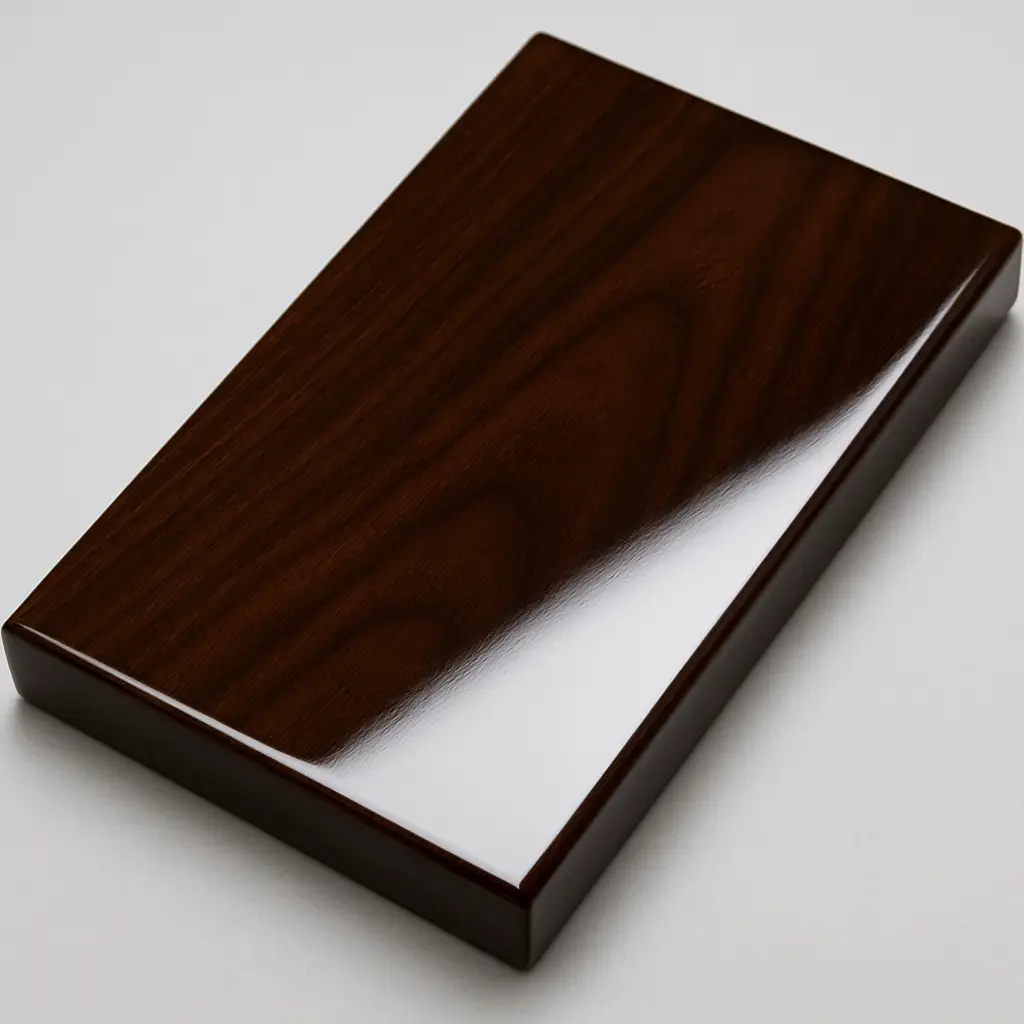
Lacquer dries to the touch in fifteen to thirty minutes and can usually be recoated within the hour, which is why factory and production furniture shops build entire finishing schedules around it — a piece can go from bare wood to a full multi-coat gloss finish in a single working day. Most lacquer is sprayed rather than brushed, since brush marks set up faster than they can be smoothed out. Once cured, it can be rubbed out with fine abrasives to a true mirror gloss, the deepest, glassiest look on this list short of a poured epoxy coating.
What Does a Wax Finish Look Like on Wood?
Wax produces the softest, lowest-luster sheen of any finish here — a subtle warmth with almost no visible film — because a hand-buffed coat of paste wax or beeswax is only a few microns thick. It adds the least color shift of any film-type finish, which is why it’s usually applied as a topcoat rather than a finish on its own.
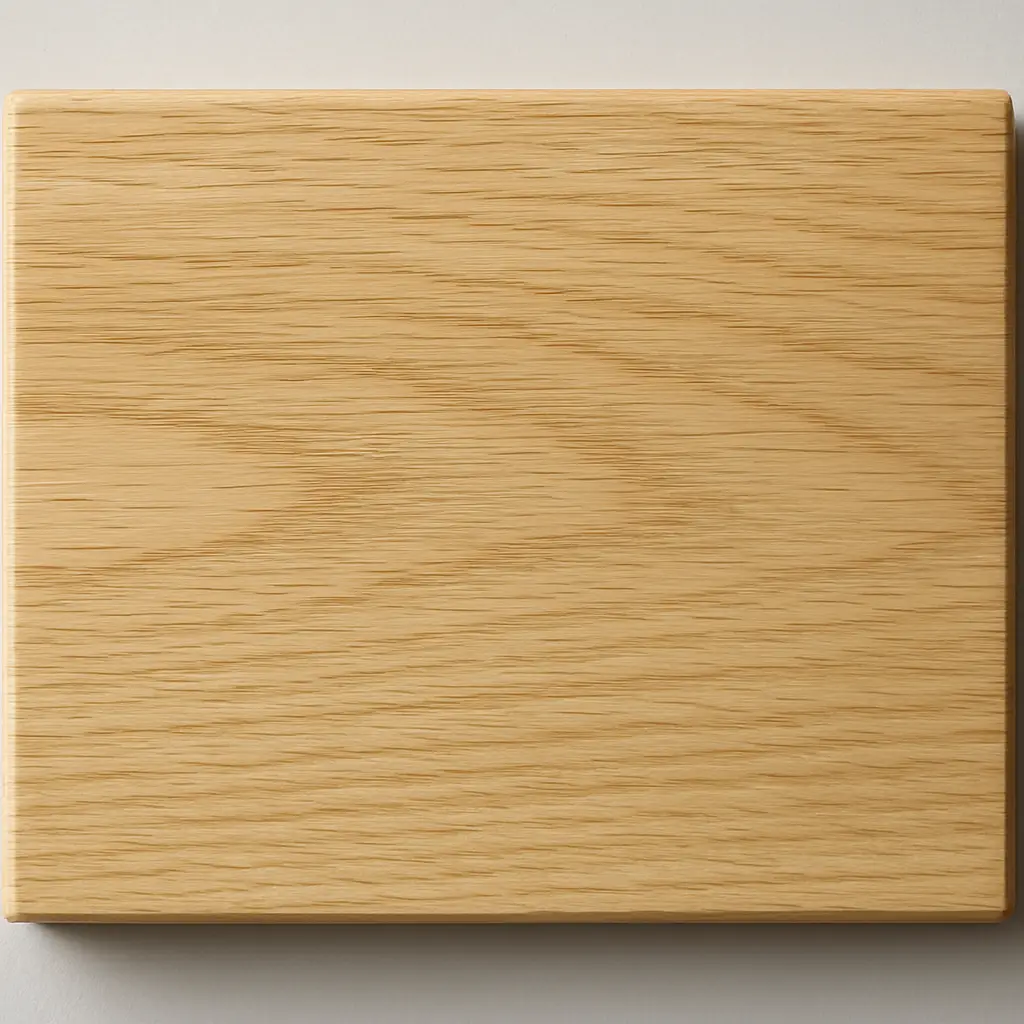
A buffed wax coat is ready to use within fifteen to thirty minutes of application, but it offers the least protection of any finish on this list — a wet glass left on a waxed tabletop for under an hour can leave a visible ring. That’s why wax rarely stands alone on furniture that sees daily use; it’s most common as the final layer over shellac or lacquer, and on surfaces that get gentle handling, like picture frames, decorative boxes, and antiques. Reapplication every two to four months keeps the sheen even on pieces that get touched often.
What Does a Varnish Finish Look Like on Wood?
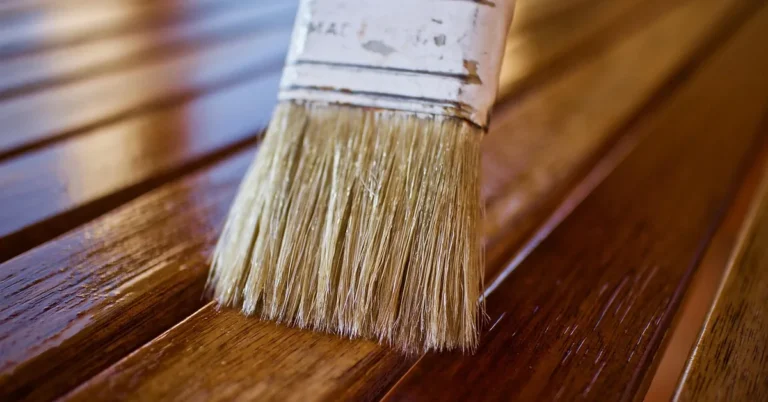
Varnish cures to a semi-gloss or gloss sheen with a golden-amber tint that deepens visibly with each additional coat, thanks to the oil-and-resin formula that builds a thick, flexible film. Spar varnish — the marine-grade version — carries UV inhibitors that let it flex with wood movement outdoors without cracking.
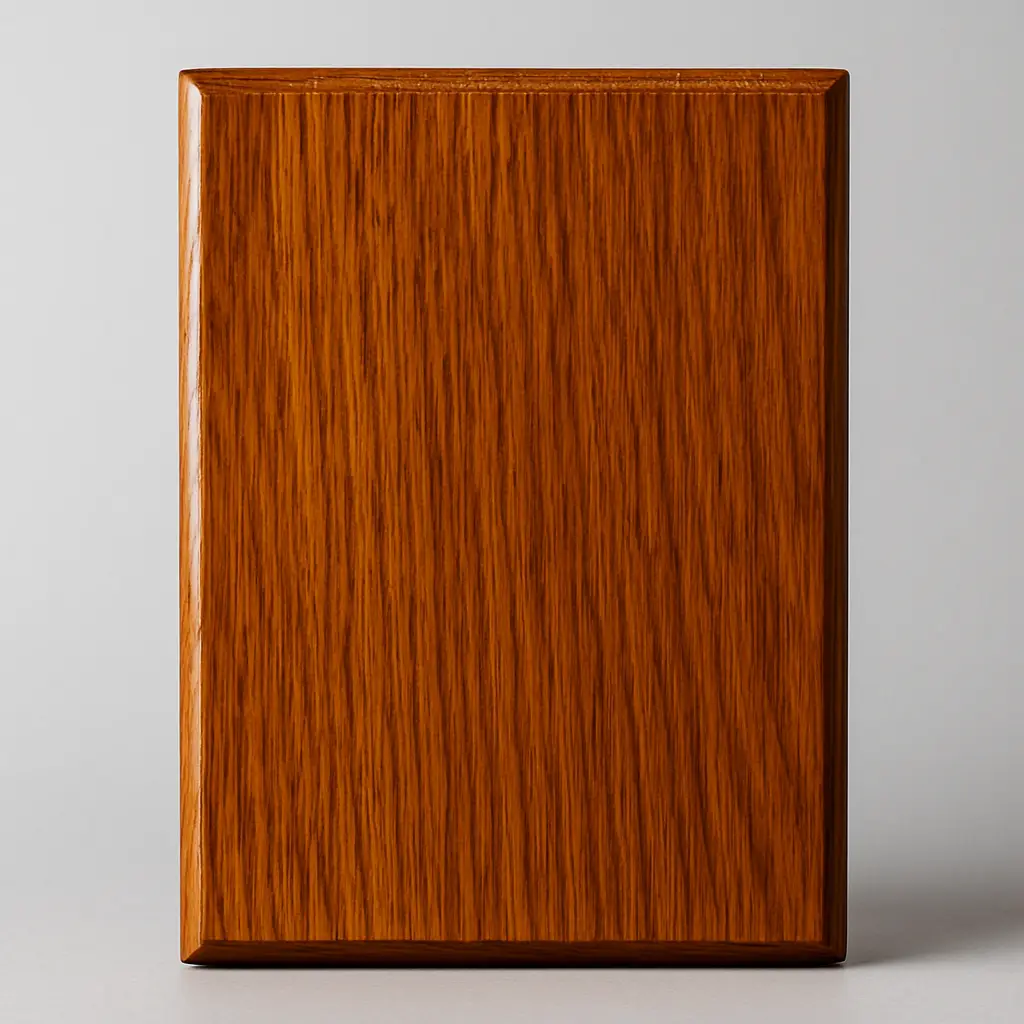
Standard varnish takes six to twenty-four hours to dry to the touch between coats depending on humidity, far slower than shellac or lacquer, and outdoor spar varnish genuinely needs three to four coats minimum to hold up to a full season of sun and rain cycling. That slow cure is the tradeoff for real UV and moisture resistance — it’s the classic choice for exterior doors, window sashes, and boat brightwork, where oil alone would fade and lacquer would crack under constant flexing.
What Does a Polyurethane Finish Look Like on Wood?
Polyurethane builds a smooth, hard film in a satin-to-gloss sheen and is the most abrasion-, water-, and heat-resistant finish in common use. Oil-based polyurethane ambers the wood noticeably over time; water-based polyurethane stays close to colorless, which is why the same wood species can look warmer under one versus the other.
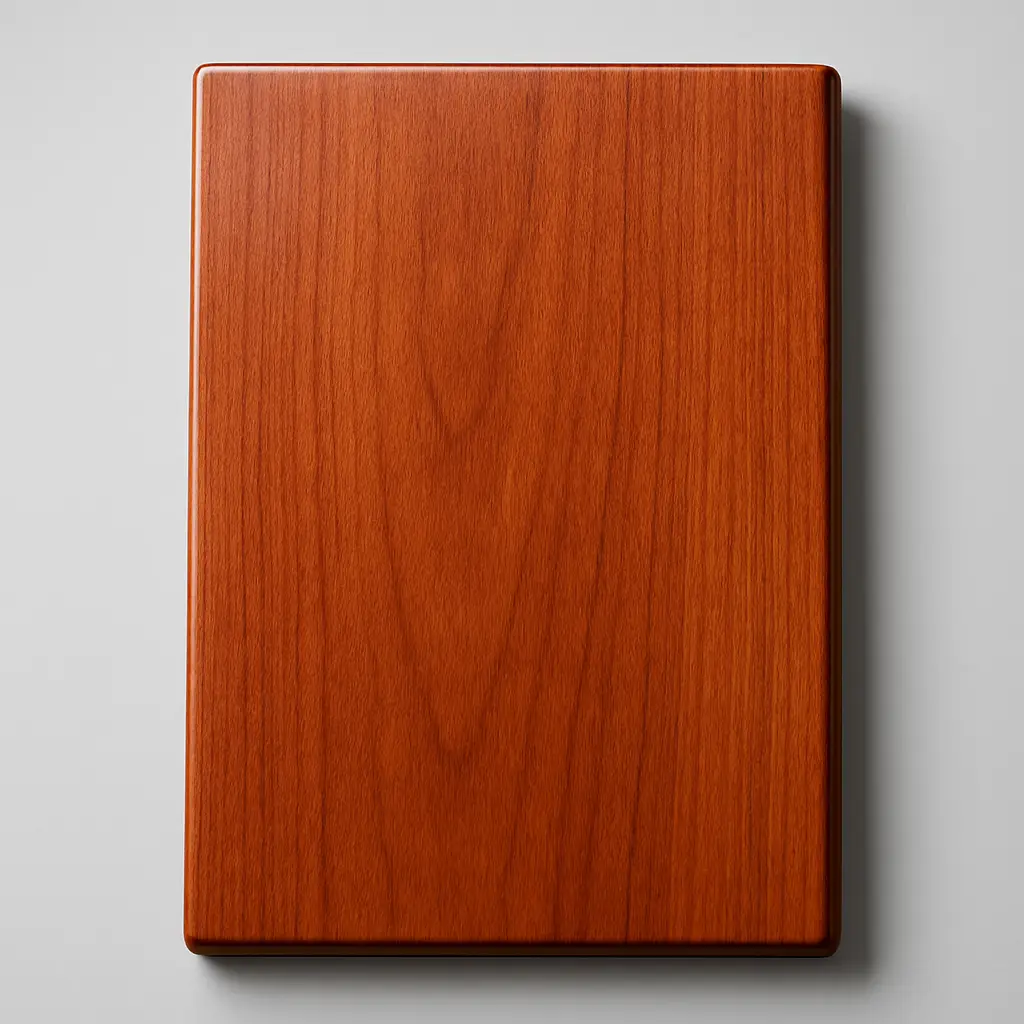
Water-based polyurethane dries to the touch in thirty to sixty minutes and can often be recoated in two to three hours; oil-based needs four to six hours to touch and roughly twenty-four hours before the next coat. Furniture and tabletops typically get two to three coats, while floors usually need three to five for real traffic resistance. It’s the default recommendation for kitchen tables, desks, and floors precisely because it tolerates the abuse oil, shellac, and wax can’t.
What Does a Painted Wood Finish Look Like?
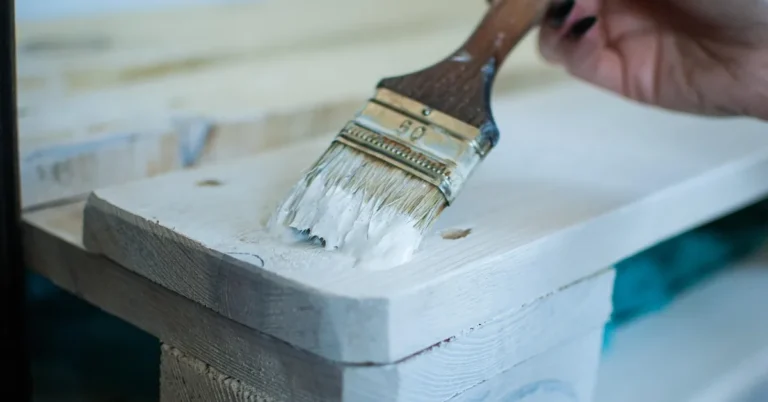
Paint is the only fully opaque finish on this list — it hides the wood grain completely rather than enhancing it, in a flat-to-satin chalky sheen. Milk paint, a powdered casein pigment mixed with water just before use, is the traditional version; modern chalk-style paints give a similar matte look with an acrylic base.
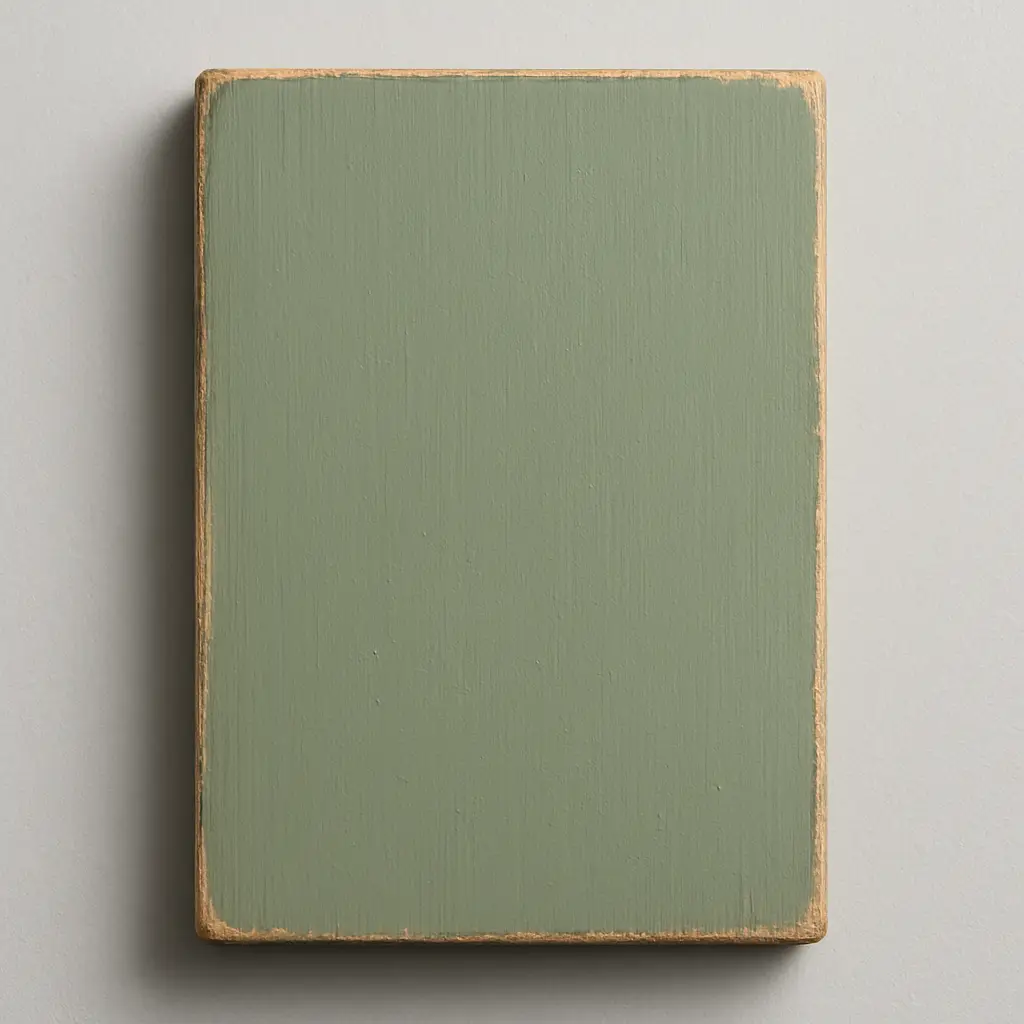
Milk paint dries to the touch in thirty to sixty minutes and, unlike modern paints, needs no primer on raw porous wood because the casein bonds directly to the fibers. Its signature trait is how it wears: it naturally chips and rubs through at edges and high-contact points instead of peeling in sheets, which is exactly the look behind farmhouse and cottage-style furniture. Because it’s fully opaque, it’s the right choice whenever the goal is color and character rather than showing off the wood’s own grain — and the wrong choice for anyone who picked their board for its figure.
How Do These Seven Wood Finishes Compare Side by Side?
The table below lines up sheen, durability, and reapplication schedule for all seven finish types, so the differences in the photos above translate into a real maintenance and use-case decision.
| Finish | Sheen | Color Effect | Durability | Reapplication | Best For |
|---|---|---|---|---|---|
| Oil (Danish, tung, linseed) | Matte / low satin | Deepens grain, natural | Low-moderate | Every 6-12 months | Furniture, cutting boards |
| Shellac | Gloss (soft if waxed) | Warm amber/honey | Low (water/alcohol sensitive) | As needed; easy recoat | Antiques, restoration |
| Lacquer | Satin to high gloss | Clear, glassy | Moderate | Rare once cured | Cabinets, factory furniture |
| Wax | Low-luster, soft | Subtle warmth | Very low | Every 2-4 months | Topcoat over shellac/oil |
| Varnish (incl. spar) | Semi-gloss to gloss | Amber, deepens per coat | High (UV/moisture) | Every 1-2 yrs outdoors | Outdoor furniture, doors, boats |
| Polyurethane | Satin to gloss | Oil-based ambers; water-based stays clear | Highest (scratch/water/heat) | Rarely needed | Floors, tabletops, high-traffic |
| Paint (incl. milk paint) | Flat / chalky matte | Fully opaque, hides grain | Moderate; chips by design | As desired for look | Farmhouse/painted furniture |
Which Wood Finish Gives the Most Natural Look?
Oil finishes give the most natural look because they penetrate rather than build a film, leaving the wood’s own texture and low sheen intact instead of adding a layer of gloss on top. Dewaxed clear shellac is the closest film-forming runner-up, since it shifts color the least of any film finish.
Which Wood Finish Is Most Durable?
Polyurethane is the most durable off-the-shelf finish, resisting scratches, water, and heat better than oil, shellac, lacquer, or wax. For genuine outdoor exposure, spar varnish is the more durable choice specifically because its UV inhibitors and flexible film handle sun and moisture cycling that indoor polyurethane isn’t formulated for.
Wood Finish Examples: Frequently Asked Questions
What are the 4 basic types of wood finish?
The four broad families are penetrating oils, film-forming finishes (shellac, lacquer, varnish, polyurethane), wax, and paint. Everything sold as a “wood finish” falls into one of these four categories, which is why comparing products by family first makes the individual choice much easier.
Do you need to seal wood before applying a finish?
Most finishes double as their own sealer and need no separate step. Very open-grained woods, like oak or ash, sometimes get a thinned wash coat or dedicated sanding sealer first so the topcoat doesn’t soak in unevenly and leave blotchy patches.
Can you put wax over polyurethane?
Yes, paste wax can go directly over fully cured polyurethane purely to soften the sheen and add a smoother feel underhand. It has to be stripped off completely before any future recoat of polyurethane, though, since fresh poly won’t bond to a waxed surface.
What’s the difference between wood stain and wood finish?
Stain changes wood color only and adds no protection on its own. Finish — any of the seven types above — is the protective topcoat applied over bare or stained wood, and it’s the finish, not the stain, that determines the surface’s sheen and durability.
Is polyurethane the same as varnish?
No. Polyurethane is technically a type of varnish, but modern usage treats them as separate products: polyurethane is harder and more scratch-resistant, while traditional spar varnish flexes more and resists UV and moisture cycling better, which is why varnish remains the outdoor standard even though polyurethane dominates indoor furniture.
Once you’ve matched a look to a finish family, the next step is application — our complete wood finishing guide covers surface prep, coat counts, and common mistakes for all seven types above. If you’re working with a specific species, finishing koa wood has its own quirks worth reading before you pick a finish from this list. And if you’re not starting from bare wood, identifying the finish already on a piece comes before any refinishing decision.
For outdoor projects, see the best finish options for outdoor furniture for a deeper look at spar varnish versus exterior oils. If you’re combining two of the finishes above, layering polyurethane over Danish oil walks through timing and adhesion. And when a finish eventually fails, repairing a damaged wood finish covers what’s fixable without a full strip-down.
Laminate isn’t on this list because it isn’t a wood finish at all — it’s a printed, factory-sealed surface that none of the seven finishes above will bond to. See wood finish laminate: what works and what ruins it for what actually protects it instead.
Sponsored / affiliate links. As an Amazon Associate I earn from qualifying purchases. I may earn additional commission from eligible campaigns.