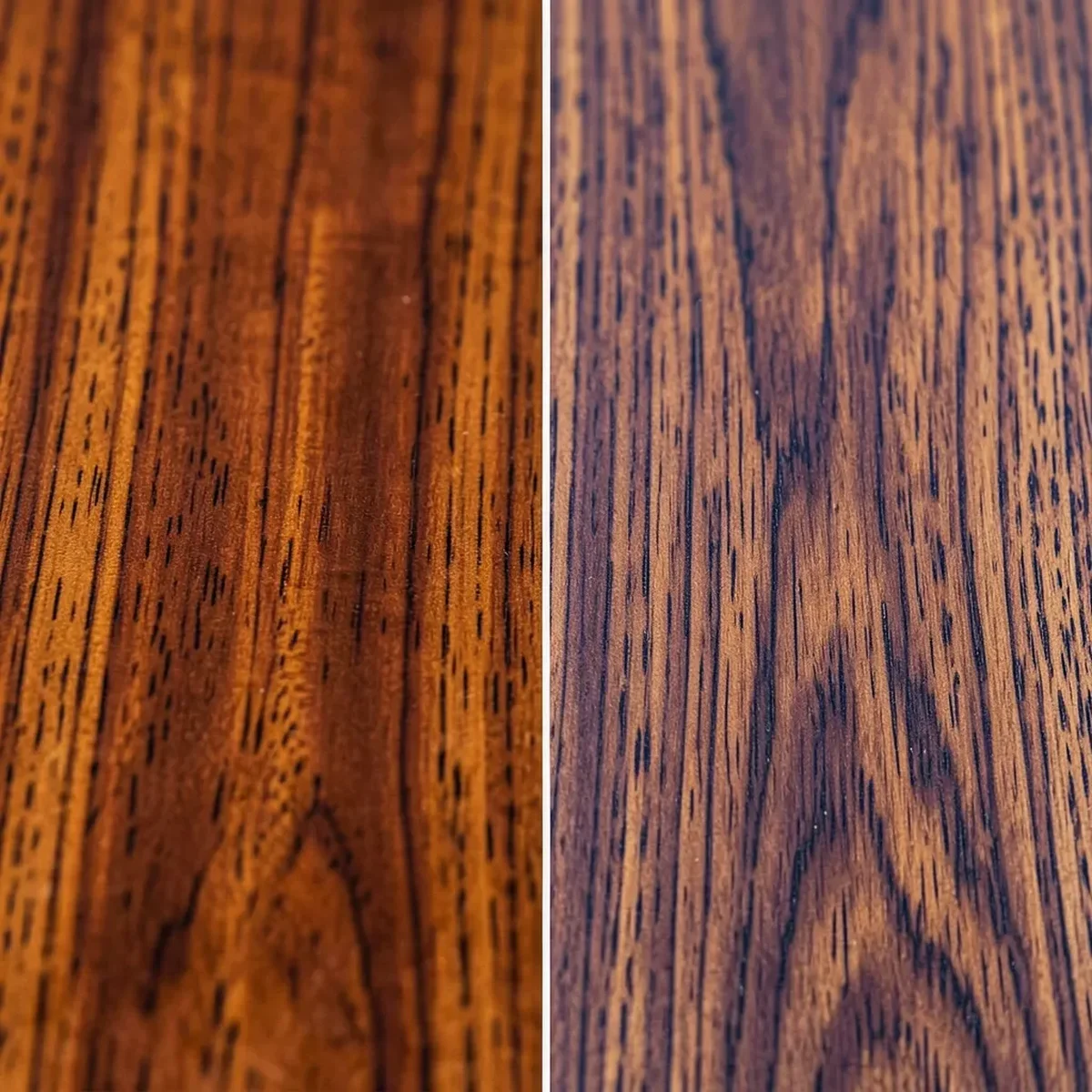
Mahogany vs Walnut Color: Warm Red vs. Cool Chocolate Brown
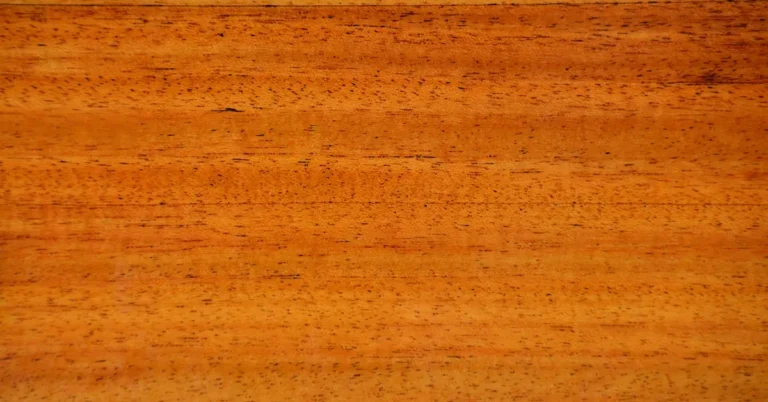
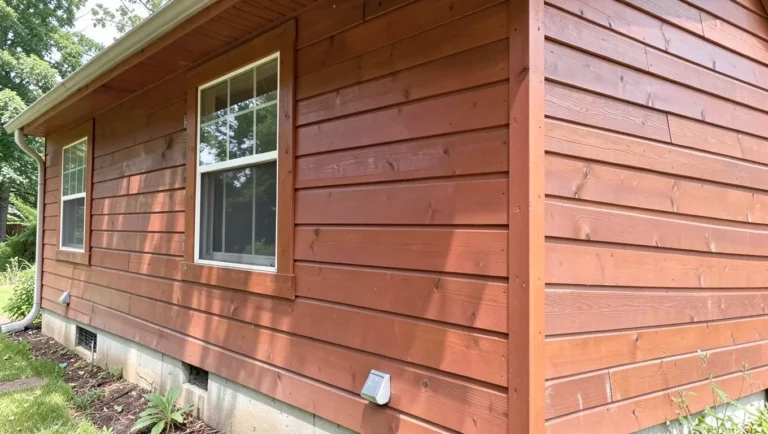
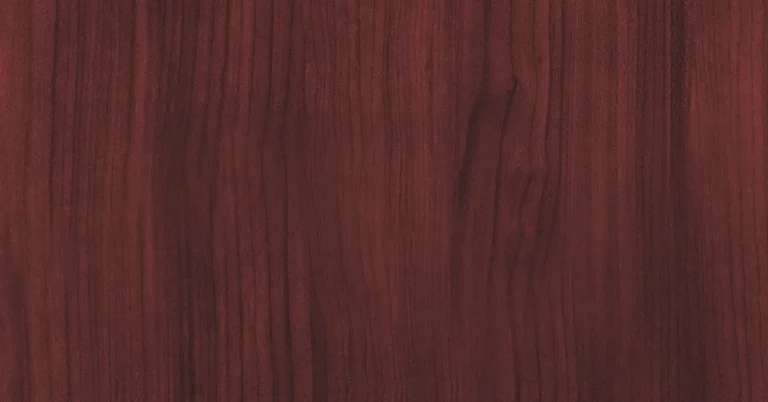
Mahogany and walnut are both prized for rich, dark wood tones, but they sit in different color families entirely. Mahogany leans warm, with reddish-brown undertones that can look almost pink when freshly cut. Walnut leans cool, showing chocolate-brown tones with a grey or purplish cast instead.
Past that basic “they’re both dark woods” comparison, the real differences show up in grain pattern, how each color shifts with age and sunlight, and where each one actually looks best in a room. Here’s what separates them.
The Real Color Difference: Warm Red vs. Cool Chocolate
If you remember one thing, remember this: mahogany is a warm wood and walnut is a cool wood. Mahogany’s reddish-brown color sits on the warm end of the spectrum, closer to terracotta or brick than to true brown. Walnut’s heartwood sits on the cool end, closer to dark chocolate or espresso, often with a faint purple or grey cast running through it. Side by side, mahogany reads red; walnut reads brown-going-on-black.
Best Stain Match for True Walnut Color
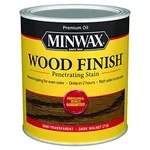 |
Minwax Wood Finish Dark Walnut Stain – $13.88 If you want walnut’s cool chocolate-brown color on a different species without sourcing real walnut lumber, this is the reference stain most woodworkers reach for.
|
Mahogany Color Profile
Freshly milled mahogany heartwood is often lighter and pinker than most people expect — a soft salmon or pale reddish-brown rather than the deep red-brown of a finished antique table. Genuine mahogany (Swietenia species, plus the Honduran and African mahoganies commonly sold today, and often confused with cherry’s similar reddish tone) darkens and deepens as it’s exposed to air and light, eventually settling into the rich, warm red-brown most people picture when they hear the word “mahogany.”
The wood itself has a straight, fine, relatively closed grain, which is part of why the color reads so evenly. There isn’t a lot of grain figure competing with the color for attention, so mahogany tends to look consistent from one board to the next and even across a finished piece of furniture. A clear finish (oil, shellac, or a light coat of poly) is usually enough to bring out mahogany’s natural color without needing a stain to warm it up further — it already runs warm on its own.
Shade variation in mahogany usually comes down to species and cut, not the underlying color family. African mahogany can run a touch more orange; Honduran mahogany tends toward a deeper, more purplish red once aged. But the warm, reddish base holds across nearly all of them.
Walnut Color Profile
Walnut starts at the opposite end. Freshly cut black walnut heartwood is already a fairly dark chocolate brown, and it frequently carries a subtle grey or purple undertone that gives it a cooler, moodier look than mahogany ever achieves. Unlike mahogany, walnut doesn’t need years of aging to look “walnut-colored” — it’s dark and cool almost right out of the mill.
If you’re trying to decide whether a board reads more “walnut” or more plain dark brown, sapwood is the exception to watch for: it (the outer, younger part of the tree) is a totally different story: it’s a pale creamy tan, which is why a lot of walnut lumber gets steamed during processing specifically to even out that contrast between the dark heartwood and the light sapwood. When you see walnut with unusually even, uniform dark color throughout, there’s a good chance it’s been steamed.
Walnut’s grain is a bigger part of the visual story than mahogany’s. It’s more open and considerably more variable — straight in some boards, wavy or curly in others, and prone to dramatic figure near crotches and burls. That grain movement changes how the color reads from different angles and under different lighting, which is a big part of why walnut furniture often looks “alive” in a way that more uniform woods don’t.
Why Grain Pattern Changes How the Color Reads
This is the part most color comparisons skip: grain pattern doesn’t just add texture, it actually changes how deep or flat a color looks. Mahogany’s tight, straight grain reflects light fairly evenly across the surface, so the reddish-brown color looks consistent and a little flatter — which reads as classic and formal rather than busy. Walnut’s wavy, irregular grain scatters light unevenly, creating small pockets of shadow and highlight within the same board. That’s what makes a single piece of walnut furniture look like it has more depth and dimension than a mahogany piece finished in a similarly dark tone, even when the two woods are close in actual value (lightness/darkness).
Practically, that means a plain, straight-grained walnut board can look almost as calm and uniform as mahogany, while a highly figured piece of curly or crotch walnut can look dramatically different from board to board. If you’re trying to match an existing piece of furniture, grain figure matters as much as species — two walnut boards can look more different from each other than a plain walnut board looks from a plain mahogany board finished dark.
How Mahogany and Walnut Change Color Over Time
Here’s the detail most buying guides leave out entirely: the color you see on a fresh-cut sample or a brand-new piece of furniture is not the color you’ll have in a few years. Both woods shift with UV exposure, but they move in opposite directions.
Mahogany starts lighter and gets richer. Fresh mahogany can look surprisingly pale and pink. With age and sunlight, it deepens into the warm, saturated red-brown that people associate with antique furniture and fine cabinetry. A mahogany piece sitting near a sunny window will noticeably intensify in color over the first year or two.
Walnut starts darker and tends to lighten slightly. Because walnut heartwood is already dark and cool when freshly milled, UV exposure over time gradually mellows and lightens it rather than deepening it further — the sharp chocolate-brown softens into a slightly warmer, less stark tone. It’s a smaller shift than mahogany’s, but it’s real, and it’s the opposite direction.
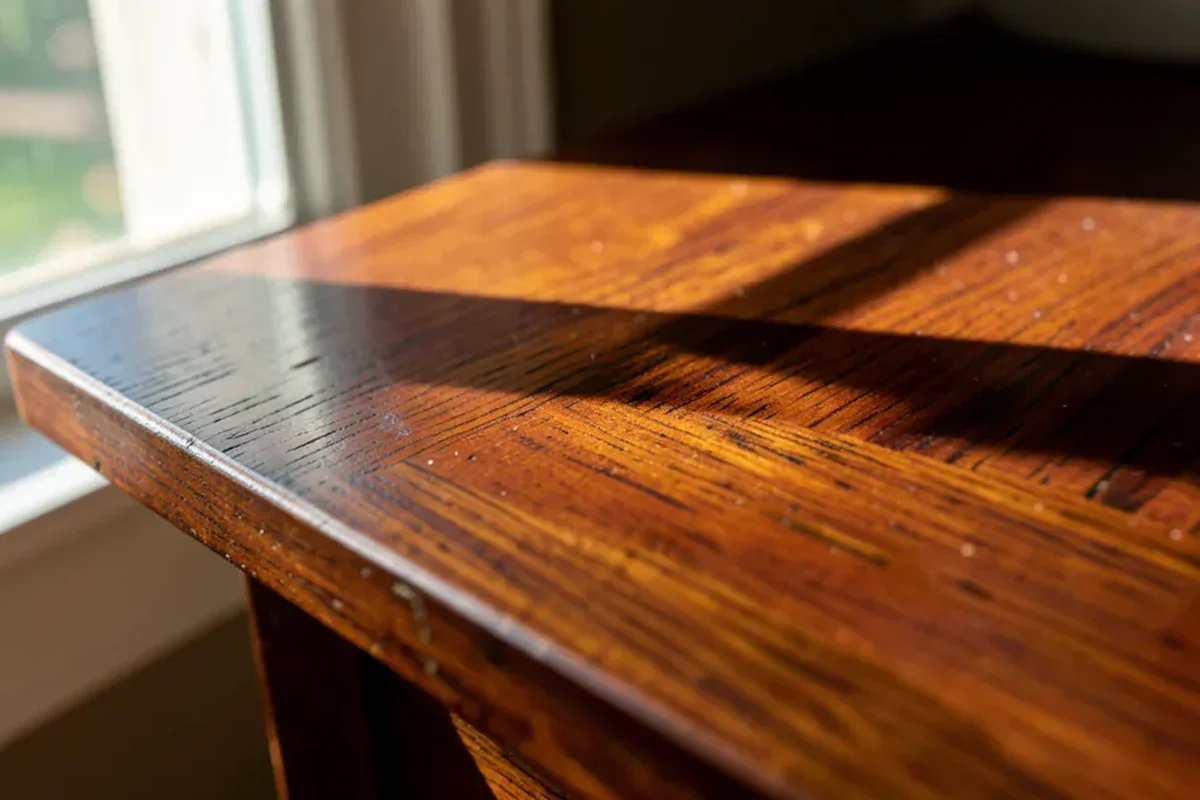
Practical takeaway: if you’re color-matching new wood to an existing piece, account for where that piece has been sitting. A 10-year-old mahogany table near a bright window will be noticeably deeper red than a brand-new mahogany sample at the store. A walnut piece that’s spent a decade in indirect light will likely look close to its original color, while one that’s had direct sun will have mellowed some of its original starkness.
Choosing Between Them for Interior Design
Because the two woods sit in different color families, they tend to suit different rooms and different companion colors.
Mahogany’s warmth pairs naturally with cream, beige, and warm grey walls, and with brass or gold hardware. It leans traditional and formal, which is why it shows up so often in dining rooms, libraries, and antique-style furniture. Under warm incandescent or soft white lighting, mahogany’s red undertones intensify; under cool white or daylight-balanced LEDs, it can look slightly more subdued.
Walnut’s cooler chocolate tone works well with blues, greens, and true white or cool grey walls, and it pairs comfortably with matte black or brushed steel hardware. It reads more contemporary and mid-century, which is part of why it’s so common in modern desks, credenzas, and minimalist furniture. Walnut’s darker starting point also means it can look almost black in dim rooms, so it benefits from a bit more ambient light than mahogany does.
Mahogany vs. Walnut for Flooring
Both woods work as flooring, but they show differently underfoot at room scale. Mahogany’s even color and tight grain make large floor areas look calm and continuous, which suits formal living and dining rooms. Walnut’s grain movement is more noticeable across a wide floor, giving it a livelier, more textured look that tends to work well in studies, bedrooms, and smaller rooms where you want visual interest.
On hardness: walnut (around 1,010 lbf on the Janka scale for American black walnut) is actually softer than genuine mahogany (roughly 800–900 lbf depending on species, though some tropical mahoganies run harder), so the durability difference between the two is smaller than most guides claim — either one is a reasonable choice for normal foot traffic with a good finish, and neither is a good choice for bathrooms or other high-moisture rooms.
Genuine mahogany typically costs more than walnut per board foot, driven mostly by import restrictions and slower-growing tropical stock rather than any performance difference. Walnut, grown domestically in North America, is usually the more budget-friendly of the two while still reading as a premium hardwood.
Mahogany vs. Walnut for Furniture
Mahogany’s straight grain and even color have made it the standard for traditional and antique-style furniture for centuries — dining tables, formal cabinets, and carved pieces where you want the wood to look uniform and let the joinery or carving stand out. It takes stain, shellac, and high-gloss finishes exceptionally well, which is part of why so much period furniture is mahogany.
Walnut is the wood of choice for a lot of modern and mid-century furniture specifically because its grain figure and cooler tone photograph and display so well with simple, unfussy designs. It’s usually finished with oil or a low-sheen wax rather than a heavy gloss, since the goal is to show off the grain rather than flatten it under a shiny topcoat. Desks, credenzas, and floating shelves lean walnut disproportionately often for exactly this reason.
Environmental and Sustainability Considerations
This is one area where the two woods genuinely differ, not just in color. Genuine mahogany grows in tropical rainforests in Central and South America and parts of Africa, regions that face real deforestation pressure, and several mahogany species are listed under CITES (the Convention on International Trade in Endangered Species) to regulate trade. Walnut, by contrast, is a temperate-climate tree grown commercially throughout the U.S. and Europe, with far less pressure on wild populations and a much shorter, more traceable supply chain.
If sourcing matters to you, look for FSC (Forest Stewardship Council) or PEFC certification on either species, and be specifically cautious with mahogany — “genuine mahogany” sold without species information or certification is one of the more commonly mislabeled tropical hardwoods on the market. Reclaimed mahogany and FSC-certified plantation stock are both reasonable ways to get the look without the sourcing risk.
Frequently Asked Questions
What is the main color difference between mahogany and walnut?
Mahogany is a warm reddish-brown, while walnut is a cooler chocolate-brown, often with a grey or purple undertone. Mahogany reads red; walnut reads brown-going-on-black.
Does mahogany or walnut change color more with age?
Mahogany changes more dramatically. It starts noticeably lighter and pinker when freshly cut and deepens into a rich red-brown with age and sunlight. Walnut starts dark and cool and shifts less, mellowing only slightly with UV exposure over time.
Which wood is better for furniture, mahogany or walnut?
Neither is objectively better — it depends on style. Mahogany suits traditional, formal furniture with its even color and straight grain. Walnut suits modern and mid-century pieces where the grain figure and cooler tone are meant to stand out.
Is walnut actually softer than mahogany?
Slightly, though the gap is smaller than most guides suggest. American black walnut runs around 1,010 lbf on the Janka hardness scale, while genuine mahogany is typically in the 800–900 lbf range depending on species. Both hold up fine for normal furniture and flooring use with a proper finish.
Conclusion
Mahogany and walnut both photograph as “dark, rich wood,” but they’re not interchangeable once you look closely. Mahogany is the warm one — reddish, straight-grained, and it deepens in color as it ages. Walnut is the cool one — chocolate-brown with grey or purple undertones, more dramatic in grain, and already close to its final color when freshly cut. Pick based on the color temperature of the room you’re furnishing, not just “which one is darker” — that’s the question most people ask, and it’s the wrong one.
Sponsored / affiliate links. As an Amazon Associate I earn from qualifying purchases. I may earn additional commission from eligible campaigns.