Best Wood for a Baby Cot: Maple, Beech, Birch or Pine?
For a baby cot, the best wood is a solid hardwood such as maple, beech or birch, and solid pine is a reasonable budget choice. The species matters less than most guides suggest: what makes a cot safe is that it meets the federal crib standard and uses a compliant, non-toxic finish.
“Cot” means a baby crib in much of the world, and that is the product covered here (a camp cot is a different item). Below are hardness numbers for the common cot woods, the federal rules that decide whether a cot is legal to sell in the U.S., and a short checklist for buying or building one.
Best Wood for a Baby Cot: The Short Answer
Best Solid-Wood Crib Pick
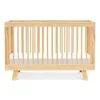 |
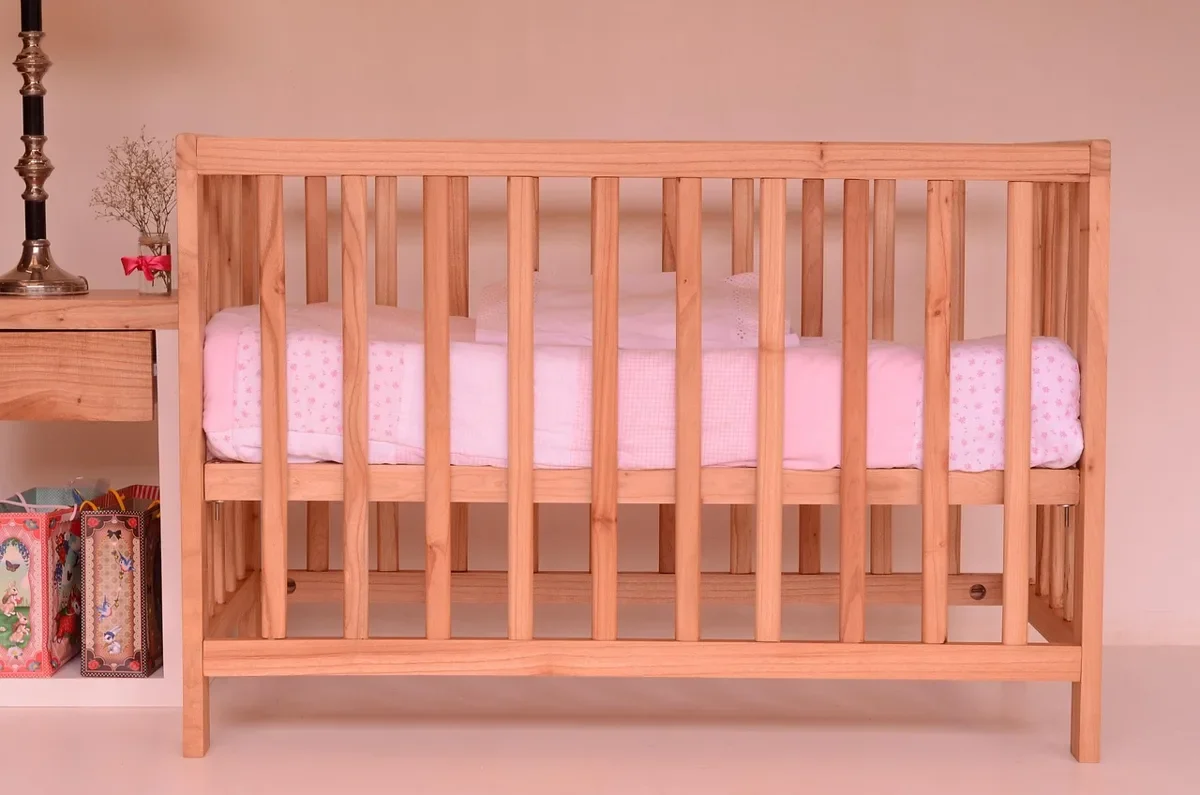
Babyletto Hudson 3-in-1 Convertible Crib, Natural – $399 A ready-made example of the point of this guide: a solid-wood frame and spindles, sold as a finished crib that states it exceeds the U.S. CPSC crib standard.
|
If you want the hardest, most dent-resistant frame, choose hard maple or European beech. Both are rated 1,450 lbf on the Janka scale, according to The Wood Database. Yellow birch is close behind at 1,260 lbf. Pine is the soft end of the range, and it is still widely used in finished cribs.
The crib above is pine, and it is there on purpose. A solid, well-finished softwood crib that meets the standard is a better buy than a hardwood crib that does not, which is the main point of this guide.
Wood Species Compared: Hardness and Weight
| Wood | Janka hardness (lbf) | Dried weight (lbs/ft3) | Where it fits in a cot |
|---|---|---|---|
| Hard maple | 1,450 | 44.0 | Hardest, densest option; resists dents, but stains blotchy |
| European beech | 1,450 | 44.3 | Same hardness as maple; common in imported European cots |
| Yellow birch | 1,260 | 43 | Nearly as hard as maple, usually cheaper |
| Red oak | 1,220 | 43.8 | Hard, but very open pores hold finish and dirt |
| Yellow poplar | 540 | 29 | Soft hardwood; usually painted |
| Eastern white pine | 380 | 25 | Lightest and softest; dents easily, budget friendly |
Hardness and weight figures from The Wood Database species pages.
Eastern white pine rates 380 lbf against 1,450 lbf for hard maple, so pine is roughly a quarter as hard. In practice that means a pine rail will pick up dents and scratches from toys, buckles and rings much sooner than maple.
The Wood Database also notes that hard maple tends to burn when machined with high-speed cutters and can blotch when stained, so a pre-conditioner, gel stain or toner may be needed for an even color. That matters mostly if you are building the cot yourself.
What Matters More Than the Species
Most “best wood for a cot” advice stops at the species. The rules that decide whether a crib is safe to sell do not mention species at all.
| What to check | What the sources say |
|---|---|
| Federal crib standard | 16 CFR Part 1219 covers full-size baby cribs and requires compliance with ASTM F1169; in force for cribs sold since June 28, 2011 |
| Interior size | 28 +/- 5/8 inches wide by 52 3/8 +/- 5/8 inches long for a full-size crib |
| Lead in paint and coatings | Banned at 0.009 percent (90 ppm) or more, under 16 CFR Part 1303, for children’s products and furniture |
| Drop-side rails | The 2011 rules addressed drop-side hazards; CPSC tells retailers not to resell cribs made before June 28, 2011 without written proof they comply |
Sources: eCFR, 16 CFR Part 1219, CPSC full-size crib business guidance, and CPSC lead in paint FAQ.
- Federal crib standard. Every full-size crib sold in the U.S. must comply with 16 CFR Part 1219. Look for the manufacturer stating compliance, not just the words “solid wood.”
- Finish. Paint and similar coatings on children’s products and furniture are banned at 0.009 percent (90 ppm) lead or more. The finish is regulated more directly than the wood underneath it.
- Size. A full-size crib has an interior of 28 +/- 5/8 by 52 3/8 +/- 5/8 inches. If you build one, use those numbers as your design brief so a standard mattress fits without gaps.
A Common Myth: Wood Allergies and Cot Species
Many guides rank woods as “hypoallergenic” or warn against oak and cedar for babies. The Wood Database does list maple, beech, birch, oak and pine as reported irritants or sensitizers, with typical reactions of skin, eye and respiratory irritation. Those notes are written for people working the raw wood, and I did not find a source tying them to a finished, sealed crib. Treat them as a caution if you are sanding or sawing, not as a reason to reject a species when you are buying a finished cot.
Solid Wood, Plywood and MDF
Many finished cribs mix solid wood for the frame and spindles with engineered panels elsewhere. That is not automatically a problem. Read the product description to see which parts are solid, and check that the crib states compliance with the CPSC rules.
Building a Cot Yourself: Wood and Finish Notes
If you plan to build rather than buy, the species choice becomes a workshop decision. Hard maple and European beech machine well but are dense, and The Wood Database warns that maple can scorch under a high-speed router bit, so keep the feed rate moving and the bits sharp. Yellow birch is a slightly easier, cheaper compromise at 1,260 lbf.
Red oak is hard enough at 1,220 lbf, but its pores are so large and open that air can be blown through a piece of straight-grained wood, according to the same source. That open grain traps finish and grime in slats and joints that get wiped down often, which is a practical reason to prefer a closed-grain wood for a cot.
Whatever you choose, treat the federal standard as your design brief: the 28 by 52 3/8 inch interior, no drop-side rails, and a finish whose maker states it is safe for children’s products. Let the finish cure fully per the label before the cot goes into the nursery.
How to Choose a Cot: A Short Checklist
- Confirm the manufacturer states the crib meets U.S. CPSC standards (16 CFR Part 1219).
- Check the description for the wood used in the frame and slats, and for any statement about lead- and phthalate-safe finishes.
- Avoid an older second-hand crib unless you can confirm it was made after June 28, 2011.
- Choose the hardest wood your budget allows if you want it to look new for the next child; choose pine if cost matters more than dents.
- For a second child or a convertible model, check that the conversion parts are included or sold separately.
For related reading on this site, see our comparison of metal and wood cribs and our look at a specific maple spindle convertible crib. If you make wooden baby items, see how to seal wooden baby toys safely.
Frequently Asked Questions
What is the best wood for a baby cot?
Solid hardwood such as maple, beech or birch is the usual answer because these woods are hard and dent-resistant, with Janka ratings of 1,260 to 1,450 lbf. Solid pine (380 lbf for eastern white pine) also works in a well-made crib. What matters more is that the cot meets the federal crib standard, 16 CFR Part 1219, and uses a compliant finish.
Is pine safe for a baby cot?
Yes, when it is part of a crib that meets the federal standard. Pine is a softer wood, so it dents more easily than maple or beech, but a dented rail is a cosmetic issue rather than a compliance one. Check the finish and the standards label rather than rejecting pine outright.
Is plywood or MDF acceptable for a cot?
Some cribs use engineered panels for parts such as the mattress base or end panels. Whether a crib is acceptable depends on it meeting 16 CFR Part 1219 and the lead limit for coatings, not on the panel material alone, so look for a manufacturer that states compliance and describes what each part is made of.
How do I know a finish is safe for a baby cot?
Federal rules ban paint and similar surface coatings containing 0.009 percent (90 ppm) or more lead on children’s products and furniture. A cot sold in the U.S. should carry the maker’s statement that it complies with the CPSC crib rules. If you are finishing one yourself, use a finish whose manufacturer says it is safe for children’s products and let it cure fully.
Can I use a hand-me-down wooden crib?
Be careful. CPSC guidance says retailers should not resell cribs made before June 28, 2011 unless they have written proof the crib meets the current requirements. An older crib may not meet the current drop-side and hardware rules, so check the manufacture date and the maker’s recall information first.
Conclusion
Pick maple, beech or birch if you want the hardest wood, pine if you want the lowest price, and put the standards label and finish ahead of either. A cot that meets 16 CFR Part 1219 and uses a compliant finish is the safer purchase whatever the species.
Sponsored / affiliate links. As an Amazon Associate I earn from qualifying purchases. I may earn additional commission from eligible campaigns.