Wood Glue Smell Not Going Away: Is It Safe or Normal?
A wood glue smell is often normal for a day or two, but if it stays strong for about a week or the glue remains tacky, I’d treat it as a curing or ventilation problem. Leave it alone, air it out, and inspect the bond if the odor is still sharp. Weak joints and stale indoor air often show up together. This guide shows what odor is normal, what smells are red flags, and how to decide whether to ventilate, wait, or inspect the bond.
This guide is part of our Wood glue essentials: types, uses, and cure times series.
Why does wood glue still smell days later?


Wood glue can keep smelling because the adhesive is still curing, water is still leaving the joint, or volatile compounds are continuing to off-gas from a thick bead or trapped area. A surface that feels dry is not always fully cured. If the glue is buried inside a cabinet, a boxed joint, or a tightly closed room, the odor can hang around much longer.
Curing odor versus true off-gassing
With many woodworking glues, the first smell comes from the curing process itself. That smell can fade while the adhesive is still hardening inside. Off-gassing is different: it is the slower release of odor-causing compounds after the first skin has formed. Temperature, humidity, thickness, and airflow all change how long that release continues.
Why a dry surface can still smell
A glue line can feel dry to the touch before it is fully cured. That matters because odor often comes from the whole bond line, not only the surface. Thick squeeze-out, glue trapped in pores, or a joint sealed inside a box can keep releasing odor long after the outside looks finished.
Which wood glues smell the strongest?
Epoxy adhesive usually has the strongest chemical smell, polyurethane wood glue often smells sharper than many PVA glues, and PVA wood glue is often the mildest of the three. Odor strength is not the only safety clue, though. The glue type, mix quality, and room conditions matter as much as the smell itself.
PVA wood glue
PVA wood glue is the common water-based adhesive used for furniture, joinery, and repairs. Its odor is usually tied to water evaporation and curing, so it tends to be lower odor than many solvent-based products. In open air, the smell often fades as the joint dries, but thick glue lines or sealed assemblies can still hold it in.
Polyurethane wood glue
Polyurethane wood glue cures with moisture and can foam as it sets. That foaming helps in irregular joints, but it also leaves more surface area for odor to linger if the excess is not cleaned up well. It usually needs clamp cleanup and good air exchange, especially in smaller rooms or when the workpiece stays indoors.
Epoxy adhesive
Epoxy adhesive is often a two-part system used for gaps and structural repairs. It can carry a stronger chemical smell, especially when the mix ratio is off or the batch is thick. If epoxy odor remains sharp after the expected cure window, that is a stronger warning sign than a mild PVA smell lingering in a ventilated shop.
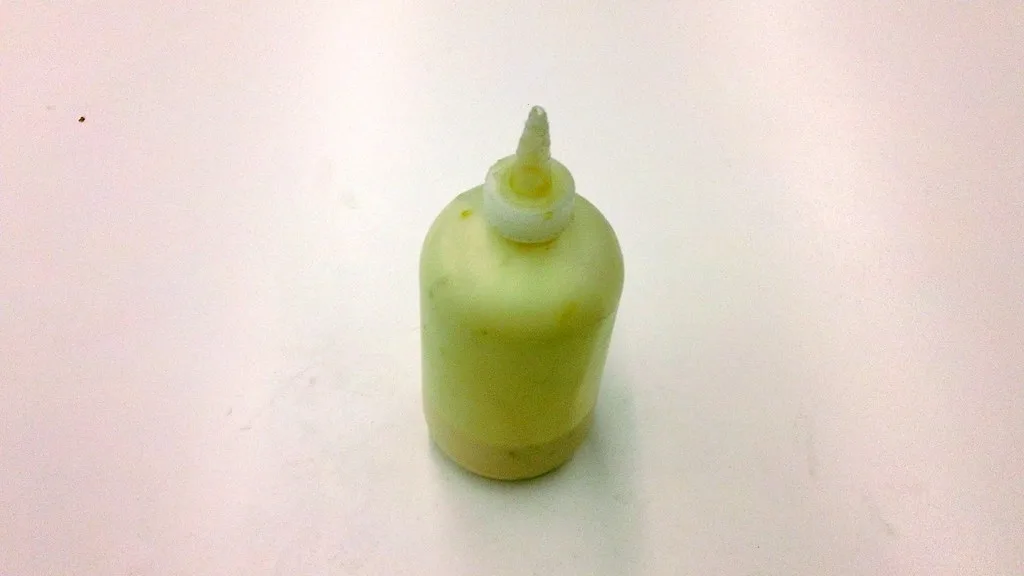
Is wood glue smell toxic after it dries?
Dry odor is not the same thing as a toxic emergency, but a lingering smell can still bother eyes, nose, throat, and breathing. Low-VOC products are often preferred because volatile organic compounds can cause headaches, dizziness, and respiratory problems. If symptoms appear, it’s no longer just a nuisance odor. (consumerreports.org)
What low-VOC really means
Low-VOC usually means the product is designed to release fewer airborne chemicals during curing and off-gassing. That does not mean “no smell” and it does not mean every indoor setup is safe. A closed room, small cabinet, or freshly glued project left in a bedroom can still create poor indoor air quality even with a milder adhesive.
When odor is only annoying
If the piece is dry, the smell is fading, and no one feels ill, the odor may be an annoyance rather than a danger. That is common with PVA glue on open furniture in a ventilated space. The practical response is usually more fresh air and time, not panic.
Symptoms that mean the air is bothering you
If anyone gets headaches, eye irritation, coughing, nausea, or wheezing, stop treating it like a normal smell and get fresh air. Those symptoms mean the room needs immediate fresh air, the piece should move outside the space, and medical help is wise if the symptoms are severe or do not ease. If the smell is strongest in a closed room or cabinet, indoor air quality is the real issue.
How long should the smell last?

For many PVA joints, odor should fade as the glue dries and the piece reaches full cure. Polyurethane and epoxy can take longer, especially in thick applications or poorly ventilated rooms. Clamp time is only the initial hold period; it does not tell you when the smell should be gone.
Clamp time versus full cure time
Clamp time is the period when the joint needs pressure to stay aligned. Full cure time is when the adhesive reaches final strength and its odor should be dropping more noticeably. A piece can be safe to handle while still giving off smell, especially if the room is warm, humid, or closed up.
Thin joints versus thick glue lines
Thin glue lines often dry faster and smell less. Thick glue lines, heavy squeeze-out, or glue trapped in end grain can keep odor around much longer. That is why a cleanly clamped door frame often smells less than a repair with pooled adhesive inside a groove.
Why cabinets and enclosed pieces hold odor longer
Cabinets, drawers, boxes, and built-ins are a common trap for lingering odor. The glue can be cured enough for handling, yet the enclosed air has nowhere to go. If the piece stays inside the home while still giving off smell, the smell can keep recycling through the room.
| Glue type | Odor strength | Typical cure behavior | Common uses | What to watch for |
|---|---|---|---|---|
| PVA wood glue | Mild to moderate | Water evaporates; odor usually drops as it dries | Furniture, joinery, repairs | Thick beads, trapped glue, sealed rooms |
| Polyurethane wood glue | Moderate to strong | Moisture-cure; foams and can hold odor in texture | Gaps, mixed-material repairs, outdoor-related work | Excess foam, cleanup residue, poor airflow |
| Epoxy adhesive | Moderate to strong | Two-part cure; sensitive to mix ratio and thickness | Gaps, structural repairs, enclosed assemblies | Wrong mix, sticky surface, persistent chemical smell |
What kind of ventilation do I need after using wood glue?
Use real air movement, not just an open door. Open windows on opposite sides if possible, place a fan so it pushes air outdoors, and avoid stirring the room air back into the space. Ventilation matters most in small rooms, finished furniture, cabinets, and any project that stays inside the home while curing.
Open-window airflow that actually moves air out
A single open window often helps less than people expect. Cross-breeze often works better because it gives the odor a path out and fresh air a path in. If the room has only one window, a fan near that opening should exhaust air outdoors rather than blow the smell deeper into the room.
Fan placement for rooms and shop spaces
In a shop, put the fan where it pulls contaminated air toward an exit. In a bedroom or living area, keep the piece away from vents that recirculate air inside the home. If the odor is strongest around a cabinet or enclosed furniture, air that reaches the outside of the room is more useful than a small desk fan nearby.
When ventilation is more important than more waiting
If the odor is mild and the glue line is dry, ventilation is often the correct next move. If the smell gets stronger after the piece comes into a warm room, that points to continued off-gassing and poor air exchange. In that case, more waiting without airflow may not solve the problem.
Use this odor triage checklist before you panic
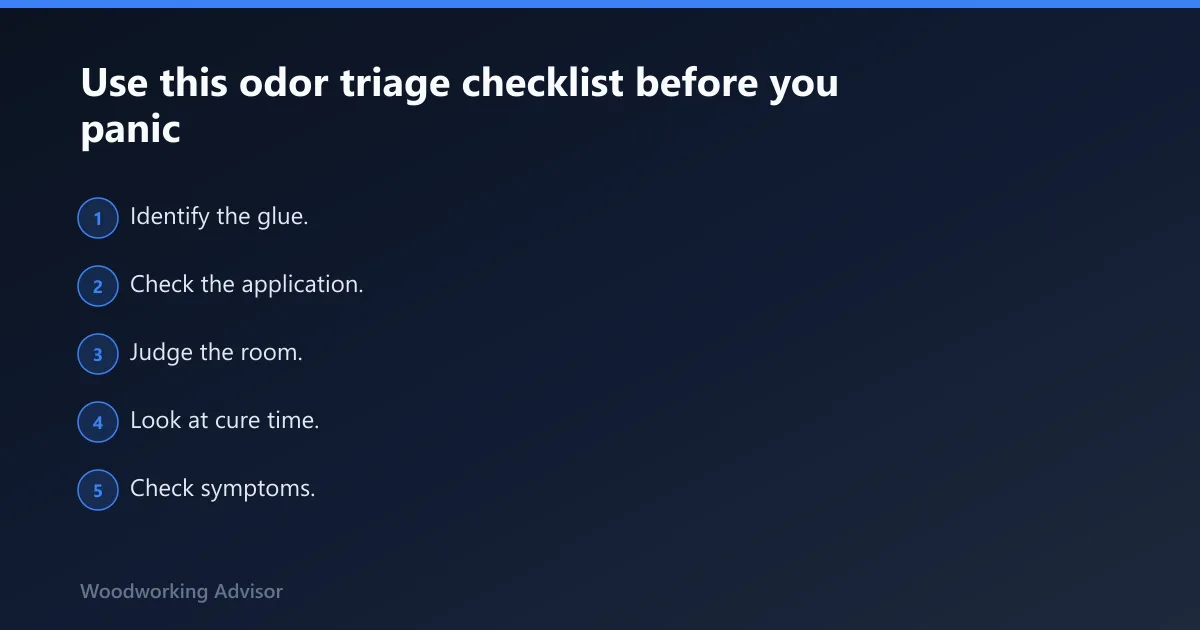
This is the practical decision rule. Match the glue type, judge the thickness, check the room, and then choose the next action. If the smell is mild and the bond is dry, wait and ventilate. If the smell is sharp, worsening, or tied to tacky glue, isolate the piece and inspect it.
- Identify the glue. PVA usually points to normal drying odor; polyurethane and epoxy deserve more caution if the smell is sharp.
- Check the application. Thin glue lines are less likely to keep smelling than thick beads, pooled squeeze-out, or glue trapped in pores.
- Judge the room. Open air and cross-breeze are lower risk than a sealed room, closed box, or cabinet left inside the home.
- Look at cure time. If the piece is still within clamp time or early full cure time, some odor is expected.
- Check symptoms. Headache, eye irritation, coughing, nausea, or wheezing means the air needs attention now.
- Choose the next move. Wait, ventilate longer, isolate the piece, or seek medical or industrial hygiene help.
| Situation | What it usually means | Next action |
|---|---|---|
| Mild smell in open room after a PVA repair | Normal curing odor | Ventilate and wait |
| Strong smell from thick polyurethane squeeze-out in a closed cabinet | Off-gassing trapped in enclosed air | Move or isolate the piece, ventilate outdoors |
| Sharp epoxy odor plus sticky or rubbery residue | Possible bad mix or incomplete cure | Inspect the bond and do not keep using the piece |
| Any smell plus headache, coughing, or wheezing | Indoor air problem, not just odor | Stop exposure and seek help if symptoms are severe |
When should you stop using the piece?
Stop using the piece if the glue line stays soft or tacky, the smell keeps getting stronger, or the odor remains sharp after what should have been a full cure. That is especially important for furniture used in bedrooms, toys, cabinets, or anything kept in a small enclosed room.
Signs of a bad mix or incomplete cure
Epoxy that was not mixed correctly may stay sticky, rubbery, or oddly soft. Excess glue can also trap unreacted material under the skin of the joint. If the surface seems dry but the smell is harsher than expected, assume the cure may be incomplete until proven otherwise.
When indoor air quality becomes the main problem
If the piece is technically bonded but the room still smells enough to bother people, the indoor air issue matters more than the woodworking problem. That is common in apartments, bedrooms, and small shops with poor airflow. For sensitive users, children, and pets, the threshold for concern should be lower.
When to throw out a piece because the smell won’t go away
Throwing out a piece is rarely the first step, but it becomes reasonable if the odor stays intense after prolonged ventilation, the glue line is still soft, or the mix ratio was clearly wrong. If the piece is meant for a toy, a sleeping area, or a sealed cabinet and the smell will not clear, replacement is safer than forcing the issue.
Frequently asked questions
How long should wood glue smell last?
That depends on glue type, thickness, room temperature, humidity, and airflow. Thin PVA joints in open air often fade sooner than polyurethane or epoxy in a closed room. If the smell is still strong after a week, or if the glue line still feels tacky, treat it as a curing problem.
Can wood glue fumes make you sick?
Yes, they can bother some people. VOCs can cause headaches, dizziness, and respiratory problems. If anyone gets nausea, coughing, eye irritation, or wheezing, stop exposure and move the piece to a better-ventilated area. Severe symptoms deserve prompt medical attention.
When should I throw out a piece because the glue smell won’t go away?
Consider discarding or rebuilding the piece if the odor remains strong after thorough ventilation, the glue line stays soft, or the product was clearly mixed wrong. For toys, bedroom furniture, and sealed cabinetry, persistent odor is a stronger reason to replace the work than for a shop fixture.
Sponsored / affiliate links. As an Amazon Associate I earn from qualifying purchases. I may earn additional commission from eligible campaigns.