Sanded Plywood vs Unsanded Plywood: When to Use Each
Choose Sanded Plywood for exposed faces, Unsanded Plywood for hidden structural parts, and S1S or S2S when you need one or both faces cleaner and flatter before veneer, laminate, or finish. Pick wrong, and you can pay for a better face you will never see, or fight telegraphing, weak glue contact, and blotchy finish later. This guide compares Sanded Plywood, Unsanded Plywood, S1S, and S2S by end use and failure mode.
| Decision factor | Sanded Plywood | Unsanded Plywood | Winner |
|---|---|---|---|
| Face quality | Smooth, paint-ready surface | Rough, variable texture | Sanded Plywood |
| Thickness consistency | About ±0.3mm tolerance | About ±0.5–1.0mm tolerance | Sanded Plywood |
| Cost | Typically 15–30% more than the same thickness unsanded panel | Lower purchase cost; skips wide-belt sanding | Unsanded Plywood |
| Paint, lacquer, HPL, melamine bonding | Ready for finish work | Needs prep before coating or bonding | Sanded Plywood |
| Hidden construction and packing use | Often unnecessary overbuying | Well matched to utility duty | Unsanded Plywood |
Surface quality and tolerance
What factory sanding changes
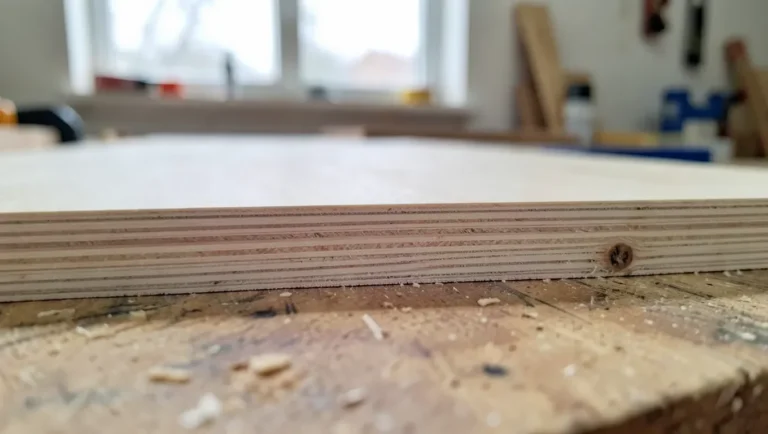
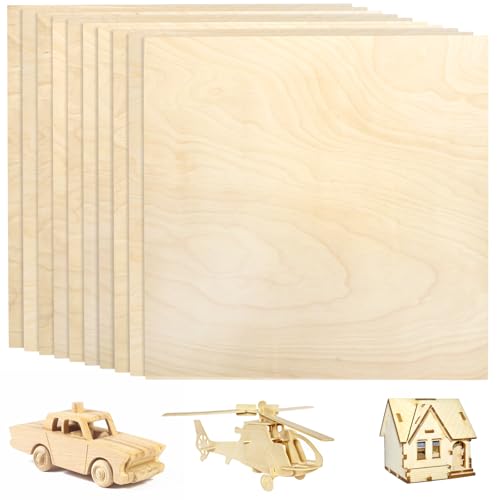
Sanded Plywood leaves the factory after wide-belt sanding, so the panel face is smoother and more uniform than an unsanded sheet. That process is what makes it paint-ready and suitable for lacquer, HPL, or melamine paper bonding. It also adds production time, which is one reason it costs more.
Why the face quality matters
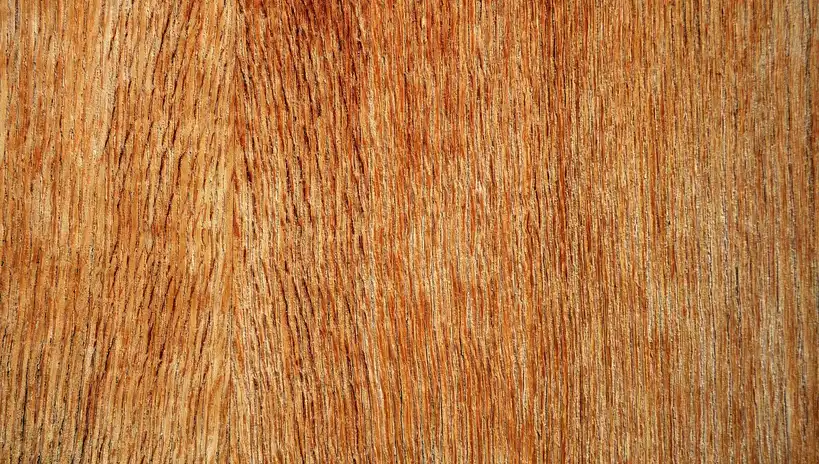
The face is where finish defects show first. A rougher unsanded face can print through paint, leave torn fibers at cut edges, or weaken adhesive contact under veneer or laminate if you skip proper prep.
How sanding affects thickness tolerance
Sanded plywood is commonly listed around ±0.3mm thickness tolerance, while unsanded plywood is often around ±0.5–1.0mm. That difference matters when you need panels to align cleanly in cabinet boxes, drawer parts, or laminated assemblies. It is a fit issue more than a strength issue.
What S1S and S2S mean
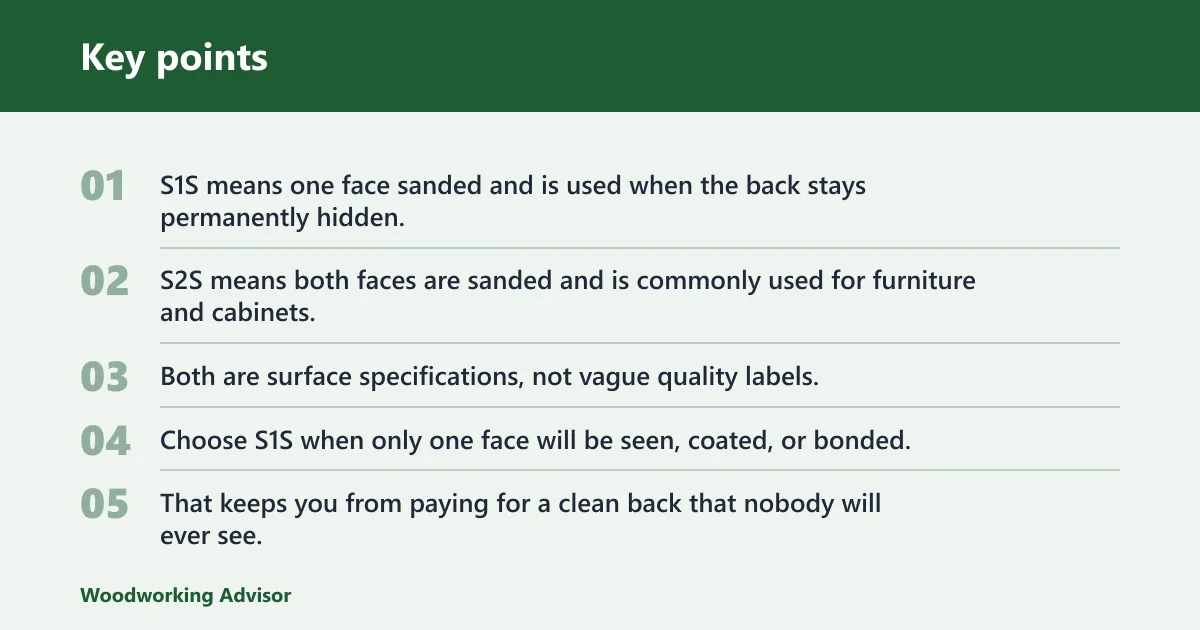
One sanded face versus two sanded faces
S1S means one face sanded and is used when the back stays permanently hidden. S2S means both faces are sanded and is commonly used for furniture and cabinets. Both are surface specifications, not vague quality labels.
When one good face is enough
Choose S1S when only one face will be seen, coated, or bonded, such as a cabinet side against a wall or a backer that will disappear inside an assembly. That keeps you from paying for a clean back that nobody will ever see.
When both faces should be finished
Choose S2S when both faces are visible, when both sides may receive finish, or when you need cleaner, more predictable stock for joinery and layout. It is the safer call for furniture parts, face frames, and most cabinet components.
Decision matrix for common uses
| Use | Correct surface spec | Why it matters | Likely failure if wrong |
|---|---|---|---|
| Cabinet sides | S2S | One or both faces may be visible, and thickness consistency helps with carcass alignment | Paint telegraphing or visible sanding-through at edges |
| Drawer bottoms | Sanded Plywood | The surface can be seen when drawers are open and may need a clean finished face | Fuzzy grain and finish defects on the visible side |
| Shop jigs | Unsanded Plywood | Function matters more than appearance | Overpaying for a surface nobody sees |
| Shelf backs | S1S | Only the exposed face needs a cleaner finish | Waste from buying S2S when one face is hidden |
| Painted furniture parts | Sanded Plywood | Paint shows every scratch, ridge, and glue flaw | Telegraphing through primer and topcoat |
| Subfloor patches | Unsanded Plywood | The patch is covered later and needs utility fit, not cosmetic finish | Extra cost with no visible benefit |
| Crate panels | Unsanded Plywood | Commercial and industrial handling favors cost control | Paying for sanding that adds no value |
| Templates | Unsanded Plywood | Templates care about cut stability and layout, not a finished face | Unnecessary material cost |
| Laminate substrates | Sanded Plywood | Bonding needs a smooth, predictable substrate | Poor adhesive bond or surface print-through |
| Hidden stretchers | Unsanded Plywood | Hidden parts do not justify finish-grade stock | Over-specifying and raising build cost |
| Utility shelves | Unsanded Plywood | Load and storage matter more than appearance | Spending for a face that stays hidden |
| Formwork | Film-faced plywood | Concrete work needs a hard-use face, often unsanded on both sides | Surface wear, poor release, or unnecessary finish prep |
Say your cabinet side is 18mm plywood and the outside face will be painted white. If you choose unsanded stock, every scratch and raised fiber has a better chance of showing after primer. If you choose S2S, you pay more, but the sheet starts flatter and cleaner.
When should you use sanded plywood?
Cabinets and furniture parts
Use Sanded Plywood for furniture, cabinets, face frames, drawer parts, and any visible component that needs a cleaner face. Furniture-grade plywood is usually selected for lacquer, HPL, or melamine-ready work where the substrate needs to be smooth and predictable.
Painted, lacquered, and laminated surfaces
Choose Sanded Plywood when the finish is the product. A smooth factory face helps reduce paint defects, and a calibrated panel helps you keep assemblies aligned before finish goes on.
Projects where thickness consistency matters
If your parts need to line up across a run of cabinets or a pair of matching doors, the tighter thickness tolerance of Sanded Plywood helps more than a rougher panel would. That is one reason it is standard in cabinet work. The gain is in fit and finish, not a claim that it is stronger.
When is unsanded plywood the better choice?
Packing, crates, and utility parts
Use Unsanded Plywood for packing, crates, pallets, and other industrial parts where cost matters more than face quality. Unsanded panels skip the wide-belt sander after the hot press and edge trim process, which is why they are cheaper and often sold as packing-grade or construction-grade stock.
Construction, subfloor patches, and formwork
Unsanded Plywood is a practical buy for construction use, subfloor patches, and temporary formwork. The rough face is a finish choice, not a structural defect, and film-faced plywood is often the better call when concrete release and durability matter more than appearance.
Hidden shop parts and temporary templates
Use unsanded stock for hidden stretchers, shop jigs, and templates. These parts need reliable cutting and assembly, not a furniture face. A common first-timer mistake is spending for Sanded Plywood in parts that will be covered in the next step.
Can you paint unsanded plywood?
Yes, but prep matters
You can paint Unsanded Plywood, but you should expect more prep. Sand the face, break sharp edges, fill voids or dents, and use a primer that seals the fibers before topcoat. Without that prep, the rough texture can print through the finish.
Where defects show up
Telegraphing usually shows first on broad flat panels, especially under gloss or solid colors. Tear-out at cut edges can also show after priming if you do not clean up the surface. A sanded panel saves some of that prep time.
When the extra prep is not worth it
If the panel will be hidden or covered by trim, laminate, or another layer, the extra sanding work may not pay back the labor. In that case, unsanded stock is often the better buy.
What to specify on a plywood order
Write the surface spec explicitly
Put S1S, S2S, or unsanded on the purchase order. Surface finish specification should be written explicitly because “plywood” alone does not tell the supplier whether the face will be seen, coated, or hidden.
Match the panel to the finish system
Choose furniture-grade plywood when the panel will receive lacquer, HPL, melamine, or another visible finish. Choose packing-grade plywood when appearance is secondary and cost matters more. If you need a hard-use panel for concrete work, film-faced plywood is often the correct spec.
Sanding adds cost because the panel goes through an extra finishing step and takes more production time. The sourced guide puts that premium at 15–30% more than the same thickness unsanded plywood, or USD 6–10 per CBM for both faces sanded and USD 3–5 per CBM for one face sanded. That premium is worth paying only when the face will be seen, coated, or laminated.
- Decide whether the face will be seen.
- Decide whether the face will be coated or bonded.
- Choose Sanded Plywood for visible, painted, lacquered, or laminated parts.
- Choose Unsanded Plywood for hidden, temporary, or utility parts.
- Add S1S or S2S to the order only when one or both faces need a cleaner finish.
- Specify film-faced plywood when the job is concrete formwork or another hard-use construction task.
If a 12mm panel is going into a shop jig that will be cut, screwed, and hidden behind clamps, unsanded stock is often sufficient. Unsanded stock is the sensible buy. If the same panel is a cabinet side in a painted kitchen run, sanded plywood is often the better choice because the face quality will show.
Choose Sanded Plywood if…
Choose Sanded Plywood if the panel is visible, painted, lacquered, laminated, or part of furniture and cabinet work where thickness consistency and face quality matter. It also belongs on laminated substrates and parts where you want less prep before finish.

Choose Unsanded Plywood if…
Choose Unsanded Plywood if the panel will stay hidden, be used for packing, crates, shop fixtures, templates, subfloor patches, or formwork, or if you want the lower-cost choice for a utility part. It is the right buy when appearance is secondary and the rough face will never be seen.
Frequently asked questions
What is the difference between sanded plywood and unsanded plywood?
Sanded Plywood has a smoother, paint-ready surface and tighter thickness tolerance, while Unsanded Plywood has a rougher, more variable factory finish and wider tolerance. The main difference is face quality and consistency, not a basic structural upgrade. Choose by end use, not by the idea that smoother always means better.
Is sanded plywood stronger than unsanded plywood?
No. Sanding changes the surface quality and thickness consistency more than the structural strength. The practical gain is a cleaner face and better fit, not a different load-bearing category. If strength is the concern, look at panel grade, core quality, and thickness instead.
Do I need sanded plywood for cabinets or furniture?
Usually yes, especially for visible cabinet parts, doors, drawer faces, and furniture panels. S2S is standard for furniture and cabinets because both faces are cleaner and flatter. Use S1S only when one face will stay hidden, such as a back against a wall.
Sponsored / affiliate links. As an Amazon Associate I earn from qualifying purchases. I may earn additional commission from eligible campaigns.
 Baltic Birch Plywood Sheets Box of 45 - Laser Engraving Cutting, Scroll Saw Nature Veneer Color, Stronger Than Basswood, A/A Grade,12 x 12 x 1/8”, 3mm Thickness Perfect for Wood Burning
 Baltic Birch Plywood 1/8'' x 12'' x 18'', 6 Pack, B/BB Grade, Void-Free Core, Laser Cutting Ready, Flat Sheets for CNC, Engraving, DIY Crafts, Art Painting, Wood Burning, Staining