How to Cut Plywood Straight Without a Table Saw
Clamp a straightedge to the plywood and cut with a circular saw or track saw. Use a fine-tooth blade, score veneer-faced sheet goods first, and keep the sheet fully supported. Bad setup usually leaves splintered edges, crooked cuts, and wasted plywood. This guide compares the best no-table-saw methods for full sheets, rip cuts, crosscuts, and finish-level cuts in tight spaces.
What you’ll need


- Circular saw, or a track saw if you need cleaner guided cuts
- Straightedge guide or edge guide, store-bought or homemade
- Clamps that can hold the guide without shifting
- Measuring tape, pencil, and a square for marking the line
- High tooth count carbide blade sized for the saw
- Painter’s tape for visible veneer faces
- Foam insulation support board, or sawhorses with 2x4s across them
- Factory edge of the plywood, when one edge is still straight
How do you cut plywood straight?
Mark the line, use a straight factory edge when you have one, and clamp a guide that matches the saw shoe offset. Set blade depth before the cut, support the full sheet, and keep the offcut from sagging. That order matters more than force, because plywood cuts fail when the sheet moves or the saw drifts. (Familyhandyman)
Step-by-step cut setup
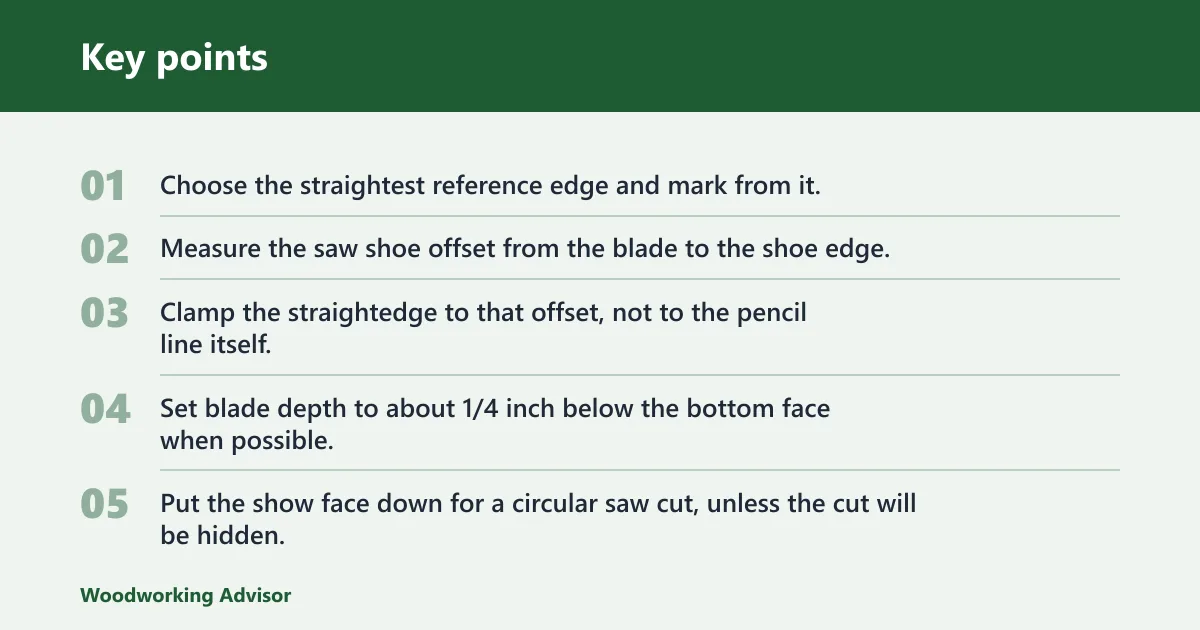
- Choose the straightest reference edge and mark from it.
- Measure the saw shoe offset from the blade to the shoe edge.
- Clamp the straightedge to that offset, not to the pencil line itself.
- Set blade depth to about 1/4 inch below the bottom face when possible.
- Put the show face down for a circular saw cut, unless the cut will be hidden.
- Support the whole sheet on foam board, or on sawhorses with 2x4s across them.
- Cut with steady feed and let the blade finish before lifting the saw.
Say your plywood has one clean factory edge and one bowed edge. Use the factory edge for the guide setup, then check the distance at both ends before clamping. If the gap changes, do not trust the bowed side as a reference.
If a trim cut of about 1/8 inch is needed on a cabinet side, that is a common setup example. Mark the line, then set the guide so the blade lands on the waste side by the saw shoe offset. That gives you a controlled cut without sneaking up on the line freehand.
Which straight-cut method should you use?
Choose the method by finish quality, space, and repeatability. A track saw is best when you want repeatable, cleaner sheet cuts. A circular saw with a straightedge handles most home plywood work. Store cutting, borrowing, or renting can make more sense when the sheet is too large to support safely.
Tool choice by use case
- Track saw: best for guided straight cuts and repeatable sheet work.
- Circular saw with straightedge: best all-around choice for most DIY plywood cuts.
- Clamp-on edge guide or homemade guide: good when you want low cost and already have a circular saw.
- Store cutting: useful when you need one or two rough cuts and do not have room for a 4×8 layout.
- Jigsaw: only for curves, not a straight-edge primary method.
When a track saw is worth it
A track saw rides a rail or straight guide, so it is easier to keep a cut straight than with a basic circular saw. It is worth using when the cut needs cleaner edges, when you will repeat the same sheet dimension, or when you need fewer setup corrections. If you cut plywood often, that consistency matters.
A straightedge guide can be clamped to the sheet or built from plywood and a circular saw. The Silicon Underground notes that a clamp-on edge guide works well for sheets shorter than 50 inches, which fits many cabinet parts after rough breakdown.
Plywood cut decision matrix
| Scenario | Tool choice | Setup time | Expected edge quality | Tear-out risk |
|---|---|---|---|---|
| Rough rip | Circular saw with straightedge | Low | Good enough for framing or hidden edges | Low to moderate |
| Cabinet-grade finish cut | Track saw with rail | Moderate | Cleanest of the common handheld options | Low |
| One-person garage cut | Circular saw with guide and foam board | Low to moderate | Good if the guide is aligned well | Moderate unless the sheet is fully supported |
When store cutting makes sense
If you only need rough breakdown and the sheet is hard to handle alone, store cutting can save time and strain. That option often makes more sense than wrestling a full 4×8 sheet on a driveway. It also helps when your garage has no clear infeed or outfeed space for a long straight cut.
How do you keep plywood from splintering?
Use painter’s tape on the show face, pair it with a sharp plywood blade, and slow the feed when the veneer starts to lift. For circular saw cuts, place the good face down so the cleaner side is where the blade exits. That combination reduces chip-out better than tape alone.
Blade and cut-line choices
Family Handyman recommends a sharp 24-tooth carbide blade for plywood cuts. A carbide-tipped blade with a high tooth count is often recommended for veneer-faced sheet goods. A dull blade tears fibers; a sharp one cuts them cleanly.
ManMadeDIY notes that a zero-clearance insert helps reduce tear-out. That matters most on visible faces, especially when the plywood has a thin decorative veneer. If the saw leaves a rough edge even with tape, blade condition and support are usually the first things to check.
What is the best way to cut 4×8 plywood?
The best way to cut 4×8 plywood is to support the full sheet first, then use a circular saw with a straightedge or a track saw. A 4×8 sheet of plywood can be difficult to support during cutting, so the setup should prevent sagging at the cut end and at the offcut. Foam board is especially useful here.
Support options that work
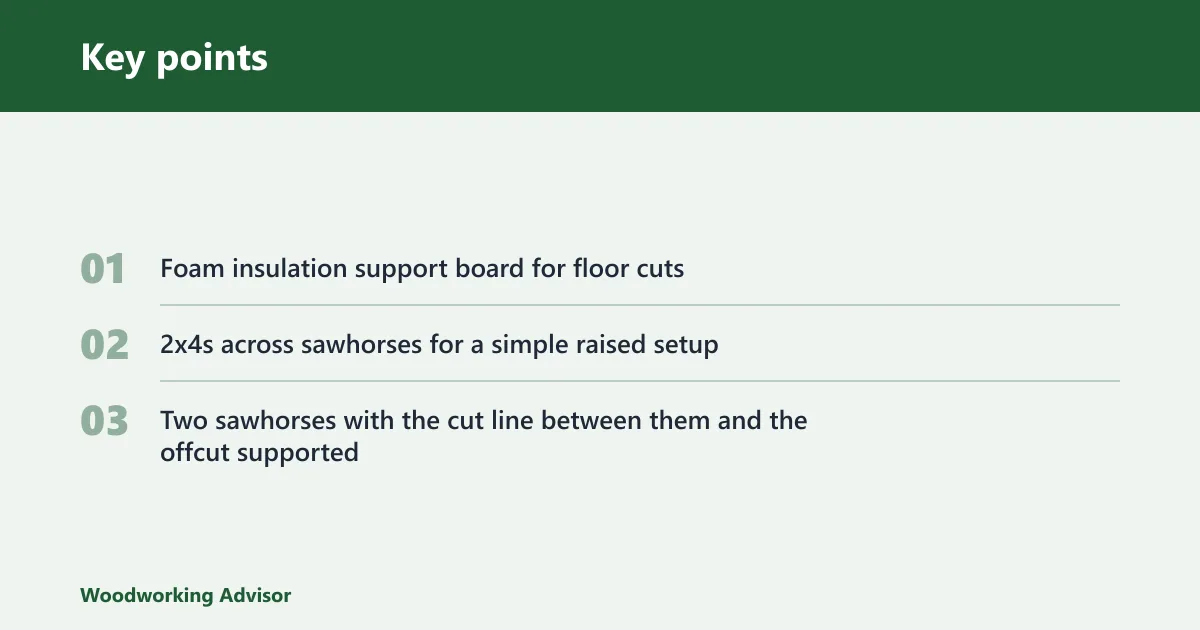
- Foam insulation support board for floor cuts
- 2x4s across sawhorses for a simple raised setup
- Two sawhorses with the cut line between them and the offcut supported
WikiHow says placing plywood on foam board lets you cut without worrying about snap-off. That matters when the last part of the cut would otherwise drop away and pinch the blade. The support should extend beyond the cut line rather than stop at it.
Common mistakes
These problems usually come from setup, not the saw itself. Fix the support, guide alignment, or blade choice first.
Troubleshooting table
| Problem | Likely cause | What to do |
|---|---|---|
| Bowed sheet | Using a curved edge as the reference | Start from the straight factory edge, then clamp the guide to that line |
| Chip-out | Dull blade, fast feed, or wrong face orientation | Use a sharp high tooth count carbide blade, tape the cut line, and cut good face down with a circular saw |
| Offcut breakaway | Unsupported waste side near the end of the cut | Move supports under both sides of the line, or use foam so the waste stays supported |
| Wandering cut | Guide shifted or saw shoe not aligned to the offset | Recheck the shoe-to-blade offset and reclamp the guide before cutting again |
Guide alignment errors
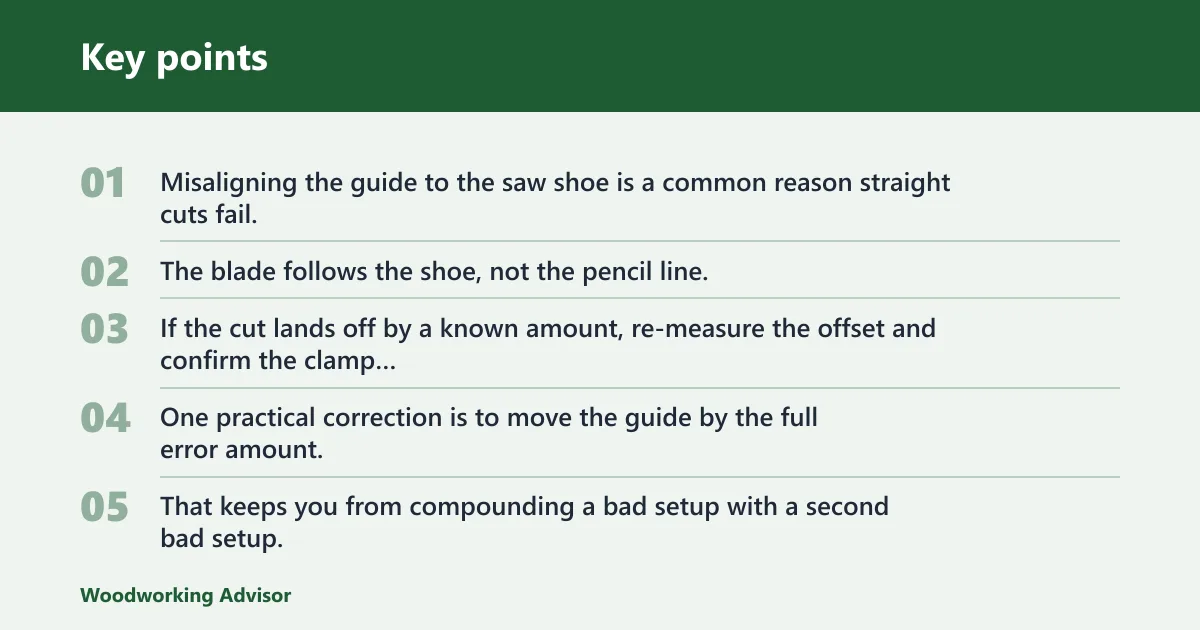
Misaligning the guide to the saw shoe is a common reason straight cuts fail. The blade follows the shoe, not the pencil line. If the cut lands off by a known amount, re-measure the offset and confirm the clamp pressure before making another pass.
One practical correction is to move the guide by the full error amount, then recheck on the scrap edge before cutting the finished part. That keeps you from compounding a bad setup with a second bad setup.
Blade depth mistakes
The same source says to set the blade about one-quarter inch through the bottom of the plywood, and wikiHow gives the same 0.25 inches below the sheet. Too deep increases drag and tear-out. Too shallow risks leaving an incomplete cut that binds as you finish the pass. (Wikihow)
When to choose a shop or rental cut
If you need one or two rough cuts, a store cutting service may be the best value. If you need repeatable cabinet parts, borrowing or renting a track saw can be smarter than forcing a basic circular saw to do finish work. If the sheet will not fit safely on your floor, do not force the cut at home.
Keep one straight factory edge untouched as long as possible. It makes guide setup faster and more accurate on the next sheet.
Frequently asked questions
How do you cut plywood straight without a table saw?
Use a circular saw or track saw with a clamped straightedge. Mark from a straight factory edge, set the blade depth to about 0.25 inches below the sheet, and support the full panel so the offcut cannot drop during the cut.
Can a circular saw be used to cut plywood?
Yes. A circular saw works well with a straightedge or edge guide, especially when fitted with a high tooth count carbide blade. For cleaner veneer cuts, put the good face down and feed slowly enough to keep the blade from wandering.
How do you keep plywood from splintering when cutting?
Use painter’s tape over the cut line, a sharp plywood blade, and slower feed. The same source recommends a sharp 24-tooth carbide blade, and the clean face should be down on circular saw cuts so the blade exits on the less visible side.
What blade is best for cutting plywood?
A sharp high tooth count carbide blade is the safest starting point for plywood. A 24-tooth carbide blade is a common recommendation for general cuts, while finer finish work may call for a blade with more teeth if the saw supports it.
Can Home Depot cut plywood for you?
Many home centers offer in-store sheet cutting, but the service is usually for rough breakdown rather than furniture-grade accuracy. If you need a clean finish edge or exact cabinet sizing, plan to leave final trimming for your own saw or a track saw.
Sponsored / affiliate links. As an Amazon Associate I earn from qualifying purchases. I may earn additional commission from eligible campaigns.