Resurfacing Wood Furniture: The Water-Drop Test That Tells You What It Actually Needs
Resurfacing wood furniture doesn’t always mean stripping it down to bare wood. Most pieces sitting around with a dull, tired-looking finish just need to be cleaned and fed, not sanded. The only reliable way to know which one your piece actually needs is a simple test: put a drop of water on the finish and watch what happens.
If the water beads up and sits there, the existing finish is still intact, and a light rejuvenation, cleaning the surface, then feeding it with an oil-and-wax conditioner, will bring it back. If the water soaks in, darkens the wood, or leaves a dull ring after it dries, the finish has failed and no amount of conditioner will fix it; that piece needs a full strip-and-refinish. This guide covers both paths, how to tell which one you’re dealing with, and the exact steps for each.
Light Rejuvenation vs. Full Refinish: Why the Difference Matters
“Resurfacing” gets used as a catch-all term, but it actually covers two very different amounts of work. Light rejuvenation means cleaning off grime and old wax buildup, then feeding the existing finish with an oil-and-wax blend so it looks glossy and fed again. No sanding, no stripping, usually well under an hour per piece. Full refinishing means stripping or sanding the piece down to bare wood and building an entirely new finish back up, a job that can take a full weekend depending on the piece’s size and how many coats the new finish needs. Most generic guides skip straight to recommending a full sand-and-refinish regardless of what a piece actually needs, which means a lot of furniture that only needed a wipe-down and some wax ends up getting sanded for no reason.
Best Pick for Light Rejuvenation
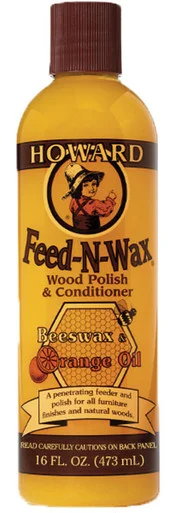 |
Howard Feed-N-Wax Wood Polish & Conditioner, 16 oz – $8.99 If your furniture passes the water-drop test, this beeswax-and-orange-oil conditioner is what we’d reach for to feed the existing finish instead of stripping it.
|
The Water-Drop Test: How to Diagnose Which One You Need
Before you pick up sandpaper or a stripper, run this test on an inconspicuous spot, like the underside of a tabletop or the back of a leg.
- Wipe the spot clean and dry.
- Place a single drop of water on the finish.
- Wait 10 to 15 seconds, then blot it dry and look closely at the spot.
Beads up and sits on the surface: the finish is still forming a continuous, sealed film. Water can’t get through it, which means the wood underneath is still protected and the finish just needs to be cleaned and re-fed, not stripped.
Soaks in, darkens, or leaves a dull white or gray ring after it dries: the film has worn through, cracked, or crazed enough that it’s no longer sealing the wood. Feeding a broken film doesn’t fix it, there’s no continuous coating left to condition, so the piece needs to be stripped or sanded back and refinished from bare wood.
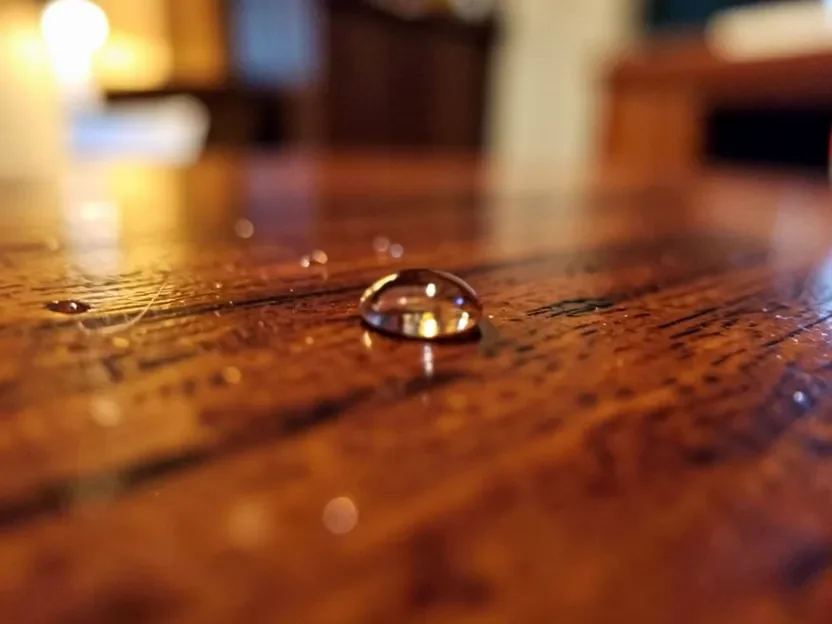
This test only diagnoses film finishes, varnish, lacquer, shellac, and most polyurethanes. An oil finish (tung oil, Danish oil, or bare oiled wood with no film on top) will almost always let water soak in a little even when it’s in good shape, since oil finishes work by soaking into the wood rather than sealing over it. For those, judge by look and feel instead: if the wood still looks fed and isn’t chalky or gray, a fresh coat of oil is all it needs.
Common Wood Furniture Resurfacing Techniques
Light Rejuvenation Techniques
Cleaning matters more than most people expect. Years of built-up furniture polish, wax, and grime can make a finish look dull and worn even when the film underneath is completely intact, and cleaning alone sometimes solves the problem before any conditioner goes on. A mild dish soap and warm water solution on a soft cloth, wrung out well so you’re not flooding the wood, removes most of this buildup. Once it’s fully dry, an oil-and-wax conditioner feeds the wood and restores the sheen without touching the existing finish.
Full Refinish Techniques: Stripping vs. Sanding
Chemical stripper removes a failed finish without removing wood, which matters most on veneer, carved details, or turned legs, spots where a sander would round over crisp edges or cut straight through a thin veneer layer. Sanding is faster on flat solid-wood surfaces like a tabletop, working through progressively finer grits to remove the old finish and smooth the wood before the new finish goes on. Most full refinishing jobs actually use both: stripper on carved or turned parts, sanding on the flats. If the piece is specifically a table, our wood table resurfacing guide covers the identification and stripping-vs-sanding decision for tabletops in more detail.
Preparing the Furniture Before You Start
Move the piece to a ventilated area if you’ll be stripping or using an oil-based finish; chemical strippers and oil-based topcoats both give off fumes that build up fast in a closed room. Remove hardware, handles, hinges, knobs, so you’re not sanding or staining around it, and bag it separately per piece if you’re working on more than one at a time so it goes back on the right drawer. Repair any loose joints or deep gouges before you refinish. A new finish applied over a wobbly joint, or over filler that hasn’t fully cured, will telegraph the repair or fail again quickly. If the damage is limited to isolated scratches, water rings, or a cloudy haze rather than a fully worn finish, our guide on repairing furniture finish damage covers spot fixes that can save you from resurfacing the whole piece.
Step-by-Step: Light Rejuvenation
- Clean the surface with a mild soap-and-water solution on a soft cloth, then let it dry fully.
- Apply an oil-and-wax conditioner with a clean cloth, working with the grain.
- Let it sit for the time the label recommends, usually 10 to 20 minutes, so the oil soaks in.
- Buff off the excess with a clean, dry cloth until the surface feels smooth, not tacky.
Step-by-Step: Full Strip-and-Refinish
- Apply chemical stripper, or start sanding on flat surfaces, and let stripper work for the time the label specifies.
- Scrape off the softened finish with a plastic scraper, then wipe the surface with the recommended solvent to remove residue.
- Sand progressively from a coarser grit up through 150 and then 220, always with the grain, removing any remaining old finish and smoothing the bare wood.
- Wipe away all sanding dust with a tack cloth before applying stain or going straight to topcoat.
- Apply stain if you want one, wipe off the excess per the can’s instructions, and let it dry fully.
- Apply two to three thin coats of topcoat, lightly sanding with fine-grit paper between coats for the smoothest result.
Protecting and Maintaining Resurfaced Furniture
Dust with a soft, dry cloth rather than a feather duster, which can grind grit into the finish. Use coasters and placemats to keep water rings and heat marks from starting the finish failure cycle over again, and keep pieces out of direct sunlight, which dries out and fades both film finishes and oil finishes over time. For pieces you rejuvenated rather than fully refinished, re-run the water-drop test every six months or so; once water stops beading, it’s time to clean and re-condition again before the finish starts to actually fail.
Common Mistakes to Avoid
- Sanding a piece that only needed cleaning and conditioning, removing a perfectly good finish for no reason.
- Skipping the water-drop test and guessing, which leads to either wasted conditioner on a failed finish or unnecessary stripping of a good one.
- Running a power sander over veneer, which can cut through the thin veneer layer in seconds.
- Expecting an oil-and-wax conditioner to seal a finish that’s already cracked or worn through; it can’t fill gaps that no longer exist as a continuous film.
- Rushing stripper or stain dry times and applying the next coat before the previous one has fully cured.
Frequently Asked Questions About Resurfacing Wood Furniture
How do I know if my furniture needs light rejuvenation or a full refinish?
Run the water-drop test: place a drop of water on the finish and wait 10 to 15 seconds. If it beads up, the finish is intact and a light rejuvenation with an oil-and-wax conditioner is enough. If it soaks in or leaves a dull ring, the finish has failed and the piece needs a full strip-and-refinish.
Can I resurface wood furniture without stripping?
Yes, as long as the water-drop test shows the existing finish is still intact. In that case, cleaning the surface and feeding it with an oil-and-wax conditioner restores the look without any sanding or stripping. Stripping is only necessary once the finish has actually failed.
How often should I re-condition furniture I only lightly rejuvenated?
Roughly every six months for pieces that get regular use, though the water-drop test is a more reliable signal than a fixed schedule. Once water stops beading up the way it did right after conditioning, it’s time to clean and re-feed the finish again.
Conclusion
Most wood furniture doesn’t need a full sand-and-refinish, it needs an honest look at whether the existing finish is still doing its job. The water-drop test takes fifteen seconds and tells you exactly which path to take, so you’re not stripping a perfectly good finish or wasting conditioner on one that’s already failed. Test first, then match the work to what the piece actually needs.
Sponsored / affiliate links. As an Amazon Associate I earn from qualifying purchases. I may earn additional commission from eligible campaigns.