What Is Willow Wood Good For? Uses, Hardness and Limits
Willow wood is good for baskets, crates, small carvings, and light utility work, and it is a poor choice for outdoor furniture or anything that has to take a beating. That is the picture painted by the Wood Database species data, which calls willow weak for its weight and confines it mostly to rough, utilitarian jobs.
Willow is still worth knowing. It is cheap and soft, it glues and finishes well, and white willow (Salix alba) is the traditional wood for cricket bats. Below are the real numbers for black willow (Salix nigra, one of the most commercially important willows in North America), what the wood does well, where it fails, and how it compares with other soft woods. If you are comparing species, our types of wood guide covers the rest, and our page on what willow wood is covers identification and general background.
Willow Wood Properties: Black Willow vs White Willow
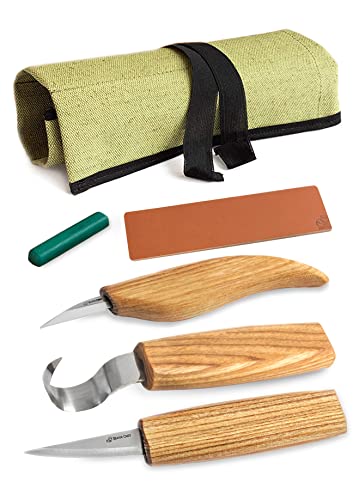
| BEST WILLOW SPOON-CARVING PICK | |
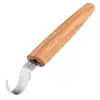 |
BeaverCraft SK1 Spoon Carving Hook Knife Best for: Hollowing bowls and spoons from soft, easy-cutting wood like willow. Why we picked it: A hook knife scoops out the inside of a bowl or spoon with light, controlled pulls, which suits willow’s low density (430 lbf Janka for black willow) better than heavy gouge work. Main drawback: Single-purpose tool: it only hollows, so you still need a straight carving knife for outside shaping. |
| View Our Pick on Amazon | |
Two willow species show up most in woodworking references. Both are lightweight and rated non-durable to perishable for rot resistance. All figures below are from the Wood Database.
| Property | Black willow (Salix nigra) | White willow (Salix alba) |
|---|---|---|
| Janka hardness | 430 lbf | 570 lbf |
| Average dried weight | 26 lb/ft3 (415 kg/m3) | 25 lb/ft3 (400 kg/m3) |
| Specific gravity (basic, 12% MC) | 0.36 / 0.42 | 0.34 / 0.40 |
| Modulus of rupture (bending strength) | 7,800 lbf/in2 (53.8 MPa) | 8,150 lbf/in2 (56.2 MPa) |
| Elastic modulus (stiffness) | 1,010,000 lbf/in2 | 1,125,000 lbf/in2 |
| Rot resistance | Non-durable to perishable | Non-durable to perishable |
| Typical uses listed | Baskets, utility wood, crates, furniture, carvings | Same, plus cricket bats |
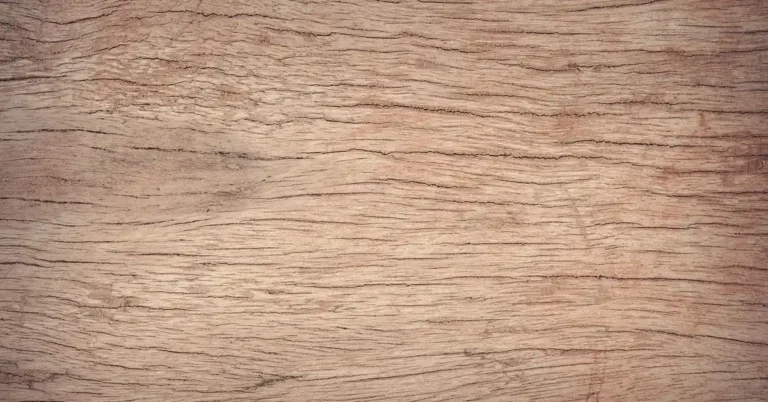
Black willow heartwood runs reddish or grayish brown, sometimes with darker streaks, and the sapwood is white to tan with no sharp boundary. The grain is usually interlocked or irregular with a medium to fine, even texture. That interlocked grain matters later, because it is the main reason willow is annoying to machine.
Willow vs Other Soft Woods: The Numbers
Here is the part most willow articles skip. Willow is often called “flexible,” but that reputation comes from green, living shoots, not from sawn lumber. Dried black willow is actually weaker in bending than basswood or eastern white pine at almost the same weight, and less than half as hard as hard maple.
| Wood | Janka (lbf) | Dried weight (lb/ft3) | Bending strength (lbf/in2) |
|---|---|---|---|
| Black willow | 430 | 26 | 7,800 |
| White willow | 570 | 25 | 8,150 |
| Basswood | 410 | 26 | 8,700 |
| Eastern white pine | 380 | 25 | 8,600 |
| Yellow poplar | 540 | 29 | 10,100 |
| Hard maple | 1,450 | 44 | 15,800 |
Source for every row: the Wood Database species pages. Black willow’s bending strength is only about half of hard maple’s (7,800 vs 15,800 lbf/in2). If you are weighing hard against soft maple for a project, our hard maple vs soft maple comparison shows where the strong end of that scale starts. For a soft carving wood, willow lands in the same hardness band as basswood and pine, but it is rougher to work, which is why carvers usually reach for basswood first.
What Willow Wood Is Actually Good For
Baskets and woven work
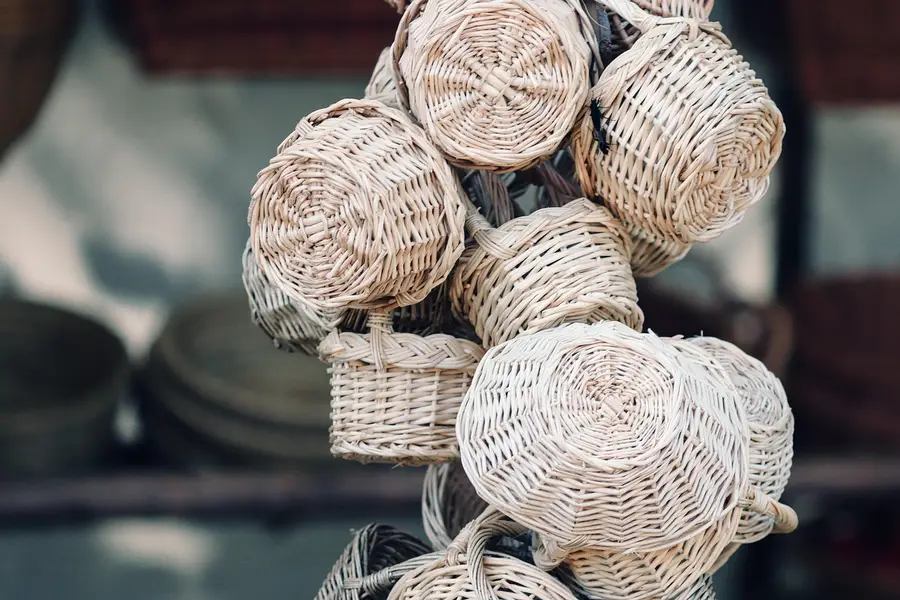
Basket making is the classic use, but note what is being used: thin, freshly cut willow rods (osier), which bend without snapping while still green. Sawn willow lumber does not behave like that. For basketry, choose fresh, flexible shoots; older, drier rods get brittle and crack as you weave.
Carving and small specialty items
The Wood Database lists carvings among black willow’s uses, and at 430 lbf the wood cuts easily with hand tools. Expect fuzzy surfaces rather than crisp detail: the interlocked grain tends to tear instead of slicing cleanly. Keep knives and gouges very sharp, take light cuts, and carve with the grain direction where you can. Spoons, bowls and simple figures are a reasonable fit; fine detail work is easier in basswood.
Crates, boxes and utility wood
Low cost and light weight are willow’s real selling points. The Wood Database notes that willow seems to be in abundant supply and is likely to be economical across its natural range, which suits crates and rough utility wood where appearance and strength do not matter much.
Cricket bats
White willow has historically been the wood of choice for cricket bats, a use named on its Wood Database page. Its listing also shows it is a bit harder and stiffer than black willow (570 vs 430 lbf Janka; 1,125,000 vs 1,010,000 lbf/in2 elastic modulus).
Furniture
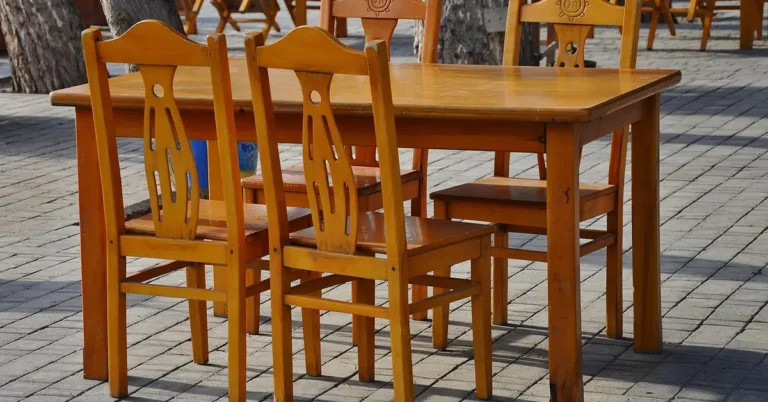
Willow furniture exists, but it is limited. A Janka rating of 430 lbf means tabletops and chair parts will dent and scratch easily compared with hardwoods like hard maple (1,450 lbf). Willow suits light decorative pieces and low-wear furniture, not dining tables or workbenches.
Working Willow: What to Expect
The Wood Database sums up willow’s machining as poor, frequently producing fuzzy surfaces or tearout because of its low density and interlocked grain. It also tends to develop drying defects and can be hard to season. Its shrinkage numbers show why: black willow shrinks 3.3% radially but 8.7% tangentially (13.9% volumetric), a tangential-to-radial ratio of 2.6, and uneven shrinkage like that is what drives warping and checking as boards dry.
On the positive side, willow glues and finishes well and responds moderately well to steam bending. Practical tips that follow from those properties:
- Use sharp blades and light passes on the jointer and planer; dull tools make the fuzz worse.
- Sand progressively and expect to spend more time on surface prep than with a close-grained hardwood.
- Buy well-dried stock, and let boards acclimate before cutting joints.
- Seal or finish the surface: willow takes finishes well, and a finish is its only protection against moisture.
Willow or Basswood for Carving?
If your goal is carving, the closest comparison is basswood. The two are nearly identical in weight (26 lb/ft3 each) and hardness (410 lbf for basswood against 430 lbf for black willow), and the Wood Database lists carvings as a main use for both. The practical difference is behavior under the blade: basswood has a reputation for slicing cleanly, while the interlocked grain of willow tears and fuzzes. Basswood is also stronger in bending (8,700 vs 7,800 lbf/in2). Choose willow when you already have a willow log or want a very cheap practice wood; choose basswood when you want crisp detail.
Buying Willow Lumber
The Wood Database describes willow as not an overly common furniture wood in the United States, even though supply is abundant, with prices likely to be economical across its natural range. In practice that means you are more likely to find it from local sawyers, tree services or craft suppliers than in the hardwood aisle of a big-box store. Ask for kiln-dried boards if you plan to build anything with joints, since willow can be difficult to season on your own.
Is Willow Good for Outdoor Use?
No. Willow is rated non-durable to perishable and is also susceptible to insect attack, so untreated willow left outside will deteriorate quickly. A finish slows moisture damage but does not change the species’ rating, so any outdoor project is better built from a naturally rot-resistant wood such as the one covered in our cedar wood guide. Living willow structures like arbors and fences are a separate case: they are built from live, rooting shoots, not finished lumber.
Safety and Dust
The Wood Database reports very few adverse health effects from willow wood itself, but notes that the bark and other parts of the tree have been reported as sensitizers, with skin and respiratory irritation the most common reactions. Wear a dust mask when sanding, particularly if you are working with bark-on stock.
Frequently Asked Questions
Is willow wood good for furniture?
Only for light decorative pieces. Black willow rates 430 lbf on the Janka scale, so it dents and scratches easily, and it is rated non-durable to perishable for rot resistance. For everyday furniture, a harder wood is a better choice.
Is willow wood good for carving?
Yes, with limits. The wood is soft and cuts easily with sharp hand tools, but the interlocked grain can leave fuzzy or torn surfaces. Basswood is usually easier for fine detail.
Is willow wood good for outdoor use?
No. Willow is non-durable to perishable and susceptible to insect attack, so untreated willow will break down quickly outside.
Why is willow used for cricket bats?
White willow (Salix alba) has historically been the wood of choice for cricket bats. According to the Wood Database it is lightweight, at about 25 lb/ft3 dried, with good shock resistance, though weak for its weight overall.
How hard is willow wood?
Black willow measures 430 lbf on the Janka hardness scale and white willow measures 570 lbf, both far softer than hard maple at 1,450 lbf.
Bottom Line
Willow is a cheap, light, soft wood that suits baskets, simple carving and utility work. It is weak for its weight, machines poorly, shrinks unevenly and will not survive outdoors, so skip it for furniture that needs to last. If you want to try carving it, start with a sharp hook knife or straight knife and light cuts.
Sponsored / affiliate links. As an Amazon Associate I earn from qualifying purchases. I may earn additional commission from eligible campaigns.