Should Snow Be Removed From a Deck?
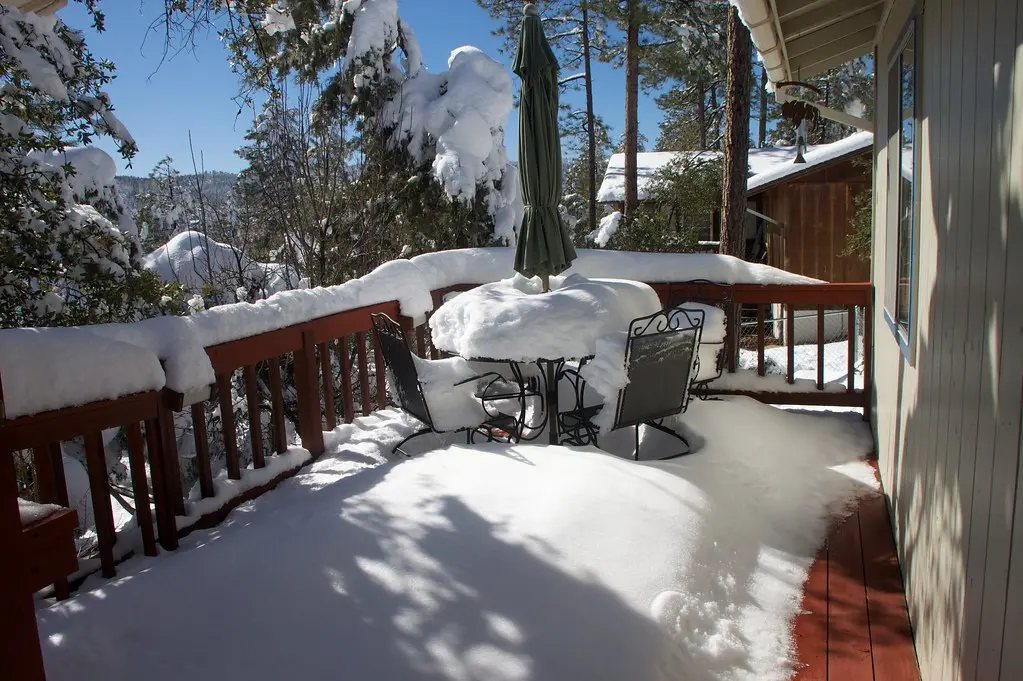
Remove snow from a deck when accumulation, ice, blocked access, or visible deck damage creates risk; otherwise leave a light layer in place and clear only what you need. Heavy, wet snow and ice can overload framing, hide trip hazards, and scratch wood or composite surfaces if you use the wrong tool. This guide shows when to act, when to wait, and how to remove snow without harming the deck.
Deck snow decision matrix



Use this as a plain decision rule. Light snow can stay temporarily if the deck is sound and unused. Remove it when depth, ice, access, or deck condition raises risk, and stop short of aggressive scraping if the surface is already damaged.
| Deck condition | Recommended action | Tool choice | Do not shovel if you see this |
|---|---|---|---|
| Dusting to about 2 in., no ice, no planned use | Leave it | Broom if you want a clean surface | Loose screws, soft spots, warped boards |
| 3 to 6 in. of dry snow, solid boards, normal access | Broom it or shovel it | Plastic shovel with no metal edge | Cracked boards, popped fasteners, visible sagging |
| Any depth with packed ice under the snow | Shovel loose snow only, then pause | Plastic shovel; calcium chloride only if compatible | Need to chip, pry, or hammer at ice |
| Wet snow, drifts, or blocked doors and stairs | Shovel now | Plastic push shovel with a rubber edge | Uneven loading on one side of the deck |
| Board damage, springy feel, rot, major warp, or loose rail posts | Call a pro before removing much snow | Light brooming only, if safe | Soft spots or a section that moves underfoot |
Say your 12-by-16-foot deck has 4 inches of light snow and no ice. If you do not need the space, leaving it alone is reasonable. Suppose the same deck has a crust of ice near the back door and a loose tread at the steps; that changes the answer to “remove carefully, or stop and inspect first.”
What you’ll need
Keep the tool list simple. The goal is to remove snow without scratching the surface or stressing weak boards.
- Plastic snow shovel with no metal edge
- Plastic push shovel with a rubber edge for larger flat sections
- Stiff broom for light, loose snow
- Leaf blower for dry powder, if conditions allow
- Calcium chloride ice melt, used sparingly and only if the deck manufacturer allows it
- Bucket or container for cleanup sweep-up
- Work gloves with a good grip
A wood deck scratches more easily and holds moisture longer than bare concrete, so tool choice matters. Composite stands up better, but it is not scratch-proof and still needs careful handling. Avoid metal shovels, ice choppers, and anything with a sharp scraping edge.
How to decide whether to shovel
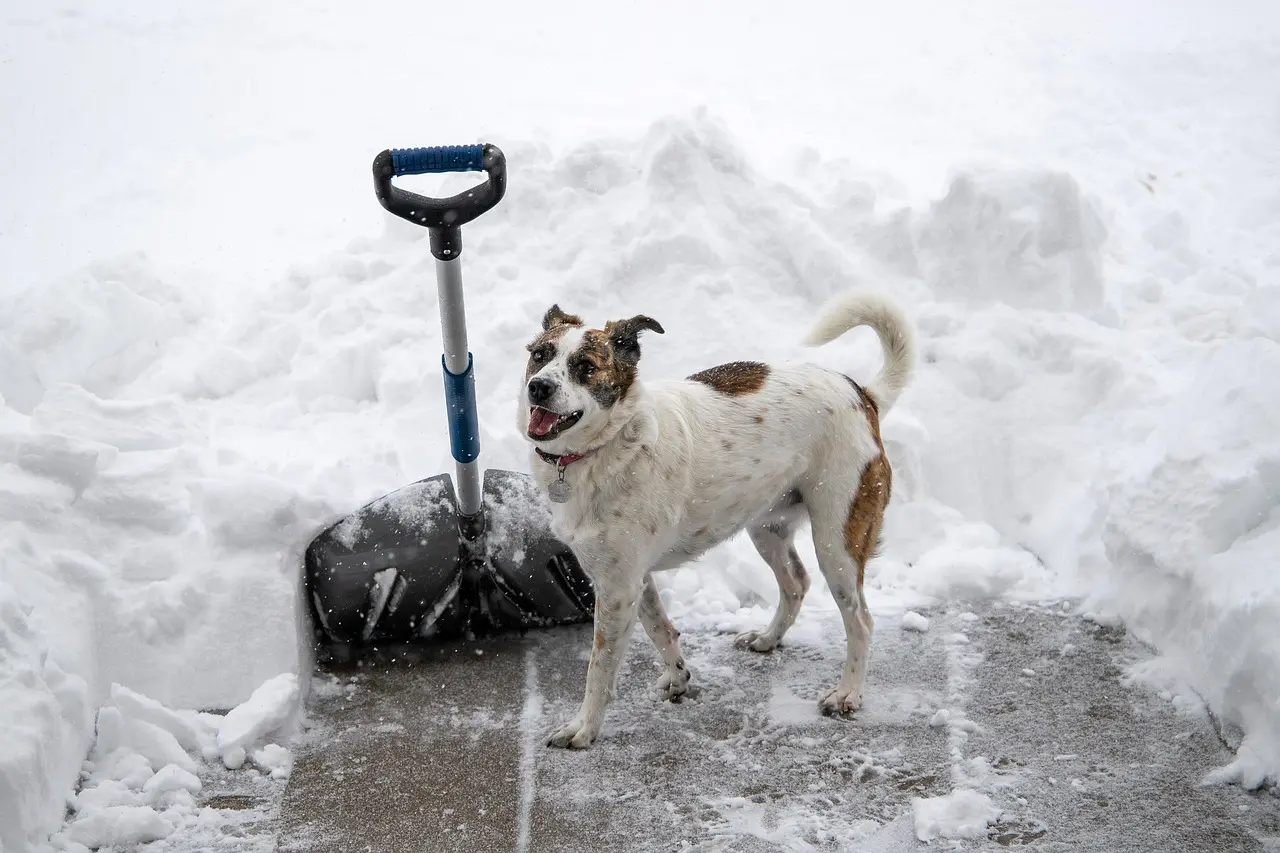
Shovel when snow blocks access, creates traction problems, or hides damaged boards. Leave a thin layer only when the deck is sound, the snow is light, and you are not trying to reach a door, storage area, or stairs. Ice weighs more than snow, so a crusty layer deserves more caution than loose powder.
- Check access first. If doors, steps, or a path to stored items are blocked, clear those areas now.
- Inspect the deck surface. Look for loose fasteners, popped screws, cracked boards, warped sections, and soft spots.
- Check for uneven loading. If one side has drifted deeper, clear that side first so the deck is not loaded unevenly.
- Look for hidden ice. If the top layer is soft but sounds hard underneath, stop before you dig into it.
- Decide whether to broom, shovel, or wait. Light snow on a sound deck can stay; wet snow, ice, or blocked access should come off.
A common first-timer mistake is clearing only a narrow path and leaving the rest of the deck buried. That can leave an uneven load and a hidden trip edge. If the deck needs to be cleared for use, clear the full section you expect people to cross.
How to remove snow safely
Start with loose snow, then remove the rest in thin passes. Work parallel to the boards with a plastic shovel, and stop if the layer turns into packed ice. The biggest problem is often how snow gets removed, not the snow itself, and freeze-thaw cycles can loosen hardware and widen small cracks over time.
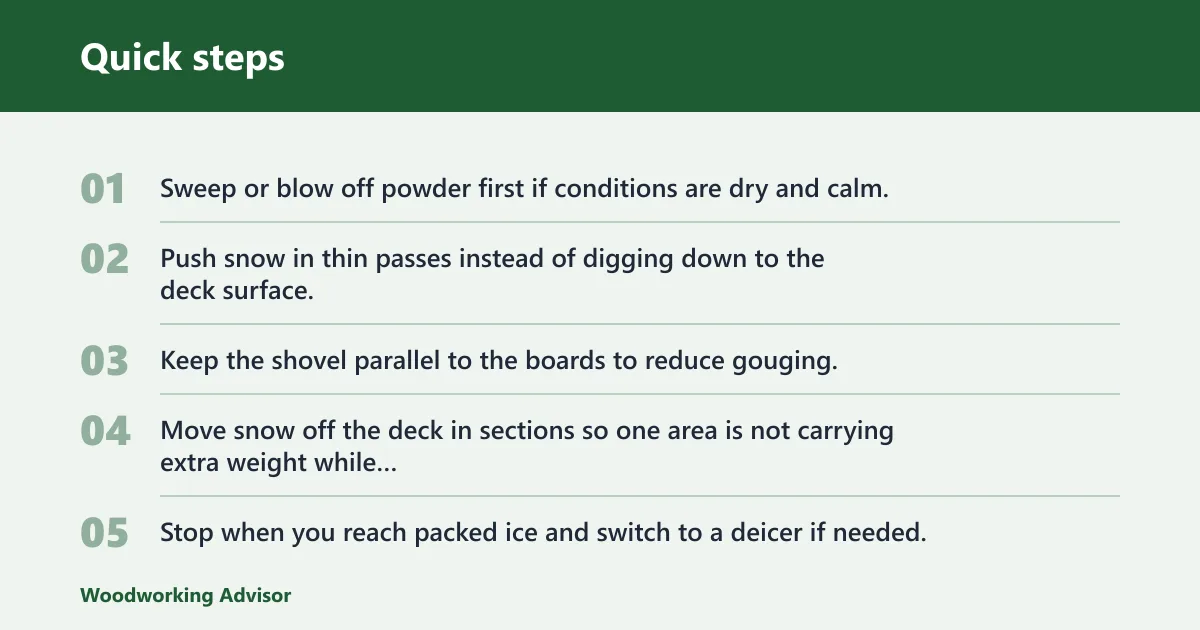
- Sweep or blow off powder first if conditions are dry and calm.
- Push snow in thin passes instead of digging down to the deck surface.
- Keep the shovel parallel to the boards to reduce gouging.
- Move snow off the deck in sections so one area is not carrying extra weight while another is being worked on.
- Stop when you reach packed ice and switch to a deicer if needed.
If that did not work, try a lighter pass with the broom before the shovel. If that still leaves packed snow, use the shovel to lift only the loose layer and leave the bonded ice for gentler treatment. Do not pry at the surface.
Picture a composite deck with 2 inches of powder over a 1-inch icy crust near the back door. Clear the loose snow first, then decide whether the remaining ice is worth treating. Chopping at it is more likely to mar the decking than to help.
What should you use on ice?
Calcium chloride is commonly used as a deck-friendly deicer when used in moderation, but compatibility still matters. Use it sparingly, follow the product label, and sweep up residue after it works. Rock salt is a poor default on wood decks because it can damage stain or sealer and may contribute to corrosion and discoloration.
For wood decking, do not treat calcium chloride or any deicer as a blanket fix without checking finish and fastener compatibility. Some competitors recommend calcium chloride for wood and composite, but the safer rule is limited use plus cleanup. Sand is also a mixed choice because it can scratch wood and composite surfaces.
- Apply the minimum amount needed to break the bond, not a full broadcast layer.
- Wait for the product to work before trying to move the ice.
- Use a plastic shovel or broom to remove loosened material.
- Sweep up leftover deicer and grit after conditions improve.
Do not rinse deicer off while temperatures are still low enough for refreezing. That can make the deck slicker than before. Sweep first, then rinse later only when thaw and drainage will not create a new ice layer.
Common mistakes
Most damage comes from the tool, the timing, or the way the load is handled. A careful removal job protects both wood and composite decking.
- Using a metal shovel or metal edge. Replace it with a plastic shovel that has no metal edge.
- Scraping across the boards. Keep the blade parallel to the decking.
- Chopping ice with an ice scraper or ice chopper. Stop and use a gentler deicer instead.
- Leaving cracked boards or popped screws untreated. Inspect first, then decide whether the deck should be used at all.
- Shoveling only half the deck. Clear the full area that needs to carry traffic.
- Using rock salt as the default. Save it for products and surfaces that specifically allow it.
Wood decks benefit from sealing or staining before winter because that finish helps resist moisture and wear. Composite decks hold up better than wood in general, but they can still scratch and can still be damaged by the wrong tool or chemical.
Frequently asked questions
Should snow be removed from a deck?
Yes, when the snow creates access problems, traction risk, or hides deck damage. If the deck is sound and the snow is light, leaving a thin layer is reasonable. The key is to remove snow before it becomes a load issue or a slick, compacted layer that is harder to clear safely.
Do I need to shovel snow off my deck?
Not always. If the deck is unused, the snow is light, and there is no ice or visible damage, you can usually leave it. Shovel when you need a safe walking path, when doors or stairs are blocked, or when the deck surface shows signs of weakness.
How much snow can a deck hold?
There is no universal depth limit for every deck. Load capacity depends on design, age, framing, local conditions, and snow density, and ice weighs more than snow. If you do not know the deck’s condition, treat deep, wet, or drifting snow as a reason to clear it sooner rather than later.
What is the safest way to remove snow from a wood deck?
Use a plastic shovel with no metal edge, work parallel to the boards, and remove snow in thin passes. For wood, the finish matters too: sealing or staining before winter helps reduce moisture damage. Avoid aggressive scraping, and stop if you hit bonded ice that needs a gentler approach.
Can I leave snow on my deck until it melts?
Yes, if the deck is sound, the layer is light, and you do not need the space. That said, freeze-thaw cycles can loosen hardware and widen small cracks over time. If the deck is aging, warped, or already cracked, removing at least some snow is the safer choice.
What shovel should I use on a deck in winter?
A plastic shovel is the preferred choice, and it should have no metal edge. A plastic push shovel with a rubber edge works well for broad areas. Use the shovel parallel to the boards. Do not use a metal shovel, an ice chopper, or a tool that can gouge the surface.
Can I use salt or ice melt on a deck?
Calcium chloride is the more commonly recommended option for decks when used sparingly and cleaned up after it works. Rock salt is a poor default on wood because it can harm finish and fasteners. Always check the deck manufacturer’s guidance, since both wood and composite can react badly to the wrong product.
When does snow become too heavy for a deck?
It becomes too heavy when the deck shows sagging, the snow is dense and wet, or the load is uneven and the structure is already aged or damaged. Because there is no safe one-size-fits-all figure, use condition and access as your trigger. If in doubt, clear the deck sooner.
How do I remove packed snow without scratching decking?
Do not dig at it with a sharp edge. Remove loose snow first, then use a plastic shovel in shallow passes along the board direction. If the layer is bonded ice, use a compatible deicer in moderation and wait for it to work before sweeping away the loosened material.
Is it better to shovel a deck before snow turns to ice?
Yes. Fresh snow is easier to move and less likely to need scraping, which is where most surface damage happens. If you wait until the layer freezes, you are more likely to need deicer and more likely to scratch wood or composite while trying to break the bond.
Sponsored / affiliate links. As an Amazon Associate I earn from qualifying purchases. I may earn additional commission from eligible campaigns.