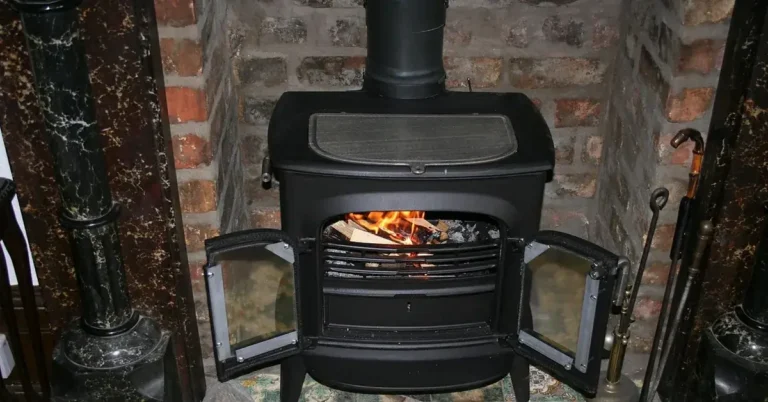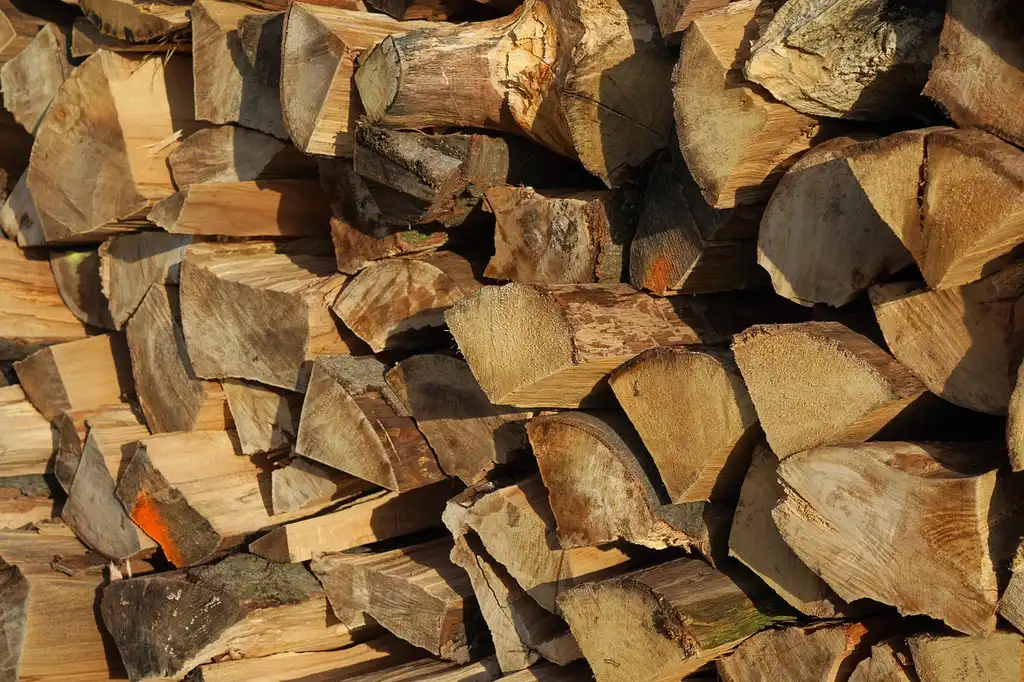
Storing Firewood in the Garage
Store firewood in the garage only for short-term holding, ideally for a few days to two weeks at most. Keep the stack off the slab, give it air on all sides, and use outdoor stacking for drying and long-term storage. Poor garage storage can bring in insects, add moisture, and create fire and carbon-monoxide risks if wood sits too close to ignition sources or fuel. This guide gives you a garage-specific checklist for safe holding, pest control, airflow, and the point where the garage stops being a good storage spot.
Can you store firewood in the garage?


Yes, but only if the wood is already seasoned, the garage stays dry, and the stack has airflow around it. A detached garage with open-sided storage is a safer choice than an attached garage. If the space is damp, enclosed, or crowded with fuel and ignition sources, move the wood elsewhere.
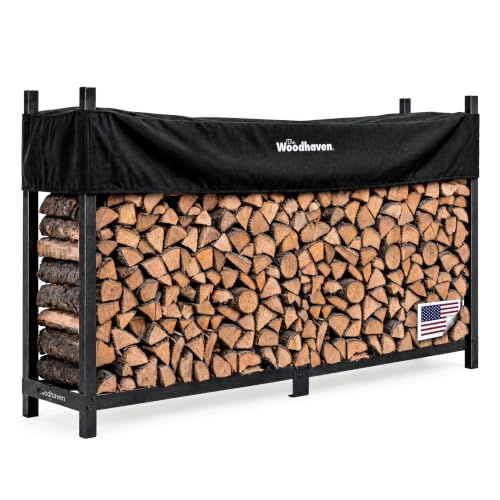
Firewood stored directly on the ground can rot quicker, so a rack, pallets, or blocks matter. A non-wood shed is even better for storage when one is available. For indoor holding, the garage should be the final stop, not the drying site.
When garage storage is acceptable
Garage storage works when the wood is near 20% moisture content or less, the stack is elevated, and the area has moving air. Wood at that level lights easier, gives off more usable heat, and sends out less smoke and creosote during a short indoor stay.
When garage storage becomes a no-go
Skip the garage if the wood is green, the floor sweats, the walls show dampness, or the garage is sealed tight. Warm indoor storage can wake up insect eggs, so a closed attached garage near wooden framing raises pest pressure. That is especially true when large quantities sit there for weeks.
What you’ll need for garage storage
- Moisture meter to confirm the wood is near 20% moisture content before indoor storage.
- Firewood rack, pallets, or blocks to lift the stack off the floor.
- Open-sided space or room for airflow around the pile.
- Fan, open window, door, or vent if the garage tends to trap moisture.
- Gloves and flashlight for weekly pest and dampness checks.
- Plastic top cover only if rain or snow can reach the pile during loading and unloading.
A rack can be steel, wooden, freestanding, or wheeled. The exact style matters less than keeping the stack off the slab and letting air move under it. Covered storage during seasoning should mean a top cover with open sides.
How to decide if the garage is safe
Use the same four checks every time: moisture, ventilation, pest pressure, and stack shape. That keeps the decision tied to conditions instead of guesswork. A garage can be acceptable for seasoned wood and unacceptable for the same wood after a wet week or a blocked vent.
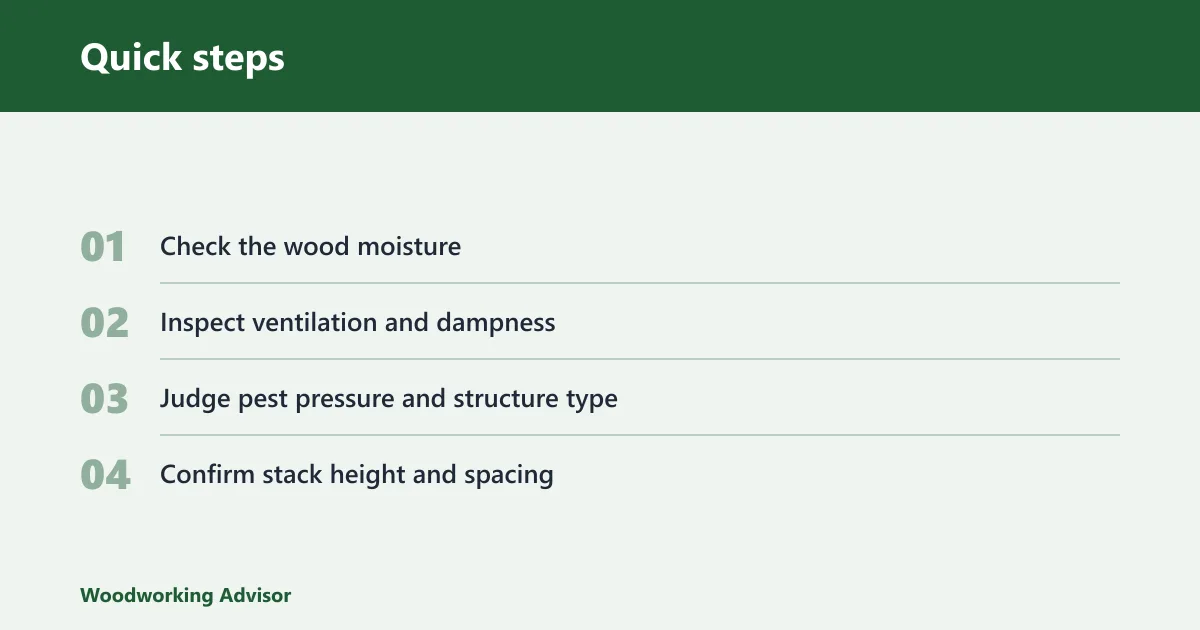
- Check the wood moisture. Split a piece and test the fresh face with a moisture meter. Aim for 20% or less before indoor holding; seasoned wood usually needs months of drying first, with some sources recommending at least 4-6 months after cutting.
- Inspect ventilation and dampness. Look for musty odor, water stains, condensation, or puddling. Detached garages tolerate storage better when air can move; attached garages need even better airflow because house heat and humidity can linger.
- Judge pest pressure and structure type. Keep wood away from wall studs, trim, and storage built from wood. Termites are the bigger concern when wood sits against structures or stays damp. Carpenter ants matter more when wood is moist, warm, and close to framing or other food sources.
- Confirm stack height and spacing. Limit height to around 4 feet and leave 6 to 12 inches between rows if you need more than one row. Stability matters as much as drying; tight stacks block airflow and make shifting more likely.
If the garage is detached, the floor stays dry, and a meter reads about 18% on split faces, that stack can usually stay for short-term holding. Suppose the same wood sits in an attached garage with a damp slab and no cross-breeze. The storage choice changes, even though the wood itself did not.
Garage firewood storage go/no-go checklist
Use this checklist before moving a stack inside. If any one column fails, garage storage is a no-go until conditions change. That keeps the decision simple and makes it easier to compare different loads, species, and garages.
| Moisture check | Ventilation check | Pest-risk check |
|---|---|---|
| Pass: seasoned wood reads near 20% or less; split faces show dry checks and no wet core. | Pass: detached or attached garage has open airflow from a window, door, vent, or fan; no standing dampness. | Pass: stack is elevated, open-sided, and kept away from wood framing and stored goods. |
| Fail: green wood, or any batch reading well above 20%. | Fail: no airflow, sealed doors, condensation, or a damp slab after rain or snow melt. | Fail: stack rests on the floor, touches wooden walls, or sits near signs of termites or carpenter ants. |
| Detached garage rule: acceptable only if the wood passes the moisture check and the pile stays dry. | Attached garage rule: acceptable only with strong airflow and no dampness; otherwise keep the stack outside. | Storage condition rule: if the garage warms up fast, inspect more often because insect eggs can become active. |
Should you store seasoned firewood in your garage?
Seasoned firewood is the best candidate for garage storage because it is already close to burn-ready. Use the garage for final holding, not for drying. If the wood still smells green, feels heavy for its size, or tests above 20% moisture, leave it outside under a top cover with open sides.
Seasoned wood generally gives better usable heat than green wood; one source lists about 7,700 BTU maximum usable energy per pound for properly seasoned wood and about 5,000 BTU available from green wood. That gap is a practical reason to verify seasoning before you move a load indoors.
Best use cases for seasoned wood
Use the garage when you need dry wood close to a stove, fireplace, or loading door, and the pile will turn over quickly. A short stay reduces rain exposure and handling. This is a holding space, not a curing space.
When outside storage is still better
Keep seasoned wood outdoors if the garage is humid, crowded, or attached and poorly ventilated. Outside storage under a top cover with open sides is safer for larger reserves, especially when you need to hold more than one season’s worth.
Common mistakes with garage firewood
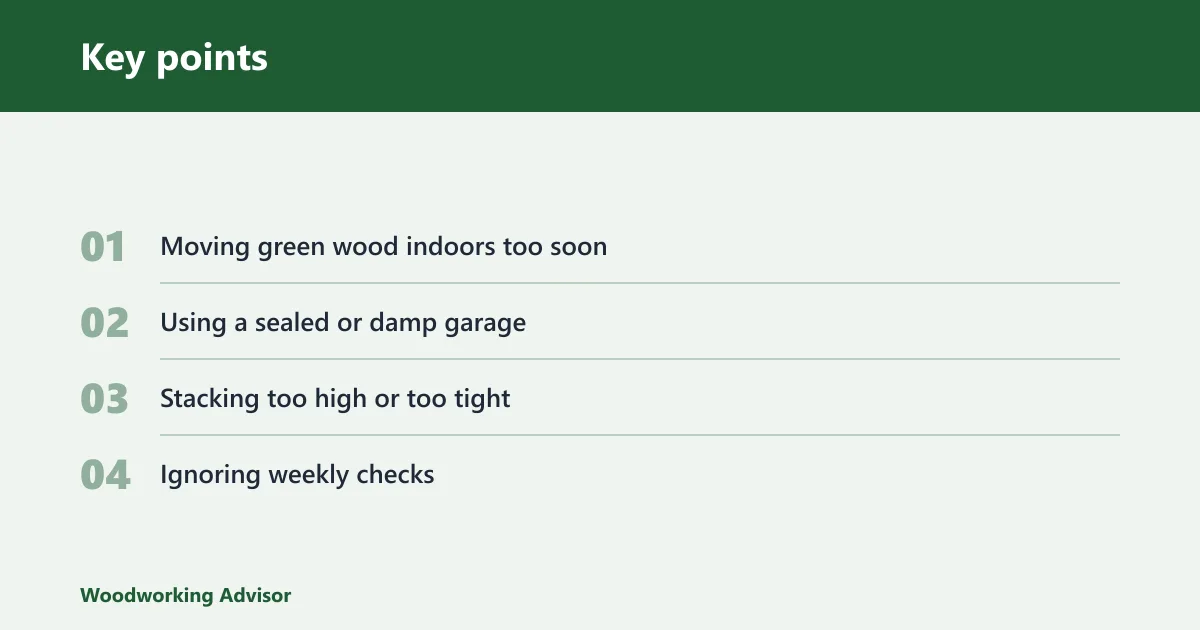
The biggest mistakes are moving green wood inside too soon, using a closed garage as if it were a drying shed, and building a stack that is too tall or too tight. Those errors trap moisture, raise pest pressure, and make the pile less stable.
A common first-timer mistake is putting a fresh split load into a warm attached garage because it feels drier than outside. Warmth alone does not fix high moisture content. Another common error is letting the bottom course sit on bare concrete after a rainy week; the slab can hold enough moisture to slow drying and invite rot.
- Moving green wood indoors too soon: green wood can contain up to 50% moisture content, so it is heavier, harder to ignite, and more likely to create smoke and creosote.
- Using a sealed or damp garage: trapped moisture can condense under cover and keep the pile wet.
- Stacking too high or too tight: over 4 feet raises stability concerns, and tight rows limit airflow.
- Ignoring weekly checks: look for wet spots, shifting rows, insect activity, and blocked vents once a week.
Weekly inspection should be brief and specific. Check the floor for dampness, the lower row for softening or mold, the sides for ant trails or termite activity, and the top cover for sagging. If a fan is blocked or a window has been shut, restore airflow before the next load goes in.
If that didn’t work: move the stack back outdoors, separate any questionable pieces from the dry pile, and let the garage clear out for a few dry days. If moisture keeps returning, treat the garage as a transport stop only.
Is it bad to store firewood in a garage?
It is bad when the garage is damp, enclosed, or attached to a structure with wood framing, and when the wood is still green. It is not bad when the wood is seasoned, the stack is elevated, and the garage has real airflow. The difference is condition, not the label on the building.
When the answer is yes
Yes, it is a bad idea if the garage holds moisture, the pile is large, or the wood touches walls or stored cardboard. That setup can attract termites and carpenter ants, especially around warm indoor wood that may activate insect eggs.
When the answer is no
No, if the wood is dry, the stack is under 4 feet, and the garage stays open enough to move air. Detached garages usually give you more margin than attached ones. If the stack stays in place only briefly, the risk stays lower.
Frequently asked questions
Can you store firewood in the garage: yes, for short-term holding?
Yes, for short-term holding of seasoned wood. Keep it elevated on a rack or pallets, leave airspace around the stack, and avoid storing large quantities in a warm garage for long periods. If the wood is still wet, dry it outside first.
Should you store firewood in your garage?
Only if the garage is dry and ventilated. A detached garage with open airflow is a better fit than an attached garage with dampness or tight enclosure. Use the garage for the last step before burning, not for seasoning green wood.
Is it okay to store firewood in your garage?
Yes, if the wood is already seasoned to about 20% moisture content or less and the space stays open enough to move air. Keep the stack away from walls, fuel, and ignition sources, and check it about once a week for dampness or insects.
Can you store seasoned firewood in garage?
Yes, seasoned firewood is the best garage candidate. It is lighter, easier to light, and less likely to smoke heavily than green wood. Use a rack, keep the rows spaced, and avoid letting the stack sit in a sealed or humid corner.
Store firewood in garage or outside
Outside is better for drying and for larger reserves. Use a garage only for final holding when the wood is already seasoned and the space is dry. If the garage is attached, enclosed, or damp, keep the wood outside under a top cover with open sides.
Sponsored / affiliate links. As an Amazon Associate I earn from qualifying purchases. I may earn additional commission from eligible campaigns.