Drying Firewood in a Basement
A basement can finish marginally wet firewood for a few weeks if it stays cool, dry, and dehumidified, but it is not a good primary seasoning space; stop once the wood reads about 15%–20% moisture. Done badly, basement storage can raise indoor humidity, invite mold, and leave wood still too wet to burn cleanly. This guide explains when basement drying helps, when it backfires, and how to monitor moisture so you know when to stop.
Assessing wood quality before basement drying
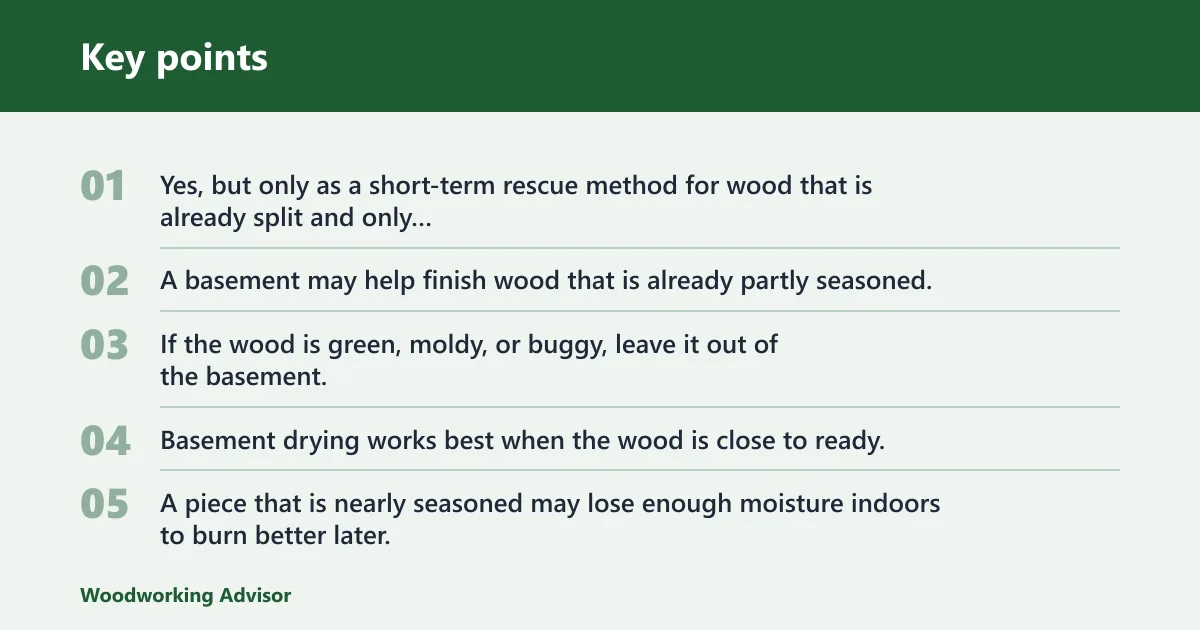


Yes, but only as a short-term rescue method for wood that is already split and only slightly damp. A basement may help finish wood that is already partly seasoned, but it should not replace outdoor seasoning for fresh-cut rounds. If the wood is green, moldy, or buggy, leave it out of the basement.
Basement drying works best when the wood is close to ready. A piece that is nearly seasoned may lose enough moisture indoors to burn better later, while a freshly cut log usually needs outdoor air, time, and more surface exposure than a basement can provide.
Which wood is worth bringing inside?
Bring in wood that is already split, clean, and only a little above your burn target. Split firewood dries faster because it exposes more surface area, and loose stacking helps air move around each piece. Smaller pieces dry faster than larger ones, so kindling-sized splits are better candidates than heavy rounds.
Dense hardwoods such as oak and elm usually need more time than lighter woods. Softwoods can dry sooner, but they also need steady airflow because tight stacks and still air hold moisture in place. Bark matters too, because it slows drying by trapping dampness against the wood. (Wikihow)
When the answer is no
Do not bring in freshly cut wood, wet rounds, or piles with visible mold. Firewood that is still far from seasoned belongs outdoors under cover, with air moving around it. If the wood smells sour, feels wet on freshly split faces, or drops moisture slowly, basement drying is the wrong tool.
A common first-timer mistake is moving a whole truckload indoors at once. That can crowd the basement, block walkways, and keep the pile damp longer. It also raises the chance of pests and mold, which are much harder to manage once the wood is inside.
How dry should firewood be before burning?
Use a moisture meter and aim for roughly 15% to 20% moisture content for burning. That target is a practical consumer guide, not a promise that every piece will read the same. Wood species, split size, and where you take the reading all affect the number you see.
Wood above that range tends to burn unevenly and make more smoke and steam. Dry wood lights easier, makes less visible smoke, and gives better heat from the same piece. Properly seasoned wood has about 7,700 BTU maximum usable energy per pound, while green wood provides only about 5,000 BTU available from the same source.
Using a moisture meter the right way
Split the piece and probe the fresh inner face, not the weathered outside. Surface readings can be misleading because the outside dries first. Check more than one piece, and sample several splits from the pile so you do not rely on a single reading.
- Split the test piece cleanly.
- Measure the freshly exposed face.
- Test several pieces from different parts of the stack.
- Look for a pattern, not one number.
Suppose a split oak piece reads 18% on the inside while a thicker split from the same pile reads 24%. That tells you the pile is not uniform. The drier piece may be ready for the stove, while the thicker one still needs more time or better airflow.
What the 15% to 20% target means in practice
Think of 15% to 20% as a burn-ready zone, not a guarantee that every furnace or stove will behave the same. Fireplace kindling may feel usable a bit sooner than larger stove fuel, but overly damp pieces still smoke and can make startup messy. If readings stay above the target, keep drying.
The point is not to hit one exact number on one day. The point is to get wood consistently dry enough that it burns cleanly and predictably. If the meter bounces around because of species or piece thickness, use the driest and the wettest readings together before deciding.
What basement conditions help wood dry?
Basement drying improves when the pile has room around it, the air keeps moving, and indoor humidity stays under control. Fans can push air through the gaps between splits, and a dehumidifier can lower RH enough to help the wood shed moisture. Warm, stable indoor temperatures can help a little, but not enough to rescue truly wet wood.
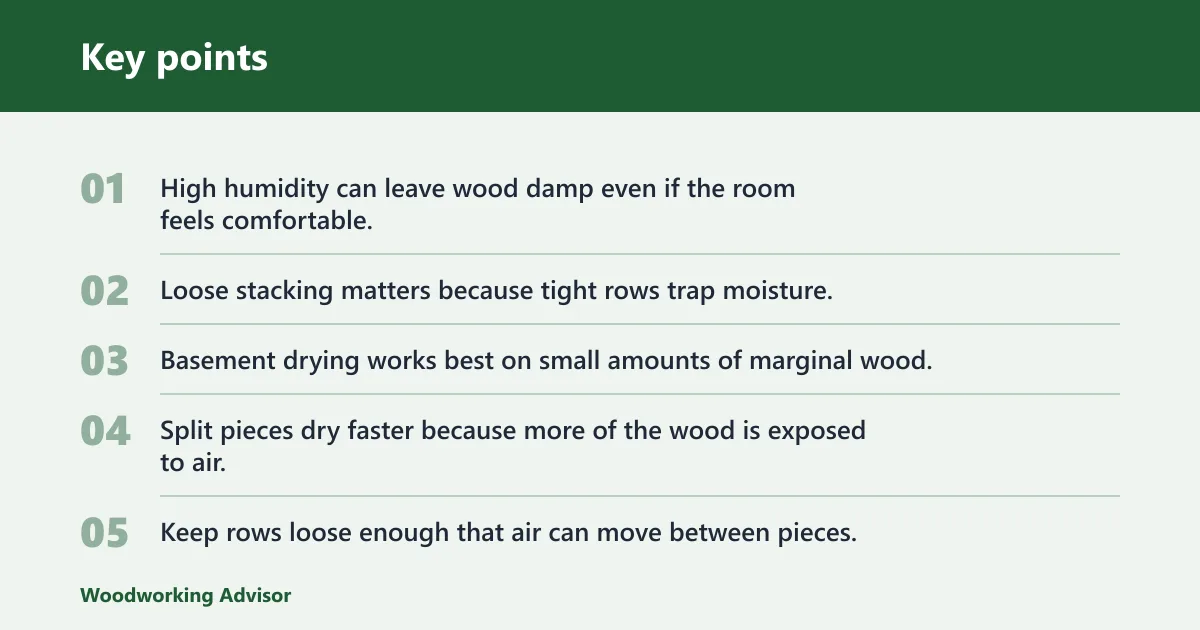
High humidity can leave wood damp even if the room feels comfortable. Loose stacking matters because tight rows trap moisture. Basement drying works best on small amounts of marginal wood, not on a full stack that blocks airflow and turns the room into a damp storage area.
Why split wood and loose stacking matter
Split pieces dry faster because more of the wood is exposed to air. Keep rows loose enough that air can move between pieces, and avoid pushing the stack flat against a wall. A rack or spaced pallets help keep the bottom course off a damp floor.
Bark slows drying, so a bark-heavy stack may need more time than a stack of cleaner splits. If the wood is already near the target moisture level, better spacing can be enough. If it is still quite wet, spacing alone will not make it ready quickly.
How fans and dehumidifiers change airflow and humidity
Fans move air across the stack and through the gaps, which helps surface moisture leave the wood. A dehumidifier pulls water from the basement air and lowers relative humidity, so the room air can accept more moisture from the pile. Used together, they can help a borderline pile finish drying.
They are not guaranteed fixes. If the basement stays damp, the wood may simply reabsorb moisture after each small dry-out cycle. That is why basement drying works best as a brief finishing step, not as the only seasoning method for wood that started out wet.
Why warm, stable indoor air helps only up to a point
Indoor temperatures that stay steady can help wood dry more evenly than cold, damp outdoor storage in bad weather. The key word is steady. A basement that stays warm but humid can still leave the pile too wet, especially if the stack is dense or the wood started out far from ready.
Dense hardwoods such as oak and elm usually need more drying time than lighter species. A covered outdoor stack in moving air is still the better choice for fresh-cut hardwood. Basement space is for the last stretch, not the whole trip.
What can go wrong in a basement wood pile?
The main risks are mold, pests, and a stack that is hard to move safely. Damp wood in a poorly ventilated basement can mold, and mold can be a health concern when inhaled. Insects may also emerge when wood warms indoors, especially if eggs or larvae are already in or on the wood.
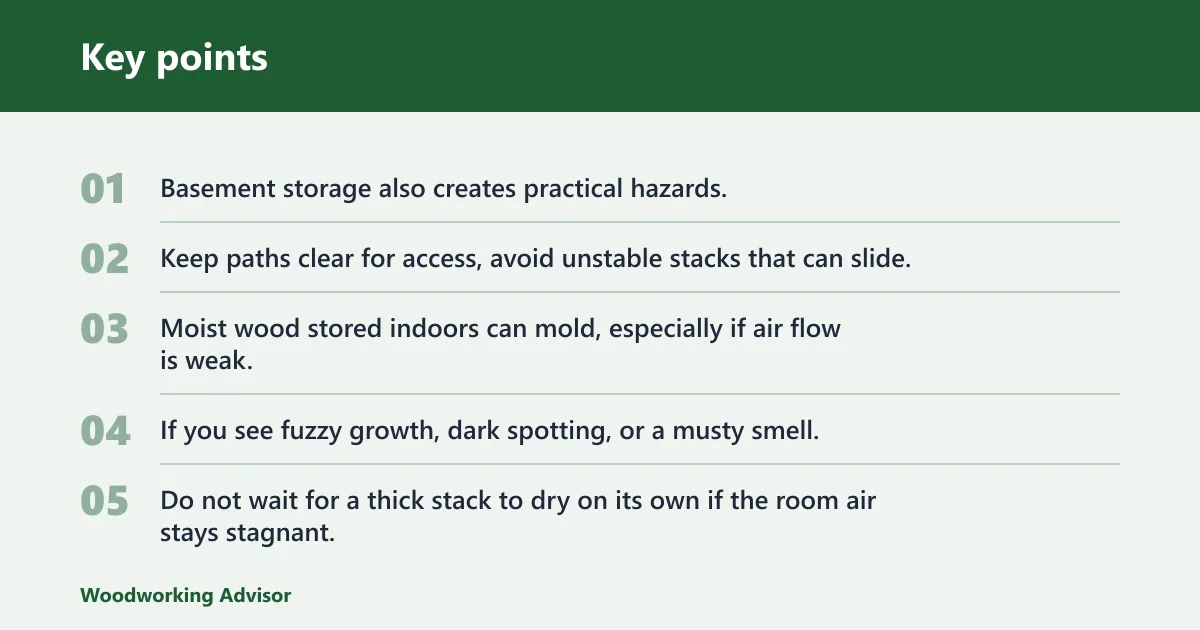
Basement storage also creates practical hazards. Keep paths clear for access, avoid unstable stacks that can slide, and separate wood from other combustibles. A safe setup matters as much as a dry one.
Mold risk from damp wood and poor ventilation
Moist wood stored indoors can mold, especially if air flow is weak. Inadequate ventilation increases the risk. If you see fuzzy growth, dark spotting, or a musty smell, stop the drying attempt and move the pile out or isolate the affected pieces.
Do not wait for a thick stack to dry on its own if the room air stays stagnant. Mold spreads faster in damp, still spaces. A small pile with good air movement is manageable; a crowded basement stack is much harder to keep clean and safe.
Pests that may emerge indoors
Wood that warms up inside can release insects that were already hiding in the bark, split faces, or egg cases. Basement storage can bring ants or beetles indoors, and one forum commenter warned that basement storage can release thousands of beetles. If you see live insects, move the wood back outside.
Check for bore holes, fine frass, and crawling insects before you bring wood in. Never add freshly cut or bug-prone wood to a basement pile. If a stack starts shedding insects, that is a stop signal, not a problem to ignore.
Stack safety and clearance around other combustibles
Keep the pile away from furnaces, water heaters, cardboard, paint, and other combustibles. Do not build a stack that leans or shifts when you pull one piece out. The stack should stay stable even if you remove wood from the middle.
Leave enough room to walk around the pile without brushing past loose pieces. A basement wood stack should be easy to inspect, easy to reach, and easy to move if needed. If you have to squeeze past it, it is too crowded.
Basement firewood decision table
Use this table to decide whether basement drying is worth trying. The right answer depends on moisture, pest risk, mold risk, and how much benefit you can expect from airflow and humidity control. If a row says no, keep the wood out of the basement and dry it another way.
| Scenario | Moisture reading | Visible mold risk | Pest risk | Expected benefit from fans or dehumidifier | Action |
|---|---|---|---|---|---|
| Already-seasoned wood | Near burn target | Low if clean and dry | Low if stored cleanly | Small benefit; mostly monitoring | Yes — store briefly if space is safe |
| Borderline-damp wood | Above burn target but not wet | Moderate if airflow is poor | Moderate if bark or debris is present | Useful if the basement is dry and ventilated | Yes — dry briefly, then recheck |
| Green wood | Clearly above burn target | High in a basement | High, especially if bark is intact | Limited; not a good rescue case | No, keep it out of the basement |
Already-seasoned wood: keep, inspect, and monitor
If the wood is already in the burn-ready range, the basement can be a convenient storage spot for a short period. Inspect for insects, keep it off the floor, and watch for any musty odor or surface dampness. There is little to gain by trying to dry wood that is already ready.
Borderline-damp wood: dry briefly if conditions are right
This is the best rescue case. Use a small, split pile, leave space for airflow, and keep the dehumidifier or fan running as needed. Recheck moisture after a few days to a couple of weeks, depending on how damp the wood started.
Green wood: leave it out of the basement
Freshly cut wood usually needs far more time than a basement can provide. The better move is outdoor seasoning under cover with open airflow. A competitor recommendation to plan at least six months ahead fits that broader reality, and denser woods need longer still.
Which wood species and forms dry best indoors?
Small, split pieces dry best indoors. Lighter woods dry faster than dense hardwoods, while oak and elm usually need more drying time. Whole rounds are poor candidates because they dry slowly and can stay wet in the center long after the outside feels dry.
The shape matters as much as the species. A split piece with fresh faces and moderate bark can dry indoors if the room is dry enough. A round, bark-heavy log is a bad basement guest because it keeps moisture trapped inside.
Dense hardwoods versus lighter softwoods
Dense hardwoods store well when dry, but they usually take longer to get there. Softwoods can move toward burn-ready moisture faster, but they still need air circulation. Do not assume every species responds the same way to the same basement setup.
That is why a single calendar rule does not work well. Seasoning time depends on species, split size, and climate. Best results often come from air-drying wood for about 4 to 6 months after cutting, and many sources recommend around 6 months or longer; dense species often need more time.
Split pieces versus whole rounds
Split pieces expose more surface area, which speeds drying. Whole rounds dry slowly because moisture has a harder time escaping from the center. If you want a basement pile to finish drying, only bring in wood that has already been split.
The recommended wood-cutting adjustment is three inches shorter than the fireplace or furnace opening, which helps you split and handle pieces that fit your stove or hearth later. That sizing choice does not make green wood dry fast, but it can make the finished pile easier to manage.
Why bark can slow drying
Bark can trap moisture against the wood and reduce airflow at the surface. Pieces with heavy bark often dry more slowly than cleaner splits. If you have a choice, prioritize bark-light splits for basement drying and keep the bark-heavy pieces outdoors longer.
When should you stop basement drying?
Stop if the moisture reading stays high, if mold or a musty smell appears, or if insects show up. Also stop if the basement remains humid even with fans or a dehumidifier running. The goal is to finish drying, not to turn the basement into a long-term wood shed.
Once the wood reaches roughly 15% to 20% moisture, move it to normal storage and keep the pile organized. If the wood cannot get close to that range without creating odor, pests, or damp air, the basement is the wrong place for it.
Moisture reading stays high
If repeated checks do not move the reading toward the burn target, the wood is not drying fast enough indoors. At that point, more basement time is usually not the answer. Move it back to outdoor seasoning or give it more time in a better-ventilated spot.
Mold, odor, or pests appear
Any sign of mold, sour smell, or insect activity is a stop sign. Remove the affected wood and clean the area as needed. Do not keep adding new wood to a pile that has already failed these checks.
The basement stays humid despite airflow or dehumidifier use
If the room air stays damp, the pile can keep holding moisture. A dehumidifier helps lower RH, but only if the basement is not constantly overwhelmed by wet wood or poor ventilation. If the room never stabilizes, basement drying is not working well enough to continue.
Frequently asked questions
Can firewood be too dry?
Yes. Extremely dry wood can burn quickly and may not give the longer, steadier heat many people want from stove fuel. For most home heating uses, the practical goal is wood that is dry enough to burn cleanly without being brittle, powdery, or badly over-dried.
Can I store firewood in my basement?
Yes, in some cases. Basement storage works best for already-seasoned or borderline-damp split wood that is clean, stable, and easy to inspect. Do not store green wood, moldy wood, or bug-prone wood indoors, and keep the stack away from combustibles and traffic paths.
How long should firewood season before use?
Best results come from air-drying for at least 4-6 months after cutting, and many sources recommend 6 months or more. Dense hardwoods such as oak and elm generally need longer. Climate, split size, and stack exposure can stretch that timeline further.
Will a basement actually dry firewood faster?
Sometimes, but only for wood that is already close to ready. A basement with low humidity, loose stacking, and moving air can finish marginally damp wood. It will not turn fresh green wood into burn-ready fuel on a short schedule.
Does drying firewood in a basement cause mold or bugs?
It can. Damp wood in a poorly ventilated basement can mold, and insects may emerge when the wood warms indoors. The risk rises with bark, crowding, and high humidity. If either mold or pests appear, stop the process and move the wood out.
Sponsored / affiliate links. As an Amazon Associate I earn from qualifying purchases. I may earn additional commission from eligible campaigns.