What Is MDF Wood? Meaning, Full Form, Specs and Weight
MDF stands for medium-density fiberboard, an engineered panel made from wood fibers, wax and resin pressed into a smooth, grain-free sheet. It paints beautifully, but it swells when wet and holds screws less well at the edges. Real manufacturer spec sheets put it near 49 lb per cubic foot, so a 3/4 inch 4×8 sheet weighs about 100 lb. This guide covers the full form, spec numbers, weight, types and EPA formaldehyde limits.
What Does MDF Stand For? (MDF Meaning & Full Form)
Best MDF Sheet Pick
 |
DGwood Custom Size 3/4 in (18 mm) x 24 x 24 in MDF Board (1 Piece), $51.90 A plain 3/4 inch MDF sheet is the quickest way to feel the weight, edge and surface the spec and weight tables below describe before you commit to full 4×8 sheets.
|
As an Amazon Associate we earn from qualifying purchases.
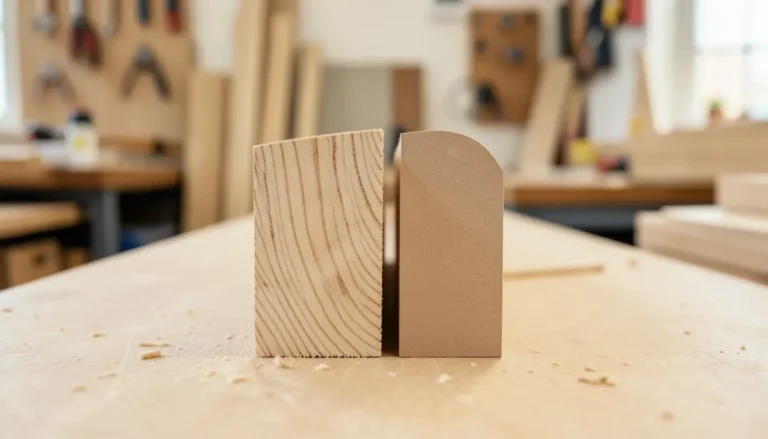
MDF is short for Medium Density Fiberboard. People search it as “MDF wood”, but there is no solid wood grain in it: wood is broken down into fibers, mixed with wax and a resin binder, and pressed under heat into a dense, flat panel. Weyerhaeuser, one of the large North American makers, describes its MDF as an engineered wood panel with a smooth surface and a homogeneous core, made from softwood species. Because the core is uniform, there is no grain direction to fight when you cut, rout or paint it.
“Medium” refers to where the board sits among fiberboards, which are grouped by density: lighter insulation-type boards, standard MDF, and denser high-density fiberboard (HDF) used for thin, hard panels. If you only want the short answer to the abbreviation, see our separate page on what MDF stands for in wood. The rest of this page is about what the board actually is and how it behaves.
MDF Specs From Real Manufacturer Data
Most MDF pages describe the board in adjectives. Manufacturers publish numbers. The table below compares two real technical data sheets, Roseburg Medite and Weyerhaeuser, with the minimums in the American standard ANSI A208.2 (Grade 155) that Weyerhaeuser lists next to its own averages. The values are averages from one product line, not a guarantee for every board you buy.
| Property | Roseburg Medite (El Dorado plant) | Weyerhaeuser MDF | A208.2 Grade 155 minimum (as listed by Weyerhaeuser) |
|---|---|---|---|
| Density | 45-55 lb/ft3 (721-881 kg/m3) | 48.5-49.0 lb/ft3 (780-788 kg/m3) | Not listed |
| Modulus of rupture (bending strength) | 4,500 psi | 4,800 psi | 4,050 psi |
| Modulus of elasticity (stiffness) | 450,000 psi | 500,000 psi | 405,000 psi |
| Internal bond (how well fibers hold together) | 120 psi | 130 psi | 117 psi |
| Face screw holding | 275 lbf | 300 lbf (over 3/8 in) | 270 lbf |
| Edge screw holding | Not listed | 275 lbf (over 16 mm) | 225 lbf |
| Moisture content as shipped | 4-6% | 5.5% | Not listed |
Two practical readings of that table. First, MDF is dense, around 49 lb per cubic foot in the Weyerhaeuser data, which is why it feels so heavy in the hand. Second, edge screw holding is rated below face screw holding for the same board (275 lbf against 300 lbf in the Weyerhaeuser data), so pre-drill and keep screws away from the very edge. Roseburg notes its mechanical properties are tested to ASTM D1037, and says its board meets or exceeds ANSI A208.2 Grade 130.
Interior use is built into the standard: ANSI A208.2 is titled “Medium Density Fiberboard (MDF) for Interior Applications,” and Weyerhaeuser states its MDF is intended for interior use only. Source: Weyerhaeuser MDF specifications, 2016.
How Much Does a Sheet of MDF Weigh?
Weight is the number most guides skip, and it decides whether one person can handle a sheet. Weyerhaeuser publishes approximate shipping weights per thousand square feet. Converting to a standard 4×8 sheet (32 square feet) gives the figures below. They are approximations for one manufacturer’s board at about 49 lb/ft3, so a different brand can differ by a few pounds.
| Thickness | Weight per 1,000 sq ft | Approx. weight of one 4×8 sheet |
|---|---|---|
| 3/8 in (9.5 mm) | 1,680 lb | 54 lb |
| 1/2 in (12.7 mm) | 2,150 lb | 69 lb |
| 5/8 in (15.9 mm) | 2,660 lb | 85 lb |
| 3/4 in (19.1 mm) | 3,210 lb | 103 lb |
| 1 in (25.4 mm) | 4,220 lb | 135 lb |
| 1-1/4 in (31.8 mm) | 5,290 lb | 169 lb |
A full 3/4 inch sheet at roughly 100 lb is a two-person job to carry, and it is the reason many cabinet builders have the supplier cut sheets down at the yard. Weight also matters for what you build: wall-hung shelves and tall cabinet doors in MDF load their fasteners far more than the same piece in a lighter panel.
Types of MDF Board
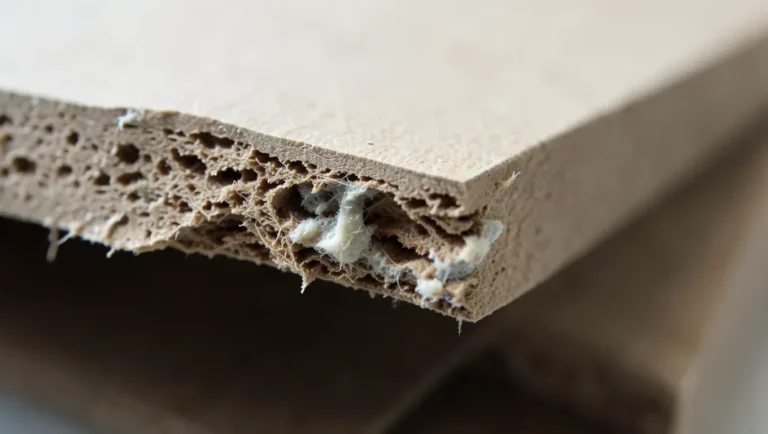
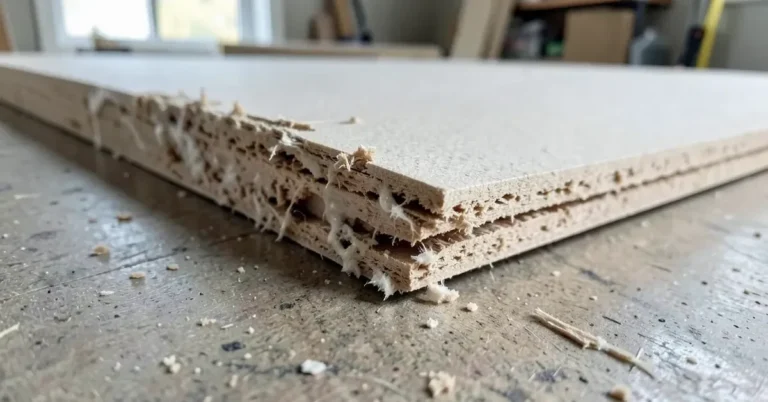
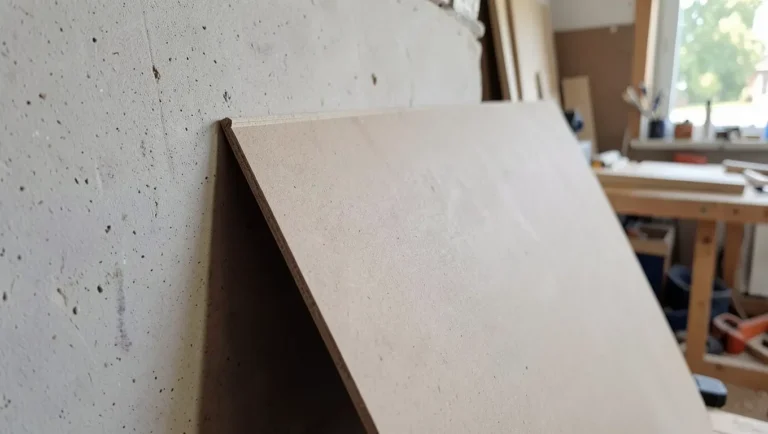
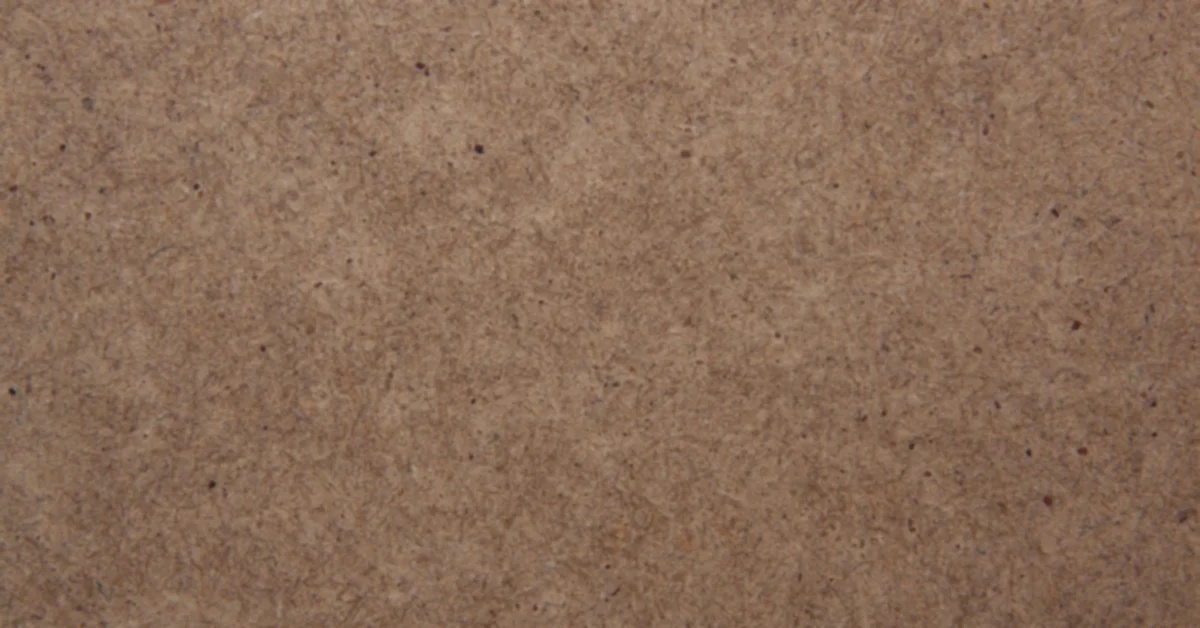
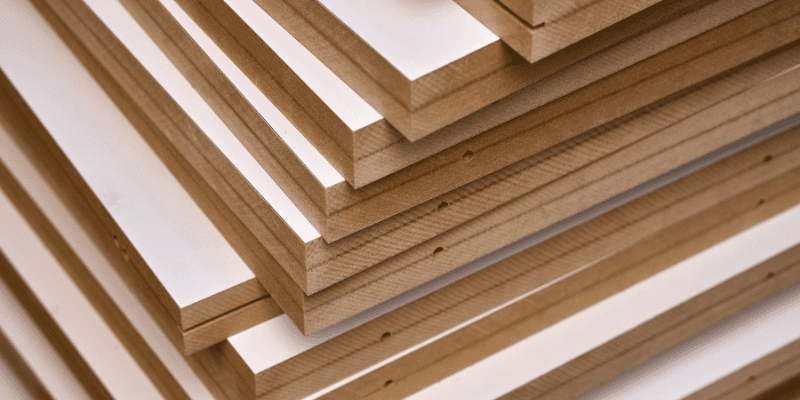
Standard MDF is the grey-brown board in the photos above. Makers also sell grades built for specific conditions. The names vary by brand, so check the product label rather than relying on color alone.
| Type | What makes it different | Best for |
|---|---|---|
| Standard MDF | Basic formulation for dry interior use | Painted cabinet doors, trim, shelving in dry rooms |
| Moisture-resistant (MR) MDF | Often green-tinted, made with water-repelling additives; still not waterproof | Kitchens and bathrooms where splashes happen |
| Fire-retardant (FR) MDF | Treated to slow flame spread; usually carries a fire-class rating | Commercial and public interiors |
| Thin or high-density board (HDF) | Denser, usually thin panels | Cabinet backs, drawer bottoms, laminate flooring cores |
| Veneered or melamine-faced MDF | MDF core with a surface layer | Ready-finished furniture panels |
Moisture is the weak point of every type. Our guide to whether MDF is waterproof explains why even MR grades need sealed edges, and our comparison particle board vs MDF vs plywood covers where each panel fits.
MDF vs Plywood vs Solid Wood
| Feature | MDF | Plywood | Solid wood |
|---|---|---|---|
| Strength | Medium, weakest at the edges | Higher, better screw holding | Highest, depends on species |
| Weight | Heavy: about 100 lb per 3/4 in 4×8 sheet | Lighter per sheet | Varies by species |
| Moisture | Poor in standard grade, fair in MR grade | Better, especially exterior glue grades | Good if sealed |
| Paint finish | Glass-smooth, no grain to show through | Grain can telegraph through paint | Needs primer |
| Cost | Usually the lowest of the three | Middle | Highest |
| Edges | Crumble if left raw, need banding or filler | Show layers, need covering | Clean and shapeable |
For a head-to-head on strength, see is MDF stronger than plywood, and for the buying decision, is plywood better than MDF. For kitchens specifically, our guide to MDF vs plywood for kitchen cabinets explains where cabinet shops use each.
MDF Pros and Cons
| Pros | Cons |
|---|---|
| Smooth, grain-free surface that takes paint well | Heavy compared with plywood |
| Usually cheaper than plywood or solid wood | Standard grade swells when it gets wet |
| Consistent thickness and density across the sheet | Edges crumble without banding or filler |
| No knots, splits or grain direction to plan around | Holds screws less well at the edge than on the face |
| Cuts, routs and shapes cleanly | Cutting makes fine dust, so wear a respirator |
| Good base for veneer, laminate or melamine | Made with formaldehyde-based resin, so look for compliance labels |
Is MDF Safe? Formaldehyde Limits
MDF is bonded with resin, and some resins release formaldehyde. In the United States, EPA’s TSCA Title VI rule sets emission limits by panel type, and regulated panels had to be certified as compliant from June 1, 2018. The limits in 40 CFR 770.10 are lower for some panels than for others:
| Panel type | Formaldehyde emission limit |
|---|---|
| Hardwood plywood | 0.05 ppm |
| Particleboard | 0.09 ppm |
| Medium-density fiberboard (MDF) | 0.11 ppm |
| Thin MDF | 0.13 ppm |
EPA limit for MDF: 0.11 ppm of formaldehyde (0.13 ppm for thin MDF) under the TSCA Title VI rule. Source: 40 CFR 770.10 via Cornell LII, with covered products and compliance date from EPA’s composite wood page.
The limits differ by product type and are measured in a standard test chamber, so they are a certification threshold, not a measure of what your room will smell like. In practice: buy panels labeled TSCA Title VI or CARB compliant (Weyerhaeuser’s sheet lists “EPA TSCA Title VI, CARB 2” at under 0.11 ppm), seal cut edges, and ventilate while you work. Our page on whether MDF gives off fumes goes deeper on the risks.
Where MDF Works Best
- Painted cabinet doors and trim: the smooth face and edge take paint without grain showing through.
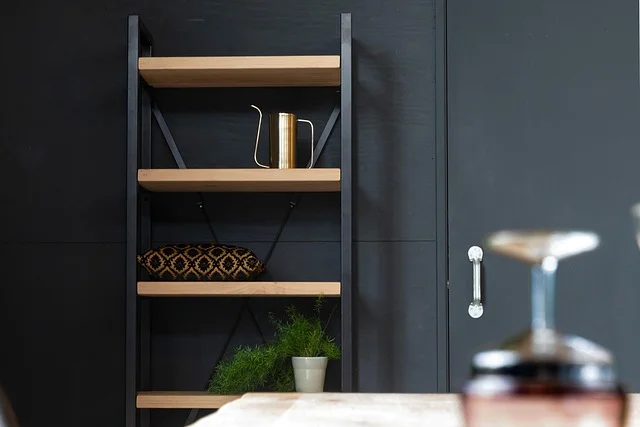
- Shelving in dry rooms: fine for light loads, but long spans sag, so add a front edge or a center support.
- Shop jigs, templates and router practice: cheap, flat and predictable.
- Speaker boxes and furniture cores: the dense, uniform panel is easy to veneer or laminate.
For a full room-by-room list, read what MDF is used for. Avoid MDF for anything that gets wet, such as outdoor furniture or the floor of a bathroom vanity.
Cutting, Screwing and Finishing MDF
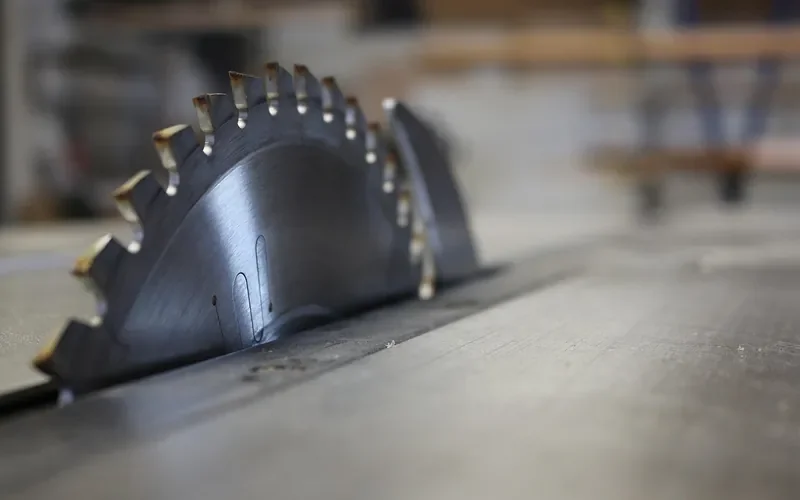
- Use carbide teeth: a carbide-tipped blade stays sharp far longer on MDF than plain steel. No saw? You can cut MDF by hand with a fine-tooth saw or a utility knife.
- Support the whole sheet: an unsupported sheet flexes and chips at the cut.
- Pre-drill screw holes: keep screws away from the edge, since edge screw holding is rated lower than face holding.
- Seal the edges first: edges are porous, so prime them before paint with a primer made for MDF.
- Thin coats: two or three thin coats beat one heavy coat, and sand lightly between them.
- Dust control: wear a respirator and use a shop vacuum, because MDF dust is very fine.
Sustainability and Recycled Content
MDF uses wood that might otherwise be wasted. Roseburg’s data sheet lists third-party certifications for 80 to 95 percent pre-consumer recycled content, depending on the plant. Pre-consumer means mill residue rather than old furniture. At end of life MDF is harder to recycle than solid wood because of the resin, so cut carefully, keep offcuts for jigs, and check local rules before dumping panels.
Frequently Asked Questions About MDF Wood
What does MDF stand for?
MDF stands for Medium Density Fiberboard. It is an engineered panel made by pressing wood fibers with wax and a resin binder under heat and pressure into a dense, smooth, grain-free sheet.
Is MDF real wood?
MDF is made from real wood fibers, but it is not solid wood. The fibers are broken down, bonded with resin and pressed flat, so the panel has no grain, rings or knots like lumber does.
Is MDF Board Waterproof?
No. Standard MDF is not waterproof and swells when it absorbs water. Moisture-resistant MDF handles splashes better, but it still needs sealed edges and is not meant for wet or outdoor use.
Is MDF Stronger Than Plywood?
No. Plywood is generally stronger than MDF and holds screws better, especially at the edges. MDF is denser and smoother, which makes it better for paint, but plywood wins on structure and moisture. Details: is MDF stronger than plywood.
What Is the Disadvantage of Using MDF?
The main disadvantages are weight, poor moisture resistance in standard grade, crumbling edges, weaker edge screw holding and fine dust when cutting. It also uses formaldehyde-based resin, so buy compliant panels and ventilate.
How much does a 4×8 sheet of 3/4 inch MDF weigh?
Using Weyerhaeuser shipping weights of about 3,210 lb per 1,000 square feet, a 4×8 sheet of 3/4 inch MDF weighs roughly 100 lb. Brands differ slightly, so treat it as an approximation.
Conclusion
MDF is a dense, smooth, affordable panel that is excellent under paint and poor around water. Check the spec data, plan for roughly 100 lb per 3/4 inch sheet, buy formaldehyde-compliant board, seal the edges, and choose plywood where strength and moisture matter more than a flawless painted face.
Sponsored / affiliate links. As an Amazon Associate I earn from qualifying purchases. I may earn additional commission from eligible campaigns.
 MECCANIXITY MDF Wood Board for Crafts,3/18"(4mm) Thick Medium Density Fiberboard Unfinished Wood for DIY Projects, Art Classes, Carpentry, Painting (12 x 16 in,2Pcs)
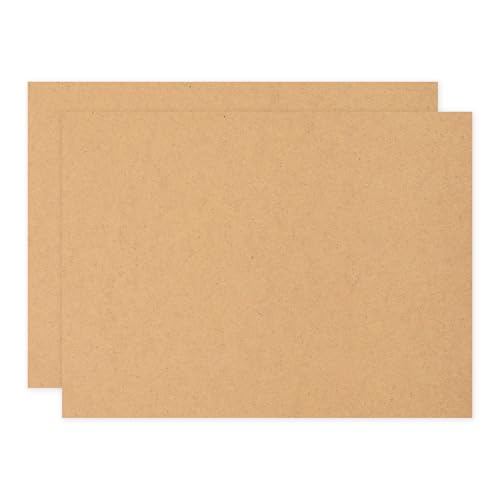 MECCANIXITY MDF Wood Board for Crafts,1/12"(2mm) Thick Medium Density Fiberboard Unfinished Wood for DIY Projects, Art Classes, Carpentry, Painting (12 x 8 in,2Pcs)