Is Cherry Wood Good to Burn? Smell, Heat and Seasoning Time
Cherry wood burns well in mixed loads. It lights fairly easily, gives a mild sweet smell, and is commonly listed at about 20 million BTU per cord, but it falls short of oak or hickory for long winter burns. Burn it while wet, or rely on it as your only fuel, and you lose usable heat, fill the chimney with smoke, and raise creosote risk. This guide covers cherry’s aroma, heat output, and typical seasoning time so you can decide where it fits.
This guide is part of our Firewood and Wood Stoves: Drying, Storing and Burning Guide series.
Cherry firewood at a glance
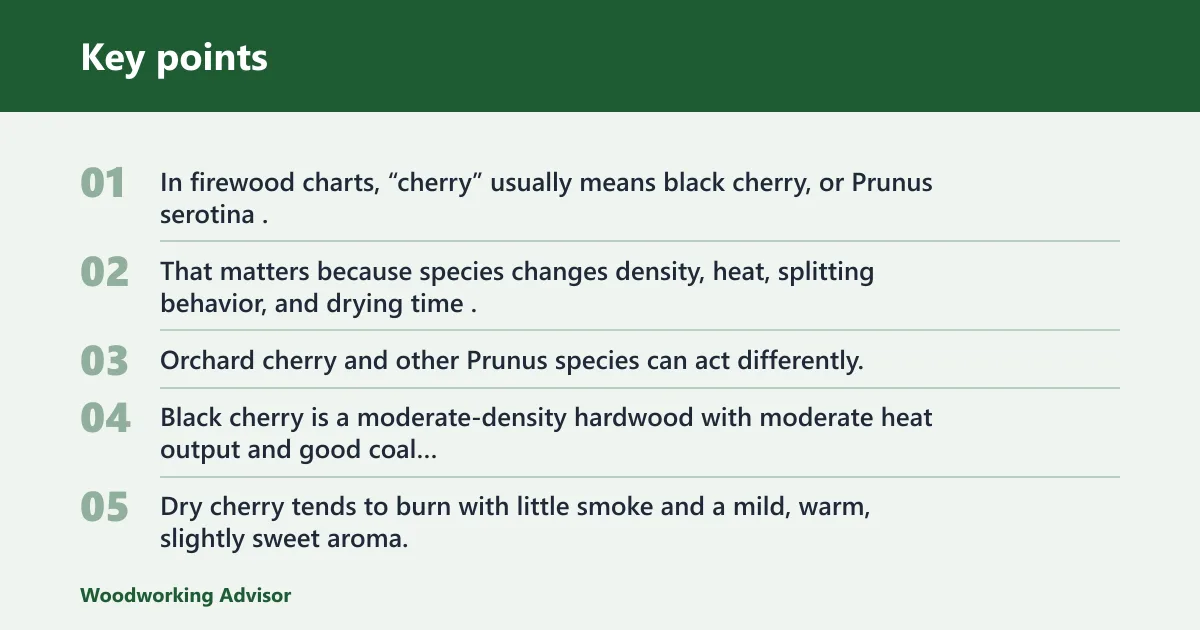


In firewood charts, “cherry” usually means black cherry, or Prunus serotina. That matters because species changes density, heat, splitting behavior, and drying time. Orchard cherry and other Prunus species can act differently, so treat them as related fuel, not the same wood.
Black cherry is a moderate-density hardwood with moderate heat output and good coal production. Dry cherry tends to burn with little smoke and a mild, warm, slightly sweet aroma. It is usually easy to split, though branchy or twisted pieces can be more stubborn.
That mix makes cherry useful for shoulder-season fires, quick evening burns, and blended stacks. It is a poor choice if you need long, hard heat through the night from one species alone.
What black cherry usually means
When a supplier or guide says cherry, black cherry is often the default species in North American firewood listings. It is the usual baseline for heat and burn-time claims, so compare other cherry species carefully before assuming they match it.
Orchard cherry and other Prunus woods may split, dry, and burn a little differently. If the label is vague, ask for the species name before you plan a full stack around it.
How much heat does cherry give off?
Cherry gives moderate heat, not premium heat. Common listings place it around 19.5 to 20.5 million BTUs per cord, and one source lists 20.4 million BTUs per dry cord. That is useful heat, but it trails oak and hickory for output and burn duration.
A cord is 128 cubic feet, and dry-cord ratings are the standard comparison point in most firewood charts. Cherry can still feel strong in a stove because it lights fairly easily and makes a steady coal bed, but it is not a top-tier long-burn fuel. (Wikipedia)
Why cherry trails oak and hickory
Oak and hickory are denser woods, so they generally store more energy in the same volume. Cherry sits below them on the usual BTU scale, which is why it is often valued for balance instead of maximum heat.
That does not make cherry weak. It means the wood is best judged by use case: quick heat, pleasant smell, and manageable handling on one side; all-night output on the other.
When moderate heat is enough
Cherry works well when you want a solid evening burn without overfiring a stove. It is also practical in mixed loads, where a denser hardwood extends the burn while cherry helps the fire light and settle in.
Suppose you need one hot fire for a cool October evening. Cherry alone can be enough. Suppose the overnight low is deep winter cold. Blend it with oak, ash, or maple instead of relying on cherry by itself.
Cherry firewood decision table
| Use case | Moisture range | Expected smoke | Coal quality | Stove heat | Decision |
|---|---|---|---|---|---|
| Dry stove load | 15% to 20% | Low | Good to excellent | Moderate | Burn |
| Mixed winter load | Below 20% | Low | Good | Moderate to steady | Mix |
| Fireplace ambiance | Below 20% | Low to moderate | Fair | Modest | Burn |
| Freshly cut cherry | 50% or higher | Heavy | Poor | Low | Hold back |
| Underseasoned stack | 20% to 25% | Moderate | Uneven | Reduced | Hold back |
| Wet or suspect split | Above 25% | High | Poor | Low and inefficient | Hold back |
Does cherry smell good when burned?
Yes, dry cherry usually smells good when burned. Its aroma is often described as mild, warm, and slightly sweet, with a faint fruity note. That makes it popular for people who want a pleasant indoor fire without a sharp resin smell.
The smell is most noticeable in fireplaces and in rooms with weaker ventilation. In a tight house, even a mild wood scent can stand out, so indoor odor tolerance matters as much as the wood itself.
Who may notice indoor odor more?
People sensitive to smoke, fragrance, or lingering odors may notice cherry more than others, even when it is seasoned well. That does not mean cherry is dirty fuel. It means aroma and indoor comfort are personal, especially in smaller living spaces.
For those users, a clean-burning stove with strong draft usually matters more than species alone. Dry cherry helps, but weak airflow can make any fire smell heavier than expected.
When aroma matters most
Aroma matters most when you burn for atmosphere rather than pure heat. A short evening fire, holiday use, or a fireplace in a living room are the usual times where cherry’s scent is part of the appeal.
If your priority is low odor and clean exhaust, dry cherry is a better choice than green cherry and a better fit than many wet mixed loads.
How long does cherry take to season?
Cherry should be dried to 20% moisture content or less before burning. Green cherry can sit at 50% moisture or higher, and that much water steals heat, increases smoke, and makes the fire work harder than it should.
Seasoning time is not fixed. Guides range from 6 to 12 months, 8 to 10 months, 9 to 12 months, and even 12 to 18 months in British climes. Climate, split size, and stack layout explain most of that spread.
Why split size and stack airflow matter
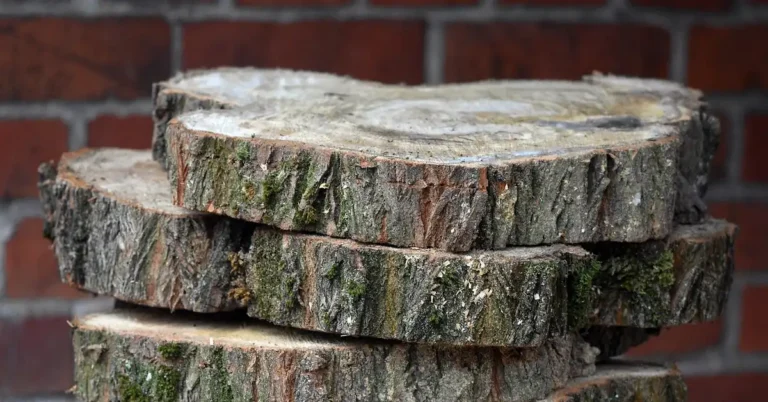
Smaller splits dry faster because they expose more surface area. A round, thick cherry log holds moisture much longer than a split stack with open sides and good airflow.
Stack height, cover, and ground contact matter too. Keep the stack off the soil, leave space for air movement, and cover the top while keeping the sides open. Tight wrapping slows drying.
- Split cherry soon after cutting, especially if the pieces are large.
- Stack it off the ground where air can reach the sides.
- Leave the sides open and cover only the top.
- Recheck with a moisture meter near the center of a fresh split.
- Burn only when readings are at 20% or less.
A common first-timer mistake is stacking cherry in a sheltered corner and assuming a summer is enough. The outside may look dry while the center still holds too much water. The fire then starts slowly, smokes hard, and leaves a wet coal bed.
Will cherry smoke or spark a lot?
Dry cherry usually smokes very little, and one source lists it as low smoke with few sparks. Green or underseasoned cherry is different. Wet wood can smoke heavily, burn unevenly, and put more unburned material into the flue.
That extra smoke is the real hazard. Creosote forms when smoke cools and condenses in the chimney, so burning cherry too wet raises chimney maintenance needs and can create a safety problem, especially in cooler, slower-drafting systems.
Creosote risk in chimneys
Creosote risk rises when the fire spends too much time smoldering. Green cherry does that easily because the fire must first drive off water before it can burn well. The result is cooler flue gases and more deposit buildup.
Dry cherry reduces that risk because it burns more completely. That still does not make the chimney maintenance-free. It means the fuel is doing its job instead of fighting its own moisture.
Practical signs wood is not ready
If the splits feel heavy for their size, show dark end checks only on the outside, or hiss in the firebox, they may still be too wet. Pale smoke that hangs around after ignition is another warning sign.
Green cherry should be held back for further drying. Burning it now is a false economy: less usable heat, more smoke, and a dirtier chimney.
Can you burn cherry in a stove or fireplace?
Yes, cherry works in both, but the best use differs. In a wood stove, dry cherry gives moderate heat and a good coal bed, which helps extend warmth after flames fall. In a fireplace, it gives pleasant flame and aroma, but less long-duration output.
For overnight stove loads, cherry is usually better as part of a mix than as the only fuel. Pair it with denser wood if you need a longer burn. For a visible fire and mild scent, cherry can stand on its own.
Best use as a mix-in wood
Cherry makes sense when you want easier lighting, a cleaner smell, and decent coaling without committing to a full load of oak or hickory. It fills the gap between fast-burning softwoods and heavier hardwoods.
That is why many owners save it for shoulder season, start-up loads, or mixed stacks. It is useful wood, just not the strongest winter anchor.
Picture a stove load made from two oak splits and one split of dry cherry. The oak carries the long heat, while the cherry helps the fire catch and leaves a pleasant coal bed. Change the cherry to green wood, and the balance falls apart: more smoke, weaker heat, and more cleanup.
Frequently asked questions
Is cherry wood good to burn in a wood stove?
Yes. Cherry is a good stove wood when it is properly seasoned. It lights fairly easily, burns with moderate heat, and leaves a useful coal bed. It is best viewed as a solid mixed-load wood rather than the main fuel for the coldest part of winter.
How much heat does cherry firewood produce?
Cherry is often listed at roughly 19.5 to 20.5 million BTUs per cord, with some sources citing around 20.4 million BTUs per dry cord. That puts it in the middle range for hardwoods. It is useful heat, but below oak and hickory for raw output.
How long does cherry wood take to season?
Most guides place cherry somewhere between 6 and 18 months, depending on climate and stacking conditions. A common range is 9 to 12 months, while colder or wetter climates can stretch that to 12 to 18 months. Split size and airflow can shorten or lengthen the wait.
Does cherry firewood smell good when burned?
Dry cherry is often described as having a mild, warm, slightly sweet smell. Many people find that pleasant in a fireplace or stove. If you are sensitive to indoor odor, though, even mild wood aroma can be noticeable, especially in a smaller room with limited ventilation.
Does cherry wood smoke a lot when burned?
Dry cherry produces relatively little smoke. Green or underseasoned cherry is a different story and can smoke heavily because of its high moisture content. That extra smoke wastes heat and increases creosote risk, so cherry should be dry before it goes into a stove or fireplace.
Can you burn green cherry wood?
You can burn it physically, but you should not treat green cherry as normal stove fuel. It often sits at 50% moisture or higher, which means poor heat, more smoke, and a dirtier flue. Hold it back until it dries to 20% moisture or less.
Sponsored / affiliate links. As an Amazon Associate I earn from qualifying purchases. I may earn additional commission from eligible campaigns.