Best Woods for Reducing Creosote (2026): Research Shows
The best woods for minimizing creosote are dense, seasoned hardwoods such as oak, maple, beech, and ash, with the driest split firewood burned in a hot, well-aired fire. Wet wood and smoldering fires create more chimney deposits, raise chimney-fire risk, and waste heat. This guide ranks the cleaner-burning species and explains why moisture content, draft, and burn technique matter more than wood type alone.
Quick comparison
| Product | Badge | Best for | Price | ||
|---|---|---|---|---|---|
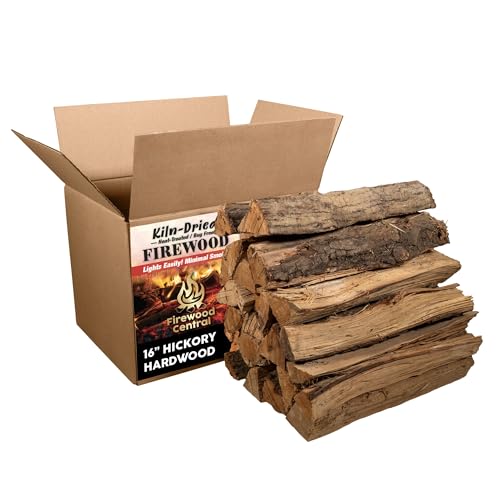 |
Firewood Central Kiln-Dried PA HickoryFirewood Central | Our pick | 16-inch hickory splits · kiln dried · 38 lb bundle | $36.04
Price as of 3 Nov 2026
|
View |
 |
Smoak Firewood 16inch Length Premium Cooking Wood & FirewoodSmoak Firewood | Also great | 16-inch white oak · kiln dried · 60-70 lb box | $124.99
Price as of 3 Nov 2026
|
View |
 |
Old Potters Kiln Dried FirewoodOld Potters | Also great | 16-inch oak logs · USDA kiln dried · ready to burn | $52.99
Price as of 3 Nov 2026
|
View |
 |
Wood Moisture Meter, TopTes Digital Moisture Meter TS-630TOPTES | Pair with it | Digital moisture meter · pin type · LCD display | $26.99
Price as of 3 Nov 2026
|
View |
 |
S.I.T.S Premium Seasoned FirewoodS.I.T.S | Budget pick | Mixed hardwoods · seasoned · small bundle | $9.99
Price as of 3 Nov 2026
|
View |
The broad rule is simple: dry hardwood in a hot fire is the safest default. Species matters, but moisture, airflow, and flue temperature usually decide whether smoke turns into creosote on the chimney walls.
If you only remember one target, check firewood with a meter and aim for under 20% moisture content before you burn it.
How we chose
This ranking uses wood type, moisture status, expected burn behavior, and likely creosote risk in a stove or fireplace.
The criteria were simple: species and resin level, stated or implied moisture status, how the wood is likely to burn in real use, and whether the listing suggests cleaner-burning firewood or a higher soot load.
Firewood creosote decision table
| Firewood type | Species / resin level | Moisture target | Likely burn behavior | Best choice | Acceptable if seasoned | Avoid |
|---|---|---|---|---|---|---|
| Oak | Dense hardwood, low resin | Under 20% | Long, steady, hotter fire with less smoke when dry | Yes | Yes | No, unless it reads wet |
| Ash | Hardwood, low resin | Under 20% | Often seasons faster than denser hardwoods; burns clean when dry | Yes | Yes | No, unless it is still green or damp |
| Beech | Dense hardwood, low resin | Under 20% | Steady, hot burn; useful for maintaining flue temperature | Yes | Yes | No, if moisture is high |
| Maple | Hardwood, low resin | Under 20% | Clean burning when seasoned; moderate heat output | Yes | Yes | No, if it feels heavy or cool to the touch after splitting |
| Pine, spruce, fir | Softwood, higher resin/sap | Under 20% | Can burn well when dry and hot, but more likely to smoke in a weak draft | No | Yes | Yes, if wet, pitchy, or burned slowly |
| Mixed hardwood bundle | Variable | Under 20% | Can be fine if all pieces are dry; uneven splits burn unevenly | Maybe | Yes, if verified dry | Yes, if some pieces read wet |
| Green or partially seasoned wood | Any species | Above 20% | More smoke, slower ignition, more incomplete combustion | No | No | Yes |
- Check moisture on a freshly split face, not just the outside surface.
- Aim for under 20% moisture content before regular burning.
- Burn with enough air to keep flames active, not lazy and smoky.
- Keep the flue hot enough to reduce condensation in cooler sections.
- Chimney inspection and sweeping should generally be scheduled at least once per year, and more often for heavy burners or when buildup appears.
Oak: best for steady, cleaner burns
Oak ranks near the top because it is a dense hardwood that burns longer and hotter when properly seasoned. That steadier fire helps support draft and keeps smoke from lingering in the flue long enough to condense into creosote.
Why oak ranks near the top
For cleaner burning, oak has two practical advantages: low resin and a burn profile that supports stable heat. Dry oak is less likely to smolder than wet softwood, and a hotter, steadier fire usually means less smoke, less condensation, and less buildup.
Seasoning and split size matter here
Even oak can create a lot of creosote if it is burned green or stuffed into a weak, air-starved fire. Smaller splits season and light more easily, while oversized rounds can stay damp inside long after the surface looks ready.
Best use case in a stove or fireplace
Choose oak when you want a reliable default for a wood stove, insert, or fireplace and you can verify that the splits are dry. A common first-timer mistake is loading one large, cool fire with damp oak and then closing the air too soon; that is a recipe for smoke and deposits.
Ash: best for faster seasoning
Ash is a practical middle ground. It is still a hardwood, but it often dries more quickly than denser species, so it can be a useful choice when you need cleaner-burning fuel sooner and can confirm that the wood is actually seasoned.
Why ash is a practical middle ground
Ash is often easier to get below the moisture target than oak, which makes it helpful for owners who need firewood sooner. Once dry, it burns hot and steady enough to support better draft and cleaner combustion.
What to check before you burn it
Do not trust the species label alone. Split the log, let the meter settle on the fresh interior face at room temperature, and if the reading is above 20%, treat it like wet wood and keep seasoning it.
When ash beats denser hardwoods
Ash can be the better pick when your storage space is limited and you need firewood that is more likely to season in a shorter window than oak. It is also a sensible choice when you want cleaner burns without waiting for very dense logs to dry all the way through.
Can you burn softwood safely?
Yes, you can burn pine, spruce, or fir safely if the wood is dry and the fire is hot enough to keep combustion complete. Softwood is not an automatic no-go. The risk rises when it is wet, burned slowly, or used in a stove or fireplace with poor draft.
When pine, spruce, or fir is acceptable
Dry softwood can work well for kindling, shoulder-season fires, or quick heat, especially in an appliance that drafts properly. If the splits are under 20% moisture and the fire burns briskly, the species label matters less than the burn conditions.
What raises the creosote risk
Wet softwood, choked air supply, and a cold flue are the problem combination. Resinous wood can leave more soot if it is burned lazily, but the bigger issue is incomplete combustion from poor draft and excess moisture.
How to burn softwood with less smoke
Use smaller splits, start with a hot kindling bed, and keep enough air open to maintain active flames. If the fire starts to smolder or the glass and flue darken quickly, the fuel is either too wet or the burn is too cool.
Firewood choice and creosote risk
Species matters, but moisture, airflow, and flue temperature usually decide the result. In practice, those factors often matter more than whether the wood is labeled hardwood or softwood. Creosote is a black tar-like byproduct of burning wood, and it forms when smoke condenses in the chimney flue.
Creosote buildup can be categorized into three stages. Stage 1 is flaky soot, Stage 2 is a tarry glazed buildup, and Stage 3 is the highest chimney-fire risk.
Why moisture matters more than species
Seasoned firewood is dried wood, and it burns cleaner than green wood because less water has to be boiled off before the wood can burn well. High-moisture firewood leads to more incomplete burning, which means more smoke, more soot, and more material for creosote to form from.
Where flue temperature fits
Creosote can start forming when flue temperature is below about 250 °F, but the real concern is the temperature in the cooler sections of the vent path, not one single number. If the appliance is idling, the draft is weak, or the fire is throttled down too far, smoke is more likely to condense.
What incomplete combustion looks like
Incomplete combustion shows up as lazy flames, persistent smoke, and dark deposits in the firebox or flue. Wet fuel, poor draft, and a choked air supply all push the fire in that direction, regardless of whether the logs are oak or pine.
Say your stove is loaded with two splits of wet oak and the air control is turned down early. The fire may look established, but the smoke will linger longer in the flue, and that cooler smoke is more likely to leave deposits than a hotter, airier burn.
Suppose a fireplace is burning dry pine kindling with the damper partly closed and a weak updraft. The wood type is not the main issue; the cool, smoky burn is. Open air and a hotter fire matter more than the label on the bundle.
Can you burn creosote wood?
Do not burn wood that has been treated with creosote, and do not confuse that with ordinary firewood that creates creosote in a chimney. Pressure-treated, painted, plywood, MDF, and glued wood should never be burned because they can release toxic fumes and create hazardous smoke.
Is it safe to burn creosote treated wood?
No. Wood treated with creosote or other preservatives is not fireplace fuel. It can release harmful compounds when burned, and it is not a safe substitute for clean firewood.
Can you burn wood treated with creosote?
No. Treated wood, painted wood, plywood, MDF, and glued panels should stay out of the stove and fireplace. The combustion products are not the same as from plain firewood, and the fumes can be dangerous.
Does burning wood help preserve it?
No. Burning wood destroys it, so it is not a preservation method.
Why does burning wood preserve it?
It does not preserve wood. That idea is a mix-up between wood preservatives and firewood.
Which one should you buy?
Pick oak if you want a strong default for cleaner burning and steady heat. Pick ash if you need a shorter seasoning window and still want a hardwood that burns clean when dry. Avoid any wood that reads wet on a meter, no matter the species.
Pick oak if you want the safest default
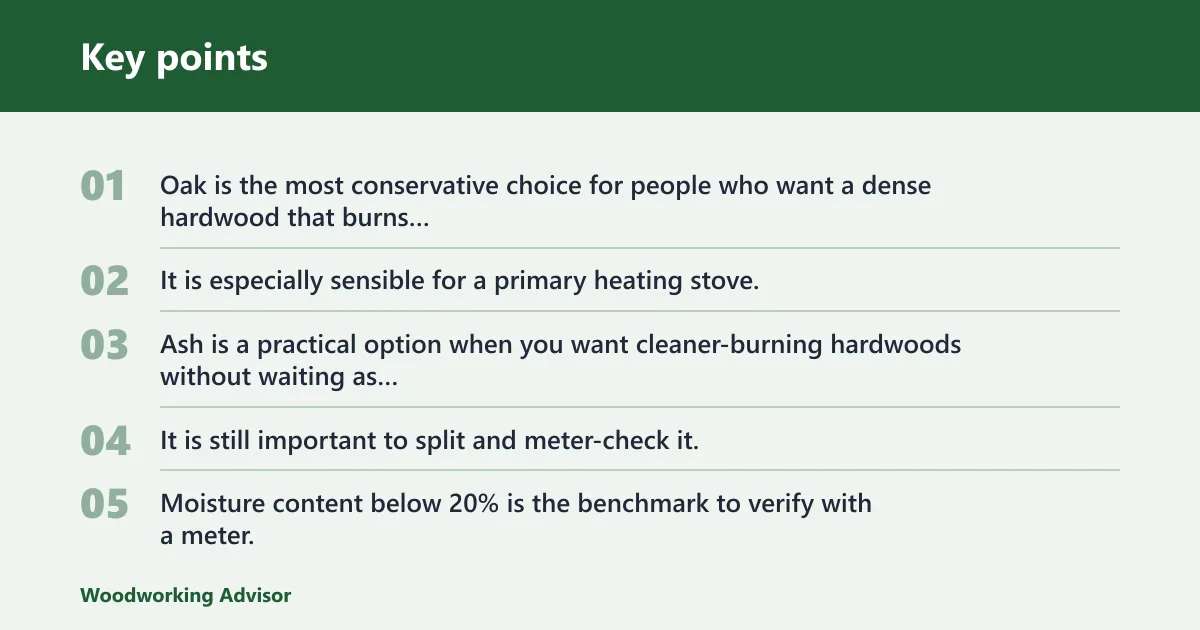
Oak is the most conservative choice for people who want a dense hardwood that burns steadily and supports a hotter fire. It is especially sensible for a primary heating stove, where a stable burn helps reduce smoke and condensation.
Pick ash if you need a shorter seasoning window
Ash is a practical option when you want cleaner-burning hardwoods without waiting as long as you might for oak. It is still important to split and meter-check it, because partially seasoned ash can behave like any other wet fuel.
Avoid any wood that reads wet on a meter
Moisture content below 20% is the benchmark to verify with a meter. Surface checks are not enough, because the outside can feel dry while the inside still holds enough water to smoke, cool the flue, and feed creosote.
Skip treated, painted, or glued wood entirely
Never burn pressure-treated lumber, painted scrap, plywood, MDF, or glued wood. If a piece looks like construction waste instead of firewood, it does not belong in a stove or fireplace.
Frequently asked questions
What wood burns with the least creosote?
Dry hardwoods such as oak, ash, beech, and maple usually burn with the least creosote because they support hotter, steadier fires when properly seasoned. The key is not species alone. Dry fuel, strong draft, and an active flame matter more than the label on the stack.
What moisture content should firewood be to reduce creosote?
A moisture content below 20% is the usual benchmark for cleaner-burning firewood. Check a freshly split face with a moisture meter, not just the outside surface, and let the meter stabilize on room-temperature wood. Wet wood increases smoke, incomplete combustion, and creosote risk.
How often should a chimney be cleaned to prevent creosote?
A chimney sweep is recommended at least once per year, with heavier burners often needing more frequent inspection based on use and buildup. Annual inspection and cleaning remove deposits before burning season starts, which lowers the chance that Stage 2 or Stage 3 creosote will be waiting in the flue.
What to put on creosote burns
If you mean a burn on skin from a hot surface or ember, cool the area under running water and seek medical care for serious burns. If you mean creosote in the chimney, do not add anything to it; the correct fix is inspection, cleaning, and better burning habits.
Sponsored / affiliate links. As an Amazon Associate I earn from qualifying purchases. I may earn additional commission from eligible campaigns.