What Wood Species Is Best for Fence Posts?
For most fence posts, use ground-contact pressure-treated southern pine. For wet soils, heavy loads, or long service life, move up to naturally durable species such as black locust, eastern redcedar, or white oak. Choose the wrong wood, and posts rot at the soil line, lean under wind, or fail early from load and movement. This guide compares species by soil contact, post role, and durability so you can choose line, corner, gate, and end posts with less guesswork.
Fence-post wood decision table
| Use case | Soil moisture | Wind exposure | Expected lifespan | Recommended species or rating |
|---|---|---|---|---|
| Line posts | Dry to moderate | Low to moderate | Moderate service life with correct drainage | Pressure-treated pine with UC4A or higher |
| Line posts | Wet or poorly drained | Moderate to high | Longer life if decay resistance is high | Robinia, larch, or sweet chestnut for untreated use; UC4A+ treated pine if available |
| Corner posts | Any soil that stays damp | High | Longest practical life needed | Robinia, oak, larch, or heavy treated pine rated for direct burial |
| Gate posts | Moderate to wet | High, with hinge load and racking | High; failure is costly | Robinia or larch first; oak or UC4A+ treated pine also suitable |
| End posts | Dry to moderate | Moderate | Moderate to high | Pressure-treated pine, cedar where above-ground exposure dominates, or larch for untreated use |
Line posts by moisture and wind
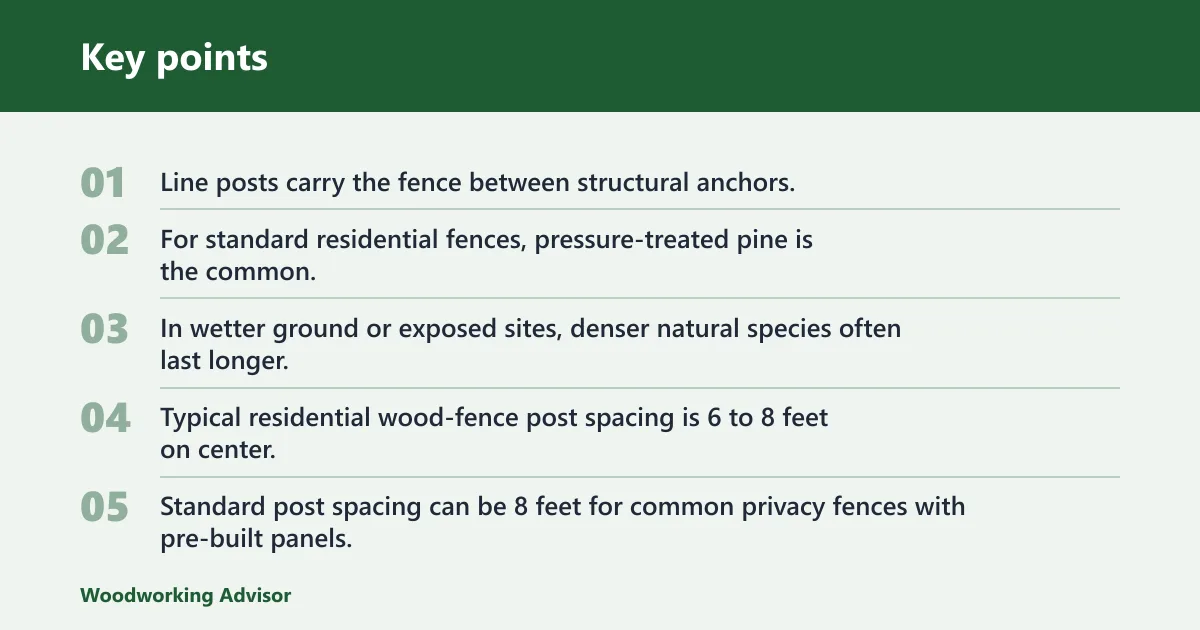
Line posts carry the fence between structural anchors, so they can be lighter than corner and gate posts, but they still need direct-burial durability. For standard residential fences, pressure-treated pine is the common, economical choice when it carries a ground-contact rating of UC4A or higher. In wetter ground or exposed sites, denser natural species often last longer.
Typical residential wood-fence post spacing is 6 to 8 feet on center. Standard post spacing can be 8 feet for common privacy fences with pre-built panels, but 6 feet gives stronger rigidity and wind resistance. Horizontal slat fences should use 6 feet maximum spacing.
Corner and gate posts by load
Corner and gate posts take more force than line posts because they carry tension, hinge load, and racking. That makes species choice more important than price alone. A post that lasts as a line post can still move, twist, or lean when it carries a gate or a tight fence run.
For those posts, choose a species with stronger ground-contact durability and better stiffness. Robinia, larch, oak, and treated pine rated for direct burial are all more appropriate than decorative above-ground woods. In exposed areas, tighter spacing nearby also reduces the load on these anchor posts.
Best species ratings by use case
The best species depends on failure risk first, not on what is cheapest at the yard. Pressure-treated pine wins on availability and cost for many residential fences. Cedar and redwood fit where decay resistance matters and the structure is mostly above ground. Robinia, oak, sweet chestnut, and larch fit better when you want untreated or longer-lived ground-contact timber.
Say your fence sits on clay that holds water after rain and the line runs across an open yard. A line post spaced 8 feet apart may be fine in a sheltered spot, but the same setup in a windy area puts more bending stress on the posts, so a denser species or closer spacing is the safer call.
What makes a fence post fail early?
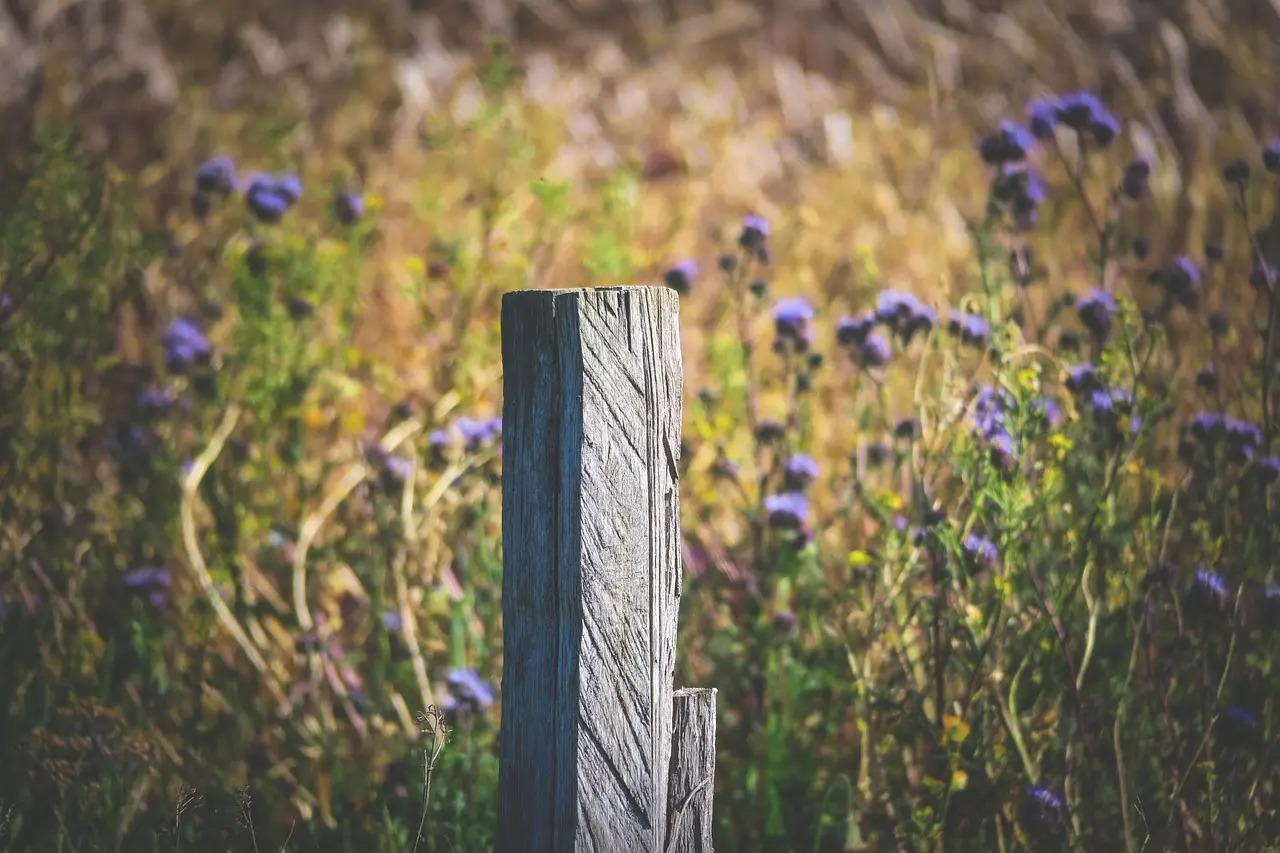
Most wood fences often start failing at the posts within about a decade when the buried section stays wet, shifts, or uses an unsuitable species for the job. Decay begins where oxygen, moisture, and soil contact meet. A post can look sound above ground while the buried end softens, cracks, and loosens.
Rot at the buried section
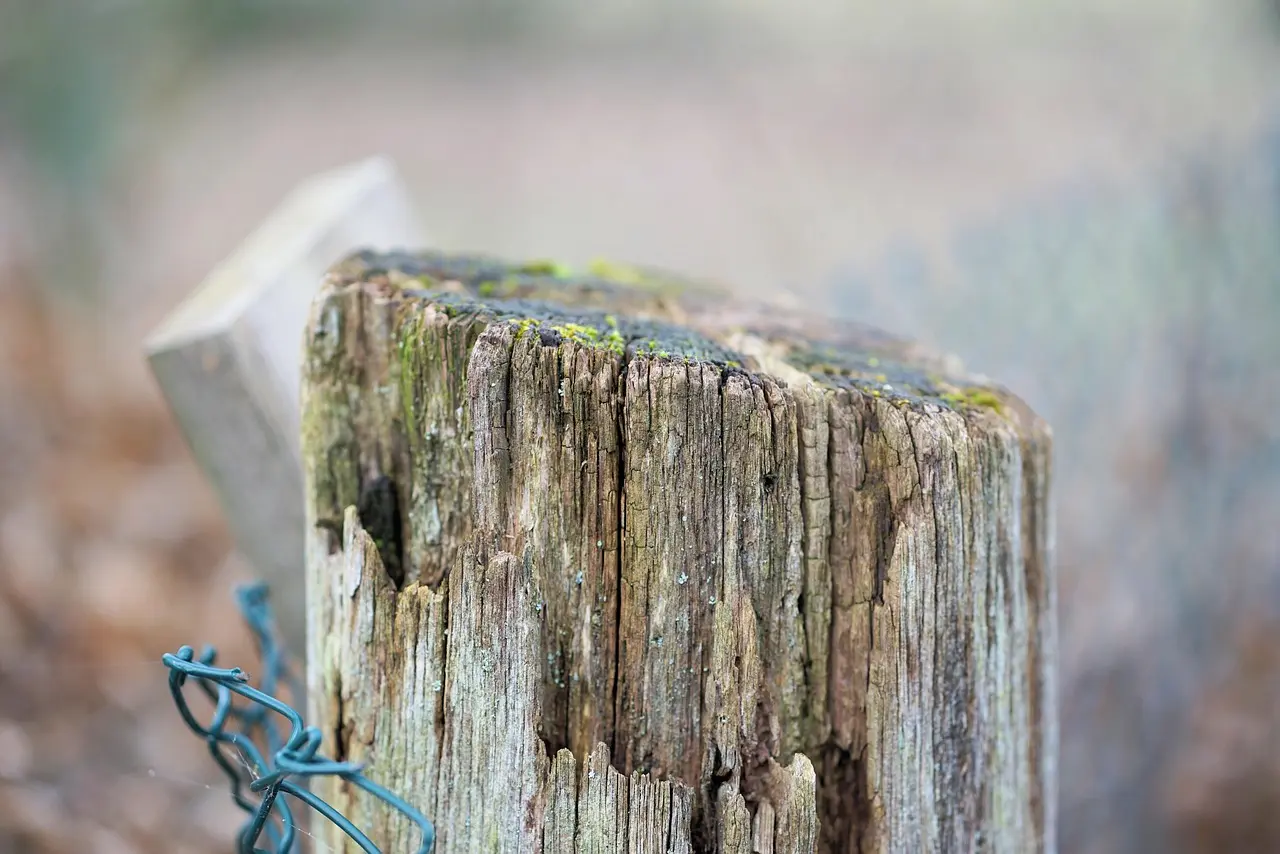
Rot usually starts at the soil line, not at the visible top. That is why direct-burial rating matters more than appearance. Untreated pine or interior-grade lumber is generally not recommended for posts. If you use treated lumber, look for UC4A or higher so the preservative treatment is meant for ground contact.
Movement from wind and loose soil
Wind can fail a post before rot does. Repeated rocking opens tiny gaps at the soil line, pumps water into the wood, and loosens compacted soil around the base. Open sites are especially hard on taller privacy fences, which is why tighter spacing helps in exposed areas.
Picture a 6-foot privacy fence on a corner lot with loose sandy soil. If the posts are spaced too far apart, the fence rails carry more load and the gate post takes more twist. The wood may still be intact, but the structure shifts enough to invite faster decay and hardware wear.
Species, grain, and treatment differences
Species matters because natural durability is not the same across woods. Redwood is naturally resistant to decay and insects, but it still needs correct installation. Cedar resists decay well for above-ground fence parts, yet it is softer than denser structural woods. Robinia is far more durable in ground contact and is often used untreated. Oak, sweet chestnut, and larch also have fencing uses, but product form and moisture exposure change results.
Is pressure-treated pine good for fence posts?
Yes, pressure-treated pine is a good fence-post choice when you need a common, available, economical material for direct burial. It is the most commonly used fencing material, and it fits many residential fences. The key is to buy posts rated for ground contact, not interior use, and to protect cut ends after trimming.
When UC4A or better matters
UC4A or higher matters because posts in the ground need preservative protection where the wood stays damp. Without that rating, a post can rot early even if the upper section looks fine. For fence posts that will be buried, this rating is more important than cosmetic grade.
Cut ends and drilled holes
Cutting or drilling exposes untreated wood inside the post. Seal cut ends after trimming, and treat any drilled holes used for bolts or hardware. That extra step matters most near the soil line, where moisture lingers and decay starts first.
Where treated pine makes the most sense
Use treated pine when you want predictable supply, standard dimensions, and lower upfront cost. It is a practical match for line posts, many end posts, and some corner posts, especially in residential fencing. It is also the easiest choice when the fence is long and material availability matters more than premium appearance.
Are cedar or redwood better than treated pine?
Cedar and redwood can outlast untreated softwoods above ground, but they are not automatically better than ground-contact treated pine for every fence post. Cedar is a good fit for above-ground fence components, while redwood brings premium durability and appearance. For buried posts, the right answer depends on soil moisture, load, and whether the wood is meant for direct burial.
Above-ground durability versus buried life
Cedar and redwood resist decay naturally, but their best use is often in fence parts that stay mostly above ground. Cedar is softer than denser structural woods, so it can be a weaker choice for heavily loaded posts unless spacing and site conditions are favorable. Redwood has better natural durability, yet correct installation still decides how long it lasts in the ground.
Where cedar fits best
Cedar fits best for above-ground fence components, lighter-duty line posts in milder conditions, and projects where appearance matters. In windy areas, cedar spacing is often kept tighter, around 6 to 7 feet, to improve longevity and rigidity. That closer spacing helps reduce bending stress on the posts.
Redwood is a premium fencing species for residential work. It is naturally resistant to decay and insects, which makes it a strong option where the owner wants long service and a cleaner look. Still, it should be installed correctly and used with the same care around drainage, burial depth, and hardware as any other post material.
Which natural woods last longest in the ground?
For untreated fence posts, Robinia is one of the strongest choices, especially for permanent paddocks and other demanding ground-contact uses. Oak, sweet chestnut, and larch also have a place in fencing systems, but their performance depends on product form, site moisture, and how the post is installed. Natural durability is real, but it is not equal across all species.
Robinia for permanent posts
Robinia needs no impregnation and is a very durable natural post wood. It suits permanent paddocks and other installations where the posts stay in the soil for years. If you want an untreated option with strong ground-contact resistance, this is one of the first species to look at.
Oak for cleft and round posts
Oak is a classic pasture-stake timber and is used for cleft and round posts. Its natural durability varies by product form, so not every oak post performs the same way. In some markets, it is suitable for ground contact and remains a trusted fencing timber for rural builds.
Sweet chestnut and larch for untreated use
Sweet chestnut is used in fencing systems as a natural ground-contact timber, including round posts and half-round rails. Larch is valued as a dimensionally stable fence timber and can serve as corner and gate posts. Both can be used untreated, but they still need the right site conditions and installation details.
How deep and how far apart should posts go?
For most residential fences, posts are typically set 24 to 36 inches deep, with deeper settings in soft soil or high wind exposure. Spacing is usually 6 to 8 feet on center. These dimensions matter because a durable species can still fail if it sits too shallow or too far apart for the load.
Typical burial depth for residential fences
Depth should match the post role and the soil. Residential posts are commonly buried 24 to 36 inches, and soft soil or wind exposure calls for deeper settings. Corner and gate posts need stronger anchoring than line posts because they carry more force.
When to go deeper
Go deeper in loose, wet, or windy ground. That extra embedment helps resist leaning and movement. Driven posts usually stand more firmly and drain water away better, which can be useful where the soil allows it. In very wet ground, drainage matters as much as depth.
Spacing for standard and exposed fences
Standard residential spacing of 6 to 8 feet on center works for many fences. Use 6 feet for stronger rigidity, especially on open sites or with heavier boards. If the fence uses pre-built privacy panels, 8 feet can fit standard panel widths, but exposed locations often justify tighter spacing.
Concrete, drainage, and base protection
Concrete can help with alignment, but it can also hold moisture against the wood and make it rot faster. That risk is why concrete should not be treated as a universal fix. Better drainage, proper burial depth, and sealing the base and cut ends do more to protect a post over time.
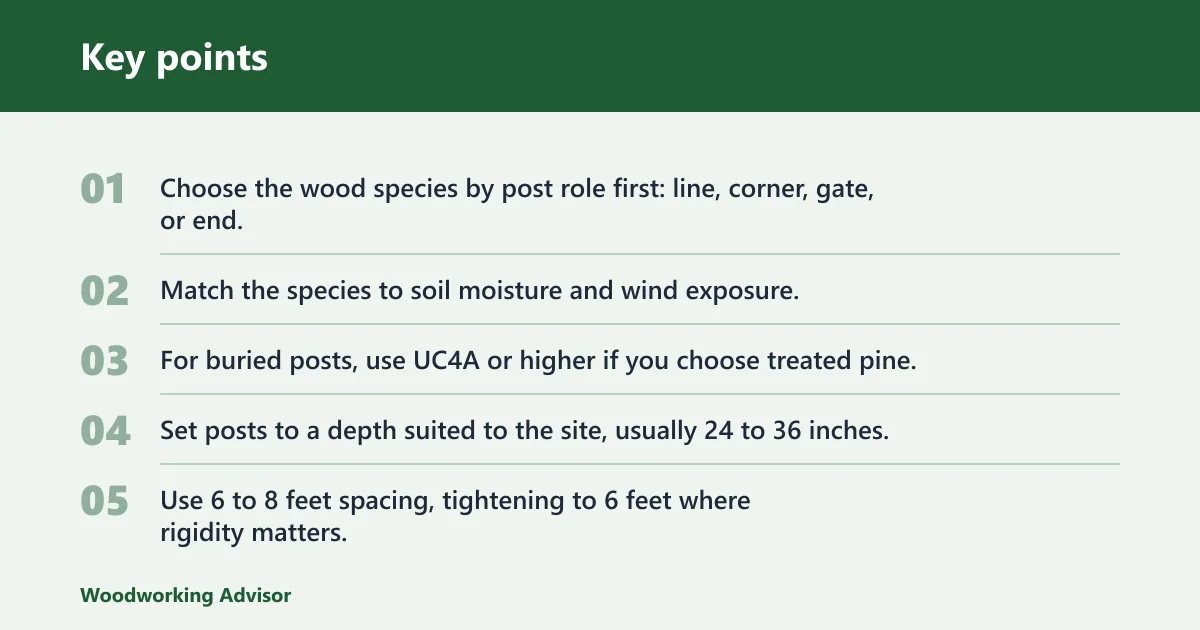
- Choose the wood species by post role first: line, corner, gate, or end.
- Match the species to soil moisture and wind exposure.
- For buried posts, use UC4A or higher if you choose treated pine.
- Set posts to a depth suited to the site, usually 24 to 36 inches.
- Use 6 to 8 feet spacing, tightening to 6 feet where rigidity matters.
- Seal cut ends, keep drainage open, and inspect the base regularly.
Frequently asked questions
What type of wood is best for fence posts?
For most fence posts, ground-contact pressure-treated pine is the practical default because it is common, affordable, and made for burial when it carries UC4A or higher. For wet ground, heavy loads, or long service life, Robinia, larch, oak, or sweet chestnut can be better choices depending on local supply.
What is the best type of wood to use for fencing?
The best wood depends on the part of the fence. Treated pine is usually the best value for posts. Cedar and redwood are better known for naturally durable above-ground fence parts. For untreated ground-contact use, Robinia is a strong option, while oak, sweet chestnut, and larch also fit certain fence systems.
Are cedar or redwood better than pressure-treated wood for fence posts?
Cedar and redwood are better than pressure-treated wood in some above-ground uses because they are naturally decay resistant. For buried posts, pressure-treated pine with a proper ground-contact rating often has the edge on value and predictability. Redwood is the better premium pick; cedar is usually better suited to lighter-duty fence parts.
What wood lasts longest in the ground for fence posts?
Robinia is one of the longest-lasting untreated woods for ground contact and is often used for permanent paddocks. Oak, sweet chestnut, and larch can also perform well, but durability depends on product form, moisture, and installation. For a treated option, choose UC4A or higher and keep the post base dry where possible.
Do fence posts need to be set in concrete?
No, fence posts do not always need concrete. Concrete can improve alignment, but it can also trap moisture against the wood and speed rot. Many posts do better with good drainage and proper depth. Driven posts can drain better than posts locked in a wet collar of concrete.
How deep should wooden fence posts be set?
Most residential wooden fence posts are set 24 to 36 inches deep. Go deeper in soft soil, wet ground, or wind exposure. Corner and gate posts usually need stronger anchoring than line posts, because they carry more load and are more likely to move if the footing is too shallow.
What wood should I use for corner and gate posts?
Corner and gate posts should be the strongest posts in the fence. Robinia is an excellent untreated choice, and larch, oak, or UC4A-or-better pressure-treated pine are also sensible options. Because these posts carry more force, species choice and depth matter more than they do for ordinary line posts.
How do soil and moisture affect fence post rot?
Soil and moisture drive rot by keeping the buried part of the post wet for long periods. Poor drainage, clay soil, and constant soil contact speed decay at the soil line. That is why ground-contact rating, drainage, and post depth all matter when you choose and install fence-post wood.
Sponsored / affiliate links. As an Amazon Associate I earn from qualifying purchases. I may earn additional commission from eligible campaigns.