Best Cedar for Fence: 5 Species Compared (2026)
Western Red Cedar is the best cedar for a fence for most homeowners — “durable to very durable” decay resistance (The Wood Database), the widest picket and board availability of any cedar species, and a live 2026 materials cost of $8.50–$16.50 per linear foot. For the posts themselves, though, a different species — Eastern Red Cedar — is the one actually named for untreated ground contact. Still weighing wood fencing against other materials? See our full pros and cons of a cedar fence breakdown first.
We compared 5 cedar species for fencing specifically — not furniture, not garden beds — normalized by Janka hardness, decay class, and what the 2024 IRC actually allows for a post set bare in soil. If you’re building a raised bed instead, see our cedar for raised garden beds comparison; for outdoor furniture, see best cedar for outdoor furniture. This guide goes deep on the one thing those two don’t cover: what happens to cedar at the part of a fence that actually touches the ground.
Cedar Species for Fencing: The Full Comparison
Best Cedar Fence Stain Pick
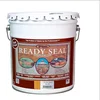
Ready Seal Exterior Wood Stain & Sealer, Natural Cedar, 5 Gallon – $177.71
Oil-based, no-lap-marks formula sized for a full fence run rather than a single gallon can.
- Best for: Staining an entire fence run in one pass without lap marks
- Why we picked it: Field-tested coverage runs 75–80 sq ft/gallon on rough or weathered cedar, budget toward that figure
- Main drawback: Oil-based — higher VOC and longer dry time than water-based alternatives
Compare more cedar fence-building supplies
 Option 1 SPAX #10 x 3-1/2″ Stainless Screws (57 pc) – $19.98
|
 Option 2 LADECH 4×4 Post Anchor Ground Spike, 24″ – $59.98
|
 Option 3 Instant Anchoring Cement, 10 lb, Quick Setting
|
As an Amazon Associate we earn from qualifying purchases.
Every numeric cell below is sourced this session — Janka hardness and decay class from The Wood Database, and the ground-contact column cross-checked against AWPA standard U1 and the 2024 International Residential Code. This is a different axis than board-foot furniture pricing — every price below is per linear foot of fence-grade material, the unit that actually matters when you’re pricing a real fence run.
| Species | Janka Hardness | Decay Resistance (Wood Database) | Density | Untreated Ground Contact | Verdict |
|---|---|---|---|---|---|
| Western Red Cedar | 350 lbf | Durable to very durable | 23 lbs/ft³ | Named exception species (heartwood, ≤10% sapwood/face) | #1 Best Overall |
| Eastern Red Cedar (Aromatic) | 900 lbf | Excellent — decay & insect | 33 lbs/ft³ | Named exception species — traditional bare-post choice | Best for Untreated Ground-Contact Posts |
| Alaska Yellow Cedar | 580 lbf | Durable to very durable, resists most insects | 31 lbs/ft³ | Not separately tested — confirm with local AHJ | Best for Wet, Cold & Coastal Climates |
| Northern White Cedar | 320 lbf | Durable to very durable, resists termites/beetles | 22 lbs/ft³ | Softest here — above-grade use recommended | Best Budget Cedar for Fencing |
| Incense Cedar | 470 lbf | Durable to very durable | 24 lbs/ft³ | Not separately tested — typically used for pickets, not posts | Best for Decorative Picket Fencing |
“Named exception species” means the 2024 IRC lists cedar heartwood (alongside redwood, black locust, and black walnut) as an accepted alternative to AWPA-treated wood for exterior applications, including fence posts — see the ground-contact section below for the exact caveat, and always confirm with your local building department, since code adoption lags by jurisdiction and inspectors commonly still expect a treated or manufacturer-rated post base.
The Correction Most Fence Guides Skip: Ground Contact Isn’t One-Size-Fits-All
Almost every “cedar fence” article repeats some version of “cedar naturally resists rot” and stops there. That claim is only true of heartwood — the dense, darker inner wood carrying the thujaplicin oils responsible for decay resistance. Sapwood, the pale band just under the bark, has almost none of that protection, and a post that’s mostly sapwood will rot at the ground line on roughly the same timeline as untreated pine, regardless of which cedar species the tag says.
The 2024 International Residential Code addresses this directly: naturally durable wood — redwood, cedar, black locust, or black walnut — qualifies as an alternative to AWPA-treated lumber in exterior construction only with no more than 10% sapwood on any face. Separately, agricultural fence-post specifications have long carried the same exception by name for red cedar specifically, alongside black locust and Osage orange. In practice, that means the cedar post sold at a big-box store — typically a mix of heartwood and sapwood in the same piece unless you ask for a heart grade — may not actually qualify as a code-compliant untreated ground-contact post, even though the species is on the approved list. Ask specifically for heartwood, or set the post on a metal anchor above grade instead of trusting the species name alone.
5 Best Cedar Species for Fencing
1. Western Red Cedar — #1 Best Overall
- Janka hardness: 350 lbf — light and easy to cut, drill, and nail
- Decay resistance: durable to very durable (The Wood Database)
- Density: 23 lbs/ft³ — the lightest board material on this list
- Price: $8.50–$16.50/linear ft materials (2026, Ergeon cost data)
- Widest commercial availability of any fence-grade cedar in North America
Western Red Cedar (Thuja plicata) is the default recommendation because it survives scrutiny on every axis a fence actually needs: it’s light enough to hang solo, cuts and nails without fighting back, is stocked as dimensional fence lumber at nearly every yard and big-box store, and resists rot and insects without chemical treatment.
It’s also the only species on this list with real published fence-grade lumber standards — No.1 “Select”, No.2 “Quality”, and No.3 “Rustic” from the West Coast Lumber Inspection Bureau, covered in the buying guide below.
Main drawback: the construction/knotty grades most yards stock blend heartwood and sapwood in the same board unless you specifically request a heart grade — and per the correction above, that matters most at the post base.
Who it’s for: anyone building a standard privacy or picket fence who wants a species sold within a short drive of almost anywhere in the US.
2. Eastern Red Cedar (Aromatic Cedar) — Best for Untreated Ground-Contact Posts
- Janka hardness: 900 lbf — more than double Western Red Cedar’s hardness
- Decay resistance: “excellent” for both decay and insect attack (The Wood Database)
- Density: 33 lbs/ft³ — noticeably denser, harder to hand-saw
- Traditionally the species set bare in soil for fence posts with no pre-treatment at all
- Botanically a juniper (Juniperus virginiana), not a true cedar — sold and graded as cedar regardless
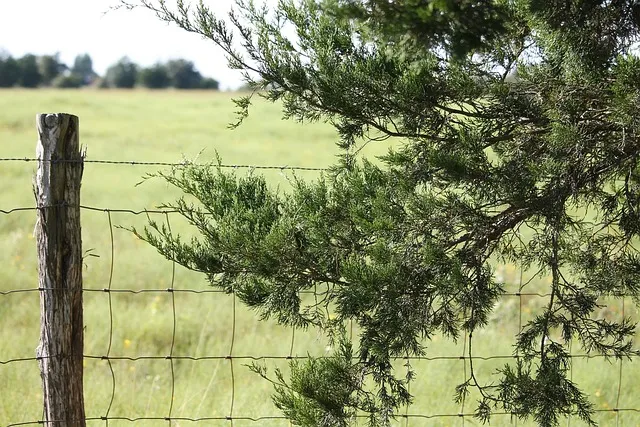
Eastern Red Cedar’s density and oil content is why it’s the species most often named by name in agricultural fence-post specifications as an accepted untreated alternative to pressure-treated wood — the same reputation that makes it a standard choice for cedar chests and closet lining.
For a post specifically — the part of a cedar fence most exposed to ground moisture — this is the species with the strongest track record, provided it’s heartwood.
Main drawback: it isn’t commercially farmed at Western Red Cedar’s scale. Trees are smaller and slower-growing, so large, clear, knot-free boards are uncommon; most available stock is narrower with visible knots, and it’s harder to work than Western Red Cedar.
Who it’s for: the posts specifically, even on a fence built mostly from a different cedar species for the boards and pickets.
3. Alaska Yellow Cedar — Best for Wet, Cold & Coastal Climates
- Janka hardness: 580 lbf
- Decay resistance: durable to very durable, resistant to most insects (The Wood Database)
- Density: 31 lbs/ft³
- Grows in consistently wet, cool coastal forests of the Pacific Northwest and southeast Alaska
- Price: not consistently published — supply is limited and largely quote-based
Alaska Yellow Cedar performs the way its native climate would predict: it tolerates constant moisture cycling without the cupping some other fence-grade softwoods show, which is exactly the stress a fence sees through a wet winter or a coastal fog cycle.
We searched for a live, representative price-per-linear-foot figure and couldn’t find one consistent enough to print without misleading you — most listings we found were quote-based, not posted pricing.
Main drawback: constrained supply outside its native range means both price and availability get worse fast the farther you are from the Pacific Northwest, and it isn’t separately named in the IRC’s ground-contact exception list the way Western Red Cedar and red cedar are — treat it as an above-grade material unless your local code official confirms otherwise.
Who it’s for: Pacific Northwest homeowners with local supplier access who want a species built for their exact climate and are comfortable calling for a quote.
4. Northern White Cedar (Eastern White Cedar) — Best Budget Cedar for Fencing
- Janka hardness: 320 lbf — the softest species on this list
- Decay resistance: durable to very durable, plus termite and powder-post-beetle resistance (The Wood Database)
- Density: 22 lbs/ft³ — the lightest species compared here
- Typically sold in smaller dimension sizes than Western Red Cedar
- Regionally concentrated in the Northeast and Great Lakes supply chain
Northern White Cedar trades hardness for weight and price in a way that suits a budget fence build: it’s the lightest species here, carries the same durable-to-very-durable decay rating as Western Red Cedar, and is typically the cheapest cedar option where it’s regionally available.
It’s the traditional material for rustic post-and-rail and split-rail fencing in the Northeast specifically, not just a cut-rate substitute for Western Red Cedar pickets.
Main drawback: it’s the softest species on this list, so it dents and dings more easily than the others, and it’s typically milled in smaller board sizes — fine for pickets, more limiting for wide rail stock. Availability and price both worsen quickly outside the Northeast/Great Lakes region.
Who it’s for: Northeast and upper-Midwest homeowners who want a genuinely lightweight, budget-tier cedar without stepping down to pressure-treated pine.
5. Incense Cedar — Best for Decorative Picket Fencing
- Janka hardness: 470 lbf
- Decay resistance: durable to very durable (The Wood Database)
- Density: 24 lbs/ft³
- Tight, straight grain with a warm reddish-brown color
- Not separately named in ground-contact code exceptions — use for pickets and boards, not posts
Incense Cedar’s tight, straight grain and pleasant natural aroma make it a strong pick specifically for the visible picket and board surfaces of a decorative fence, where appearance matters as much as durability. It’s easy to cut and shape, which shows in detailed picket-top profiles and lattice work.
It fills a different role than the other four species here: nobody is specifying Incense Cedar for the structural posts, but for the boards a passerby actually sees, it’s a genuine upgrade in grain and color consistency.
Main drawback: it hasn’t been tested and named for ground contact the way Western Red Cedar and Eastern Red Cedar have, so pair it with a different species (or a treated/anchored post) below grade rather than assuming it performs the same way there.
Who it’s for: anyone prioritizing the look of the visible fence face — pickets, caps, lattice — over the posts, which should come from a species with a real ground-contact track record.
How We Picked These
This is a research-and-compare guide, not a hands-on lumber test — we did not physically install and weather five species of cedar fence posts over multiple seasons. Here’s exactly what the picks and numbers above are built from:
- Janka hardness and decay resistance ratings pulled directly from The Wood Database, a primary-sourced species reference, for each of the five species — not paraphrased from another site’s summary.
- Fence board grading (No.1 Select, No.2 Quality, No.3 Rustic) sourced from the West Coast Lumber Inspection Bureau’s published fencing grade rules — a different, fence-specific standard from the general appearance-lumber grading (Architect Clear, Custom Knotty) used for furniture or garden-bed cedar.
- Ground-contact code language cross-checked against AWPA standard U1’s Use Category 4 and the 2024 International Residential Code’s naturally-durable-species exception — not assumed from a single blog’s summary.
- Price-per-linear-foot figures cross-checked against multiple 2026 fence-cost sources; ranges reflect real regional and labor-market variation, not one contractor’s quote.
- Product picks (fasteners, sealant, post hardware) are live-verified via the Amazon Creators API this session — a returned buy-box price, not just a page that loads.
Where a number couldn’t be confirmed from a solid source — Alaska Yellow Cedar’s per-linear-foot price specifically — we said so directly rather than smoothing it over with an invented figure.
What to Consider When Buying Cedar for a Fence
Fence Board Grades, Explained Plainly
Fence-grade cedar uses its own grading system, separate from the appearance grades (Architect Clear, Custom Knotty) used for furniture-grade or garden-bed cedar. The West Coast Lumber Inspection Bureau’s fencing grades: No.1 “Select” — sound, tight knots, up to roughly half the face width, tightest thickness tolerance; No.2 “Quality” — larger knots up to 3/4 face width and up to four 1-inch holes per foot permitted, same dimensional tolerance as Select; No.3 “Rustic” — the economy grade, permitting essentially any characteristic that doesn’t interfere with function, with looser dimensional tolerances. For a privacy fence where boards overlap, No.2 Quality is usually the sweet spot — the knots are cosmetic and mostly hidden by adjacent boards, and it costs meaningfully less than Select grade.
Heartwood vs. Sapwood at the Post Base
This matters more for a fence than almost any other cedar project, because posts are the one component set directly in soil. Heartwood is the darker, denser inner wood carrying the rot-resistant oils; sapwood is the pale outer band with almost none of that protection. When buying posts specifically, look for consistent darker coloration across the full cross-section, not just the visible face — a post can look like heartwood on the surface and still carry a sapwood core. If the yard can’t confirm heartwood content, consider a metal post anchor instead of direct burial (see the supplies section below).
Picket vs. Board Dimensions
Standard dog-eared privacy pickets run 5/8″ thick by 5.5″ wide (nominal 1×6), sold in 6-foot and 8-foot heights for a typical residential privacy fence. Rails are usually nominal 2×4, and posts are nominal 4×4, though 5×5 and 6×6 posts are common on taller or gate-adjacent sections that see more racking load. A board-on-board or shadowbox style typically uses the same picket stock, just with overlap or offset spacing instead of tight-butted joints — the dimension standards don’t change, only the layout.
Ground Contact: What the Code Actually Allows
AWPA standard U1 governs pressure-treated wood in Use Category 4 (UC4) — the ground-contact category that includes fence posts — and most local codes default to requiring UC4-rated treated lumber below grade. The naturally-durable-species exception (see the correction section above) is real and code-recognized, but it isn’t universally enforced the same way in every jurisdiction, and it hinges on heartwood content you often can’t verify without cutting into the board. The lower-risk approach for an untreated cedar post: set it on a manufacturer-rated metal post anchor above grade instead of burying it directly, which sidesteps the heartwood question entirely.
Price per Linear Foot, Not per Board
A single board’s price tells you almost nothing about what a real fence run costs, because pickets, rails, and posts are priced and consumed at different rates per foot of fence. Price per linear foot of finished fence — what a contractor actually quotes — is the only unit that lets you compare species and compare DIY materials cost against a professional installed quote fairly. See the full cost breakdown below for a 100-foot run priced both ways.

Kiln-Dried vs. Green for Fencing
Unlike a garden bed or furniture piece, green (undried) cedar is the industry standard for fence pickets specifically — the narrow board width keeps shrinkage manageable, and air reaches both faces to limit warping. Kiln-dried stock costs more and mostly matters for wider rail or post stock, where shrinkage as the wood dries in place could open gaps or loosen fasteners.
Climate and Regional Availability
Buying the regionally native cedar usually beats buying the “best” species on paper once freight is factored in. Western Red Cedar ships well and is stocked nationally; Eastern Red Cedar is the practical choice through the central and eastern US; Northern White Cedar is priced best in the Northeast and Great Lakes region; Alaska Yellow Cedar is priced most reasonably close to its native Pacific Northwest range and gets expensive fast outside it.
Fasteners: Why Cedar Corrodes Standard Screws
Cedar’s natural tannic acid reacts with standard zinc-coated or plain steel fasteners, producing black streaking around every screw or nail head within a season or two — a cosmetic problem on a fence face that’s hard to reverse once it happens. Stainless steel (304 or better) or hot-dip galvanized fasteners rated for cedar and other tannin-rich woods avoid the reaction entirely; it’s a small cost difference over the life of a full fence run. Cedar pickets sold pre-treated are less common than you’d expect — see our breakdown of whether cedar fence pickets come treated if you’re unsure what you’re buying.
Real Cost to Build a 100-Linear-Foot Cedar Privacy Fence
Per-linear-foot pricing is hard to picture without a real project attached, so here’s the math for a 100-linear-foot, 6-foot-tall Western Red Cedar dog-eared privacy fence, DIY materials only, posts set 8 feet on-center (13 posts total). For a wider breakdown of what drives cedar pricing generally, see our cedar fence cost guide; if you’re still weighing whether cedar is worth the premium at all, our is a cedar fence worth it breakdown covers that decision directly.
| Component | Formula | Cost |
|---|---|---|
| Cedar pickets, boards & rails | 100 linear ft × $8.50–$16.50/linear ft (2026 materials data) | $850 – $1,650 |
| Posts set in concrete | 13 posts × 2 bags fast-set concrete (50 lb, live-verified $29.99/bag) | $779.74 |
| Stainless fasteners | ≈230 pickets × 2 screws → 9 packs SPAX 304-stainless (57 pc, live-verified $19.98/pack) | $179.82 |
| Post caps | 13 posts ÷ 4-pack → 4 packs cedar caps (live-verified $49.99/4-pack) | $199.96 |
| Materials subtotal, DIY | $2,009.52 – $2,809.52 | |
| Compare: pressure-treated pine, fully installed | 100 linear ft × $20–$35/linear ft installed (2026) | $2,000 – $3,500 |
| Compare: cedar, fully installed | 100 linear ft × $30–$45/linear ft installed (2026) | $3,000 – $4,500 |
Derived figures — each row’s formula and live-verified unit price are shown so the arithmetic can be checked. Stain/sealant is priced separately in the supplies section below since coverage depends heavily on picket style and whether you seal one or both faces.
The comparison worth remembering: DIY cedar materials for this run ($2,010–$2,810) land close to what a professionally installed pressure-treated pine fence costs ($2,000–$3,500). If you’re willing to install it yourself, cedar isn’t necessarily the “expensive” option its reputation suggests — it’s roughly a wash against paying someone else to install the cheaper material.
Essential Cedar Fence-Building Supplies
Raw fence-grade cedar boards and posts are a local-lumberyard purchase in almost every case — they’re long, heavy, and sold by the linear or board foot, and shipping on Amazon typically erases any price advantage past roughly 4 feet in length. Use the grade names and species picks above at the yard. For the supporting hardware and finish, these returned a live buy-box price this session:
For stain coverage specifically: the manufacturer rates Ready Seal at 125–250 sq ft per gallon depending on whether the wood is rough or smooth, but independent field testing on rough or weathered wood has measured closer to 75–80 sq ft per gallon — budget toward the lower, field-tested figure rather than the manufacturer’s best-case number. Our full Ready Seal review breaks down coverage by color and wood type in more depth.
How to Build a Cedar Fence That Lasts
- Pick your species and grade using the comparison table above — Western Red Cedar boards with Eastern Red Cedar or heart-grade posts is a common, defensible split.
- Inspect posts for heartwood specifically before buying — consistent darker coloration through the cross-section, not just the visible face.
- Choose No.2 Quality grade for overlapping privacy pickets, reserving No.1 Select for gates or single-board sections where knots are more visible.
- Set posts 8 feet on-center in concrete, or on a rated post anchor if you want to avoid direct ground contact entirely.
- Assemble with stainless or hot-dip-galvanized fasteners — never standard zinc-coated screws, which streak cedar within a season.
- Let new cedar weather 4–8 weeks before staining or sealing, so the wood’s natural moisture content drops enough for the finish to actually penetrate.
- Reapply sealant every 2–3 years, more often on south- or west-facing runs with heavy sun exposure — see our guide to staining a cedar fence for application technique. For a colorless, waterproof-only option, our cedar sealer comparison covers seven clear products by coverage and cost.
For a side-by-side on the two most-asked material questions, see cedar vs. pine, which lasts longer and cedar vs. pressure-treated fence. For design inspiration once you’ve settled on material, browse our cedar fence ideas.
Frequently Asked Questions
What type of cedar is best for a fence?
Western Red Cedar is the best all-around choice for boards and pickets — durable to very durable decay resistance, the widest availability of any fence-grade cedar, and $8.50–$16.50 per linear foot in 2026 materials pricing. For the posts specifically, Eastern Red Cedar has the stronger untreated ground-contact track record.
Can cedar fence posts go directly in the ground without treatment?
Heartwood cedar posts are a named exception to AWPA-treated-wood requirements in the 2024 IRC and in many agricultural fence-post specifications, but only with no more than 10% sapwood on any face — and enforcement varies by local jurisdiction. A metal post anchor that keeps the post base above grade avoids the question entirely.
What’s the difference between No.1, No.2, and No.3 cedar fence grades?
No.1 “Select” has sound, tight knots and the tightest size tolerances; No.2 “Quality” permits larger knots and a limited number of small holes at the same tolerances; No.3 “Rustic” is the economy grade, permitting most cosmetic flaws that don’t affect function. Most privacy fences use No.2 Quality as the cost/appearance balance point.
How much does a cedar fence cost per linear foot?
DIY materials run roughly $8.50–$16.50 per linear foot for boards, pickets, and rails alone. Fully installed by a contractor, expect $30–$45 per linear foot in 2026 — compared to $20–$35 per linear foot installed for pressure-treated pine.
Is cedar better than pressure-treated pine for a fence?
Cedar resists decay and insects naturally and doesn’t require chemical treatment, and typically lasts 20–25 years with maintenance versus 10–15 for pine. Pressure-treated pine costs meaningfully less installed, particularly for the posts, where its treatment rating is more consistently code-verifiable than an unverified cedar heartwood claim.
Do cedar fence fasteners need to be stainless steel?
Effectively yes for a clean finish. Cedar’s natural tannic acid reacts with standard zinc-coated or plain steel fasteners and produces black streaking around every screw or nail within a season or two. Stainless steel (304 or better) or hot-dip galvanized fasteners avoid the reaction.
Final Thoughts
Western Red Cedar remains the best cedar for a fence overall — light, widely available, and naturally rot-resistant without a chemistry lesson. But the number worth carrying away from this whole comparison isn’t a species: it’s that ground contact is where cedar’s reputation is tested hardest, and heartwood content at the post base matters more than which cedar species the tag says. Buy heart-grade posts, confirm No.2 Quality grade for the boards, and use stainless fasteners — the species choice matters less than getting those three details right.
Sponsored / affiliate links. As an Amazon Associate I earn from qualifying purchases. I may earn additional commission from eligible campaigns.