How Much Does It Cost to Build a DIY Deck Bench?
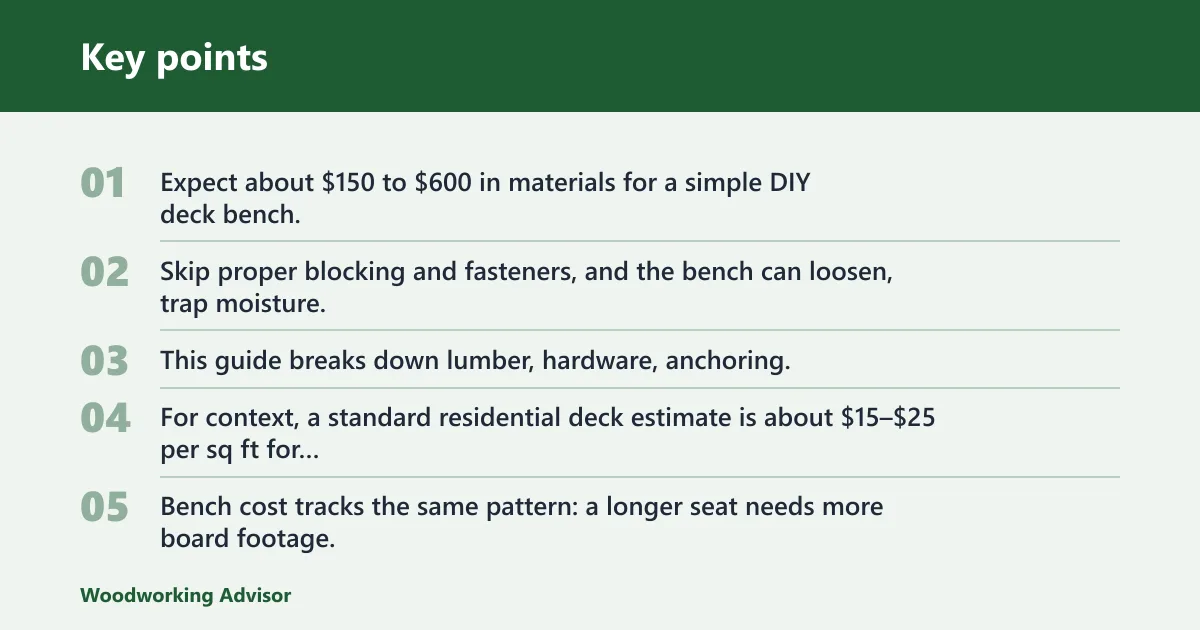
Expect about $150 to $600 in materials for a simple DIY deck bench, about $250 to $900 for a corner bench, and about $500 to $1,500 for wraparound layouts, before labor or deck repairs. Skip proper blocking and fasteners, and the bench can loosen, trap moisture, or force rework. This guide breaks down lumber, hardware, anchoring, and the cost differences between straight, corner, and wraparound bench plans.
This guide is part of our Woodworking project ideas and plans series.
For context, a standard residential deck estimate is about $15–$25 per sq ft for pressure-treated pine, while composite decking can run about $40–$80 per sq ft installed. Bench cost tracks the same pattern: a longer seat needs more board footage, more connectors, and more support points.
Material cost ranges for bench sizes and layouts


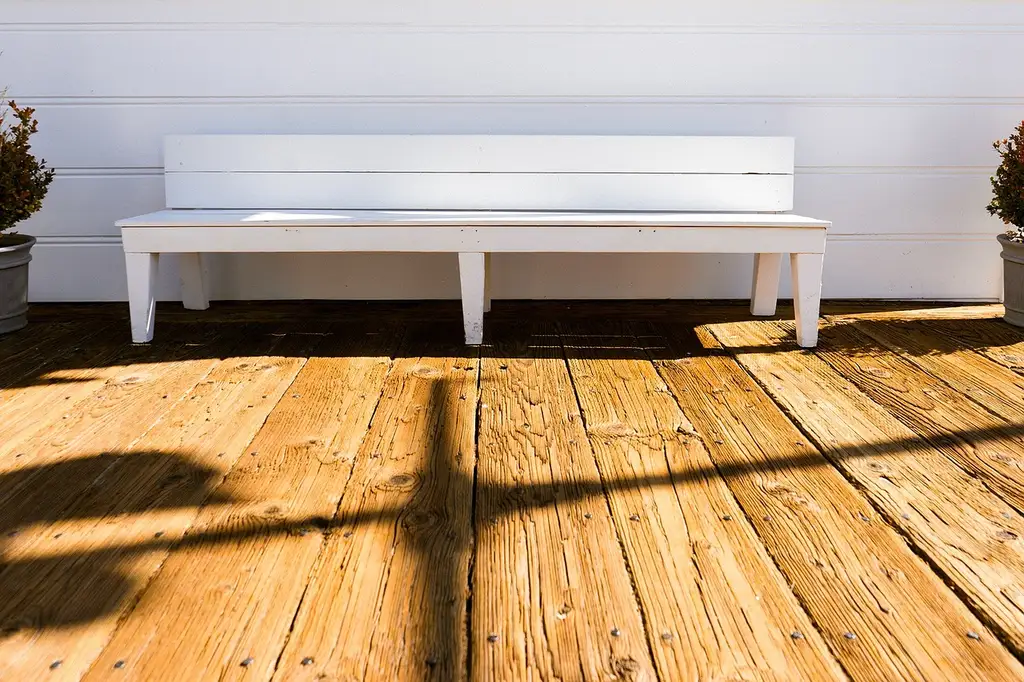
Materials-only price range for a simple built-in bench
A basic straight bench usually costs less than a full deck add-on package because you are pricing a small frame, seat boards, and attachment hardware rather than a new surface. The material bill rises fast when you add return legs, corner turns, or wraparound seating that needs more blocking and longer runs of trim.
Why larger layouts cost more than a basic seat
Bench size drives cost in a direct way. A 6-foot seat may need a modest amount of framing and a short run of decking, while an 8-foot bench and a corner or L-shaped layout add more joists, more fasteners, and more chances for water to sit in joints.
Bench projects also behave like a small structural add-on once they are tied to the deck frame. That matters because attachment points, drainage gaps, and maintenance access matter more than the look of the seat alone.
When a bench starts to affect the deck budget
A bench starts to move the overall budget in a meaningful way when it needs its own blocking, changes the guard layout, or forces a stronger frame under the seating area. That is especially true on raised decks, where extra posts or bracing may already be part of the structure and the bench becomes one more load path to plan for.
Deck bench cost worksheet
Use this worksheet to price the bench as a small build, not as furniture. The ranges below are materials-only estimates for common DIY plans, assuming standard lumber choices, corrosion-resistant connectors, and a finish coat only where needed for the material selected.
| Bench style | Estimated lumber | Brackets/fasteners | Footing or blocking | Finish | Total materials-only range | When extra support is needed |
|---|---|---|---|---|---|---|
| 6-ft straight bench | $70–$140 | $35–$70 | $25–$90 | $20–$45 | $150–$345 | Needs added blocking if it attaches to a deck area that was not framed for seating loads or if the seat span is left unsupported. |
| 8-ft straight bench | $95–$190 | $45–$90 | $35–$120 | $25–$55 | $200–$455 | Longer span usually needs more than end support; plan for intermediate blocking or a stronger frame layout. |
| Corner bench | $180–$360 | $70–$140 | $60–$180 | $35–$70 | $345–$750 | The turn adds load concentration at the corner, so support often has to be checked at both legs of the angle. |
| Wraparound L-bench | $280–$620 | $110–$220 | $90–$260 | $45–$100 | $525–$1,200 | Needs the most planning because the return leg, corner joint, and longer run usually require stronger blocking and more fastening points. |
Worked materials example for a 6-foot straight bench
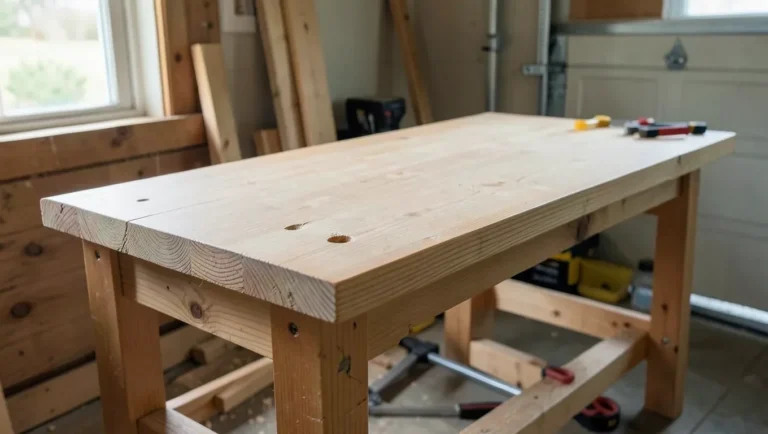
A common 6-foot bench might use pressure-treated framing, seat boards, corrosion-resistant screws, structural connectors, and a small amount of stain or sealant. In practice, the cost lands in the lower end if you keep the frame simple and use standard lumber sizes, and it climbs when you add wider seat boards, hidden fasteners, or decorative trim.
- Measure the clear bench length and seat depth before buying lumber.
- Price the frame boards, seat boards, and any backrest parts separately.
- Add structural screws or approved connectors for each joint.
- Estimate blocking or support hardware if the bench will be tied to the deck frame.
- Include finish only if the product and moisture content call for it.
What materials do you need?
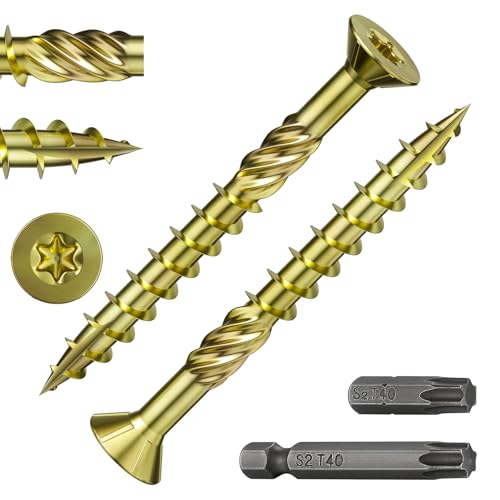
A built-in deck bench usually needs framing lumber, seat material, corrosion-resistant fasteners, and some form of support or blocking. The exact list changes with the bench style, but the cost pattern stays the same: framing and connectors do the structural work, while the seat boards and finish decide the appearance and maintenance burden.
Pressure-treated pine parts and fasteners
Pressure-treated pine is the lowest-cost baseline for a budget deck. It is commonly used for framing, and it pairs well with exterior-rated screws or structural connectors. If you use it for the seat, plan for periodic sealing or staining when the product and exposure call for it.
Composite bench parts and trim considerations
Composite decking usually costs about 2–3x more up front than pressure-treated pine. That higher price applies to the bench surface as well, and the material is often chosen for lower maintenance rather than lowest initial cost. Brands such as Trex and TimberTech are common examples.
Composite can make sense for the seat surface even if the hidden frame stays pressure-treated. That approach keeps the structure affordable while giving you a seat that better matches a composite deck board profile and color.
Blocking, brackets, and corrosion-resistant hardware
Do not treat a built-in bench like a loose outdoor stool. The connection points matter because bench loads create movement, and movement opens up joints, loosens screws, and traps water at the frame. Use hardware rated for exterior use and sized for the span you are building.
One common first-timer mistake is skipping blocking under a seat because the bench “only” holds sitting weight. That shortcut can leave the frame flexing at the attachment points and can create drainage gaps that hold water against the lumber.
Finish, stain, or sealant costs
Finish is not always mandatory on day one, especially with pressure-treated lumber that is still drying. If you do add a finish, price it as a separate line item because the product type, coverage area, and number of coats change the total more than most people expect.
Is pressure-treated wood or composite cheaper?
Pressure-treated wood is usually cheaper up front, while composite costs more at purchase but may reduce upkeep later. For a DIY bench, pressure-treated lumber often wins on budget, especially if you are already building a pressure-treated deck. Composite makes more sense when color match and lower maintenance matter more than initial price.
Up-front cost difference
For the deck itself, pressure-treated pine is the budget baseline at about $15–$25 per sq ft installed, while composite can run about $40–$80 per sq ft installed. A bench follows the same direction: composite seat boards and trim usually push the bill higher because the material cost is higher before any labor is added.
Maintenance and finish differences
Pressure-treated wood may need periodic sealing or staining depending on product, moisture content, and exposure. Composite usually skips that routine, which is why some homeowners accept the higher price. That tradeoff is about time and upkeep, not just first cost.
When matching the deck boards makes sense
Matching the bench to the deck boards makes sense when the deck is already a composite system or when you want the seat to blend into the surface. If maintenance is the main concern, matching materials can also keep cleaning and refinishing schedules closer together. If budget matters more, a pressure-treated frame with a simpler seat often costs less.
Do built-in benches need posts or footings?
Some built-in benches only need blocking tied to the deck frame, but larger or heavier layouts may need posts or dedicated support. The need depends on span, attachment points, and whether the deck structure was planned for the extra load. Elevated decks deserve more caution because support details change fast.
When blocking is enough
Blocking can be enough for a short straight bench when the deck frame is already sized for the added load and the bench is not carrying guard-related forces. In that case, the bench acts more like a structural attachment than a separate free-standing piece.
When posts or dedicated support make more sense
Posts or dedicated support make more sense when the bench is long, cantilevered, or part of a corner or wraparound layout. Picture a 10-foot L-bench on a raised deck: the turn concentrates load at the corner, and a simple surface attachment may not be enough.
Why elevated decks need more structural planning
Deck height changes the whole project because raised and second-story decks need longer posts, more bracing, and different guard-rail decisions. That can affect where a bench can sit, how it is anchored, and whether the deck structure needs to be modified before the bench goes in.
What deck add-ons increase cost most?
Railing, stairs, height, and permits usually move the budget more than the bench itself. Built-in features such as benches, planters, pergolas, and lighting also increase complexity because they create custom labor, extra fastening details, and more planning around the deck frame.
Deck railing as a separate line item
Railing is priced separately at roughly $20–$60 per linear foot, and it is often code-driven. That makes it a major add-on cost on any deck project, far bigger than a simple bench in many cases. If the bench sits near an edge, railing decisions can affect the budget and the layout at the same time.
Deck stairs and why they add up fast
Stairs are estimated at about $150–$300 per step, and they can change the budget quickly on elevated decks. A second-story deck also tends to need more code-related work, which means the stair run is not just a convenience item; it is a significant line item in the project total.
Deck height and extra bracing
Height increases cost because taller decks need more framing, more bracing, and more careful support planning. That added structure matters to a bench project too, because a bench tied into a higher deck often needs stronger attachment details than the same bench on a ground-level platform.
Permits, inspection, and site conditions
Permits are often required for attached or elevated decks, and fees vary by jurisdiction. The rule usually applies to the deck project or a structural change, not to every bench by default, but a built-in bench can become part of the permit review if it changes the structure. Site conditions, demolition, and access also affect the total budget.
How much should you budget if you hire it out?
If you hire the work out, labor often makes up about 25% to 55% of installed deck cost, which is why DIY bench savings can be meaningful. The exact labor share depends on region, project complexity, and whether the bench is a simple add-on or part of a bigger structural change.
Materials versus labor split
For a bench build, materials may be only part of the total once a carpenter prices setup, layout, attachment, and finishing. Backyard Calcs estimates materials at about 45% of an installed deck and labor at 55%, which is a useful reminder that labor can rival the material bill on custom work.
How region changes installed pricing
Regional rates matter because carpentry labor, inspection steps, and permit fees vary widely. BuildCost lists national averages of $17–$89 per sq ft for decks, and Inch Calculator gives a typical deck price range of $30–$60 per square foot. Those broader figures explain why a built-in bench quote can move a lot from one market to another.
When getting multiple quotes matters most
Get more than one estimate when the bench is attached to a raised deck, when it changes guard-rail layout, or when the plan includes stairs or other add-ons. Say your 8-foot bench needs custom corner blocking on a second-story deck; a quote that treats it like furniture will miss part of the structural work and understate the cost.
Frequently asked questions
How much does it cost to build a DIY deck bench?
A simple DIY deck bench usually costs about $150 to $600 in materials, depending on length, lumber choice, and how much blocking or connector hardware you need. Corner and wraparound layouts cost more because they use more framing and more attachment points, so their material total rises quickly.
What does it cost to add a built-in bench to a deck?
Adding a built-in bench usually means pricing it as a small structural add-on, not as loose furniture. For a basic straight bench, materials often stay under a few hundred dollars, but the total climbs if the bench needs extra blocking, a corner turn, or finish that matches the deck boards.
Is a deck bench cheaper to build with pressure-treated wood or composite?
Pressure-treated wood is usually cheaper up front. Composite costs about 2–3x more at purchase and is better suited to low-maintenance goals or color matching. If you want the lowest material bill, pressure-treated pine is the usual baseline, especially on a pressure-treated deck.
What materials do I need for a DIY deck bench?
Plan on framing lumber, seat boards, exterior-rated screws or connectors, and some form of blocking or support. You may also need stain, sealant, or trim depending on the material and the finish you want. A longer bench or an L-shaped layout usually needs more hardware and more structural planning.
How much should I budget for labor if I hire it out?
Labor commonly makes up about 25% to 55% of installed deck cost, and custom bench work can sit near that same logic when the layout is more than a simple seat. Raised decks, corner benches, and jobs that affect railing or stairs usually bring a higher labor quote.
Can I build a deck bench without a permit?
Sometimes, yes, but permit rules usually track the deck project or a structural modification rather than the bench alone. If the bench is built into an attached or elevated deck, or if it changes framing, guard layout, or inspection scope, local rules may require a permit or approval.
Sponsored / affiliate links. As an Amazon Associate I earn from qualifying purchases. I may earn additional commission from eligible campaigns.