Fence Stringer vs Fence Rail: What’s the Difference
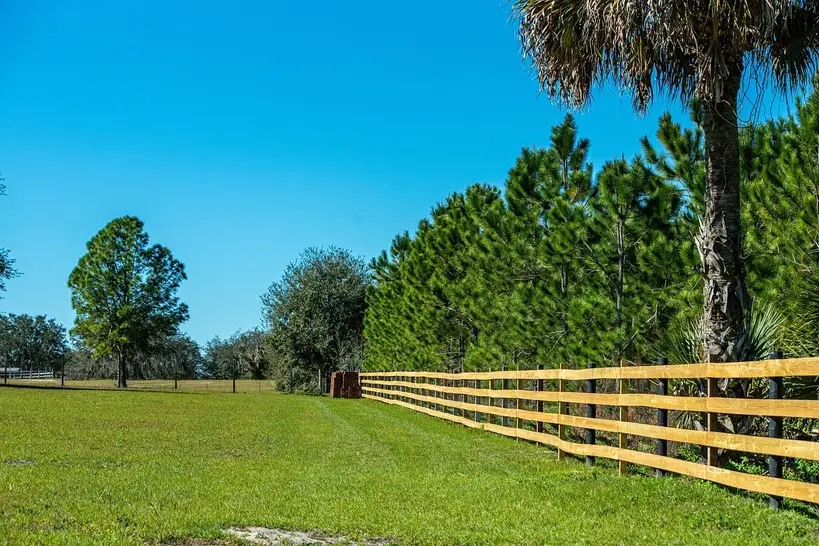
On a fence, a rail is the horizontal member that spans between posts; stringer is a regional term that may mean the same part, so match the fence style and measure the board before you buy. Using the wrong term can send you home with lumber that does not fit, fasteners that do not suit the job, or a repair that fails at the post. This article explains the terms, regional naming differences, and what to say when you order replacement parts or discuss a repair.
| Decision factor | Fence Stringer | Fence Rail | Winner |
|---|---|---|---|
| How broad the term is | Often used on wood privacy fences and by some contractors for the horizontal support board. | Works as the broader label for a horizontal fence member across many fence styles. | Fence Rail |
| Match to wood privacy fence parts | Often the better match when the fence uses backer rails behind pickets. | Can fit the part, but may be too generic if the yard stocks fence parts by privacy-fence vocabulary. | Fence Stringer |
| Buying clarity at the lumber yard | Useful if the existing fence already uses that term in the local market. | Usually easier for a general counter order because most people read it as the horizontal member. | Fence Rail |
| Risk of confusion with trim | Lower if you are talking about structural members on a wood privacy fence. | Higher unless you also specify whether you mean a structural rail, top rail, or cap board. | Fence Stringer |
| Best default for a replacement request | Strong choice for an existing privacy fence with rows of backer rails. | Strong choice when you want the broadest term and will add dimensions and fence style. | Fence Rail |
Fence parts at a glance
Posts, rails, and pickets
Fence posts are the vertical structural members. Rails or stringers are the horizontal members that run between posts, and pickets are the visible vertical boards attached to those members. On a wood privacy fence, the rails carry the load from the pickets and transfer it to the posts.
A simple mental model helps: posts are the spine, rails are the horizontal braces, and pickets form the face. The terms change by region and contractor language, but the layout stays the same. That is why a homeowner can hear “rail” and “stringer” used for the same piece on one job and treated differently on another.
Where horizontal members fit
Horizontal members do the structural work. In most wood fence layouts, they sit between posts and create the mounting surface for pickets or panels. The exact number and spacing change with fence height, style, and wind exposure, so the right name should always be paired with the right dimensions.
What is a fence stringer?
A fence stringer is the horizontal support board on a fence, especially on a wood privacy fence. It is the same part that others call a backer rail. Use the term that matches the existing fence layout and the local language, then confirm the size before ordering.
How stringers function on wood privacy fences
Stringers support the pickets and usually run between posts. Backer rails are the horizontal boards on a wood fence, and fence pickets attach to the backer rails. The backer rails fasten to the fence posts and provide the support structure for pickets.
Why some sources call them backer rails
Backer rail is a common name for the horizontal board on the back of a wood privacy fence. On a standard 6-foot privacy fence, you will typically see three rows of backer rails. That layout is common enough that many installers expect the term “backer rail” when the fence has solid privacy boards.
Common places you will hear the term
You are more likely to hear “stringer” in conversations about wood privacy fences than on ornamental metal or vinyl systems. It may also appear on plans or quotes from a contractor who treats the horizontal board as the structural member behind the pickets. The main point is the same: check the fence style before you order.
What is a fence rail?
A fence rail is the horizontal member of a wood fence, but the term can mean different things depending on the fence style. It may describe the structural board between posts, a top rail, a middle rail, or the backer rail that carries pickets. That breadth makes it useful, but also easy to misread.
Rail as the broadest term
Rail is the safer umbrella term when you are talking generally about a horizontal fence part. It can cover privacy fence supports, rail fence components, and some trim pieces that run along the top. Because of that overlap, you should never stop at the word alone when buying replacements.
Top rail, middle rail, and backer rail
A top rail sits near the top of the fence, while a middle rail sits lower or between other rails. A backer rail sits on the back of a wood privacy fence and supports pickets. A cap board can be part of the top edge on some fence styles, so exact placement matters more than the name by itself.
When rail and stringer overlap
In some regions, rail and stringer are interchangeable for the same horizontal board. In other regions, rail may mean any horizontal fence member while stringer gets used mainly on wood privacy fences. If a yard clerk or contractor uses one term, repeat it back with the fence style and dimensions attached.
Fence terminology by style
| Fence style | What the horizontal member is usually called | Where it sits | What to ask for at the lumber yard |
|---|---|---|---|
| Stockade | Backer rail or stringer | Behind the pickets, running between posts | Exterior fence rail cut to the fence height and matched to the existing rail size |
| Privacy | Backer rail or stringer | Between posts, usually in multiple rows | Replacement backer rails with the same thickness and length as the existing fence |
| Shadowbox | Rail or backer rail | Between posts, with pickets attached on alternating sides | Fence rails for a shadowbox layout, plus matching fasteners for exterior use |
| Rail fence | Rail | Runs through post openings or along post faces, depending on design | Rails sized for the post system, not privacy-fence backer rails |
| Cap-topped privacy fence | Backer rail below, cap board above | Rails sit between posts; the cap board runs along the top edge | Backer rails for structure and cap board only if you need the top trim |
Say your 6-foot privacy fence lost a lower board in a windstorm. If you ask for a “fence rail” without naming the style, you may get a rail fence part or a top rail instead of the backer rail you need. The safer request is: “I need a replacement backer rail for a 6-foot wood privacy fence.”
Suppose a homeowner with a shadowbox fence asks for “stringers” but the yard stocks the part under “rail.” The board may be the same piece, but the buyer still needs the right length, thickness, and fastening method. That is why the style name matters as much as the part name.
Where do rails go on a fence?
Rails usually go between posts, but whether they sit on the inside or outside depends on the fence design, privacy needs, and which side the owner wants to present. On many wood privacy fences, the rails are placed on the inside so the smoother face is shown outward. The rule is not universal, so match the existing layout before replacing parts.
Inside versus outside placement
The smooth side is usually the side facing out. That means the rails and fasteners are often placed on the inside face, where they are less visible from the street or neighboring property. Some fences reverse that layout for access, slope conditions, or a finished look on the opposite side.
Standard 6-foot privacy fence layouts
A standard 6-foot privacy fence typically has three rows of backer rails. That layout gives the pickets support near the top, middle, and lower portion of the fence. Taller fences, lower fences, and wind-prone sites may use different spacing or extra support, so do not assume every wood fence follows the same pattern.
How spacing changes with height and wind
Fence height and exposure to wind affect how many horizontal members you need and where they sit. A fence in an open yard may need closer spacing or stronger fastening than a fence in a sheltered area. If the existing fence shows sag or flex, the repair should match the original pattern unless a contractor specifies a structural change.
Which part name should you use when buying replacements?
Use the part name that matches the fence style, then give the dimensions. For a wood privacy fence, “backer rail” or “stringer” is usually the clearest request. For a more general fence discussion, “fence rail” works, but it should be paired with the fence height, thickness, and whether the part sits as a top rail, middle rail, or privacy-fence support.
How to ask for the right lumber size
- Name the fence style first: privacy, stockade, shadowbox, or rail fence.
- Say whether the part is a backer rail, top rail, middle rail, or cap board.
- State the length, thickness, and any matching profile needed for the existing fence.
- Ask for exterior-grade fasteners that fit the repair.
Exterior-grade coated screws or hot-dipped galvanized ring-shank nails are the fasteners to discuss for outdoor fence work. Uncoated or interior-rated fasteners will rust. Rust at a rail connection can loosen the joint, stain the wood, and shorten the life of the repair.
Repair wording for broken, split, and rotted parts
| Replacement scenario | Correct part name to use | What to say when ordering |
|---|---|---|
| Broken rail | Fence rail or backer rail | “I need a replacement rail for a wood fence, matched to the existing length and thickness.” |
| Split stringer | Stringer or backer rail | “I need a replacement stringer for a privacy fence with the same dimensions as the damaged board.” |
| Rotted backer rail | Backer rail | “I need a rot-damaged backer rail replaced, and I want exterior-grade fasteners for the new one.” |
| Loose fastener | Fastener, not the rail itself | “I need replacement exterior screws or hot-dipped galvanized ring-shank nails for the rail connection.” |
A common first-timer mistake is asking for a “new fence board” when the problem is actually the rail behind the pickets. That can lead to a second trip and the wrong cut. If the pickets are still attached but sagging, the failing part is usually the horizontal support, not the visible face boards.
Fastener choices that match the job
Screws are usually the better choice when you want stronger pull-out resistance and easier future removal. Nails can still be appropriate, especially hot-dipped galvanized ring-shank nails on outdoor work where the connection is built to stay put. Do not use interior-rated fasteners on fence rails, because rust is a predictable failure point.
Cap board and post cap differences
A cap board is not the same as a post cap. A cap board can run along the top of the fence as a decorative or finishing element. A post cap sits on top of an individual post instead of running the length of the fence.
Cap board versus top rail
In some fence descriptions, “top rail” means the upper horizontal board that caps the fence line. In other descriptions, “top rail” can still be treated as a structural horizontal member. That is why you should ask whether the part runs the length of the fence and whether it supports pickets or only finishes the top edge.
What a post cap does
A post cap covers the top of a single post and helps shed water off the end grain. It can also be decorative. Because it sits on one post rather than spanning the fence, it does not do the same structural job as a rail or backer rail.
When trim is decorative, not structural
If a part does not support pickets or tie posts together, do not order it as though it were a rail. That matters when replacing trim on a privacy fence with a cap board and post caps. The wrong label can result in a part that looks right but does nothing for the fence structure.
Fence stringer versus fence rail
Fence stringer and fence rail overlap, but they are not always the same label in every region or fence style. Fence rail is the broader term, while fence stringer is often the better match for a wood privacy fence with backer rails. The right choice depends on the existing fence layout and the language your supplier uses.
How the comparison resolves
Fence rail wins for the widest range of fence conversations and for general purchasing language. It is easier to use when you are still confirming whether the part is a top rail, middle rail, or backer rail. That makes it the safer default if you have only a rough description.
Fence stringer wins when you are talking about a wood privacy fence that uses horizontal support boards behind pickets. That term points more directly to the structural member you need, especially on a fence with three rows of backer rails. If the existing fence uses that wording locally, matching it reduces confusion.
Which one to choose for your situation?
Choose fence rail if you need a broad term, you are speaking to a general lumber counter, or you have not yet identified the fence style. Choose fence stringer if the fence is a wood privacy fence and the existing parts are already being called backer rails or stringers. In both cases, pair the name with the fence height and rail dimensions.
Picture a homeowner replacing one damaged board on a 6-foot privacy fence. If the replacement request says “rail,” the clerk may still need to ask whether it is a backer rail, top rail, or a rail-fence piece. If the request says “backer rail for a 6-foot privacy fence,” the order is much harder to misread.
Verdict: Fence stringer or fence rail?
Choose fence stringer if you are replacing a board on an existing 6-foot wood privacy fence, especially when the fence uses backer rails behind pickets and you want the clearest request at the lumber yard.
Choose fence rail if you need the broadest term for a horizontal fence member, such as when discussing a rail fence part or asking for a top rail, middle rail, or privacy-fence support with the fence style and dimensions attached.

Frequently asked questions
What is the difference between a fence stringer and a fence rail?
A fence stringer is often the wood privacy-fence term for the horizontal support board, while fence rail is the broader label for a horizontal fence member. In some regions the terms overlap, but the safest move is to name the fence style and the part’s location before you buy or repair anything.
Are stringers and rails the same thing on a wood fence?
Sometimes yes, sometimes no. On a wood privacy fence, many installers use stringer and rail for the same horizontal support board, also called a backer rail. On other fence styles, rail can mean a different horizontal part, so check the layout instead of assuming the terms always match.
How many rails does a 6-foot privacy fence usually have?
A standard 6-foot privacy fence typically has three rows of backer rails. That arrangement supports the pickets at multiple points and helps the fence hold its shape. Taller fences, windy sites, or custom designs may use a different layout, so the existing fence should guide the replacement.
Should fence rails go on the inside or outside of the fence?
It depends on the fence design, privacy needs, and which side you want to present. On many wood privacy fences, the rails are placed on the inside so the smooth side faces out. Some fences reverse that layout, so check the existing pattern before installing replacements.
What is a backer rail on a wood fence?
A backer rail is the horizontal board on the back of a wood fence. It supports the pickets and usually screws into or is nailed to the fence posts. On a standard 6-foot privacy fence, three rows of backer rails is a common layout, which makes the term useful when ordering replacement lumber.
How do I know if a fence rail is failing?
Look for sagging, split ends, rot near the posts, or fasteners pulling out of the wood. A rail can also fail if the connection loosens and the pickets start leaning or rattling. If the board is still solid but the fasteners are corroded, the problem may be the attachment hardware rather than the rail itself.
Is a top rail the same as a cap board?
Not always. The safer distinction is this: a cap board runs along the top of the fence, while a post cap sits on a single post. If you need the structural piece, say so clearly before ordering.
What are the parts of a wood fence called?
The main parts are posts, rails or stringers, and pickets. Posts are the vertical supports, rails or stringers are the horizontal members between posts, and pickets are the visible vertical boards. Some fences also use cap boards, while individual posts may have post caps for protection and appearance.
Sponsored / affiliate links. As an Amazon Associate I earn from qualifying purchases. I may earn additional commission from eligible campaigns.