How to Fix MDF Water Damage: Shellac-Primer Method + 5 Steps
Water-damaged MDF can be repaired if you dry it fully, sand the swollen fibers flat, and seal with a shellac-based primer — a water-based primer re-swells the same fibers you just sanded. Left wet, MDF darkens within minutes and softens within hours, so drying speed decides whether the piece is salvageable. This guide covers fast drying methods, sanding and filling swollen sections, the primer choice that actually holds, and when replacement beats repair.
Identifying MDF Water Damage
Best MDF Repair Primer Pick
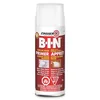
Zinsser BIN Shellac-Base Primer-Sealer
A denatured-alcohol-based primer that seals repaired MDF without wicking moisture back into the sanded fibers.
- Best for: Priming sanded or filled MDF edges before repainting
- Why we picked it: Dries in 10–30 minutes and doesn’t cause fiber puffing like water-based primers
- Main drawback: Strong solvent odor — use in a ventilated area
Compare more MDF repair options
 Option 1 Gorilla Water-Resistant Wood Filler
|
 Option 2 DAP Weatherproof Patching Compound
|
 Option 3 Thompson’s WaterSeal Clear Wood Sealer
|
As an Amazon Associate we earn from qualifying purchases.
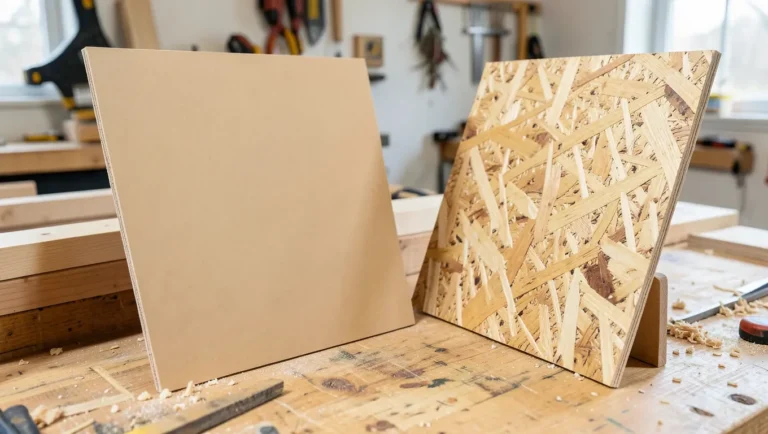
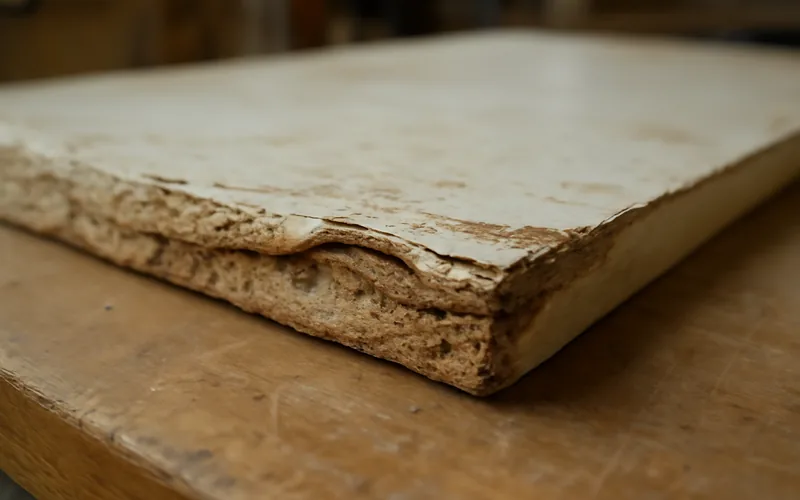
MDF (Medium Density Fiberboard) is compressed wood fibers and resin with no natural grain to resist moisture, so it absorbs water at the edges first. Look for swelling along the edges, discoloration that darkens the surface, a puffed or spongy feel when pressed, and bubbling in the paint or laminate. Any of these confirm water has already reached the fiber core.
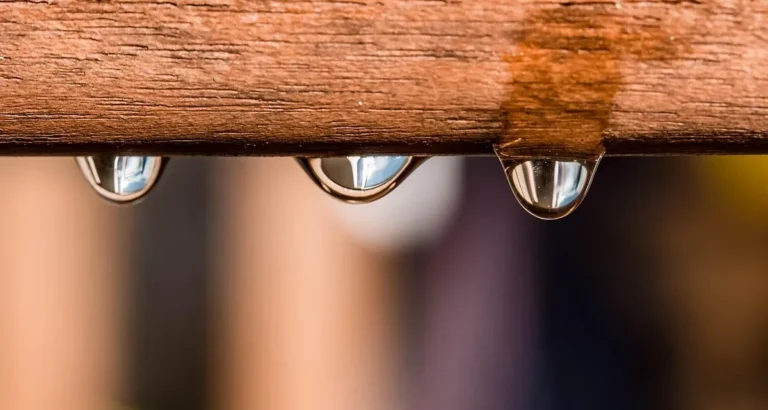
Leaking pipes, uncleaned spills, sustained high humidity, and storm flooding are the four most common causes — and a single rain exposure can cause the same swelling as a slow leak if the board sits wet for more than a few hours. MDF is not waterproof on its own, even when painted — it only becomes water-resistant once every edge and seam is properly sealed.
Which Primer Actually Works on Repaired MDF? (Shellac vs Water-Based)
This is the step most repair guides skip, and it’s the reason many “fixed” MDF pieces swell right back up within weeks. A shellac-based primer (denatured alcohol carrier) cures by solvent evaporation and never introduces water into the sanded fibers. A water-based primer does the opposite — it wicks moisture straight into the porous edges you just sanded flat, causing fiber puffing, a rough, raised texture that reappears within days of painting.
| Primer Type | Effect on Repaired MDF | Best For |
|---|---|---|
| Shellac-based (e.g. BIN-type) | Dries in about 10–30 minutes, no fiber swelling | Any repaired or bare MDF edge |
| Oil-based | Minimal swelling, but 8–24 hour dry time | Large flat faces, not raw edges |
| Water-based (standard latex) | Causes fiber puffing on repaired/raw edges | Previously sealed surfaces only |
📊 MDF exposed to standing moisture typically darkens within minutes and the core begins to soften within hours if not addressed — drying speed, not repair skill, is usually what decides whether a piece is salvageable.
How Fast Should You Dry Wet MDF?
Blot standing water with rags immediately, then open the affected doors, drawers, or panels so air reaches both faces. Point fans directly at the wet area, or use a heat gun or hairdryer on low heat for stubborn spots, and run a dehumidifier in the same closed room to pull ambient moisture out of the air. Keep this going for 24 to 48 hours, checking every few hours — MDF that still feels cool or slightly springy to the touch is still holding water. Confirm it’s fully dry before sanding, filling, or priming; sealing in trapped moisture is what causes repairs to fail months later.
The most common mistake on this repair: painting over MDF that still feels dry on the surface but is still damp underneath. The paint film traps the remaining moisture against the fibers, and the same swelling reappears a few weeks later — only now it’s hidden under fresh paint until it bubbles again. Pressing a fingernail into the repaired area is a quick check; if it dents or feels spongy at all, it needs more drying time before you touch a primer to it.
Repair vs Replace: When Is MDF Beyond Saving?
Repair is worth attempting when the swelling is limited to edges or a localized spot and the board still holds its shape. Replacement is the better call once MDF has crumbled, separated into layers, or lost enough structural integrity that it no longer holds a screw — sanding and filling can’t restore fiber strength that has already broken down, and a repair on structurally failed MDF typically fails again within a season.
What Happens When MDF Gets Wet?
Water enters MDF’s exposed fibers almost immediately: the surface visibly darkens within minutes, and if the moisture isn’t removed, the core softens within hours and the board swells and loses structural integrity. This is why speed matters more than technique in the first hour after MDF gets wet.
Repairing Swollen MDF: Sanding, Filling, and Priming
- Confirm it’s fully dry: Do not sand or fill MDF that still feels cool, damp, or springy — trapped moisture under a repair is the #1 cause of repeat swelling.
- Sand in two passes: Start with 120-grit sandpaper to knock down the swollen ridge, then finish with 220-grit for a smooth, even surface. Sand in a well-ventilated area and stop as soon as the surface is flush — over-sanding thins the board.
- Fill gaps and cracks: Press a water-resistant wood filler into any remaining gaps or cracks with a putty knife, slightly overfilling, then let it cure fully before sanding it flush.
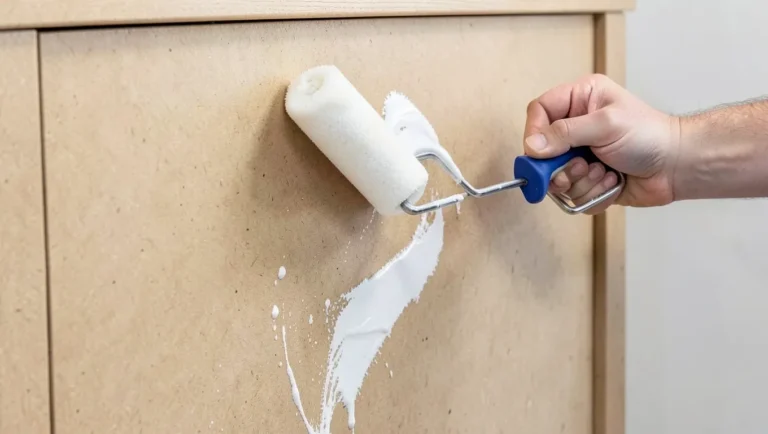
- Prime with shellac, not water-based: Brush on a shellac-based primer over the entire repaired area and at least an inch beyond it. It dries in 10–30 minutes and won’t reintroduce moisture into the fibers you just sanded.
- Paint and reseal: Once the primer is fully cured, repaint to match and apply a waterproof sealant to the repaired edges so the same spot doesn’t fail again.
Replacing a Severely Damaged MDF Section
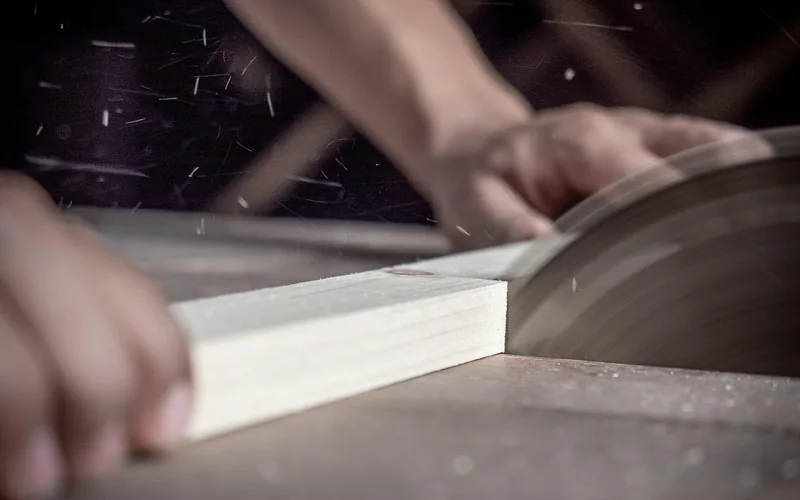
When a section is too far gone to sand and fill, mark the damaged area in pencil, cut along the line with a straight, controlled cut, and remove the piece carefully so you don’t stress the surrounding board. Measure the opening precisely, cut a new piece of matching-thickness MDF to fit, and test the fit before committing to glue.
Apply wood glue to both mating edges, press the new section into place, and clamp it until fully cured. Sand the seam flush, then follow the same priming and sealing steps above — a shellac-based primer first, waterproof sealant last — so the new section is protected as well as the surrounding board.
Preventing Future MDF Water Damage
If you’re buying MDF for anywhere near moisture — a bathroom vanity, a mudroom shelf, a kitchen toe-kick — look for moisture-resistant MDF (MR-MDF), identifiable by a green-dyed core and specialized water-repellent resins. MR-MDF still isn’t waterproof; it tolerates humidity better but not standing water or full immersion, so sealing remains necessary either way.
Seal every cut edge and joint before installation — edges are where water gets in first, and unsealed cuts are the most common failure point. Sealing MDF properly before painting takes an extra 30 minutes and prevents most of the repairs covered above. Fix leaks promptly, wipe spills immediately with a dry cloth, and never let standing water sit on any MDF surface. For the full set of sealing, edge-banding, and storage steps that stop MDF from swelling in the first place, see our guide on how to protect MDF board.
Tools and Materials
- Screwdrivers — to remove hardware from the damaged area
- Hammer — for gently tapping loose parts free
- 120-grit and 220-grit sandpaper — to sand swollen areas smooth in two passes
- Saw — to cut out and replace severely damaged sections
- Drill and clamps — to hold new sections while glue cures
- Putty knife — to spread wood filler evenly
- Safety goggles, gloves, and a mask — MDF dust is fine and irritating to breathe
- Water-resistant wood filler, shellac-based primer, paint, and waterproof sealant — the repair materials covered above
Frequently Asked Questions
Can Water Damaged MDF Be Repaired?
Yes, you can repair water-damaged MDF. Dry it thoroughly first. Sand the swollen areas carefully. Apply wood filler to smooth out imperfections. Seal with a water-resistant primer and paint. Severe damage may require replacing the affected MDF parts. Regular maintenance prevents future water damage.
Is MDF Ruined If It Gets Wet?
Yes, MDF can get damaged if it gets wet. The material swells and warps, losing structural integrity. It’s crucial to dry it quickly to minimize damage. Consider sealing or waterproofing MDF for better water resistance and durability in moisture-prone areas.
How To Get Water Marks Out Of MDF?
To remove water marks from MDF, gently sand the surface with fine-grit sandpaper. Clean with a damp cloth, then apply a wood stain or finish to restore. Ensure proper ventilation and use protective gear during the process. Regularly maintain MDF to prevent future water damage.
How To Repair A Swollen MDF Door?
Repair a swollen MDF door by sanding the affected area. Apply wood filler to smooth the surface. Seal with primer and repaint to protect from moisture. Ensure proper ventilation to prevent future swelling. Use water-resistant paint for added protection.
What Primer Should You Use On Repaired MDF?
Use a shellac-based primer, not a water-based one. Shellac cures by solvent evaporation and dries in 10 to 30 minutes without wicking moisture into the fibers you just sanded. A water-based primer does the opposite, causing fiber puffing on repaired or raw MDF edges within days.
How Long Does Water-Damaged MDF Take To Dry?
Plan on 24 to 48 hours with fans, a heat gun on low, and a dehumidifier running in a closed room. MDF that still feels cool, damp, or springy is still holding water and isn’t ready to sand, fill, or prime yet.
Conclusion
Fixing MDF water damage comes down to speed and the right materials: dry the piece fully within 24 to 48 hours, sand swollen areas in two grits, fill gaps with a water-resistant filler, and prime with shellac rather than a water-based product. Replace sections only when the MDF has crumbled or lost its structural integrity — everything else can usually be repaired and sealed to prevent it from happening again.
Sponsored / affiliate links. As an Amazon Associate I earn from qualifying purchases. I may earn additional commission from eligible campaigns.