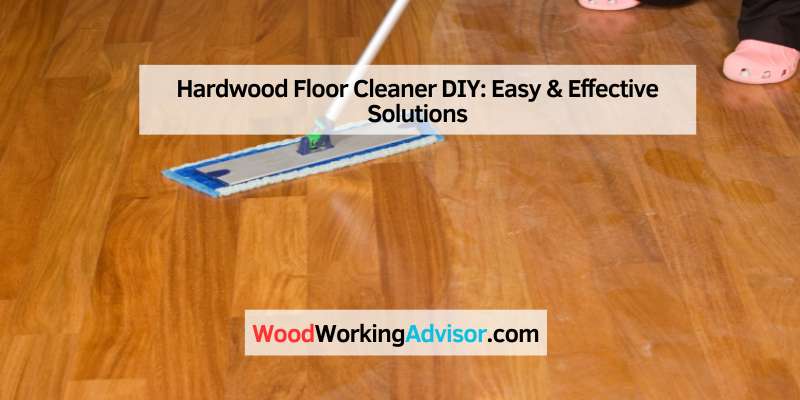
5 Homemade Hardwood Floor Cleaner Recipes (Safe by Finish Type)
A homemade hardwood floor cleaner works best when matched to your floor’s finish — diluted vinegar is fine on sealed polyurethane but will streak or dull wax and unfinished wood. Using the wrong recipe on the wrong finish can cloud a glossy floor’s sheen in a single mopping. This guide covers five tested recipes with exact ratios, which finish each one is safe for, and the mopping technique that keeps any of them from leaving streaks.
Quick Answer
For most sealed hardwood floors, mix 1 teaspoon of pH-neutral castile soap with 4 cups of warm water in a spray bottle — it won’t strip polyurethane or leave residue the way vinegar sometimes can. Skip vinegar-based recipes entirely on waxed or unfinished floors; the acid dissolves wax and can darken raw wood.
Is a Homemade Cleaner Safe for Your Floor’s Finish?
Best Hardwood-Safe Cleaner Pick
Bona Hardwood Floor Cleaner Spray – 32 fl oz
A ready-made pH-neutral spray built for the same polyurethane floors the DIY recipes below target.
- Best for: Everyday spray-mop cleaning on sealed polyurethane floors between DIY deep cleans
- Why we picked it: pH-neutral formula matches the finish-safety table above — no dilution math, no streaking risk
- Main drawback: Not safe for wax or oil-finished floors, same restriction as the homemade vinegar recipes
Compare more hardwood cleaning options
 Option 1 Bona PowerPlus Hardwood Floor Deep Cleaner Spray – 32 fl oz – Refillable
|
 Option 2 BPAWA Microfiber Mops for Floor Cleaning: Flat Mop for Hardwood Tile Wood
|
 Option 3 Bona Premium Sweep & Clean Mop for Multi-Surface floors
|
As an Amazon Associate we earn from qualifying purchases.
Hardwood floor finish is the protective topcoat — polyurethane, wax, or oil — that actually determines which homemade ingredients are safe, not the wood species underneath. Vinegar is mildly acidic (pH 2.4–2.8), and while a hard polyurethane topcoat tolerates brief, diluted contact, that same acidity dissolves wax finishes outright and can raise the grain on unfinished boards.
Not sure which finish you have? Run a fingertip test in a low-traffic corner: if the surface feels smooth and slightly plastic-like and water beads on top, it’s sealed (polyurethane/urethane). If water soaks in slowly and the surface feels slightly soft or dull, it’s wax or oil. If water absorbs almost immediately, treat it as unfinished.
| Finish Type | Vinegar-Based Cleaners | Best Recipe Below | Why |
|---|---|---|---|
| Polyurethane / urethane (glossy, water beads) | Diluted only, occasional use | Castile Soap (Recipe 1) or heavily diluted Vinegar & Water (Recipe 2) | Hard sealed topcoat tolerates brief acid contact, but repeated heavy use still dulls the sheen over months |
| Wax or oil finish (matte, water soaks in) | Never | Castile Soap (Recipe 1), damp cloth only | Vinegar partially dissolves wax, causing streaking and a patchy, uneven sheen |
| Unfinished / raw wood | Never | Dry or barely-damp microfiber only | No topcoat to protect the wood — any liquid can raise the grain or leave a stain |
📊 Vinegar’s pH sits around 2.4–2.8, acidic enough to gradually break down the alkaline-stable bonds in polyurethane, oil-modified urethane, and shellac finishes with repeated use — Source: material safety data on household vinegar.
5 Homemade Hardwood Floor Cleaner Recipes (Exact Measurements)
1. Castile Soap & Water (Safest for Daily Use, Any Sealed Finish)
Mix 1 teaspoon of liquid castile soap with 4 cups of warm water in a spray bottle; add 5–10 drops of essential oil if you want a scent. Castile soap is pH-neutral, so it’s the one recipe here that’s safe on polyurethane, wax, and oil finishes alike — mist lightly and wipe with a microfiber cloth, no rinsing required.
2. Classic Vinegar & Water (Polyurethane Only)
Combine 1/2 cup of white vinegar with 1 gallon of warm water. That’s a heavier dilution than the 1-part-vinegar-to-3-parts-water ratio you’ll see elsewhere online — the extra dilution matters, because at full strength vinegar’s acidity gradually dulls polyurethane. Use this recipe only on floors you’ve already confirmed are sealed with the fingertip test above.
3. Vinegar & Oil No-Rinse Shine (Polyurethane Only)
Mix equal parts white vinegar and vegetable or olive oil in a spray bottle and shake well right before each use — the oil and vinegar separate quickly, so don’t premix a large batch. Spray a light coat and buff dry immediately with a clean microfiber towel; there’s no rinsing step, which is what keeps this one streak-free.
4. Baking Soda Paste (Tough, Sticky Spots)
Stir 1/4 cup of baking soda with just enough water to form a paste. Apply it only to the sticky or stained spot, let it sit for 5 minutes, then wipe with a barely damp cloth and buff dry. This is a spot treatment, not a whole-floor recipe, and it’s meant for sealed floors only.
5. Black Tea Rinse (Natural Shine Boost)
Steep 3 black tea bags in 4 cups of boiling water for 10 minutes, then let the tea cool completely before mopping with a well-wrung cloth. Tannic acid in black tea deepens the wood’s natural tone and adds shine without the residue buildup a wax-based polish leaves. Skip it on very light or white-washed floors, since tannic acid can add a faint amber cast — and stick to sealed finishes only.
How to Apply a Homemade Cleaner Without Streaking
- Sweep or vacuum first: Clear loose dirt and grit so it doesn’t get dragged across the finish while mopping.
- Test in a hidden spot: Try any new recipe on an inconspicuous corner or closet edge and check it after it dries.
- Mix fresh: Vinegar-and-oil and black tea recipes separate or lose potency within hours — mix right before you mop.
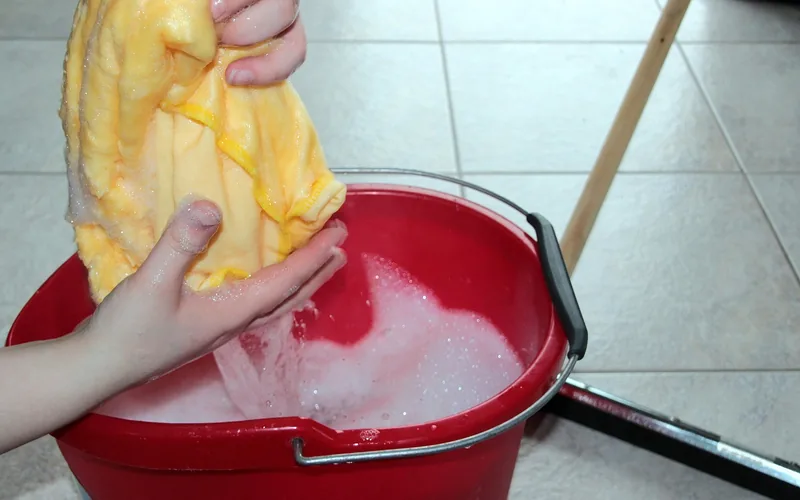
- Damp-mop, never wet-mop: Wring your microfiber mop or cloth until it’s barely damp; standing water is what causes cupping and warping, not the cleaner itself.
- Dry immediately: Follow behind with a dry microfiber towel instead of letting the floor air-dry.
- Buff with the grain: Work in the direction of the wood grain for an even, streak-free sheen.
Mistakes That Damage Hardwood Floors When Cleaning
- Using a string mop or steam mop: Both saturate the floor with far more water than a wrung-out microfiber mop, which is the leading cause of cupping and warping.
- Using vinegar on wax, oil, or unfinished floors: Even heavily diluted, the acid dissolves wax and can raise the grain on raw wood — use the castile soap recipe instead.
- Skipping the test patch: A recipe that’s safe on one floor’s finish can still react differently on an older or refinished section.
- Mixing vinegar with Dawn or other dish soap: The combination can leave a dulling, streaky film on hardwood that’s harder to remove than the original grime.
- Letting spills or cleaner sit: Standing liquid, not the ingredients themselves, is what actually damages a finish — dry every pass immediately.
If a finish has already clouded or dulled from years of the wrong cleaner, a light screen-and-recoat is usually enough — full sanding isn’t always necessary. See our guide to making a hardwood floor’s finish last longer for the difference between the two.
How Often Should You Deep Clean Hardwood Floors?
Damp-mop weekly with the castile soap recipe for routine upkeep. Reserve the baking soda paste and black tea rinse for a deeper clean every 4–6 weeks in high-traffic rooms like kitchens and entryways, or every 8–10 weeks in low-traffic bedrooms. Engineered hardwood follows the same schedule, but check the finish type first — many engineered floors ship with a wax or oil top coat rather than polyurethane.
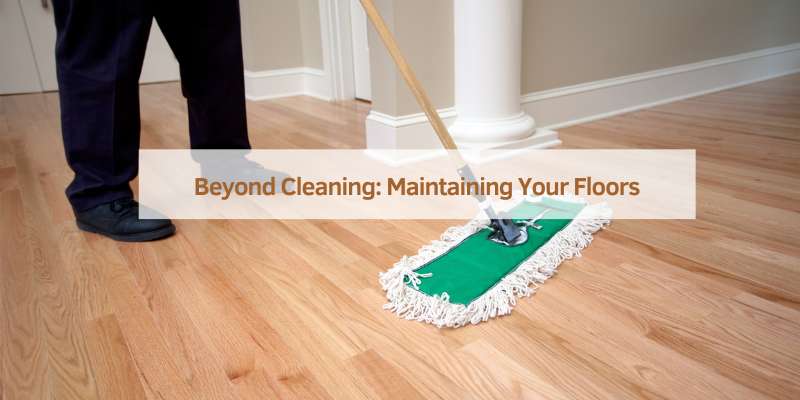
“Safe for all unwaxed, unoiled, polyurethane finished wood floors.”
That restriction — polyurethane only, never waxed or oiled — is the same line every commercial and homemade cleaner in this guide has to respect. It’s why the finish-type table above matters more than which specific recipe you pick.
Frequently Asked Questions
What is the best homemade cleaner for hardwood floors?
The castile soap recipe (1 teaspoon castile soap to 4 cups warm water) is the safest all-around option because it’s pH-neutral and works on polyurethane, wax, and oil finishes alike. Vinegar-based recipes clean well too, but only on confirmed polyurethane floors.
Can you use vinegar and Dawn dish soap on hardwood floors?
It’s not recommended. Dawn is formulated to cut grease and leaves a soap film that hardwood floors don’t rinse away as easily as dishes do, and combined with vinegar it can dull the finish’s shine over repeated use. Use the castile soap or plain diluted vinegar recipes above instead.
Does vinegar and baking soda damage hardwood floors?
Combining them isn’t useful for cleaning — vinegar and baking soda neutralize each other into mostly salt water, which cancels out baking soda’s scrubbing power. Use the baking soda paste recipe on its own for tough spots, and vinegar and water separately for everyday mopping.
Can I use a homemade cleaner on unfinished or waxed hardwood floors?
Skip vinegar-based recipes on both. Unfinished wood has no topcoat, so any liquid can raise the grain or leave a stain, and vinegar’s acidity dissolves wax finishes, causing streaks. A barely damp castile soap cloth or a dry microfiber mop is the safer choice for either surface.
How often should you deep clean hardwood floors?
Weekly damp-mopping handles routine dirt. Plan a deeper clean with the baking soda paste or black tea rinse every 4–6 weeks in high-traffic areas like kitchens and entryways, and every 8–10 weeks in lower-traffic rooms.
Is a homemade cleaner as good as a store-bought hardwood cleaner like Bona?
For routine cleaning, yes — the castile soap recipe matches what pH-neutral commercial sprays like Bona are formulated to do, at a fraction of the cost. A store-bought spray is mainly worth it for convenience or tougher buildup; see our comparison of hardwood cleaning methods for how homemade options stack up against commercial ones.
Match the recipe to your floor’s finish, dry every pass immediately, and you’ll get commercial-cleaner results without the cost or the chemicals. Start with the castile soap recipe if you’re not certain what finish you have — it’s the one option safe across all three finish types. For a Dawn dish-soap-specific method, see our DIY hardwood floor cleaner with Dawn guide, and for straight vinegar dilution ratios, see cleaning hardwood floors with vinegar.
Sponsored / affiliate links. As an Amazon Associate I earn from qualifying purchases. I may earn additional commission from eligible campaigns.