1.75 HP vs 3 HP SawStop: Specs, Amps and Price (2026)
Short answer: on a SawStop Professional Cabinet Saw, the 1.75 HP model runs on a standard 120V circuit and the 3 HP model needs a 230V circuit. The 3 HP costs about $526 more at Amazon’s current listings and gives you more torque for thick hardwood, but it does not draw more amps than the 1.75 HP saw.
That last point trips up a lot of buyers. Many guides, including an earlier version of this one, say a 3 HP motor “draws more amperage.” On SawStop’s own ratings it does not: the 1.75 HP PCS is listed at 14 A on 120V, and the 3 HP PCS is listed at 13 A on 230V. The real difference is voltage, so the question you need to answer is whether you have (or are willing to install) a 230V circuit, not whether your panel can survive a bigger motor. Below are the actual model specs, what the extra horsepower does and does not change, and how to decide.
1.75 HP vs 3 HP SawStop: Specs Side by Side
Best 1.75 HP SawStop Pick
 |
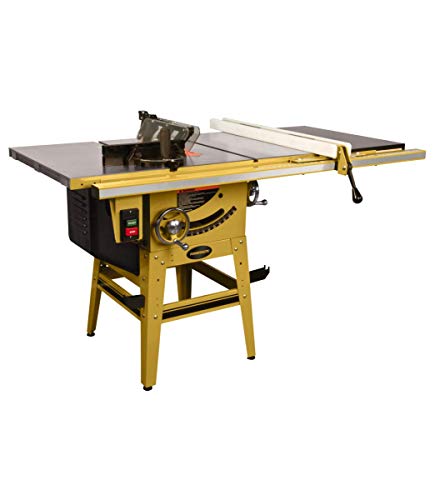
SawStop Professional 1.75HP Cabinet Saw, 36-inch T-Glide Fence: $3,827 (Amazon listing, price varies) The 120V version of SawStop’s most popular cabinet saw, and the model most people mean when they say “1.75 HP SawStop.”
|
SawStop sells the same “1.75 HP vs 3 HP” choice in more than one saw line, so it helps to separate the models before comparing. The specs below come from SawStop’s product listings as quoted by retailers; prices are Amazon listings checked on 2026-09-30 and move often.
| Model (36-inch fence package) | Motor | Rated draw | Plug (per listing) | Amazon price |
|---|---|---|---|---|
| Professional Cabinet Saw (PCS) 1.75 HP | 1.75 HP, 1 phase, 120V | 14 A | Standard 120V cord | $3,827 |
| Professional Cabinet Saw (PCS) 3 HP | 3 HP, 1 phase, 230V | 13 A | NEMA 6-15P, 9 ft cord | $4,353 |
| Contractor Saw 1.75 HP | 1.75 HP, 120V | 14 A | Standard 120V cord | $2,726 |
| Industrial Cabinet Saw (ICS) 3 HP, 1 phase | 3 HP, 1 phase, 230V | Check SawStop listing | Check SawStop listing | $5,743 |
Two details from that table matter more than the horsepower number. First, the 1.75 HP Professional Cabinet Saw and the 1.75 HP Contractor Saw share the same motor rating (1.75 HP, 120V, 14 A), so the $1,100 gap between them buys you a heavier cabinet-style saw, not a stronger motor. If you are torn between those two, read our cabinet saw vs contractor saw comparison. Second, the 3 HP jump costs $526 between two otherwise identical 36-inch-fence PCS packages, which makes it the cheapest way to get a real power upgrade inside the SawStop lineup.
What Stays the Same Between the 1.75 HP and 3 HP PCS
People often assume the bigger motor comes with a bigger saw. For the Professional Cabinet Saw line, most of the hardware is shared:
- Size and cutting depth: SawStop lists the PCS at 69 1/8 in wide by 33 in deep by 34 in high with the 36-inch fence package, and the 1.75 HP model at 3 1/8 in maximum depth of cut at 90 degrees and 2 1/4 in at 45 degrees. It is the same 10-inch blade and cast iron table design on both motors.
- Rip capacity: Rip capacity comes from the fence package, not the motor. SawStop sells the PCS with a 30-inch premium fence, a 36-inch T-Glide fence, or a 52-inch T-Glide fence, in both horsepower ratings.
- Safety system: Both use SawStop’s brake cartridge, which SawStop says stops the spinning blade in less than 5 milliseconds on contact with skin. Motor size does not change that.
- Dado capacity: SawStop’s dado limit on these saws is 8 inches for a stack, with a dado brake cartridge and insert, whichever motor you buy. Our guide to dado blade size for a 10-inch table saw explains why 8 inches is the ceiling.
Where the Extra 1.25 HP Actually Shows Up
Horsepower does not change how a saw cuts when the blade is moving through easy stock. It changes how much the blade slows when the load spikes. A 3 HP motor has more reserve, so it holds blade speed better in these situations:
- Ripping thick hardwood: A long rip through full-thickness 8/4 maple or white oak is the classic load that makes a lighter motor slow down, lose blade speed, and burn.
- Wide dado cuts: A stacked dado removes far more material per pass than a single blade, so it is the fastest way to find the limit of a 1.75 HP motor.
- Continuous production: If you rip dozens of boards in a session, the bigger motor has more thermal headroom. A hobbyist making a few cuts at a time rarely notices.
For plywood, softwood, and typical 4/4 hardwood, both saws cut cleanly. A sharp, correctly chosen blade and a steady feed rate make a bigger difference to cut quality than the extra motor, and a dull or wrong-tooth-count blade will make a 3 HP saw bog just as readily as a 1.75 HP saw. If your saw slows in a cut, check the blade and feed rate first before blaming the motor.
The Electrical Question: 120V vs 230V
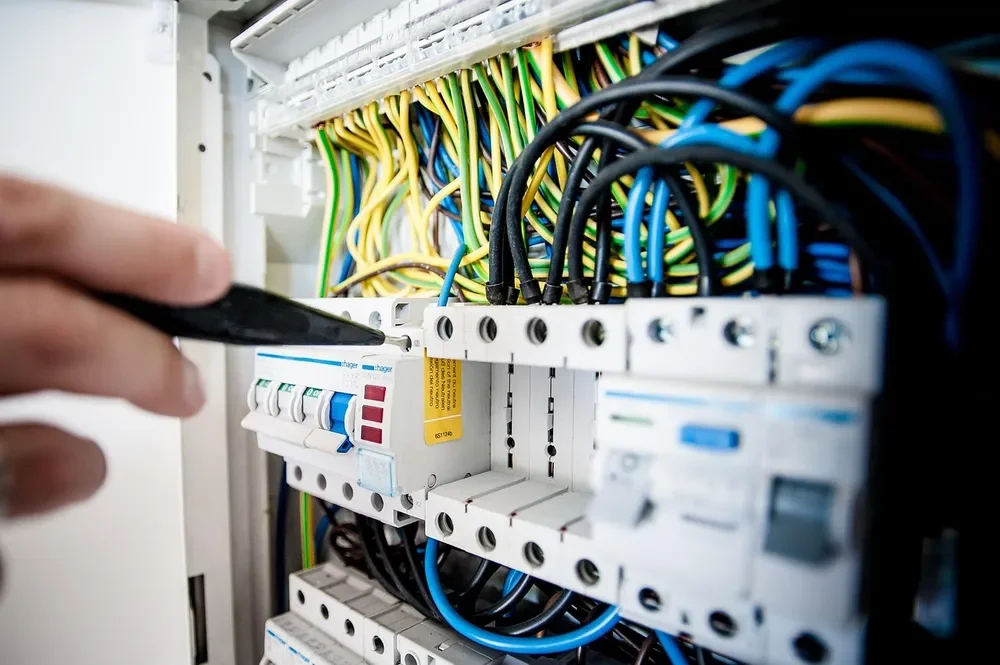
This is the deciding factor for most buyers, so it is worth being precise about what SawStop states and what you need an electrician to confirm.
1.75 HP on 120V
SawStop rates the 1.75 HP PCS at 14 A on 120V. A 14 A load sits right at the limit of a standard 15 A household circuit, so plan on giving the saw its own dedicated circuit rather than sharing it with lights, a dust collector, or a shop vacuum. A running dust collector on the same circuit is a common cause of tripped breakers. Confirm the right breaker and wire size for your run with SawStop’s manual and a licensed electrician; this article cannot substitute for your local electrical code.
3 HP on 230V
The 3 HP PCS is a single-phase 230V saw rated at 13 A, and it is listed with a NEMA 6-15P plug. That plug needs a matching 6-15 receptacle on a 230V circuit, which most garages do not have. If a 230V circuit is already available the upgrade can be simple; if not, you will be paying an electrician to run a new circuit, and that cost varies widely by house, panel space, and distance, so get a quote before you count the $526 as the full price of the upgrade. Do not modify the plug or use an adapter to force the saw onto the wrong outlet, and do not use an undersized extension cord on either saw.
Because the amp draw is nearly identical, the 3 HP saw does not stress your panel more. It just needs the right kind of circuit. Our 3 HP table saw wiring guide covers the circuit side in more depth.
Price and Value: Is the 3 HP Worth $526 More?
At current Amazon listings the gap is $526 for the 36-inch fence package ($4,353 vs $3,827), and it is $526 again on the 52-inch package ($4,459 vs $3,933). Here is how to think about it:
| Your situation | Better fit | Why |
|---|---|---|
| Mostly plywood, pine, poplar; occasional hardwood | 1.75 HP | Saves $526 and avoids a new 230V circuit |
| Regular ripping of 8/4 hardwood or frequent dado stacks | 3 HP | More reserve torque under heavy load |
| Shop already has a 230V receptacle nearby | 3 HP | The upgrade is mostly the $526 sticker difference |
| Renting or no way to add a circuit | 1.75 HP | Runs on the 120V circuit you already have |
| Tight budget, no room for a full cabinet saw | 1.75 HP Contractor Saw | Same 1.75 HP, 120V, 14 A motor rating at $2,726 with the 36-inch fence |
A note on what not to compare: SawStop’s Jobsite Saw PRO is listed at 1 1/2 HP and 120V, so it does not sit in the 1.75 HP camp the way older guides claim. If you are weighing portable saws, see SawStop Compact vs Jobsite Saw Pro instead.
Does Motor Size Affect SawStop’s Safety System?
No. The brake system is built around a cartridge that senses contact with skin and fires a block into the blade, and SawStop says it stops the blade in under 5 milliseconds. It works the same on 1.75 HP and 3 HP saws. The one practical point is that the cartridge is a consumable, so a real trigger event means replacing the cartridge, and a dado brake cartridge is a separate part if you run a stack. Read the manual and budget for a spare before you need it. For background on the sensing, see our explainer on how table saws detect fingers.
Which One Should You Buy?
Choose the 1.75 HP Professional Cabinet Saw if you have a 120V shop, cut mostly sheet goods and moderate stock, and want to keep the total cost down. Choose the 3 HP if you rip a lot of thick hardwood, run dado stacks often, or already have 230V available, and treat the 230V circuit as part of the purchase. If you want the same 1.75 HP motor for less money and can live with a lighter saw, the Contractor Saw is the budget route. For a broader look at the category, see our best table saws roundup and the brand-neutral 1.75 HP vs 3 HP table saw comparison.
Frequently Asked Questions (FAQ)
Will a 1.75 HP SawStop slow down too much on oak?
For typical 4/4 oak it should cut fine with a sharp blade and a steady feed. It is thick stock (8/4 and up), long rips, and wide dado stacks that expose the limit of a 1.75 HP motor. If the saw slows, check blade sharpness and feed rate before assuming you need more horsepower.
Can I run a 3 HP SawStop on a standard 120V outlet?
No. The 3 HP Professional Cabinet Saw is a 230V single-phase saw, listed with a NEMA 6-15P plug. It needs a matching 230V circuit installed by a qualified electrician who follows your local code.
Does a 3 HP SawStop draw more amps than a 1.75 HP model?
Not on SawStop’s ratings. The 1.75 HP PCS is listed at 14 A on 120V and the 3 HP PCS at 13 A on 230V. The 3 HP saw needs a different kind of circuit, not a higher amp draw.
Is the SawStop safety feature affected by motor power?
No. The brake cartridge system is the same on 1.75 HP and 3 HP saws. SawStop says it stops the blade in less than 5 milliseconds on contact with skin regardless of motor size.
Sponsored / affiliate links. As an Amazon Associate I earn from qualifying purchases. I may earn additional commission from eligible campaigns.