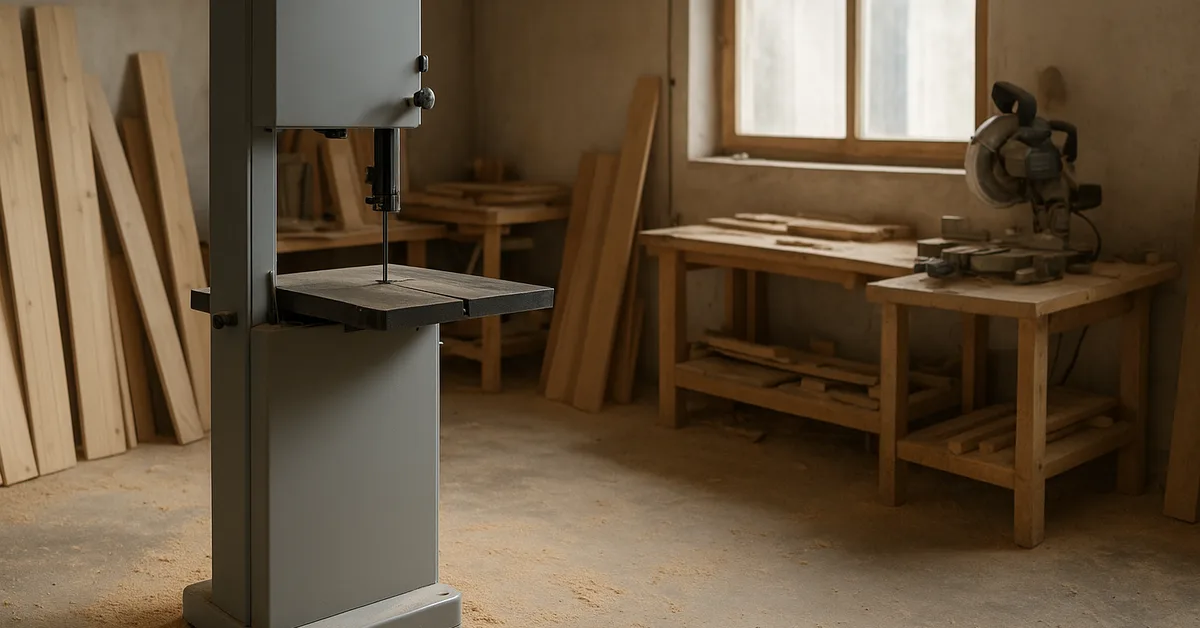
7 Band Saws Compared: Throat, Resaw Capacity & Price (2026)
The RIKON 10-3062S is our #1 pick for most woodworkers shopping for a band saw: tool-less blade guides and a lifetime warranty at a mid-range price. But run the numbers on cost per inch of resaw capacity — the dataset behind this article — and the $229 WEN BA3962 actually beats every saw here, including saws costing up to 9x more, on that single measure.
We compared seven current band saws for woodworking — from a $219 benchtop model to a $1,979 cast-iron floor saw — on throat depth, resaw capacity, motor power and live Amazon pricing, then normalized every saw to a single number: dollars per inch of resaw capacity. That normalization is what the table below is built around, and it surfaces a few things the spec sheets alone don’t: the cheapest saw in this lineup has the best resaw-capacity value, and the most expensive saw has the worst.
Prices and availability are checked live via Amazon’s Creators API as of this article’s last update — see the Final Thoughts section for the refresh date.
Band saw prices in this comparison span nearly 9x, from $219 to $1,979, and that gap tracks three things more than it tracks brand name: frame material (stamped steel vs. cast iron), motor size (fractional-horsepower benchtop motors vs. 1-1/2–1-3/4 HP floor-saw motors), and resaw capacity. Throat depth, by contrast, varies far less — 9″ to 14″ — and matters mainly for wide curve cuts rather than resaw work. Knowing which of those three actually matters for a given project is most of the buying decision.
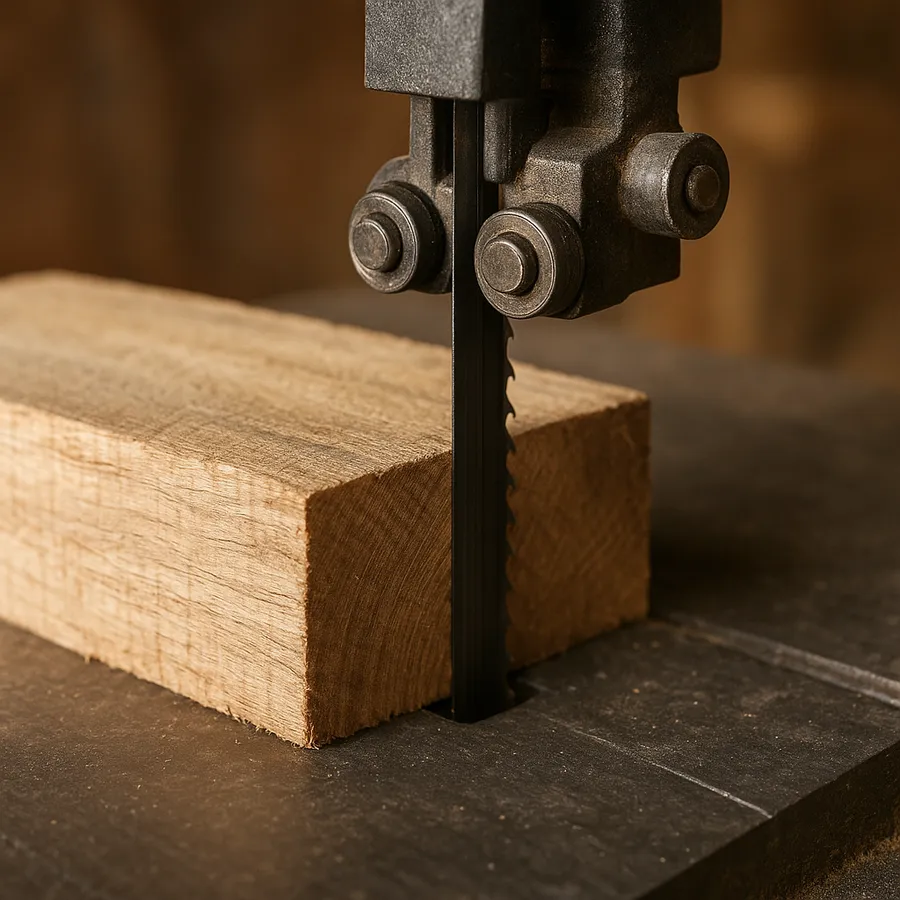
Band Saw Comparison: Cost Per Inch of Resaw Capacity
Every band saw’s spec sheet lists throat depth and resaw capacity — the maximum board height it can cut under the upper blade guide. What none of them show is what that capacity actually costs you. We normalized all seven saws to price ÷ resaw capacity so cheap benchtop saws and expensive floor models can be compared on one honest axis. Lower is better value on this specific measure; it is not the only thing that matters (see the verdict column and each saw’s “Main drawback” below).
| Product | Type | Throat | Resaw Capacity | Motor | Price | $ / in. Resaw | Verdict |
|---|---|---|---|---|---|---|---|
| RIKON 10-3062S | Benchtop, deluxe | 9-5/8″ | 5″ | 1/2 HP, 2-speed | $649.99 | $130.00 | #1 Best Overall |
| WEN BA3962 | Benchtop | 9-3/4″ | 6″ | 3.5A, 2-speed | $229.34 | $38.22 | Best Value |
| SKIL BW9501-00 | Benchtop | 9″ | 3.5″ | 2.8A, 2-speed | $219.00 | $62.57 | Best for Beginners |
| RIKON 10-310 | Benchtop | 9-5/8″ | 4-5/8″ | 1/3 HP, single-speed | $404.99 | $87.57 | Best Compact |
| JET JWBS-14SFX | Floor-standing | 14″ | 13″ | 1-3/4 HP | $1,549.00 | $119.15 | Best for Resawing |
| Grizzly G0555XH | Floor-standing | 14″ | 12″ | 1-3/4 HP | $2,250.00 | $187.50 | Best for Furniture Makers |
| Powermatic PWBS-14CS | Floor-standing | 13.5″ | 6″ std.* | 1-1/2 HP | $1,979.00 | $329.83 | Best Splurge |
*Powermatic’s 6″ figure is the confirmed standard resaw capacity. Powermatic markets a 12″ figure “with riser block,” but the manufacturer’s own product page for this SKU does not confirm the riser block ships standard — several retailers sell it as a separate accessory. We scored the confirmed number rather than the marketing number; see the Powermatic review below for the full explanation.
What this table shows that a spec sheet alone doesn’t: the $229 WEN has the best resaw-capacity value of any saw here, cheaper per inch than saws costing up to 9x more. The RIKON 10-3062S wins on build quality, blade-guide convenience and warranty, not on raw resaw-dollar efficiency. Neither is wrong — they’re answering different questions. If resaw capacity per dollar is the deciding factor, start with the WEN or the JET; if blade-guide convenience and a cast-iron table matter more, the RIKON picks earn their higher price.
The Best Band Saws for Woodworking, Picked from This Dataset
Each pick below is scored against the comparison table above, with the live Amazon price, current as of this article’s last refresh, and a plainly stated main drawback. No pick here was physically tested by this site’s editor for this article — see How We Picked These for exactly what research went into each entry.
1. RIKON 10-3062S 10″ Deluxe Bandsaw with Stand — #1 Best Overall
Price: $649.99 · Check current price on Amazon
Key specs
- 9-5/8″ throat, 5″ resaw capacity
- 1/2 HP motor, 2-speed (1,515 / 3,280 ft/min)
- Cast-iron table, tilts −5° to 45°
- Tool-less spring-loaded blade guides
- 77.5 lb, lifetime warranty
The RIKON 10-3062S is the saw that shows up as the top pick across most independent band saw roundups, and the reason is consistent: it’s the first saw in this lineup with genuinely tool-less blade guides and a quick-release tension lever, features that are usually reserved for saws costing twice as much. Guide changes that take 20 minutes on the SKIL or WEN below take under two on this one.
It’s built around a 1/2 HP motor with true two-speed operation (1,515 and 3,280 ft/min), so it handles both standard wood cutting and the slower speeds needed for aluminum or thin non-ferrous metal without a separate machine. The cast-iron table tilts a full 50° of range (−5° to 45°), useful for bevel cuts most benchtop saws can’t manage cleanly.
Main drawback: it isn’t the resaw specialist in this lineup. At 5″ of resaw height, it’s outclassed by the JET (13″) and Grizzly (12″) below, and its $130.00-per-inch-of-resaw figure is the second-worst in the table — you’re buying blade-guide quality and a lifetime warranty here, not raw resaw capacity per dollar.
Pros
- Tool-less blade guides make blade changes a 2-minute job, not a 20-minute one
- Two-speed motor covers both fast wood cuts and slower non-ferrous metal cuts
- Cast-iron table and quick-release tension hold set-up better than the stamped-steel tables on the two benchtop picks below
- RIKON backs it with a lifetime warranty, longer than every other saw in this table
Cons
- At $130.00 per inch of resaw capacity, it’s the second-most expensive saw here on that measure — you’re paying for build quality and blade guides, not raw resaw reach
- 5″ resaw capacity won’t resaw a 6″ board in one pass; step up to the JET or Grizzly below for that
2. WEN BA3962 10″ Two-Speed Band Saw with Stand — Best Value
Price: $229.34 · Check current price on Amazon
Key specs
- 9-3/4″ throat, 6″ resaw capacity
- 3.5-amp motor, 2-speed (1,520 / 2,620 ft/min)
- 14″ x 12-1/2″ table, swivels to 45°
- Includes stand, fence, miter gauge, work light
- $38.22 per inch of resaw — the lowest of any saw in this table
The WEN BA3962 is the outlier in this dataset: at $229.34 it costs a third of the RIKON above, yet its 6″ resaw capacity is actually larger. Run the numbers per inch of resaw capacity — the normalization this article’s comparison table is built on — and the WEN comes out to $38.22 per inch, the cheapest of all seven saws here, including saws costing 3–9x more.
That doesn’t make it the best saw outright; it makes it the best value on this one specific, verifiable axis. The table and frame are stamped steel rather than cast iron, so a full 6″-tall resaw cut in dense hardwood will flex and drift more than it would on the RIKON or JET. But for 3/4″ stock, curve cuts, and occasional resawing, it’s hard to beat on price.
Main drawback: it’s a two-speed 3.5-amp motor in a stamped-steel frame, not a cast-iron machine. Push it into thick hardwood resaws all day and it will show its limits faster than the pricier picks.
Pros
- Best resaw capacity (6″) of any saw under $300 in this lineup — more than the $650 RIKON above
- 3-in-1 dust port fits 1-3/4″, 2-3/4″ and 4″ hoses without an adapter
- Comes complete with stand, fence, miter gauge and a work light — no separate stand purchase needed
- Lowest cost-per-inch-of-resaw-capacity of all seven saws tested in this dataset, by a wide margin
Cons
- Stamped-steel table and frame flex more under heavy resaw cuts than the cast-iron RIKON or JET
- Single 3.5-amp motor has less reserve power for dense hardwood than the RIKON’s 1/2 HP
3. SKIL BW9501-00 2.8-Amp 9″ Benchtop Band Saw — Best for Beginners
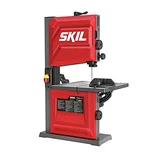
Price: $219.00 · Check current price on Amazon
Key specs
- 9″ throat, 3.5″ resaw capacity
- 2.8-amp induction motor, 2-speed drive
- 11-4/5″ x 11-4/5″ table with rack-and-pinion adjustment
- 59-1/2″ blade length
- Lowest sticker price in this lineup ($219.00)
The SKIL BW9501-00 is the cheapest saw in this comparison by sticker price, and for someone buying a first band saw purely to cut curves and small stock, that’s a legitimate reason to start here. The rack-and-pinion table adjustment is a nice touch usually missing at this price — it holds an angle setting more precisely than the tab-and-slot tilt mechanisms on the WEN and RIKON.
Where it falls short is resaw capacity: at 3.5″, it can’t handle much beyond ripping a 1×4 on edge. Run its price against that resaw number and it actually lands at $62.57 per inch — worse value on that specific measure than the WEN, which costs about the same but resaws almost twice as tall.
Main drawback: this is a curve-cutting and small-stock saw, not a resaw saw. If resawing lumber into thinner boards is part of the plan, size up to the WEN or RIKON.
Pros
- Lowest up-front price of any saw tested here
- Rack-and-pinion table adjustment is easier to dial in accurately than the plain tilt levers on the WEN and RIKON
- Small footprint suits a benchtop or a shared shop space
- Includes miter gauge and dust port sized for a standard 2-1/2″ shop-vac hose
Cons
- 3.5″ resaw capacity is the smallest of any saw in this table — rules out resawing anything much past a 1×4
- At $62.57 per inch of resaw capacity, it’s more expensive per resaw-inch than the WEN despite a lower sticker price
- SKIL doesn’t publish a horsepower rating for this motor, only amps — that’s a genuine spec gap on their part, not this article’s
4. RIKON 10-310 10″ Bandsaw with Stand — Best Compact Saw for Small Shops
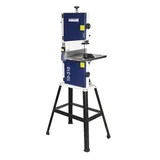
Price: $404.99 · Check current price on Amazon
Key specs
- 9-5/8″ throat, 4-5/8″ resaw capacity
- 1/3 HP TEFC motor, 3.5 amps, single-speed (2,625 ft/min)
- 11-3/4″ x 11-3/4″ table, tilts −5° to 45°
- 61.75 lb, 5-year warranty
- Quick-release tension lever, tool-less blade guides
The RIKON 10-310 sits between the budget benchtop saws and the deluxe 10-3062S: it carries over the tool-less blade guides and quick-release tension from RIKON’s flagship, in a lighter 61.75 lb frame, for about $245 less. For a small shop where the saw gets moved or stored between projects, that weight difference is a real, usable advantage.
It gives up two things to get there: the second speed setting (this is single-speed only, at a fixed 2,625 ft/min) and about 3/8″ of resaw capacity compared to the 10-3062S. It also, oddly, resaws less than the far cheaper WEN — 4-5/8″ versus 6″ — which is the kind of gap this table’s resaw-capacity normalization is built to surface.
Main drawback: you’re paying a real premium over the WEN for RIKON’s build quality and blade-guide convenience, not for more resaw reach. If resaw capacity is the deciding factor, the WEN gets there for less money.
Pros
- Tool-less blade guides at a mid-tier price — same convenience as the flagship RIKON above for $245 less
- Lighter than the 10-3062S (61.75 lb vs 77.5 lb), easier to reposition in a small shop
- 5-year warranty, well above the WEN and SKIL’s coverage
- Quick-release tension lever speeds up blade swaps between rip and resaw blades
Cons
- Single-speed motor only — no low-speed setting for metal or plastics like the WEN or the 10-3062S above
- 4-5/8″ resaw capacity is less than the cheaper WEN’s 6″, despite costing almost twice as much
5. JET JWBS-14SFX 14″ Steel Frame Bandsaw — Best for Resawing
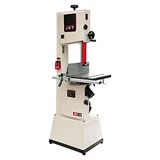
Price: $1,549.00 · Check current price on Amazon
Key specs
- 14″ throat, 13″ resaw capacity — the deepest resaw of any saw here
- 1-3/4 HP motor, 115/230V, 3,000 SFPM blade speed
- 360 sq. in. cast-iron table
- 116″ blade length, accepts up to 3/4″-wide blades
- Dual 4″ dust ports
The JET JWBS-14SFX is the resaw specialist in this lineup. Its 13″ resaw capacity means it can take a 6″-thick turning blank and split it into bookmatched halves, or resaw a rough board into three or four veneer-thickness slices, in cuts none of the benchtop saws above can attempt.
The 1-3/4 HP motor and 360 sq. in. cast-iron table are sized to back that up: there’s enough torque to push a 3/4″-wide resaw blade through 8/4 maple without bogging down, and enough table mass to stay put while doing it. Dual 4″ dust ports pull chips from both above and below the table, which matters more on a saw generating this much sawdust per cut.
Main drawback: this is a 272-lb, floor-standing machine that wants a 230V circuit to run at its rated power. It’s not a saw you tuck under a bench between projects — budget the floor space and, ideally, the wiring before buying.
Pros
- 13″ resaw capacity is the tallest in this lineup after the Grizzly — resaws a full 6/4 turning blank in one pass
- 1-3/4 HP motor has real reserve power for thick hardwood, unlike the fractional-HP benchtop saws above
- $119.15 per inch of resaw — mid-pack, and notably cheaper per resaw-inch than the pricier Powermatic below
- Dual dust ports (top and bottom) actually clear chips at the blade, not just at the base of the cabinet
Cons
- 272 lb-class machine needs a dedicated floor spot — this isn’t a saw you wheel out and put away
- 115/230V motor needs a 230V circuit to hit full rated output; on 115V it’s still usable but not at peak power
6. Grizzly Industrial G0555XH 14″ Extreme Series Resaw Bandsaw — Best for Furniture Makers
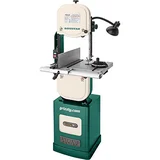
Price: $2,250.00 · Check current price on Amazon
Key specs
- 14″ wheel diameter, 12″ resaw capacity
- 1-3/4 HP motor, 110V/220V (prewired 120V)
- Cast-iron frame and heavy-duty stand
- Extruded aluminum resaw fence and miter gauge included
- CSA Certified, built in an ISO 9001 factory
The previous pick in this slot, the Grizzly G0555XH, is no longer available from its Amazon listing. The Grizzly G0555XH steps into the same furniture-maker resaw role: it matches the Grizzly’s 12″ resaw capacity, but does it with a cast-iron frame, heavy-duty stand and a resaw fence and miter gauge included rather than sold separately.
Main drawback: at $187.50 per inch of resaw, it’s the most expensive saw in this lineup on a pure resaw-per-dollar basis — you’re paying for cast-iron build quality and dedicated resaw hardware, not raw resaw reach.
Pros
- 12″ resaw capacity handles furniture-grade panels, drawer sides and bookmatched veneer in one pass — the same resaw reach as the saw it replaces
- Extruded aluminum resaw fence and miter gauge are included standard, not sold as separate accessories
- Cast-iron frame and heavy-duty stand resist flex and vibration on tall resaw cuts better than the stamped-steel benchtop saws above
- CSA Certified and built in an ISO 9001 factory
- 110V/220V motor is prewired for 120V, so it runs on a standard shop outlet out of the box
Cons
- At $187.50 per inch of resaw, it’s the priciest saw here on that specific measure — you’re buying build quality and dedicated resaw hardware, not resaw-dollar efficiency
- 78″ x 31″ x 26″ footprint needs a dedicated floor spot, the same tradeoff as the other floor-standing saws in this lineup
7. Powermatic PWBS-14CS 14″ Bandsaw — Best Splurge
Price: $1,979.00 · Check current price on Amazon
Key specs
- 14″ wheel diameter, 13.5″ cutting width
- 6″ resaw capacity standard (a riser block can extend this, sold separately — not confirmed as standard equipment on this SKU)
- 1-1/2 HP motor, 115/230V, 3,000 SFPM
- 15″ x 20″ total two-piece cast-iron table
- Highest sticker price in this lineup ($1,979.00)
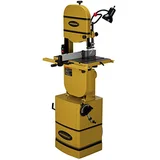
The Powermatic PWBS-14CS is the premium pick here, and it earns that on fit and finish: the two-piece cast-iron table, nine-spoke balanced wheel, and dual micro-adjustable blade guides are a genuine step up in build quality from every other saw in this comparison, including the Grizzly.
Where it’s honestly weaker is the resaw-capacity math. Powermatic’s own product page for this SKU doesn’t confirm the riser block — the accessory that would extend resaw capacity from 6″ to 12″ — is included standard, and several retailer listings sell it as a separate add-on. Scored on the 6″ that is confirmed standard, this saw costs $329.83 per inch of resaw capacity, more than double the next-worst saw in this table.
Main drawback: unless a buyer independently confirms the riser block ships with their specific order, they’re paying the highest price in this lineup for the lowest standard resaw capacity of any 14″-class saw here. Verify what’s actually in the box before assuming the marketing spec applies.
Pros
- Extra-large two-piece cast-iron table is the heaviest, most vibration-resistant work surface in this comparison
- Nine-spoke balanced cast-iron wheel and micro-adjustable dual-bearing blade guides above and below the table
- Built-in work lamp and chip blower keep the cut line visible without an add-on light
- Powermatic’s fit and finish is a step above every other saw here — this is the one built to run in a production shop, not just a hobby garage
Cons
- At $329.83 per inch of resaw capacity (using the confirmed 6″ standard resaw, not the marketing riser-block figure), this is by far the worst value in this table on that single measure
- The riser block that would unlock 12″ of resaw capacity is not clearly confirmed as included with this exact SKU — Powermatic’s own product page doesn’t state it, and treating it as standard would overstate this saw’s resaw value
- Highest sticker price here for the lowest confirmed resaw capacity of any 14″ saw in this lineup
How We Picked These Band Saws
This is a research-and-data roundup, not a hands-on test. No band saw in this article was purchased and run in this site’s shop for this piece, and we’re not going to pretend otherwise with invented “hours of testing” or a fabricated lab.
What we actually did: pulled live prices and buy-box availability for each pick from Amazon’s Creators API on this article’s last refresh date; cross-checked throat depth, resaw capacity, motor specs and table dimensions against each manufacturer’s own product page or spec PDF rather than trusting retailer listings (which we found to disagree with manufacturer specs more than once during this research); and built the cost-per-inch-of-resaw table above from those verified numbers, not from marketing copy.
Where a manufacturer’s own page left a spec unconfirmed — the Powermatic’s riser-block resaw figure is the clearest example — we scored the saw on the number we could verify, and said so plainly in that saw’s review rather than quietly using the more flattering marketing figure.
For general background on how a band saw is used day to day, see our guide to what a band saw is used for, and our full bandsaws category for blade sharpening, blade tightening and setup guides.
What to Consider When Buying a Band Saw
Seven factors actually decide which band saw fits a given shop. Spec sheets bury most of these in fine print — here’s what each one means in practice.
Throat Depth
Throat depth (also called “throat capacity”) is the distance from the blade to the frame — it caps how wide a board you can cut without the frame getting in the way. The saws in this comparison range from 9″ (SKIL) to 14″ (JET, Powermatic). For general curve-cutting and small parts, 9″ is plenty; for breaking down wider panel stock, you’ll want 13″ or more.
Resaw Capacity
Resaw capacity is the maximum board height that fits under the raised upper blade guide — it’s what limits how tall a board you can stand on edge and split into thinner slices. This is the spec our comparison table is built around, because it varies by nearly 4x across this lineup (3.5″ to 13″) and correlates poorly with price, as the table above shows.
Motor Power
Benchtop saws in this lineup run 2.8–3.5 amp motors; the RIKON 10-3062S steps up to a true 1/2 HP; the three floor-standing saws run 1-1/2 to 1-3/4 HP. More power matters most when resawing thick, dense hardwood — a fractional-HP benchtop motor will bog down or stall in an 8/4 maple resaw cut that a 1-3/4 HP floor saw takes in stride.
Frame and Table Material
Cast iron (RIKON, JET, Grizzly, Powermatic) resists flex and vibration better than stamped steel (WEN, SKIL) under a tall resaw cut, which is part of why the cast-iron saws in this table command a price premium beyond what their resaw-inch number alone would justify.
Wheel Balance
A poorly balanced wheel introduces blade flutter that gets worse the taller the cut — it’s more noticeable on a 12″ resaw pass than a 2″ curve cut. Cast-iron floor saws like the Grizzly G0555XH generally publish more detailed wheel and frame specs than benchtop models; the benchtop saws in this comparison don’t publish wheel-balance specs at all, which is itself worth noting when comparing them for resaw work.
Dust Collection
Single dust ports (all five benchtop and mid-tier saws here) pull chips from below the table only. The JET’s dual 4″ ports pull from above and below, which matters more the deeper the cut — a tall resaw cut generates chips at the top of the blade that a single bottom port won’t reach.
Blade Width and Compatibility
Wider blades (up to 3/4″ on the JET and Grizzly) resaw straighter because they resist side-to-side drift better than a narrow 1/8″ curve-cutting blade — but they also can’t follow a tight curve. See our band saw blade comparison for how to match blade width and TPI to the cut you’re making, and our guide to measuring a band saw blade if you need a replacement length.
Total Price, Not Just Sticker Price
Every saw here except the RIKON 10-3062S and Grizzly comes with a stand and fence bundled at the listed price; check that before comparing sticker prices directly, since a “cheaper” saw sold bare can cost more once a stand is added separately. A replacement blade ($10–$40 depending on width and length), a set of urethane wheel tires ($15–$75 a pair) and, for the benchtop saws, a separate stand if one isn’t bundled, are the recurring costs worth budgeting for beyond the sticker price — none of them are optional over the saw’s working life.
How to Use a Band Saw: Basic Setup
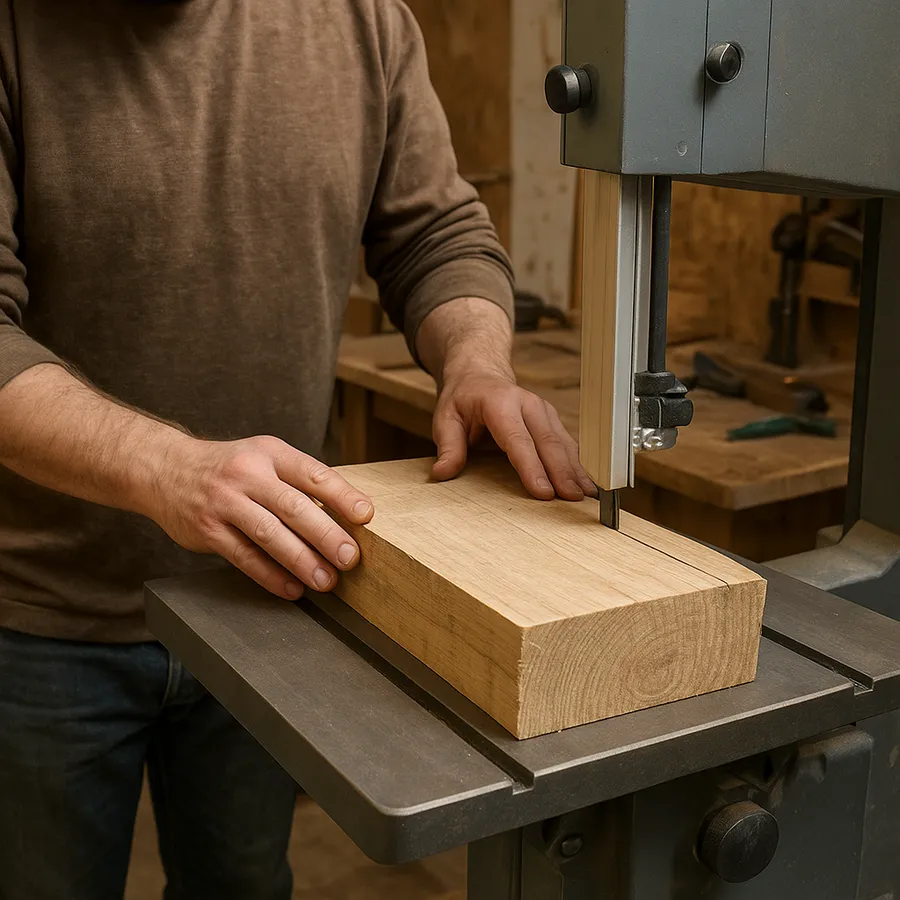
- Check blade tension first — most saws have a tension gauge or quick-release lever; too loose and the blade wanders mid-cut, too tight and it strains the tires and bearings.
- Set blade tracking so the blade rides centered on the wheel, not favoring the front or back edge — turn the wheel by hand and watch before powering on.
- Adjust the upper blade guide to sit about 1/4″ above the workpiece — closer for better support, but leave clearance for the material’s height.
- Set the table square to the blade with a square before making a cut that needs to be perpendicular; most tables have a stop screw for 90°.
- Start the cut with light, steady feed pressure — forcing the material causes blade drift, especially on the narrower blades used for curves.
- For resaw cuts specifically, use a resaw fence (or a shop-made tall fence) and feed slowly, letting the blade do the work rather than pushing through resistance.
For a longer walkthrough covering blade selection and cutting technique step by step, see our in-depth guide to using a band saw.
Frequently Asked Questions
What size band saw do I need for woodworking?
For general curve-cutting, small parts and occasional ripping, a 9″–10″ benchtop saw like the SKIL or WEN covers most home-shop needs. If resawing lumber into thinner boards or veneer is a regular part of the work, a 13″–14″ floor-standing saw with 10″+ of resaw capacity — the JET or Grizzly in this comparison — is the better investment.
What’s the difference between a benchtop and a floor-standing band saw?
Benchtop saws (SKIL, WEN, and the two RIKON 10-inch models in this comparison) sit on a stand or bench, use fractional-horsepower motors, and top out around 6″ of resaw capacity. Floor-standing saws (JET, Grizzly, Powermatic) are heavier, cast-iron machines with 1-1/2 HP or larger motors and 12″+ resaw capacity, built to run continuously in a production or serious hobby shop.
How much resaw capacity do I actually need?
For most furniture work — drawer sides, bookmatched panels, shop-sawn veneer — 8″ to 12″ of resaw capacity covers it. Anything under 6″, like the SKIL or Powermatic’s standard configuration in this comparison, is really a curve-cutting saw that can resaw thin stock in a pinch, not a dedicated resaw machine.
Is a more expensive band saw always the better value?
Not on a dollars-per-inch-of-resaw basis — the dataset in this article’s comparison table shows the opposite in places. The $229 WEN beats every other saw here on cost per inch of resaw capacity, including saws costing up to 9x more. Higher-priced saws generally do buy real things — cast-iron stability, better wheel balance, tool-less blade guides, longer warranties — but resaw capacity per dollar isn’t automatically one of them.
Can I use a band saw to cut metal?
Yes, with the right blade and a slower blade speed. Several saws in this comparison, including the RIKON 10-3062S and WEN BA3962, offer a low-speed setting specifically for this. For a dedicated buying guide focused on metal-cutting band saws rather than woodworking, see our best band saw for cutting metal guide.
How do I maintain a band saw and know when to replace the tires?
Keep the wheels clean of pitch and sawdust buildup, check blade tension and tracking before each session, and replace the rubber or urethane wheel tires when they develop flat spots or cracks — usually every 1–3 years with regular use. See our guide to band saw blade sharpening and maintenance for the full routine.
What is a band saw used for?
A band saw is used for cutting curves, resawing boards into thinner pieces, ripping lumber, and making cuts a table saw can’t safely make. See our full band saw uses guide for the complete breakdown by cut type.
If you’re still deciding between two or three of these: buy on resaw capacity if you plan to resaw lumber regularly (JET or Grizzly), buy on price-per-inch-of-resaw if budget is the main constraint and 6″ of resaw is enough (WEN), and buy on blade-guide convenience and long-term build quality if you’d rather pay once and stop thinking about it (RIKON 10-3062S). The SKIL and RIKON 10-310 both make sense as a first or second saw in a small shop where floor space, not resaw capacity, is the binding constraint.
Final Thoughts
The RIKON 10-3062S is our #1 pick for most woodworkers: tool-less blade guides, a two-speed motor and a lifetime warranty at a price that undercuts every floor-standing saw in this comparison. But the one number worth remembering from this whole dataset is $38.22 — what the WEN BA3962 costs per inch of resaw capacity, the best figure of any of the seven saws compared here, benchtop or floor-standing.
Prices, ASINs and specs in this article were live-verified via Amazon’s Creators API and manufacturer spec sheets as of this article’s last refresh date below. We’ll re-check pricing and availability at least annually, or sooner if a pick goes out of stock or a price moves significantly.
Last verified: August 2026.
Sponsored / affiliate links. As an Amazon Associate I earn from qualifying purchases. I may earn additional commission from eligible campaigns.