Right Angle Drill Attachment: How It Works & When to Use One
A right angle drill attachment is a gear-driven adapter that clips onto a standard 1/4-inch hex shank chuck and bends the bit path 90 degrees — letting you drive screws or drill holes where a straight drill body simply won’t fit. It only works with bits and drivers that have a hex shank, not round twist-drill shanks. This guide covers how the gearing works, when an attachment beats buying a dedicated right-angle drill, the specs that actually matter (chuck size, gear life, torque), and the mistakes that strip attachments early.
Quick Answer
A right angle drill attachment locks onto your drill’s chuck and redirects the bit 90 degrees, so you can drive screws or drill in corners, cabinets, and stud bays a straight drill can’t reach. It takes 1/4-inch hex-shank bits only — standard round-shank twist bits need a hex adapter first. For occasional use, an attachment on your existing drill beats buying a dedicated right-angle drill; for daily electrical or HVAC work in tight bays, a standalone right-angle drill holds up longer.

How a Right Angle Drill Attachment Works
Best Right Angle Drill Attachment Pick
Milwaukee 48-32-2390 Shockwave Right Angle Adapter
Impact-rated bevel gears in a compact head, built to hold up under an impact driver rather than just a standard drill.
- Best for: daily use with an impact driver in cabinets and tight framing bays
- Why we picked it: Shockwave-rated gears survive impact torque spikes that strip cheaper stamped-gear attachments
- Main drawback: no built-in chuck — round-shank bits need a separate hex adapter
Compare more right angle drill attachment options
 Option 1 DEWALT FLEXTORQ Right Angle Drill Adapter
|
 Option 2 Milescraft Drill90PLUS Right Angle Drill Attachment
|
 Option 3 Titan 16189 90-Degree Magnetic Right Angle Drill Attachment
|
As an Amazon Associate we earn from qualifying purchases.
The attachment’s own 1/4-inch hex shank goes into your drill’s chuck exactly like a driver bit would. Inside the attachment’s head, a small set of bevel gears takes the drill’s straight rotation and redirects it 90 degrees to a second hex socket, which is where your actual drill bit or screwdriver bit sits. Squeezing the drill’s trigger spins the internal gears, not the bit directly — that gear-driven step is why cheap attachments feel “spongy” and why impact-rated models (marked for use with impact drivers) use hardened steel gears instead of stamped ones.
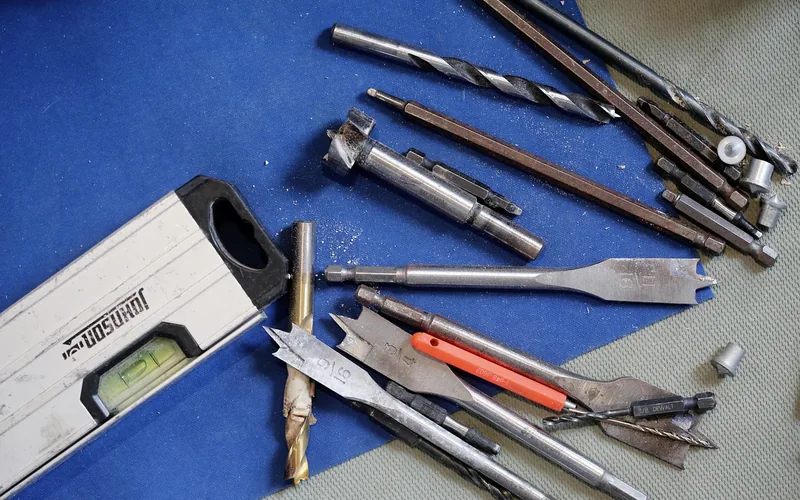
Most attachments accept only 1/4-inch hex-shank bits — the quick-change type used by impact drivers and most screwdriver bits. A round-shank twist drill bit will spin freely in the socket unless the attachment has a separate keyed or keyless chuck built into its head, which a small number of models (like dual-handle designs) do include.
Right Angle Attachment vs. a Dedicated Right-Angle Drill
These solve the same access problem differently, and the choice comes down to how often you need the tight-space reach and how much torque the job demands.
| Factor | Right Angle Attachment | Dedicated Right-Angle Drill |
|---|---|---|
| Typical cost | $15–$40, added to a drill you already own | $100–$250+ as a standalone tool |
| Size in the corner | Drill body still sits behind the attachment, adding several inches | Whole tool is built low-profile — fits tighter gaps |
| Power available | Full torque of your existing drill, minus gear loss | Limited by the tool’s own smaller motor |
| Bit compatibility | 1/4″ hex shank only (most models) | Often has its own keyless chuck for round-shank bits |
| Best for | Occasional cabinet, stud-bay, or shelf-bracket work | Daily electrical, HVAC, or plumbing rough-in work |
Gear durability is the number to watch if you’re buying an attachment for regular use. The DEWALT DWARA100, for example, is rated for more than 2,000 impact-driver duty cycles on its internal gears — a spec worth checking before buying a bargain attachment for daily use, since cheaper stamped-gear models wear out their teeth well before that.
Compact Design and Where It Actually Helps
The attachment’s head itself is small — often under 2 inches from tip to back — but the drill body behind it still needs clearance. A 90-degree attachment shines in spots with an open side channel (inside a cabinet carcass, between wall studs, behind a mounted shelf) rather than a fully boxed-in gap, where the drill body has nowhere to go even though the bit itself only needs an inch of clearance.
Choosing the Right Attachment
Match the attachment to your drill and the work before buying:
- Shank type: confirm your drill takes 1/4-inch hex bits directly, or that the attachment includes its own chuck for round-shank bits.
- Impact-rated gears: if you’ll run it off an impact driver or impact wrench, buy a model explicitly rated for impact use — standard gears strip fast under impact torque spikes.
- Material: steel gear housings hold up longer than aluminum or plastic-cased models under repeated use.
- Fixed vs. flexible shaft: a rigid 90-degree head gives more control for precise holes; a flexible shaft (often 12 inches) reaches around obstacles a rigid head can’t clear at all.
How to Attach and Use It Safely
- Unplug or remove the battery. Never seat the attachment or a bit with the drill live.
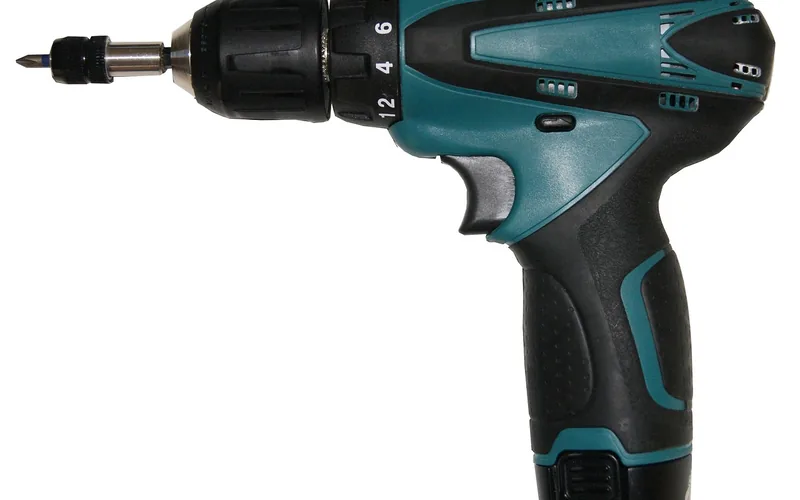
- Seat the attachment’s hex shank fully in the chuck and tighten until it stops turning by hand — a loose shank is the most common cause of wobble.
- Insert your bit into the attachment’s socket and confirm it locks (most use a spring-loaded ball detent you’ll feel click).
- Start at low speed to confirm the bit runs true before applying pressure.
- Keep steady, light forward pressure — the gear-driven head has less feedback than a direct drive, so it’s easier to bind a bit without noticing.
- Release the trigger before pulling back once the hole or fastener is set.
Wear safety glasses, keep loose clothing and jewelry clear of the chuck, and confirm the work area is well lit before you start — the attachment’s angled head makes it harder to see the bit engage than a straight drill, which is exactly when a slip is most likely.
Common Applications
Cabinet installers use these attachments to drive hinge and shelf-pin screws inside a closed carcass where a full-size drill won’t fit. Electricians run them to set screws in electrical boxes recessed behind studs. Plumbers use flexible-shaft versions to reach fasteners behind pipe runs. In general woodworking, the most common use is fixing hardware — drawer slides, cabinet hinges, shelf brackets — inside boxes that are already assembled, since building the piece with the sides open first isn’t always practical for a repair or a retrofit.
Maintenance
Wipe sawdust and debris off the attachment after each use and store it somewhere dry — trapped moisture rusts the internal gears faster than the exposed housing shows. A drop of light machine oil on the gear head every few months keeps the bevel gears from grinding dry. Check the hex socket and shank for play periodically; once the socket is visibly worn or rounded, bits will slip under torque no matter how tightly you seat them, and the attachment should be replaced rather than forced.
Related Reading
If you’re weighing a right angle attachment against a full impact driver or hammer drill purchase, or you’re not sure which drill in your kit even accepts hex-shank accessories, our tools and saws buying guide covers how drills, drivers, and their bit systems differ. For sharpening the twist bits that need a chuck adapter to work with these attachments, see our DIY drill bit sharpener guide.
Frequently Asked Questions
How do you drill a 90-degree angle?
Use a drill press, a doweling jig, or a right angle drill attachment to hold the bit perpendicular to the surface. Secure the material firmly and drill at a slow, steady speed — freehand drilling without a guide is the most common cause of an off-angle hole.
What is a right angle drill attachment used for?
It’s used for drilling or driving screws in tight spaces a standard drill can’t reach — inside cabinets, between wall studs, or behind fixed shelving. It clips onto your existing drill’s chuck and redirects the bit 90 degrees through internal bevel gears.
Can you use a right angle attachment with an impact driver?
Only if the attachment is specifically rated for impact use. Standard attachments have stamped or lighter-duty gears that strip quickly under an impact driver’s torque spikes; impact-rated models use hardened steel gears built to survive that repeated shock load.
What is the best drill bit for a right angle attachment?
Use 1/4-inch hex-shank bits — the quick-change type made for impact drivers — since that’s the socket size most attachments accept directly. For round-shank twist bits, choose an attachment with its own built-in chuck, or add a separate hex-to-chuck adapter.
A right angle drill attachment earns its place in a toolkit the moment a job puts a screw or hole somewhere a straight drill physically can’t reach — inside an assembled cabinet, between studs, or behind a fixed shelf. Match the chuck type to your bits, buy impact-rated gears if you’ll run it off an impact driver, and it will outlast a bargain model by years rather than months.
Sponsored / affiliate links. As an Amazon Associate I earn from qualifying purchases. I may earn additional commission from eligible campaigns.