What Is the Best Clear Coat Over Gel Stain?
A suitable clear coat over gel stain is one that matches the stain’s chemistry, cure time, and the project’s wear level; for many projects, about 2 thin coats of a compatible water-based or oil-based topcoat are enough. Use the wrong topcoat or rush recoating, and you can get soft film, adhesion failure, or a cloudy finish. This guide explains which clear coats work with gel stain, which combinations to avoid, and how to choose for cabinets, doors, furniture, and tabletops.
Clear coat over gel stain


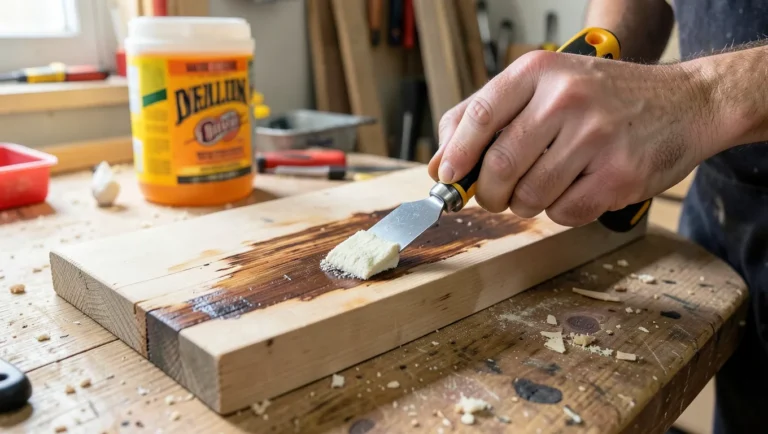
Gel stain is thicker than regular stain, so it sits on the wood surface rather than soaking in like traditional stain. That makes it useful on finished wood, vertical parts, and problem species such as maple, pine, birch, and cherry. It also means the topcoat choice matters more, because the stain layer can stay soft longer than many people expect.
When a clear coat is optional
You do not have to seal every gel-stained project. Low-wear decorative pieces can sometimes stop at the stain if the surface will not see hands, water, or rubbing. A clear coat makes sense when the piece will be cleaned often, handled daily, or placed where abrasion can wear through the color.
How finish chemistry changes the answer
The answer depends on whether the gel stain is oil-based or water-based, and whether the topcoat can bond to that cured film. A water-based topcoat can go over fully dried oil-based gel stain, but only after the stain has dried enough to avoid adhesion failure or color shift. Satin is commonly chosen for a low-gloss finish that keeps the stain color from looking shiny.
What you’ll need
- 120 to 220 grit sanding sponge or sandpaper for light scuff sanding
- Tack cloth for dust removal after sanding
- Denatured alcohol, clean water, or an appropriate TSP alternative for cleaning residue
- Gel stain that fits the substrate and the project
- Compatible clear coat in satin, or another sheen if the project calls for it
- Shop towel, applicator pad, chip brush, or lint-free rag
- Clean container for the finish
How to choose the topcoat
Start with the stain chemistry, then check how much wear the surface will take. For cabinets and doors, a well-matched clear coat is mainly about protection and adhesion. For tabletops, durability matters more, because the finish will need to resist abrasion, spills, and repeated wiping.
Match the clear coat to the stain
Oil-based gel stain usually pairs well with a compatible clear coat once it has fully dried. Water-based topcoats are often chosen for their lower odor, easier cleanup, and clearer look, but they should go over a dry stain film, not a tacky one. If the stain is still soft, the topcoat can trap solvents and cause trouble later.
Choose sheen by the look you want
Satin clear coat is often the default because it keeps the surface low-gloss and lets the stain color read naturally. Higher sheen can make imperfections more visible, while flat sheen can mute the wood too far for some projects. For finished wood, satin is often the safest starting point.
Use wear level to choose durability
High-wear tabletops need a tougher finish than decorative furniture. Cabinets and doors sit in the middle: they need regular protection, but not the same abuse as a dining surface. If a piece will be scrubbed, slid across, or set under dishes and drinks, choose a topcoat made for higher abrasion resistance.
Can you use water-based topcoat over gel stain?
Yes, a water-based topcoat can go over fully dried oil-based gel stain. The key is full dry time, not just dry-to-touch. If the stain is still soft, the water-based finish can drag color, haze the surface, or lose adhesion. Waiting longer is safer than sealing too early.
Why full dry time matters
Dry-to-touch only means the surface has skinned over. It does not mean the film is ready to be locked under a clear coat. One example recommends waiting 72 hours before top-coating gel stain, and gel stain often needs 8 to 24 hours between coats. Humidity and temperature can stretch both numbers.
What can go wrong if you rush?
If the stain has not cured enough, the topcoat can turn cloudy, stay tacky, or peel later. Color can also shift if the clear coat re-wets the pigment layer. Say your cabinet door still feels slightly rubbery on day two; sealing it then risks trapping solvents under the film.
Compatibility decision table
| Gel stain type | Recommended clear coat family | Risk notes |
|---|---|---|
| Oil-based gel stain | Water-based or oil-based topcoat after full dry time | Wait until fully dry; a water-based topcoat can work if the stain is cured enough to avoid color shift or soft-film failure. |
| Water-based gel stain | Compatible water-based clear coat | Test first if the product data sheet allows a different family; poor matching can dull clarity or weaken adhesion. |
| High-wear tabletops | Durable satin clear coat or the hardest compatible finish the product allows | Wear is higher here; thin film and rushed cure time raise the chance of scratches, water marks, and early wear-through. |
| Cabinets and doors | Satin clear coat with good adhesion over fully dried stain | Good balance of protection and appearance; finish failure often starts where doors touch, rub, or get cleaned often. |
| Decorative furniture | Satin or another low-sheen compatible clear coat | Topcoat may be optional if wear is light, but sealed surfaces clean more easily and resist handling marks better. |
| Do not use | Any incompatible pairing on wet or undercured stain | Do not seal tacky stain, do not assume dry-to-touch means ready, and do not mix incompatible chemistries without product confirmation. |
How do you apply clear coat over stain?
Prep the surface, apply thin coats, and give the film enough time to cure before hard use. The safest routine is simple: clean the surface, scuff it lightly, remove dust, then build the clear coat in controlled layers. For finished wood, adhesion depends on prep as much as on the finish itself.
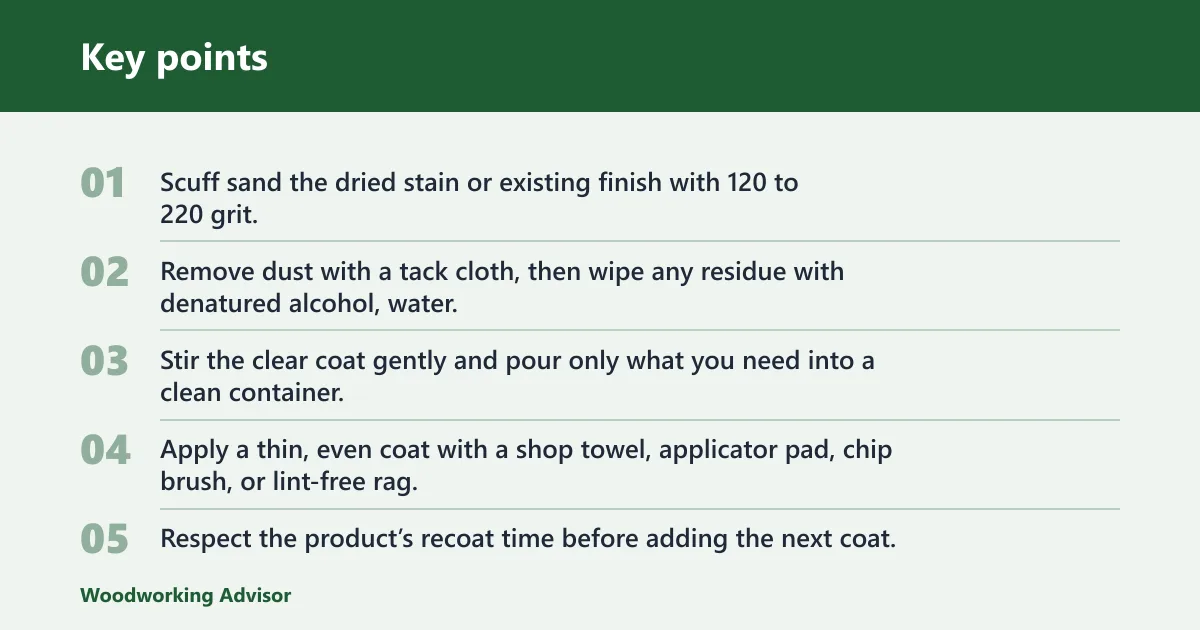
- Scuff sand the dried stain or existing finish with 120 to 220 grit.
- Remove dust with a tack cloth, then wipe any residue with denatured alcohol, water, or a suitable TSP alternative.
- Stir the clear coat gently and pour only what you need into a clean container.
- Apply a thin, even coat with a shop towel, applicator pad, chip brush, or lint-free rag.
- Respect the product’s recoat time before adding the next coat; 8 to 24 hours is common for gel stain systems, but the label controls the schedule.
- Add a second thin coat if the surface needs more protection, then leave it alone until full cure.
Picture a coffee table used for drinks and game nights. A satin clear coat over fully dried gel stain is a practical choice because the table sees more abrasion than a display shelf. The same stain on a bookcase may be fine with fewer coats, because the wear load is much lower.
How to get the best clear coat finish
Keep coats thin. Thick passes trap solvent longer, raise the chance of streaking, and can leave a softer surface. If the first coat looks uneven, do not flood on extra finish in one pass. Let it level, dry, and correct it with the next coat.
Common mistakes
Most problems come from prep, cure time, or the wrong product family. Tacky finish, peeling, cloudiness, and color shift usually point to one of those three issues. The fix is to slow down, not to add more finish immediately.
Topcoating before the stain is fully dry
This is commonly described as a failure point. If the stain is not cured, the topcoat can seal in solvent, stay soft, or haze. Wait longer in cool or humid conditions. If the finish still feels grabby, let it sit instead of coating over it.
Skipping adhesion prep on finished wood
Gel stain can be applied over finished wood with proper prep, but a slick surface needs a light scuff first. Cleaning after sanding matters too. Dust left on the surface can create roughness, weak spots, and poor bonding under the topcoat.
Choosing the wrong clear coat for the wear level
A decorative shelf does not need the same topcoat as a tabletop, since the wear level is usually lower. If the finish is too soft for the use case, the surface will mark early even when the stain color looks good. Start with the wear level, then choose the clear coat family that fits it.
Frequently asked questions
What is the best top coat for gel stain?
The best top coat for gel stain is the one that matches the stain’s chemistry and the wear level of the project. For many furniture and cabinet jobs, a compatible satin clear coat is a sensible default. For tabletops, choose a harder finish the product allows.
What is the best top coat for gel stain on wood?
On wood, the best top coat is usually a compatible satin finish that can bond to the fully dried stain. If the surface is high-touch, add protection rather than skipping it. If it is decorative only, you may not need a clear coat at all.
Do you have to put a clear coat over gel stain?
No. You do not have to clear coat every gel-stained surface. Use one when the piece will get regular handling, wiping, or abrasion. Decorative items can often stop at stain if the finish goal is appearance rather than added protection.
Does gel stain need a clear coat?
Gel stain needs a clear coat when the project will be used hard or cleaned often. It does not always need one for low-wear decor. The real decision point is whether the stain film needs extra protection and whether the chosen topcoat is compatible.
Can you use a water-based topcoat over oil-based gel stain?
Yes, if the oil-based gel stain is fully dry. A water-based topcoat can be a good choice because cleanup is easier and the finish often stays clear. Do not topcoat early, or you risk adhesion failure, soft film, or a cloudy look.
How long should you wait before topcoating gel stain?
Wait until the stain is fully dry, not merely dry-to-touch. One example calls for 72 hours before top-coating gel stain, and many gel stains need 8 to 24 hours between coats. Humidity and temperature can change that timeline, so the label still wins.
What clear coat gives the most durable finish over gel stain?
The most durable finish is the hardest compatible topcoat the product system allows, especially on tabletops and other high-wear surfaces. Satin is still a common choice because it gives a muted look while adding protection. Match the finish family to the stain and the use case.
Sponsored / affiliate links. As an Amazon Associate I earn from qualifying purchases. I may earn additional commission from eligible campaigns.