What Is the Best Top Coat Over Water-Based Stain?
For many furniture and cabinet projects, a water-based polyurethane is a common top coat over water-based stain, since it usually adds good protection with relatively little color shift; an oil-based varnish can be used if more ambering is desired. If you choose the wrong finish, the stain color can shift, adhesion can suffer, and the surface may wear faster on tabletops and high-touch parts. This guide compares clear top coats by color change, durability, and application method so you can match the finish to your project.
This guide is part of our Wood Stain Colors and Stain Problems: Brand Charts, Comparisons and Fixes series.
Top-coat decision table


| Project variable | Water-based polyurethane | Oil-based polyurethane | Conversion varnish | Lacquer | Shellac |
|---|---|---|---|---|---|
| Desired color shift | Least color change; keeps stain closest to dry color | Noticeable ambering; warmer look on light stains | Usually slight warmth; depends on formula | Usually low ambering, but chemistry varies | Clear to slight warmth; can warm pale woods |
| Application method | Brush or pad; many products also spray well | Brush or wipe-on formulas are common | Professional spray application only | Usually spray application | Brush, pad, or wipe; works well as a sealer |
| Abuse level | Good for furniture, cabinets, and many trim parts | Good durability; slower cure before heavy use | High chemical resistance and hard film for heavy-duty cabinetry | Good film, but solvent sensitivity can be a limit | Low to moderate; better as a sealer than final wear coat |
| Risk tolerance | Low risk; forgiving for DIY use | Moderate risk on pale stains because of yellowing | Higher risk because of spray skill, VOCs, and safety controls | Moderate to high because of compatibility and spray variables | Low as a barrier coat, but it wears too fast by itself on tabletops and other hard-use surfaces |
What top coat should you use?
Choose a water-based polyurethane first if you want the least color change, fast recoating, and simple brush or pad application. Choose oil-based polyurethane or a varnish-like top coat if you want more warmth and can accept ambering. Choose a spray system only if the project and equipment justify the extra setup.
Best choice for least color change
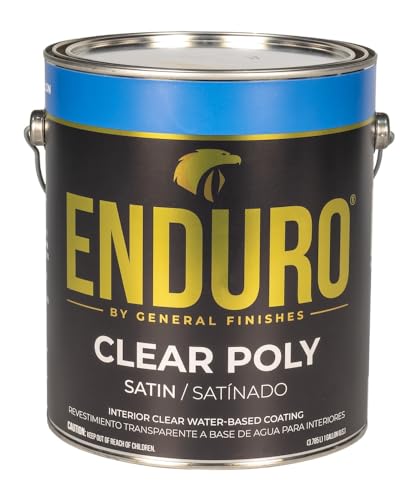
Water-based polyurethane is the safest default over General Finishes water-based stain because it usually keeps the stain color closest to what you saw after dry-down. General Finishes High Performance fits this role well because it is water-based, comes in several sheens, and is widely used as an interior topcoat over stained furniture and trim.
Best choice for more warmth and depth
If you want a slightly warmer look, General Finishes Enduro-Var is a strong candidate. It gives a varnish-like appearance with a mild amber tone and may help when a stain looks too cool on lighter woods. Oil-based polyurethane also warms the color, but it can push light stains farther than expected.
Best choice for high-wear surfaces
For tabletops, kitchen cabinet doors, and other high-touch parts, durability matters as much as color. Water-based polyurethane is often the easiest durable choice for DIY work. Conversion varnish is tougher in many professional cabinet settings, but it is spray-only for most users and carries VOC and safety concerns.
Can you put polyurethane over General Finishes water-based stain?
Yes. Polyurethane is a standard clear coat over General Finishes water-based stain as long as the stain is fully dry and the label allows the pairing. Water-based polyurethane is the safer choice when you want little color shift. Oil-based polyurethane can work, but it adds amber color and takes longer to cure.
When water-based polyurethane is the safer choice
Use water-based polyurethane on maple, pine, and other light woods when you want the stain color to stay clean and close to the original tone. It is also the easier route for brush or pad application, and it generally recoats faster than oil-based polyurethane.
When oil-based polyurethane can work
Oil-based polyurethane can be a good fit if the goal is warmth and a deeper look, especially on oak or hickory where a little ambering is welcome. It is less attractive when the stain is pale, gray-toned, or carefully matched to a cool color.
When polyurethane is a poor fit
Polyurethane is a poor fit when the stain is still tacky, when the project needs a fast spray-only production finish, or when the surface will be exposed to coatings that require a different chemistry. It is also a poor choice if you want the fastest possible full cure without color change.
Will the top coat change the stain color?
Yes. Every clear coat shifts the appearance a little, but the direction and amount depend on resin type and sheen. Water-based finishes usually change the color least. Oil-based finishes usually amber the stain. Higher gloss often makes color look deeper and darker than matte or satin.
How water-based finishes affect color
Water-based polyurethane and other waterborne topcoats usually keep the stain close to its dried color. That makes them a good match for General Finishes water-based stain on maple or pine, where even a small amber shift can make the result look warmer than intended.
How oil-based finishes amber the stain
Oil-based polyurethane, and some oil-modified varnishes, introduce ambering that can help on oak and hickory but can turn a light walnut, gray-brown, or black stain softer and yellower. That shift is often gradual, so the final color may look different after full cure than it did on day one.
How sheen changes the final look
Matte hides glare and usually reads closest to the stained color. Satin adds a little more depth. Semi-gloss and gloss reflect more light, which can make the color appear darker and the grain more pronounced. Sheen choice is part of the color decision, not a separate detail.
How long should the stain dry before top coating?
General Finishes water-based stain should be fully dry before you top coat it. Dry to the touch is not the same as ready to seal. Most manufacturers list a minimum wait on the label, and temperature, humidity, film thickness, and wood species can all stretch that window.
Dry-to-touch versus fully dry
Dry to the touch means the surface no longer feels wet. Fully dry means the colorant and binder have set enough that the clear coat will not trap moisture or tackiness underneath. A trapped stain layer can cloud, streak, or stay soft longer than it should.
Temperature and humidity effects
Warm, dry air shortens dry time. Cool or humid air slows it. A thin coat on open-pore oak may dry faster than a heavier coat on pine or maple, where the stain can sit differently on the surface. The label’s minimum wait is the starting point, not a guarantee.
When to wait longer before sealing
Wait longer if the room is cool, if humidity is high, if the stain was applied heavily, or if the piece has detailed profiles that hold residue. A common first-timer mistake is top coating a panel that feels dry at the edges but still feels slightly cool or tacky in corners.
Application and sanding steps
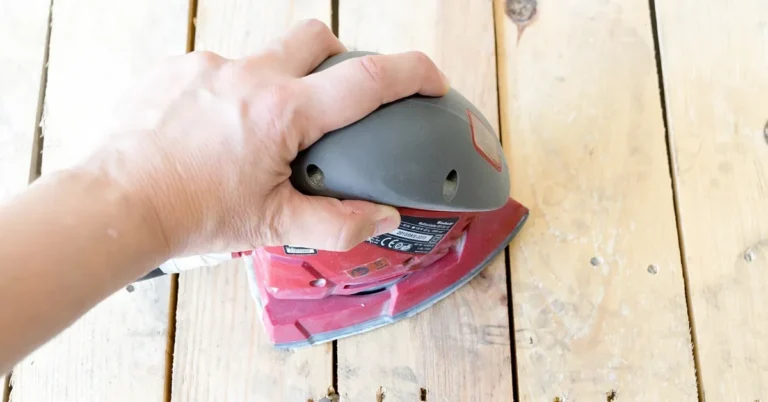
Start with a clean, dry surface and follow the manufacturer label for compatibility. After the stain has fully dried, a light scuff sand with about 320-grit or finer is a common step to remove dust nibs and smooth raised grain. Then remove all sanding dust before the first clear coat.
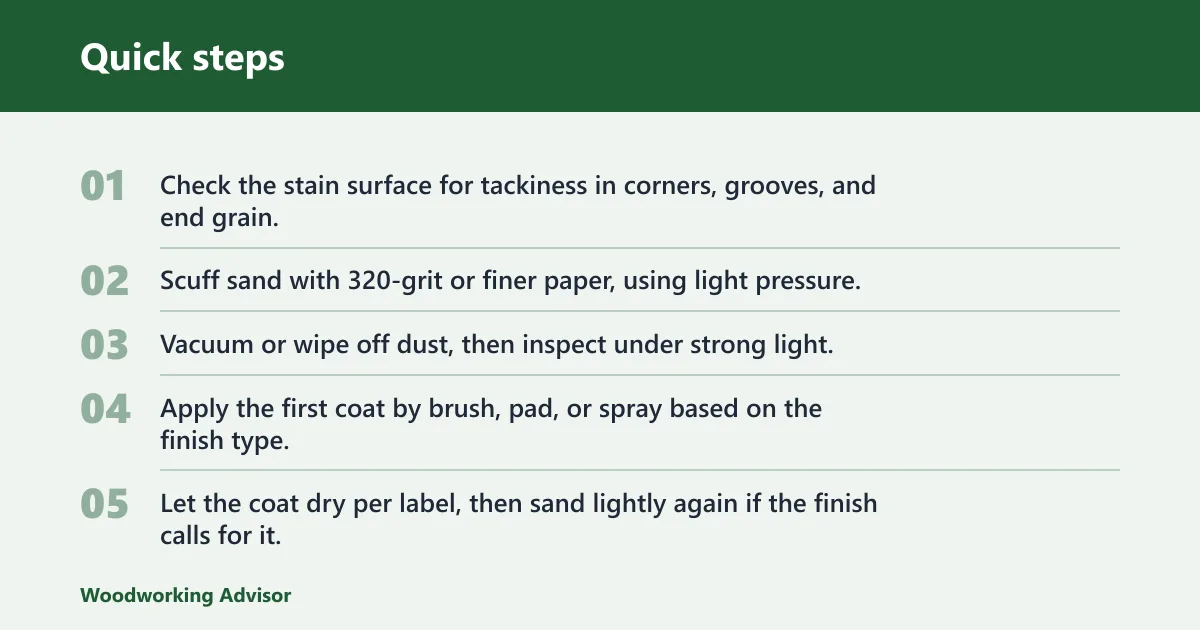
- Check the stain surface for tackiness in corners, grooves, and end grain.
- Scuff sand with 320-grit or finer paper, using light pressure.
- Vacuum or wipe off dust, then inspect under strong light.
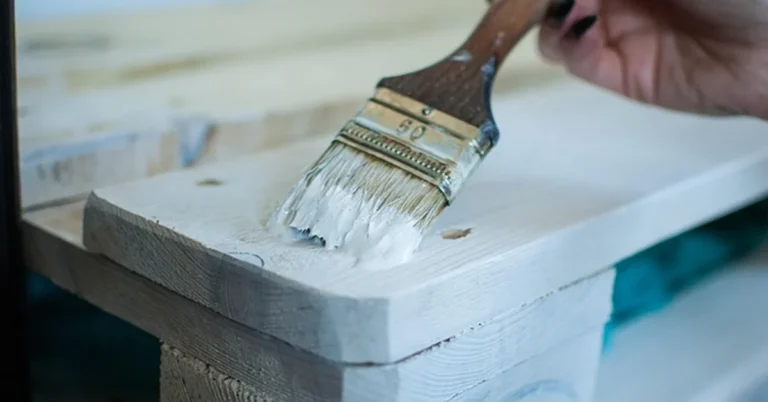
- Apply the first coat by brush, pad, or spray based on the finish type.
- Let the coat dry per label, then sand lightly again if the finish calls for it.
- Repeat until the film builds to the level needed for wear.
For brush or pad work, water-based polyurethane is usually the easiest choice. Shellac can be brushed or padded as a sealer. Lacquer and conversion varnish are usually spray jobs, and conversion varnish is the least forgiving of the group for casual use.
Say your maple nightstand is stained a light walnut brown and you want the color to stay quiet and neutral. A water-based polyurethane will usually be the closest visual match. If you swap in oil-based polyurethane, expect the tone to warm and deepen, especially in the lighter areas of the grain.
Suppose a pine cabinet door has dried stain but the room is 55°F and the humidity is high. Even if the surface feels dry, wait longer before top coating. That extra time lowers the chance of trapping stain that later clouds or gums up the clear film.
Which finish fits your project?
The right finish depends on use, appearance, and application method. Furniture usually benefits from a durable water-based top coat with minimal color shift. Cabinets may justify a harder professional finish. Decorative pieces can accept more color change if protection needs are low.
Top coat over general matrix
| Furniture need | Recommended finish | Reason |
|---|---|---|
| Least color change | Water-based polyurethane | Clear appearance, fast recoat, good DIY control |
| Warmer look | Enduro-Var or oil-based polyurethane | Slight ambering adds depth to light stain |
| Heavy tabletop use | Water-based polyurethane or conversion varnish | Durability matters more than sheen alone |
Top coat over general matrix
| Cabinet need | Recommended finish | Reason |
|---|---|---|
| DIY brush-on job | Water-based polyurethane | Better control and lower color shift |
| Factory-style spray job | Conversion varnish or lacquer where compatible | Fast build and professional film behavior |
| Warm cabinet tone | Enduro-Var | Varnish-like look with light ambering |
Top coat over general matrix
| Decorative need | Recommended finish | Reason |
|---|---|---|
| Minimum visual change | Water-based polyurethane | Preserves the original stain color best |
| Quick sealer or barrier coat | Dewaxed shellac | Useful for spot repair and sealing before another compatible top coat |
| Glossy display piece | Lacquer if the system is compatible | Fast drying and smooth spray film |
Top coat over general checklist
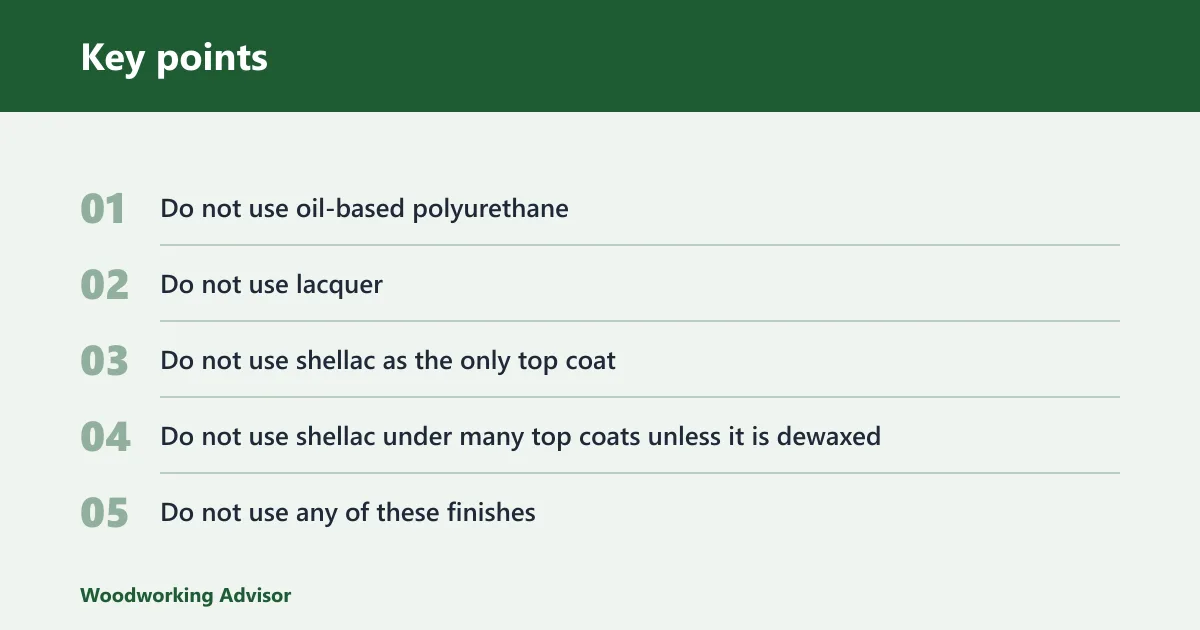
- Do not use oil-based polyurethane when the stain is on maple, pine, or another light wood and you want the color to stay pale.
- Do not use lacquer if the stain system or previous sealer is not known to be compatible, because solvent sensitivity can cause lifting or streaking.
- Do not use shellac as the only top coat on tabletops or other high-wear surfaces where a thin film would wear too quickly.
- Do not use shellac under many top coats unless it is dewaxed, because wax can interfere with adhesion.
- Do not use any of these finishes over stain that still feels tacky or cool in corners.
Frequently asked questions
What is the best top coat over General Finishes water-based stain?
For most furniture and cabinets, a water-based polyurethane is the best starting point because it gives solid protection with the least color change. General Finishes High Performance is a common pairing. Use a warmer finish only when ambering is part of the look you want.
Should I use water-based or oil-based top coat over water-based stain?
Choose water-based when you want the closest color match and faster recoating. Choose oil-based when you want more amber warmth and can accept slower cure time. On light stains, oil-based top coats often change the look more than expected.
How long should General Finishes water-based stain dry before top coating?
Use the label’s minimum wait, then adjust for temperature, humidity, and film thickness. Dry to the touch is not enough. If the room is cool or damp, or if the stain was applied heavily, wait longer before sealing.
Will a top coat change the color of General Finishes water-based stain?
Yes. Water-based finishes usually change it the least. Oil-based polyurethane and some varnishes add ambering, which can deepen the color and shift pale stains warmer. Sheen also changes the look; gloss usually reads darker than matte.
Can I use shellac as a top coat over water-based stain?
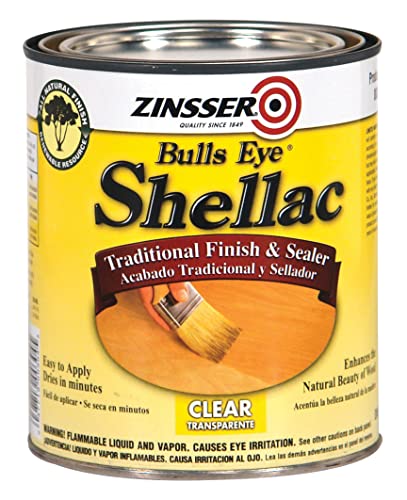
Shellac can be used as a sealer or barrier coat over water-based stain, but dewaxed shellac is the safer choice under many later top coats. It works well for quick sealing and spot repair, but it is usually not the best final wear layer for furniture tops.
Sponsored / affiliate links. As an Amazon Associate I earn from qualifying purchases. I may earn additional commission from eligible campaigns.